
News
New Michael Jackson Biopic Sparks Debate Over What It Left Out


Faith Facts
- The new “Michael” biopic chronicles Jackson’s rise from childhood performer to global superstar while notably avoiding discussion of controversial allegations that plagued his later years
- The film highlights Jackson’s strong Christian upbringing as a Jehovah’s Witness, which shaped his early worldview and family values
- Critics note the biopic’s selective storytelling raises important questions about how Hollywood handles truth and moral complexity in biographical films
A new biographical film about Michael Jackson is generating conversation among moviegoers and critics alike, not just for what it shows, but for what it chooses to leave out. “Michael” takes audiences through the legendary performer’s journey from his formative years to international stardom, but the film’s approach to the singer’s controversial legacy has become a focal point of discussion.
The movie captures Jackson’s undeniable talent and cultural impact, showcasing the dedication and artistry that made him one of the most influential entertainers of the 20th century. From his early days performing with his brothers in the Jackson 5 to his groundbreaking solo career, the film doesn’t shy away from depicting the demanding nature of his childhood and the pressures of fame.
One aspect the film does address is Jackson’s deeply religious upbringing. Raised as a Jehovah’s Witness, Jackson’s faith played a significant role in his early life and shaped his family’s values. The influence of this Christian background on his character development and early moral formation is woven throughout the narrative, providing context for understanding the man behind the music.
However, the film has drawn criticism for its handling—or lack thereof—of the serious allegations that emerged in Jackson’s later years. Multiple accusations of child abuse followed Jackson throughout the 1990s and into the 2000s, culminating in a 2005 criminal trial where he was acquitted on all counts. These allegations continued to shadow his legacy even after his death in 2009, particularly following the 2019 documentary “Leaving Neverland,” which featured detailed accusations from two men.
The decision to largely omit this aspect of Jackson’s story raises important questions about biographical storytelling and Hollywood’s responsibility to truth. For families and viewers who value honesty and moral clarity, the film’s selective narrative may feel like an incomplete picture of a complex life.
From a Christian perspective, we are called to pursue truth in all things while also recognizing the fallen nature of humanity and the possibility of redemption. The Jackson story presents a challenging case study in how we remember public figures—acknowledging both extraordinary gifts and serious moral questions.
The film does succeed in illustrating the tremendous pressure placed on Jackson from childhood, the exploitation he experienced at the hands of the entertainment industry, and the innovative artistry that changed music forever. These are legitimate parts of his story that deserve recognition.
Yet the omission of credible allegations that were documented, investigated, and publicly litigated feels like a missed opportunity for a more complete and honest reckoning with a complicated legacy. For Christian audiences who value truth-telling and protecting the vulnerable, this selective storytelling may ring hollow.
The debate surrounding “Michael” ultimately reflects broader cultural tensions about how we handle accusations against beloved figures, the standards we apply to biographical filmmaking, and whether commercial interests should outweigh historical accuracy. As believers, we can appreciate artistic excellence while still insisting on moral honesty.
The Jackson family’s cooperation with the film likely influenced its sympathetic portrayal, which is understandable from a family perspective but leaves questions about journalistic and historical integrity. Whether audiences will embrace this version of Jackson’s story or demand more complete truth remains to be seen.
Let us know what you think, please share your thoughts in the comments below.

Faith Facts
- A Washington pastor stands accused of establishing a fake internet company and soliciting over $13 million from parishioners and others.
- The pastor allegedly dismissed investors as demon-possessed when they demanded their money back.
- Authorities have charged the pastor with wire fraud and money laundering.
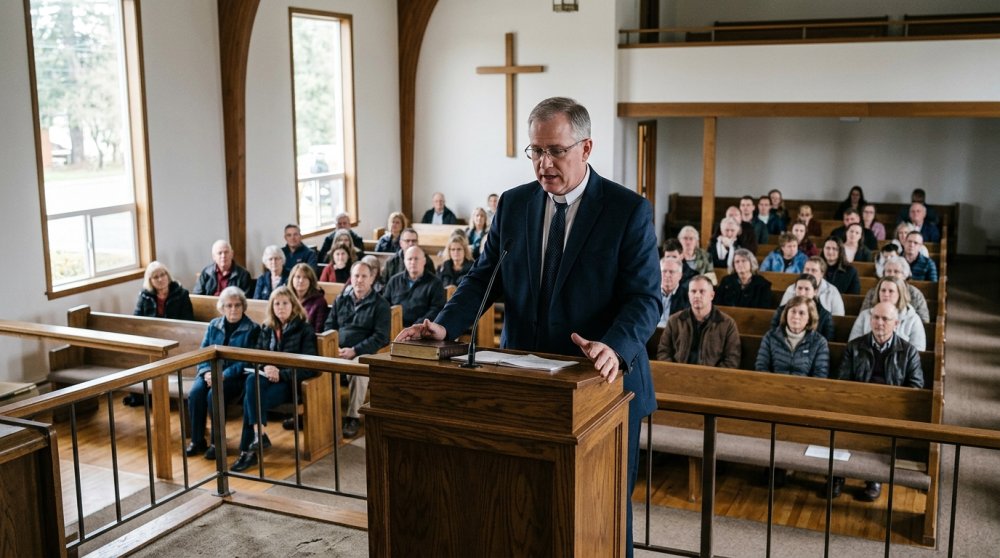
Authorities in Washington state say a pastor used his pulpit to solicit millions of dollars for an internet company that never existed.
The pastor allegedly pocketed more than $13 million from parishioners and other investors before brushing off their concerns as spiritual attacks.
“Demon-possessed” is how the pastor reportedly described church members who asked for their money back.
Federal prosecutors charged the pastor with wire fraud and money laundering after a lengthy investigation into the alleged scheme.
Victims say the pastor used his position of spiritual authority to pressure believers into handing over life savings and retirement funds.
The case has sent shockwaves through congregations across the state and renewed calls for greater accountability among church leaders.
Let us know what you think, please share your thoughts in the comments below.

Faith Facts
- The Protestant Reformation restored the authority of Scripture as the final rule for faith and practice.
- The movement defended the biblical doctrine that salvation comes by grace alone through faith alone in Christ alone.
- Reformation principles of religious liberty and individual conscience helped lay the foundation for America’s constitutional freedoms.
To understand the Reformation and its lasting influence, we have to imagine a very different world from our own.
The early 1500s were marked by spiritual darkness as the Word of God was largely hidden from ordinary people. Church leaders claimed the sole right to interpret Scripture, while traditions and man-made rules often overshadowed the clear teaching of the Bible.
Into this setting, God raised up faithful men like Martin Luther who dared to stand on the truth of Scripture alone. When Luther nailed his Ninety-Five Theses to the Wittenberg church door in 1517, he was not seeking fame but calling the church back to the gospel of Jesus Christ.
“The just shall live by faith,”
he declared, quoting Scripture to defend the truth that salvation is a gift of God received through faith, not earned through works or purchased with money.
The Reformation quickly spread across Europe as ordinary men and women embraced the Bible in their own language. William Tyndale and others risked their lives to translate and distribute God’s Word, believing every believer had the right and responsibility to read Scripture for themselves.
“I will cause a boy that driveth the plough shall know more of the Scripture than thou dost,”
Tyndale famously told a critic, reflecting the Reformation conviction that the gospel belongs to all people, not just a religious elite.
These same principles of biblical authority and religious liberty crossed the Atlantic with the Pilgrims and Puritans. The American founders, shaped by a Protestant worldview, enshrined freedom of conscience in the First Amendment, protecting the right to worship according to the dictates of Scripture rather than the commands of government.
Today the Reformation continues to bear fruit in the lives of faithful Christians who hold fast to the authority of God’s Word, the finished work of Christ on the cross, and the liberty that flows from the gospel. The truths recovered five centuries ago remain the solid foundation for both personal salvation and the preservation of religious freedom in our nation.
Let us know what you think, please share your thoughts in the comments below.

Faith Facts
- Calvary Chapel of Costa Mesa has agreed to a $12 million settlement with a former staff member who alleged multiple rapes by a former pastor.
- The plaintiff, a single mother of four, claimed the assaults occurred while she worked at the California church.
- Jacob Harman, identified in the lawsuit as a former pastor, missionary, and wrestling coach, is the accused perpetrator.
Calvary Chapel of Costa Mesa has agreed to pay $12 million to settle a lawsuit brought by a former staff member and single mother of four.
The woman alleged she was brutally battered and violently raped multiple times by Jacob Harman, who served as a pastor, missionary, and wrestling coach at the church.
The case has drawn attention to accountability within large church organizations when serious allegations arise.
Church leaders stated the settlement was reached to bring closure for all parties involved without admitting wrongdoing.
Let us know what you think, please share your thoughts in the comments below.


-

 Self-Reliance2 years ago
Trump’s Bold Move Uncovers Massive Social Security Fraud
-

 Faith2 years ago
New Clues Emerge in Noah’s Ark Mystery
-

 News2 years ago
Governor Walz’s Rhetoric Sparks National Controversy
-

 News2 years ago
Mel Gibson’s ‘The Passion of the Christ’ Sequel Title Announced
-

 Family2 years ago
Texas Lawmaker Targets Furries in Schools
-

 Freedom2 years ago
Maine Lawmaker Challenges Sports Fairness Controversy
-

 Family1 year ago
Canada’s Controversial Policy Sparks Ethical Debate
-
Faith11 months ago
Congress Hears Pleas for Nigerian Christians