
Faith
NASA Commander Reveals Emotional Encounter With Cross After Space Mission

Faith Facts
- NASA Artemis II Commander Reid Wiseman, who describes himself as non-religious, experienced an unexpected spiritual moment after returning from space
- Wiseman broke down in tears upon seeing a cross and requested to speak with a Navy chaplain following his mission
- The astronaut’s experience highlights the profound impact of viewing Earth from space and encountering spiritual symbols after the journey
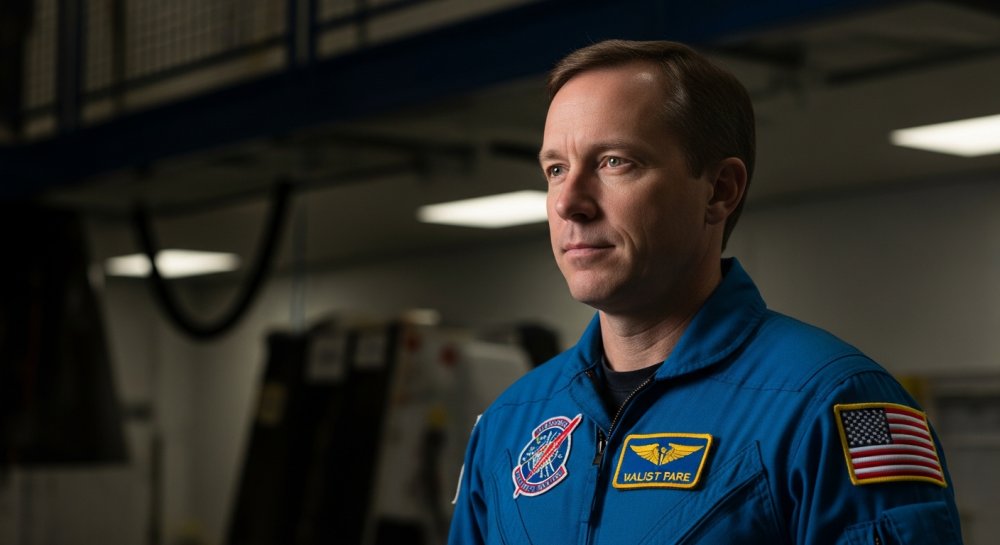
A NASA astronaut who commands the upcoming Artemis II mission has shared a remarkable testimony about an unexpected spiritual encounter that moved him to tears after returning from space. Reid Wiseman, who openly identifies as non-religious, revealed that seeing a cross following his space mission triggered such powerful emotions that he sought counsel from a Navy chaplain.
The Artemis II mission represents a significant milestone in America’s return to lunar exploration, with Wiseman serving as commander alongside fellow astronauts Victor Glover, Christina Koch, and Canadian astronaut Jeremy Hansen. This will mark humanity’s first crewed mission to the Moon since the Apollo program ended over five decades ago.
Wiseman’s candid revelation about his emotional response to religious imagery speaks to something many believers have long understood: that encounters with the divine can transcend personal belief systems. The vastness of space and the privilege of viewing God’s creation from such a unique vantage point have historically moved astronauts to contemplate matters of faith and eternity.
The commander’s willingness to seek spiritual guidance from a chaplain, despite his self-described lack of religious affiliation, demonstrates an openness to exploring the deeper questions that arise from experiencing the cosmos firsthand. Throughout history, many astronauts have reported profound spiritual experiences during their time in space, often describing a heightened awareness of creation’s majesty and humanity’s place within it.
This testimony serves as a powerful reminder that God’s truth can speak to human hearts in unexpected ways and unexpected moments. For believers, Wiseman’s response to the cross reinforces the enduring power of Christian symbols and the hope they represent, even to those who may not have previously embraced faith.
The Artemis program itself represents American ingenuity and determination, building upon the legacy of the Apollo missions that captured the world’s imagination. As the nation prepares to return astronauts to the lunar surface, stories like Wiseman’s remind us that space exploration involves not just scientific discovery but also personal transformation and spiritual contemplation.
The presence of chaplains within military and space programs reflects America’s recognition of the importance of spiritual support for those serving in extraordinary circumstances. These faith leaders provide counsel and comfort to service members and astronauts facing unique challenges and experiences that can raise profound existential questions.
For the Christian community, Wiseman’s account offers encouragement that the message of the cross continues to resonate powerfully, reaching hearts in ways that transcend intellectual assent or religious upbringing. His emotional response demonstrates that truth has a way of breaking through human defenses, particularly in moments when individuals confront the grandeur of creation.
As the Artemis II mission prepares to launch, carrying its crew around the Moon, Americans can take pride in this new chapter of space exploration while also reflecting on the deeper spiritual dimensions that such journeys often reveal. The story of one commander’s tears before a cross serves as a testament to the enduring relevance of faith in an age of scientific achievement.
Let us know what you think, please share your thoughts in the comments below.


Faith Facts
- Belgian footballer Jérémy Doku temporarily left his national team during World Cup to attend the birth of his first child
- The Christian athlete faced harsh public criticism for prioritizing family over professional sports
- His decision reflected biblical values of family stewardship and demonstrated faith-driven priorities in a secular culture
When Belgian international footballer Jérémy Doku made the decision to step away from his national team during World Cup competition to be present for the birth of his first child, the response from media and critics was swift and harsh. One television presenter expressed “outrage” at the 22-year-old Manchester City winger’s choice to put family before the world’s most prestigious football tournament.
But for those who understand Christian values, Doku’s decision was not only understandable—it was commendable.
The criticism Doku faced reveals a troubling cultural priority that places professional achievement and entertainment above the sacred bonds of family. In a world that increasingly devalues fatherhood and traditional family structures, Doku’s choice to be present for one of life’s most significant moments stands as a counter-cultural witness to biblical truth.
The Bible is clear about a man’s responsibility to his family. Scripture teaches that a man who does not provide for his own household has denied the faith and is worse than an unbeliever. While this passage primarily addresses material provision, the principle extends to emotional and spiritual presence, especially during pivotal family moments.
Doku’s decision also reflects the biblical understanding that our identities are not rooted in our careers or achievements, but in our roles as image-bearers of God and stewards of the families He has entrusted to us. In a culture obsessed with performance and public success, choosing to prioritize an intimate family moment over global recognition demonstrates a proper ordering of values.
The outrage directed at Doku highlights how far modern culture has drifted from traditional Christian understanding of vocation and family. While work is good and God-honoring, it is not ultimate. A football match, no matter how important in the eyes of the world, cannot compare to the miracle of new life and the beginning of fatherhood.
Furthermore, Doku’s choice models healthy masculinity for a generation desperately in need of such examples. In an era when fathers are often portrayed as optional or incompetent, a young man choosing to be present for his child’s birth sends a powerful message about the importance of engaged, committed fatherhood.
The criticism also reveals the idolatry of sports in contemporary culture. When a man is condemned for prioritizing his newborn child over a game, something has gone profoundly wrong with our collective values. Sports can be enjoyable and even character-building, but when they demand total allegiance at the expense of family, they have become false gods.
It’s worth noting that Doku’s temporary absence from the World Cup camp did not demonstrate a lack of commitment to his team or country. Rather, it showed a man with properly ordered priorities who understands that some moments cannot be reclaimed. His child will only be born once; there will be other matches, other tournaments, other opportunities to represent Belgium.
For Christian athletes navigating the intense pressures of professional sports, Doku’s decision offers an important example. The world will always demand total commitment to career success, but believers are called to a different standard—one that recognizes the eternal significance of family relationships and the temporal nature of earthly achievements.
In the broader context of cultural witness, moments like these matter. When a public figure makes a decision that reflects biblical values in the face of criticism, it creates opportunities for conversations about what truly matters in life. Doku’s choice invites reflection on our own priorities and challenges the assumption that professional success should always take precedence over family.
The response to Doku’s decision also serves as a reminder that living according to Christian principles will often bring misunderstanding and criticism from a world that operates by different values. This is not a reason to compromise, but rather confirmation that we are called to be salt and light, even when doing so is countercultural.
As American Christians committed to family values, we should celebrate Doku’s decision and support others who make similar choices. In a culture that increasingly devalues both fatherhood and the sanctity of family, every example of a man prioritizing his wife and child deserves recognition and encouragement.
The birth of a child is not merely a biological event, but a sacred moment when a new soul enters the world and a man becomes a father. Missing such a moment for any professional obligation, no matter how prestigious, represents a fundamental misunderstanding of what matters most in this life and the next.
Jérémy Doku was absolutely right to leave Belgium’s World Cup camp to be present for his child’s birth. His decision reflected biblical priorities, demonstrated Christian character, and provided a much-needed example of faithfulness in an age that desperately needs men willing to put family first.
Let us know what you think, please share your thoughts in the comments below.

Faith Facts
- The Bible has now been translated into 800 languages, with the second set of 400 translations completed in just 28 years compared to nearly 2,000 years for the first 400
- Approximately 1.5 billion people worldwide still lack access to the complete Bible in their native language
- Wycliffe Bible Translators continues leading global efforts to ensure every person can read Scripture in their heart language
The Christian faith has reached a historic milestone that demonstrates both the rapid advancement of Bible translation work and the enduring challenges that remain. After nearly two millennia to translate God’s Word into the first 400 languages, the pace of translation has accelerated dramatically, with the next 400 languages achieved in just 28 years.
This remarkable acceleration reflects the dedication of Christian organizations like Wycliffe Bible Translators, who have pioneered innovative approaches to bringing Scripture to communities that have never had access to the complete Word of God in their own tongue. The organization’s work represents a fulfillment of the Great Commission to spread the Gospel to all nations.
Jeremy Weightman from Wycliffe Bible Translators emphasized the significance of this achievement while acknowledging the work that remains ahead. The milestone of 800 language translations represents countless hours of faithful service by linguists, translators, and local community members working together to preserve both linguistic heritage and spiritual truth.
Despite this progress, the mission is far from complete. An estimated 1.5 billion people around the world still await the Bible in their native language. For these communities, the lack of Scripture in their heart language creates a barrier to fully understanding and embracing the Christian faith in a deeply personal way.
The acceleration in translation speed can be attributed to several factors, including improved technology, better coordination among mission organizations, and the involvement of native speakers in the translation process. These advances have allowed Christian translators to work more efficiently while maintaining the accuracy and spiritual integrity essential to Scripture translation.
This milestone serves as a powerful reminder of the global nature of Christianity and the universal hunger for God’s Word. As believers in America, we can take inspiration from this progress and remember our responsibility to support missionary work that brings the light of Christ to every corner of the earth.
The dedication required to translate Scripture into hundreds of diverse languages reflects the core Christian belief that every person, regardless of their native tongue, deserves direct access to the transformative message of the Gospel. This work preserves cultural identity while simultaneously building bridges across the global body of Christ.
As we celebrate this 800-language milestone, it’s worth reflecting on how blessed we are to have multiple English translations readily available. This abundance should inspire gratitude and motivate us to support ongoing efforts to ensure that every person can experience the life-changing power of reading God’s Word in their own language.
Let us know what you think, please share your thoughts in the comments below.

Faith Facts
- The U.S. Government has officially released files acknowledging Unidentified Anomalous Phenomena (UAP), sparking widespread public fascination and speculation.
- While secular culture embraces alien theories, Christians recognize this as an opportunity to discuss genuine spiritual realities grounded in biblical truth.
- The gospel provides answers to humanity’s deepest questions about our origins, purpose, and the unseen realm—truths far more compelling than extraterrestrial myths.
The recent declassification of government files on Unidentified Anomalous Phenomena has captivated the nation. Americans are asking questions about what lies beyond our understanding, and the conversation has never been more open.
For Christians, this cultural moment represents something far greater than speculation about alien life. It’s a divine appointment to speak truth into a spiritually curious generation.
The Bible is clear that spiritual realities exist beyond what we can see with our eyes. Angels, demons, and principalities operate in realms most people never consider. When secular voices rush to explain UAP through extraterrestrial theories, believers have the opportunity to offer a biblical framework that actually makes sense of the phenomena people are witnessing.
Scripture teaches us that Satan masquerades as an angel of light, and that deceptive spiritual forces seek to lead people away from God. The enemy has always used counterfeits and distractions to keep humanity from the truth of the gospel. The modern fascination with aliens and UFOs may simply be the latest manifestation of ancient spiritual deception.
Rather than dismissing those who are genuinely curious about UAP, Christians should engage with compassion and clarity. When neighbors, coworkers, or family members bring up these government revelations, it’s the perfect opening to discuss what the Bible reveals about the unseen world—and more importantly, about the God who created all things, seen and unseen.
This moment also reminds us that humanity is hardwired to seek answers beyond the material world. People know, deep down, that there’s more to existence than what science can measure. That longing points directly to our Creator, who made us for relationship with Him.
The gospel message speaks directly to these fundamental questions: Where did we come from? Why are we here? What happens after death? These are the questions driving interest in UAP, and Christianity provides real, satisfying answers rooted in God’s revealed Word.
As believers, we must be prepared to give an answer for the hope within us. When the culture fixates on myths about little green beings from distant planets, we can redirect the conversation to the God who spoke galaxies into existence and loved us enough to send His Son to redeem us.
The UAP phenomenon isn’t a threat to Christian faith—it’s an opportunity. It’s a chance to demonstrate that biblical truth addresses even the most mysterious aspects of reality. It’s a reminder that people are searching for meaning, and the church holds the only message that truly satisfies that search.
In an age of confusion and spiritual darkness, let us shine the light of Christ brighter than ever. Let us speak with boldness about spiritual realities that far exceed anything the government could ever declassify.
Let us know what you think, please share your thoughts in the comments below.


-

 Self-Reliance1 year ago
Trump’s Bold Move Uncovers Massive Social Security Fraud
-

 Faith1 year ago
New Clues Emerge in Noah’s Ark Mystery
-

 News1 year ago
Governor Walz’s Rhetoric Sparks National Controversy
-

 News1 year ago
Mel Gibson’s ‘The Passion of the Christ’ Sequel Title Announced
-

 Family1 year ago
Texas Lawmaker Targets Furries in Schools
-

 Freedom1 year ago
Maine Lawmaker Challenges Sports Fairness Controversy
-

 Family1 year ago
Canada’s Controversial Policy Sparks Ethical Debate
-
Faith7 months ago
Congress Hears Pleas for Nigerian Christians