
Faith
NASA Astronaut Breaks Down After Moon Mission, Seeks Chaplain Despite Being Non-Religious


Faith Facts
- Artemis II Commander Reid Wiseman experienced an unexpected spiritual encounter after returning from a Moon mission when he saw a cross and was moved to tears.
- Despite not identifying as religious, Wiseman felt compelled to speak with a Navy chaplain about his profound emotional experience.
- The incident highlights how encounters with the vastness of space can lead even secular astronauts to profound spiritual moments and questions about faith.
A NASA astronaut who describes himself as non-religious had a powerful spiritual experience that moved him to tears and led him to seek counsel from a Navy chaplain. Reid Wiseman, the commander of the upcoming Artemis II mission, shared this deeply personal moment that occurred after returning from space.
The encounter took place when Wiseman, despite not being a man of faith, found himself overwhelmed with emotion upon seeing a cross. The experience was so profound that it brought him to tears and created an intense need to process what he was feeling.
In what many Christians would recognize as the Holy Spirit working in unexpected ways, Wiseman felt compelled to speak with a Navy chaplain about his experience. This spontaneous desire to seek spiritual counsel speaks to something deeper than intellectual acknowledgment—it points to a soul stirring that transcends our human understanding.
The story recalls the words of Psalm 19:1: “The heavens declare the glory of God; the skies proclaim the work of his hands.” Many astronauts throughout history have reported profound spiritual experiences while viewing Earth and the cosmos from space.
From the Christian perspective, Wiseman’s emotional response to seeing the cross after his journey through God’s creation is no accident. It demonstrates that even those who may not identify as religious can be touched by the divine, particularly after witnessing the majesty of creation from a unique vantage point.
The Artemis II mission represents humanity’s return to lunar exploration, building on the legacy of the Apollo program. For many Americans of faith, these missions serve as powerful reminders of both human ingenuity—a gift from our Creator—and the vastness of God’s creation.
Wiseman’s vulnerability in sharing this experience offers a window into how space exploration can challenge and deepen our understanding of spiritual matters. His willingness to seek out a chaplain, despite his stated lack of religious affiliation, suggests that the human heart naturally yearns for meaning beyond the material world.
This moment also underscores the important role that military chaplains and spiritual counselors play in supporting those who serve in extraordinary capacities. Their availability to provide guidance during moments of spiritual questioning or awakening can make all the difference.
For Christians, Wiseman’s story serves as an encouraging reminder that God can work in anyone’s heart at any time. Sometimes it takes seeing creation from a new perspective—or returning from that perspective to see an ancient symbol of faith—to open eyes and hearts to spiritual truth.
The cross that moved Wiseman to tears represents the ultimate expression of God’s love for humanity. That this symbol could evoke such a powerful response in someone who doesn’t identify as religious speaks to its enduring power and the universal human need for redemption and meaning.
Let us know what you think, please share your thoughts in the comments below.


Faith Facts
- Pastor Seth Troutt offers a biblical alternative to modern influencer culture’s vision of masculinity
- The rise of figures like Andrew Tate reveals young men’s desperate search for purpose and direction
- True biblical manhood is rooted in humility, discipline, responsibility, and servant leadership
As a generation of young American men searches for meaning and purpose in an increasingly confused culture, one pastor is pointing them back to Scripture’s timeless model of masculinity.
Pastor and author Seth Troutt is offering a biblical vision of manhood that stands in stark contrast to the messages flooding social media from popular influencers. While figures like Andrew Tate have captured massive followings among young men seeking direction, Troutt argues that only God’s Word provides the true foundation for masculine identity.
The popularity of controversial influencers reveals a hunger among young men that the church must address with biblical truth. Rather than allowing secular voices to define manhood for this generation, Christian leaders are called to present Scripture’s countercultural vision of strength, leadership, and purpose.
Troutt’s approach centers on core biblical principles: humility before God, personal discipline, taking responsibility, and serving others sacrificially. This model directly challenges both the passive, directionless masculinity promoted by progressive culture and the pride-driven, self-centered masculinity marketed by some secular influencers.
The crisis of masculinity in America is real and urgent. Young men are struggling with identity, purpose, and direction at alarming rates. Suicide rates, educational achievement gaps, and lack of life direction point to a generation desperately needing solid biblical teaching about what it means to be a man.
The church has a unique opportunity and responsibility to fill this void with truth. Scripture offers a robust, compelling vision of manhood—men who lead with love, protect with courage, provide through hard work, and point others to Christ through humble service.
Biblical masculinity is not about domination or passivity, but about stewarding God-given strength and leadership for His glory and others’ good. It calls men to be both tender and tough, gentle and firm, humble and confident—all grounded in submission to Christ.
As cultural confusion intensifies, faithful pastors and teachers must boldly proclaim what God’s Word says about manhood. The next generation is listening, searching, and hungry for truth that resonates with how God created them.
The answer to our masculinity crisis isn’t found in self-help gurus or social media influencers, but in the eternal Word of God and the perfect example of Jesus Christ—the ultimate man who combined perfect strength with perfect love.
Let us know what you think, please share your thoughts in the comments below.
Faith Facts
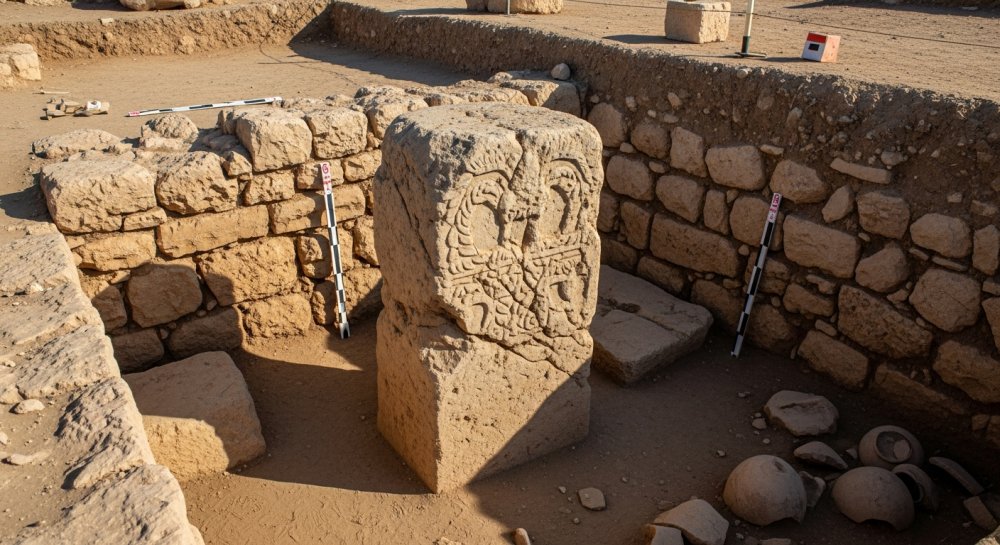
- A 2,750-year-old standing stone discovered at Tel Eton may provide archaeological evidence of King Hezekiah’s biblical reforms
- The ancient artifact was found in an Israelite mansion south of Jerusalem, dating to the late 8th century BC
- Researchers from Bar-Ilan University believe the stone supports the biblical account of Hezekiah’s efforts to centralize worship in Jerusalem
Archaeological discoveries continue to validate the historical accuracy of Scripture, and a new find in Israel offers compelling evidence for one of the Old Testament’s most significant religious reforms. A research team from Bar-Ilan University has uncovered a 2,750-year-old standing stone that may substantiate the biblical account of King Hezekiah’s campaign to centralize Jewish worship in Jerusalem.
The ancient stone was discovered at Tel Eton, an archaeological site located south of Jerusalem. The artifact’s age corresponds precisely with the period of King Hezekiah’s reign in the late 8th century BC, when the biblical monarch undertook sweeping religious reforms throughout the Kingdom of Judah.
According to the biblical account in 2 Kings and 2 Chronicles, King Hezekiah removed high places, broke down sacred pillars, and destroyed the Asherah poles in an effort to purify worship and direct the people’s devotion exclusively toward the Temple in Jerusalem. This latest discovery provides tangible evidence that such reforms actually took place in the ancient Israelite kingdom.
The standing stone was found within what researchers have identified as an Israelite mansion, suggesting it belonged to a family of significant social standing. The context of this discovery makes it particularly noteworthy for biblical archaeology, as it demonstrates the reach of Hezekiah’s reforms even into the homes of the wealthy and powerful.
For believers who hold to the historical reliability of Scripture, such archaeological confirmations serve as important reminders that the Bible describes real people, real places, and real events. The convergence of biblical text and physical evidence strengthens confidence in God’s Word as a trustworthy historical document, not merely a collection of spiritual myths or legends.
The discovery at Tel Eton joins a growing body of archaeological evidence that corroborates biblical narratives from the Old Testament period. From the Pool of Siloam to King David’s palace, excavations throughout Israel continue to unearth artifacts that align with Scripture’s historical claims.
This finding holds particular significance because it relates to a period of spiritual renewal in Israel’s history. King Hezekiah is portrayed in Scripture as a righteous king who “did what was right in the eyes of the Lord” and who trusted in the God of Israel. His reforms represented a return to biblical faithfulness after years of spiritual compromise under previous rulers.
The Bar-Ilan University study adds to our understanding of how Hezekiah’s religious reforms were implemented throughout Judah. The presence of a standing stone in a private mansion, and presumably its later removal or abandonment, suggests that the king’s directives were carried out even in areas distant from the capital.
For Christians and Jews alike, archaeological discoveries like this one serve as tangible connections to our spiritual heritage. They remind us that the faith we practice today has deep historical roots and that the God who worked through King Hezekiah continues to work in our world today.
Let us know what you think, please share your thoughts in the comments below.
Faith Facts
- Nearly two-thirds of Americans still believe increased religiosity would benefit society, though support has declined
- Women, Democrats, and younger Americans show the steepest drops in viewing religion as positive for the nation
- The decline reflects ongoing cultural shifts away from traditional faith values in American life
A new survey reveals a concerning trend for people of faith: fewer Americans now view increased religiosity as beneficial for the nation. While just under two-thirds of Americans still affirm that more religious citizens would help society, this represents a notable decline driven primarily by specific demographic groups.
The data shows the sharpest drops among women, Democrats, and adults under 54 years of age. These demographic shifts point to broader cultural challenges facing traditional religious communities as they work to maintain their influence in an increasingly secular society.
For Christian conservatives, these findings underscore the urgent need for renewed evangelism and cultural engagement. The decline in support for religion’s societal role doesn’t occur in a vacuum—it reflects decades of secularization in education, entertainment, and public institutions that have systematically marginalized faith perspectives.
The survey results highlight a generational divide that should concern all Americans who value the nation’s religious heritage. Younger adults, who have grown up in an era of aggressive secular messaging, show markedly less appreciation for religion’s positive contributions to American life than their parents and grandparents.
Among women, the decline is particularly striking given their historical role as pillars of church communities and faith transmission within families. This shift may reflect changing cultural narratives that increasingly frame traditional religion as oppressive rather than liberating—a characterization that contradicts Christianity’s foundational teachings about human dignity and purpose.
The political dimension of the divide is equally significant. Democrats’ declining support for religion’s societal role reflects the party’s increasing embrace of secular progressive ideology and its growing hostility toward traditional religious values, particularly on issues like life, marriage, and religious liberty.
Despite these troubling trends, the fact that nearly two-thirds of Americans still recognize religion’s potential benefits offers hope. This majority represents a foundation upon which faithful Americans can build, demonstrating through lives of service and conviction why biblical values remain essential for human flourishing and national strength.
The survey serves as a wake-up call for churches and religious leaders. Passive acceptance of cultural drift is not an option. Bold, compassionate proclamation of timeless truth must accompany genuine community engagement that shows skeptics the transformative power of authentic faith.
America’s founding principles drew heavily from biblical worldviews about human nature, limited government, and unalienable rights. As fewer citizens appreciate religion’s role, the philosophical foundations of our republic face erosion—a development with profound implications for freedom and justice.
Let us know what you think, please share your thoughts in the comments below.


-

 Self-Reliance1 year ago
Trump’s Bold Move Uncovers Massive Social Security Fraud
-

 Faith1 year ago
New Clues Emerge in Noah’s Ark Mystery
-

 News1 year ago
Governor Walz’s Rhetoric Sparks National Controversy
-

 News1 year ago
Mel Gibson’s ‘The Passion of the Christ’ Sequel Title Announced
-

 Family1 year ago
Texas Lawmaker Targets Furries in Schools
-

 Freedom1 year ago
Maine Lawmaker Challenges Sports Fairness Controversy
-

 Family1 year ago
Canada’s Controversial Policy Sparks Ethical Debate
-
Faith7 months ago
Congress Hears Pleas for Nigerian Christians