
Faith
Museum of the Bible Unveils New Exhibits Honoring Faith’s Role in America’s Founding

Faith Facts
- Museum of the Bible launching “The Bible & America 250” initiative featuring new exhibits celebrating the biblical foundations of American history
- Special programming includes a lecture series and theatrical production exploring George Washington’s personal faith
- The initiative coincides with America’s upcoming 250th anniversary, highlighting Scripture’s enduring influence on the nation’s founding principles
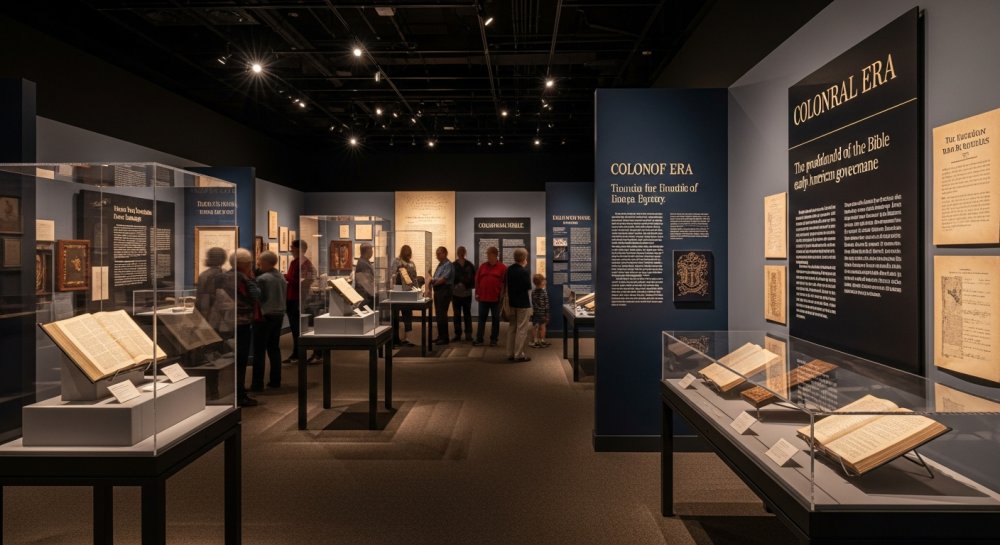
The Museum of the Bible is launching a comprehensive new initiative that celebrates the biblical foundations of American history as the nation approaches its 250th anniversary. “The Bible & America 250” features new exhibits, educational programming, and cultural events designed to illuminate the profound role Scripture played in shaping the United States.
This ambitious undertaking includes carefully curated exhibits that trace the influence of biblical principles on America’s founding documents and democratic ideals. The museum is also hosting a lecture series that will feature historians and scholars exploring how faith guided the nation’s early leaders.
A centerpiece of the initiative is a theatrical production focused on George Washington’s personal faith. This production aims to reveal the biblical convictions that sustained America’s first president through the Revolutionary War and his presidency. Too often, modern narratives strip away the spiritual dimension of our founders’ lives, leaving Americans with an incomplete understanding of the faith that inspired their sacrifice and vision.
The timing of “The Bible & America 250” is particularly significant as the nation prepares to mark its semiquicentennial. While contemporary culture increasingly seeks to minimize Christianity’s role in American history, initiatives like this remind us that biblical values weren’t peripheral to the founding—they were central to it.
The Museum of the Bible has established itself as an important institution for preserving and presenting the historical, narrative, and cultural impact of Scripture. This new programming continues that mission by helping Americans understand how deeply the Bible influenced the nation’s character and institutions.
By connecting Americans with their spiritual heritage, the museum is performing a vital service. Understanding the biblical worldview of the founders provides essential context for the freedoms we enjoy today and the responsibilities that come with them.
As America approaches this historic milestone, “The Bible & America 250” offers an opportunity for reflection on the nation’s spiritual roots. It challenges visitors to consider how the timeless truths of Scripture guided those who established this republic and how those same principles remain relevant today.
Let us know what you think, please share your thoughts in the comments below.


Faith Facts
- God’s silence in prayer is not a sign of His absence or lack of care for His children
- Scripture teaches that God answers prayers according to His will and timing, not always according to our desires
- Unanswered prayers often serve a divine purpose in spiritual growth and trust-building
Every faithful Christian has experienced the frustration of praying earnestly for something, only to feel as though heaven remains silent. It’s a deeply personal struggle that can shake even the strongest faith. But does God’s silence mean He doesn’t care about our needs and desires?
The answer is a resounding no. God’s love for His children is unchanging and unconditional, demonstrated most powerfully through the sacrifice of His Son, Jesus Christ.
Scripture provides clear guidance on this difficult topic. In 1 John 5:14-15, we read that God hears us when we pray according to His will. This means that our prayers are filtered through divine wisdom that far exceeds our limited human understanding.
Sometimes what we desperately want isn’t what we truly need. God sees the full picture of our lives from beginning to end, while we can only see the present moment. What appears to be an unanswered prayer may actually be God protecting us from something harmful or preparing us for something better.
James 4:3 addresses another reason prayers may go unanswered: wrong motives. When we pray selfishly or for things that would ultimately harm our walk with God, He lovingly redirects our path. This isn’t punishment—it’s protection.
The timing of God’s answers also differs from our human timeline. Abraham and Sarah waited decades for the son God promised them. Joseph endured years of slavery and imprisonment before God elevated him to save nations. Delayed answers often serve to strengthen our faith and prepare us for the blessings ahead.
Additionally, unconfessed sin can create a barrier in our prayer life. Psalm 66:18 warns that if we regard iniquity in our hearts, the Lord will not hear us. Maintaining a right relationship with God through repentance keeps the communication lines open.
Faith itself plays a crucial role. Jesus repeatedly emphasized the importance of believing when we pray. Doubt and unbelief can hinder our prayers, not because God is offended, but because faith is the substance of things hoped for and the evidence of things not seen.
Rather than viewing unanswered prayers as evidence of God’s indifference, we should see them as opportunities to trust more deeply. God’s “no” or “wait” is just as much an answer as “yes”—and often the one we need most, even when it’s hardest to accept.
The Christian life requires surrendering our will to God’s perfect plan. When we pray “Thy will be done,” we acknowledge that His ways are higher than our ways, and His thoughts higher than our thoughts. This surrender doesn’t diminish our desires but places them in the hands of a loving Father who knows what’s best.
In our moments of spiritual frustration, we can remember that Jesus Himself prayed in the Garden of Gethsemane for the cup of suffering to pass from Him—yet submitted to the Father’s will. If the Son of God experienced prayers that seemed unanswered in the moment, we can trust that our heavenly Father has a purpose we may not yet understand.
Let us know what you think, please share your thoughts in the comments below.

Faith Facts
- In vitro fertilization procedures result in more embryonic deaths annually than the nation’s largest abortion provider
- The Trump administration is currently reviewing potential new regulations for fertility treatments
- Pro-life advocates are facing complex ethical questions about IVF practices and the sanctity of life from conception
As the Trump administration weighs new guidelines for in vitro fertilization, a sobering reality is emerging that challenges Christians and pro-life advocates to examine an uncomfortable truth. The fertility industry, while helping families achieve their dreams of parenthood, operates within a framework that results in the destruction of countless human embryos.
Traditional pro-life efforts have long focused on abortion clinics, with Planned Parenthood serving as the most visible target of advocacy and protest. Yet fertility clinics across America quietly dispose of hundreds of thousands of embryos each year through standard IVF procedures. These tiny lives, created with hope but ultimately discarded, frozen indefinitely, or used for research, represent a profound moral dilemma for those who believe life begins at conception.
The IVF process typically involves creating multiple embryos, implanting several, and either destroying or indefinitely freezing those that remain. This approach has become so normalized in American medicine that few pause to consider the theological implications. For Christians who hold that each embryo carries the full dignity of human life, the math presents a troubling equation.
The Trump administration’s consideration of new IVF regulations offers a critical opportunity to reframe this conversation through a lens of faith and moral clarity. President Trump has expressed support for families seeking fertility treatments while also championing the cause of life. Finding the balance between these values requires wisdom, compassion, and a willingness to ask difficult questions about current practices.
Some pro-life ethicists argue that IVF can be conducted in ways that honor the sanctity of every embryo created. These approaches might include creating only the number of embryos intended for implantation, transferring all created embryos rather than selecting among them, and avoiding the creation of “spare” embryos destined for destruction. Such modifications would require significant changes to standard fertility clinic protocols.
The broader pro-life movement now faces a moment of reckoning. Consistency demands that if we defend the unborn in the womb, we must also defend the created embryo in the laboratory. This isn’t about denying couples the joy of children—it’s about ensuring that the path to parenthood doesn’t require sacrificing other lives along the way.
Families struggling with infertility deserve compassion and support. Their desire for children reflects God’s design for family and the natural longing He places in human hearts. Yet even righteous desires must be pursued through righteous means. The question before us is whether American medicine and law can accommodate both the dreams of hopeful parents and the rights of their tiniest potential children.
As this national conversation unfolds, Christians have an opportunity to lead with both truth and grace. Speaking honestly about the loss of embryonic life through IVF doesn’t diminish the struggles of infertile couples—it simply acknowledges that every human life, regardless of size or stage, matters to God and should matter to us.
Let us know what you think, please share your thoughts in the comments below.

Faith Facts
- Norwegian socialists published a book acknowledging the Bible’s strong messages about justice, care for widows and orphans, and warnings against wealth corruption
- The authors question why Christians have allegedly stopped applying biblical principles to public life
- This acknowledgment from secular sources underscores the timeless relevance of Scripture to all aspects of society, including governance and policy
An unusual source is making waves in the Christian community — Norwegian socialists who have discovered what Bible-believing Christians have known for centuries. In their new book, the authors express surprise at how frequently Scripture addresses justice, defends the vulnerable, welcomes strangers, and warns against the corrupting influence of wealth.
The observation comes from individuals who do not profess Christian faith, yet they found themselves confronted with biblical truths while reading through the Scriptures. Their reading experience revealed consistent themes of God’s concern for the poor, the fatherless, and the widow — principles deeply embedded throughout both the Old and New Testaments.
What makes this development particularly noteworthy is the authors’ puzzlement over why Christians have seemingly retreated from applying these biblical principles to public policy and civic life. This question strikes at the heart of ongoing debates within American Christianity about faith’s proper role in the public square.
Conservative Christians have long argued that biblical values should inform governance, policy-making, and cultural norms. The founding fathers established America on Judeo-Christian principles, recognizing that true justice flows from God’s unchanging standards. Traditional Christian teaching has always emphasized believers’ responsibility to be salt and light in society, not withdrawing into private piety while abandoning the public sphere.
The socialists’ observation inadvertently exposes a troubling trend: the secular left has sometimes been more willing to acknowledge the Bible’s social teachings than some modern Christians who have adopted a compartmentalized faith. This shouldn’t surprise us — Jesus Himself warned that the children of this world are sometimes wiser in their generation than the children of light.
Scripture indeed speaks powerfully about economic justice, care for the vulnerable, and the dangers of wealth without righteousness. Proverbs 31:8-9 commands believers to “speak up for those who cannot speak for themselves” and “defend the rights of the poor and needy.” James 1:27 defines pure religion as caring for orphans and widows in their distress.
However, the application of these principles requires biblical wisdom, not secular socialist redistribution schemes. Conservative Christians understand that personal charity, voluntary community support, and limited government create better outcomes than centralized state control. The Bible commands individuals and churches to care for the needy — not to compel others through government force.
The Norwegian authors’ surprise reveals their own ideological blindness: they assume biblical justice means big government programs. In reality, Scripture promotes personal responsibility, private property rights, honest work, and generous voluntary giving. The early church in Acts shared possessions voluntarily out of love, not through state coercion.
This development should encourage American Christians to reclaim the full counsel of Scripture in public discourse. Faith must not be relegated to Sunday mornings or private devotions. Biblical principles on human dignity, family structure, sexual ethics, economic freedom, and limited government remain as relevant today as when they were written.
The question posed by these secular observers deserves an answer: Why have some Christians stopped expecting Scripture to shape public life? Perhaps it’s because cultural elites have relentlessly pushed faith out of the public square, or because some believers have bought the lie that religion is purely private.
The solution is not socialist policy but renewed Christian engagement grounded in biblical truth. Believers must confidently bring Scripture to bear on every area of life — education, economics, governance, and culture. This doesn’t mean theocracy; it means citizens whose worldview is shaped by God’s Word participating fully in democratic processes.
When unbelievers recognize biblical wisdom, it should provoke Christians to deeper faithfulness, not embarrassment. The fact that socialists can see Scripture’s concern for justice while missing its full message about sin, redemption, and personal transformation reveals the danger of selective reading.
True biblical justice begins with hearts transformed by the Gospel, then flows outward through changed lives, strengthened families, and communities that embody God’s love practically. Government has a limited but important role in restraining evil and protecting rights, but it cannot replace the church’s calling to be the hands and feet of Christ.
America needs Christians who take Scripture seriously in every sphere — defending the unborn, supporting marriage and family, promoting economic freedom and opportunity, welcoming immigrants legally and compassionately, and advocating for the vulnerable without embracing failed socialist ideologies.
Let us know what you think, please share your thoughts in the comments below.


-

 Self-Reliance1 year ago
Trump’s Bold Move Uncovers Massive Social Security Fraud
-

 Faith1 year ago
New Clues Emerge in Noah’s Ark Mystery
-

 News1 year ago
Governor Walz’s Rhetoric Sparks National Controversy
-

 News1 year ago
Mel Gibson’s ‘The Passion of the Christ’ Sequel Title Announced
-

 Family1 year ago
Texas Lawmaker Targets Furries in Schools
-

 Freedom1 year ago
Maine Lawmaker Challenges Sports Fairness Controversy
-

 Family1 year ago
Canada’s Controversial Policy Sparks Ethical Debate
-
Faith8 months ago
Congress Hears Pleas for Nigerian Christians