
News
Miss America Quietly Revises Contract After Contestant Raises Alarm Over Gender Language


Faith Facts
- The Miss America Organization has revised its contract to clarify that only biological females can compete in its pageants
- The change follows a dispute with a contestant who refused to sign language she believed opened competition to trans-identified males
- Liberty Counsel is representing the former titleholder in her fight to preserve women’s spaces in pageantry
The Miss America Organization has quietly altered its contract language to make clear that only females may compete in its beauty pageants, a move that comes after significant controversy over unclear gender eligibility rules.
The revision follows a high-profile dispute with a contestant who claimed she was stripped of her title for refusing to sign a contract that she believed would have allowed biological males identifying as women to compete. The organization has denied this characterization of events.
Liberty Counsel, a Christian legal organization, is representing the former titleholder in her challenge to what she views as an unjust removal from her position. The case has drawn attention to the broader national debate over the definition of “woman” in single-sex spaces and competitions.
Mat Staver, founder and chairman of Liberty Counsel, emphasized the importance of maintaining clarity in women’s competitions.
“Women’s sports and women’s pageants should be reserved for biological women,” Staver said. “The fact that the Miss America Organization felt compelled to clarify its contract language vindicates the concerns raised by our client.”
The Florida contestant at the center of the controversy, Kayleigh Bush, maintained that the original contract language was ambiguous enough to potentially permit trans-identified males to enter the competition. Her refusal to sign what she viewed as problematic language cost her the Miss Florida title, according to her legal team.
The Miss America Organization has consistently denied that its eligibility rules ever allowed or intended to allow biological males to compete. However, the organization did revise its contract language following the dispute, adding specificity that was previously absent.
This development comes as women’s sports and single-sex spaces across America face increasing pressure to accommodate transgender ideology. From high school athletics to professional competitions, biological males identifying as women have sought and in some cases gained entry to female-only events, sparking concerns about fairness and safety.
The pageant world has not been immune to these pressures. Several beauty competitions have already opened their doors to transgender contestants, marking a significant departure from the traditional understanding of women’s pageantry.
For many conservatives and Christians, the preservation of women-only spaces represents a matter of both common sense and biblical truth. The belief that God created humanity as male and female, with distinct and complementary purposes, undergirds the conviction that women deserve their own protected categories in competition and beyond.
The Miss America Organization’s decision to clarify its language, whether motivated by legal concerns or principle, represents a small victory for those who believe biological reality should determine eligibility in women’s events. The revised contract now leaves less room for ambiguity about who qualifies as a woman in the context of the pageant.
Liberty Counsel continues to represent the former titleholder as her case proceeds. The organization has built a reputation for defending religious liberty and traditional values in courts across the nation, taking on cases that involve the intersection of faith, freedom, and cultural flashpoints.
The broader implications of this case extend far beyond one pageant or one state title. As institutions across America grapple with demands to redefine fundamental terms like “woman” and “man,” clarity in policy and contract language becomes essential to protect the rights and opportunities of biological women.
“This is about more than pageants,” Staver noted. “It’s about whether we as a society will continue to recognize the reality of biological sex and protect spaces that have been reserved for women.”
The case highlights the real-world consequences when organizations fail to maintain clear definitions. Ambiguous language creates confusion, legal vulnerability, and potential injustice for those who seek to uphold traditional standards.
For Christian Americans watching this situation unfold, the stakes are clear. The erosion of sex-based categories represents not merely a political disagreement but a fundamental challenge to the created order and to the protection of women and girls in spaces designed specifically for them.
Let us know what you think, please share your thoughts in the comments below.


Faith Facts
- Åland, a Swedish-speaking Finnish archipelago of 6,700 islands, preserves medieval Christian churches dating back centuries
- The region maintains strong Christian heritage and traditions despite modern secular pressures in Scandinavia
- These historic churches stand as testaments to the enduring power of faith across generations
Nestled among roughly 6,700 islands and skerries in the Baltic Sea, the Åland archipelago represents a fascinating crossroads of faith and culture in northern Europe. While politically part of Finland, this unique region maintains its Swedish cultural and linguistic identity—and more importantly, its Christian heritage.
The medieval churches scattered throughout these islands tell a powerful story of faith that has endured for centuries. These sacred structures, built by devoted believers generations ago, continue to serve as places of worship and testimony to the unshakable foundation of Christianity in the region.
For Christian travelers seeking to connect with the historical roots of European faith, Åland offers a rare opportunity. The archipelago’s churches stand as physical reminders that our faith is not a modern invention, but a living tradition passed down through countless generations who faced their own trials and tribulations.
In an era when much of Scandinavia has drifted toward secularism, these medieval churches represent something precious: evidence that Christian communities once thrived here, building monuments to their faith that would outlast them. The stones themselves preach a sermon about permanence, dedication, and the sacrifices made by believers who came before us.
The Swedish-speaking population of Åland has maintained many traditional values that resonate with Christian conservatives. Their respect for history, preservation of cultural identity, and maintenance of these sacred spaces demonstrates a commitment to honoring the past while living in the present.
Visiting these churches isn’t merely tourism—it’s pilgrimage. Each medieval sanctuary offers modern believers a chance to pray where their spiritual ancestors prayed, to stand where the faithful once stood, and to be reminded that we are part of a story much larger than ourselves.
The Baltic setting adds to the spiritual experience. The natural beauty of thousands of islands, the clean Nordic air, and the sense of remoteness create an atmosphere conducive to reflection and prayer—far removed from the chaos and spiritual emptiness of modern urban life.
For American Christians planning European travel, Åland represents an alternative to the crowded tourist destinations that have lost much of their spiritual significance. Here, faith still feels real, history still matters, and the church buildings remain what they were always meant to be: houses of God.
Let us know what you think, please share your thoughts in the comments below.
Faith Facts
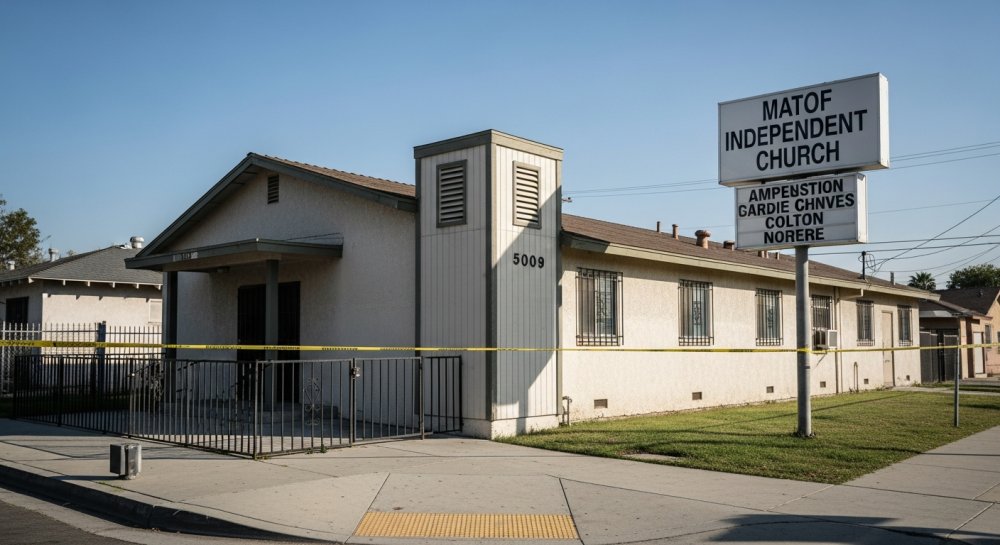
- Pastor Darryl Muzik Martin and his wife Shelley Bailey “Kat” Martin, leaders of His Way Spirit Led Assemblies in Colton, California, now face a second murder charge in the disappearance of a former congregant who left their church in 2023.
- The couple had previously faced murder charges in connection with another death, raising serious concerns about the spiritual and physical welfare of their congregation.
- Authorities continue investigating the circumstances surrounding the missing congregant’s disappearance after his departure from the religious group.
A California pastor and his wife are facing mounting legal troubles as prosecutors have filed a second murder charge against the church leaders. Darryl Muzik Martin, pastor of His Way Spirit Led Assemblies in Colton, California, and his wife Shelley Bailey “Kat” Martin, who served as the church’s “head prophetess,” are now both charged in connection with the death of a congregant who vanished after leaving their religious group in 2023.
The new charges represent a significant escalation in a case that has shocked the local faith community. The Martins had already been facing murder charges in a separate case, and this second filing suggests a disturbing pattern that law enforcement is uncovering in their investigation.
The missing congregant’s disappearance occurred shortly after he departed from the church, according to authorities. Investigators have not released details about the specific evidence linking the Martins to the alleged crime, but the filing of murder charges indicates prosecutors believe they have sufficient proof to proceed with the case.
The case raises important questions about spiritual authority and accountability within independent churches. While most pastors and church leaders faithfully serve their congregations with integrity and godly character, cases like this remind believers of the biblical warnings against false teachers and those who would abuse positions of spiritual trust.
Scripture is clear about the serious responsibility that comes with spiritual leadership. James 3:1 warns that teachers will be judged with greater strictness, and 1 Peter 5:2-3 instructs church leaders to shepherd God’s flock willingly and not domineering over those in their charge.
The Christian community must remain vigilant against those who would exploit faith for personal gain or control. True biblical leadership is marked by humility, service, and conformity to the teachings of Christ—not manipulation, coercion, or harm.
As this case proceeds through the legal system, it serves as a sobering reminder that churches must maintain proper accountability structures. Healthy congregations operate with transparency, multiple layers of leadership, and adherence to biblical standards of conduct.
The investigation into the Martins’ activities continues, with authorities working to determine the full extent of what occurred within their church. The case underscores the importance of discernment when choosing a church home and the need for believers to test all teaching against the clear truth of Scripture.
Let us know what you think, please share your thoughts in the comments below.
Faith Facts
- A Catholic priest has been charged with felony theft for allegedly stealing approximately $160,000 from his former parish.
- The alleged financial misconduct was discovered after the priest resigned amid a separate criminal investigation.
- The case highlights ongoing concerns about financial accountability and transparency within church institutions.
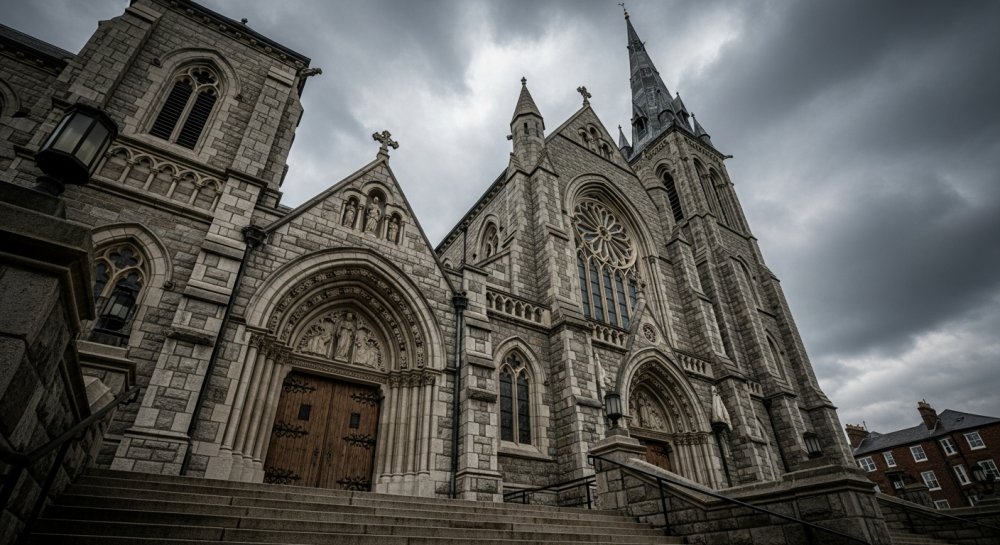
A Catholic priest is now facing serious legal consequences after being charged with felony theft for allegedly embezzling roughly $160,000 from the parish he once served. The charges represent a troubling breach of trust that has shaken the local faith community.
The alleged financial misconduct came to light only after the priest had already resigned from his position. His departure was connected to a separate criminal investigation, which subsequently led to the discovery of the missing funds from church accounts.
This case adds to growing concerns among faithful Americans about the need for greater financial oversight and accountability within religious institutions. Churches hold a sacred trust with their congregations, who give sacrificially to support ministry work and community outreach.
The theft of $160,000 represents not just a legal violation, but a profound moral failing that undermines the credibility of church leadership. For parishioners who contributed those funds in good faith, the betrayal cuts especially deep.
As this case moves through the criminal justice system, it serves as a sobering reminder of the importance of transparency, regular audits, and proper financial controls in all church operations. Congregations have every right to expect that their generous donations will be used for the purposes intended—advancing the Gospel and serving those in need.
The investigation into how such a substantial amount could be taken without detection raises questions about the financial oversight mechanisms that were in place at the parish. Churches must implement strong checks and balances to protect both their resources and their witness in the community.
Let us know what you think, please share your thoughts in the comments below.


-

 Self-Reliance1 year ago
Trump’s Bold Move Uncovers Massive Social Security Fraud
-

 Faith1 year ago
New Clues Emerge in Noah’s Ark Mystery
-

 News1 year ago
Governor Walz’s Rhetoric Sparks National Controversy
-

 News1 year ago
Mel Gibson’s ‘The Passion of the Christ’ Sequel Title Announced
-

 Family1 year ago
Texas Lawmaker Targets Furries in Schools
-

 Freedom1 year ago
Maine Lawmaker Challenges Sports Fairness Controversy
-

 Family1 year ago
Canada’s Controversial Policy Sparks Ethical Debate
-
Faith6 months ago
Congress Hears Pleas for Nigerian Christians