
News
Minnesota Schools Introduce Gender-Swapping Dolls to Children as Young as Four

Faith Facts
- Minnesota schools are reportedly introducing “MyGender Dolls” with removable genitalia to children as young as 4 years old
- The dolls are designed to teach children they can “be anyone regardless of their body parts,” contradicting biblical teaching on God-given gender
- This program represents a direct challenge to parental authority and Christian values regarding human sexuality and child development
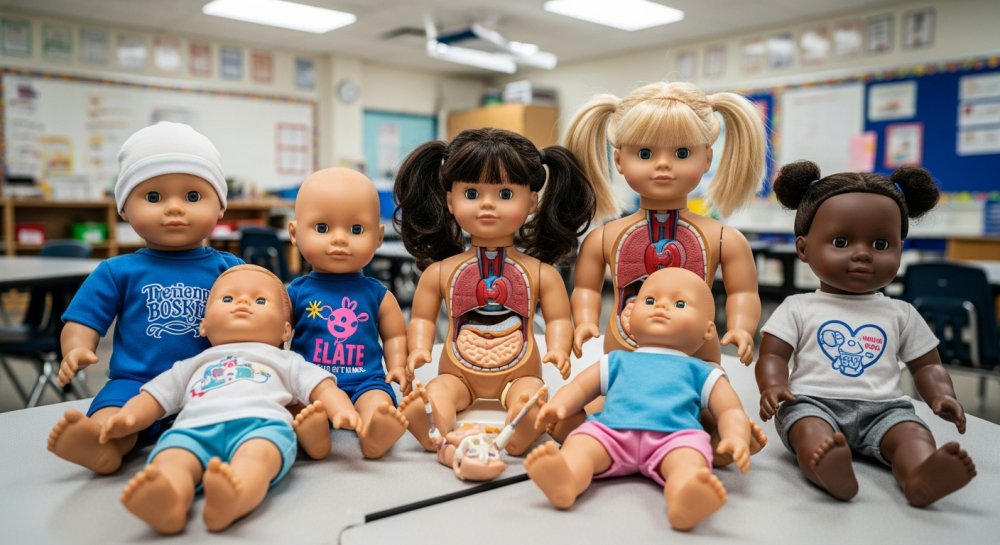
A troubling new educational initiative in Minnesota schools has raised serious concerns among parents and faith communities across the nation. Schools in the state are reportedly distributing dolls with removable and interchangeable genital parts to children as young as four years old.
The controversial “MyGender Dolls” are being introduced as part of what educators describe as gender identity curriculum. According to reports, the stated purpose is to help young children “realize all the different options that exist for who they can be — regardless of their body parts.”
This approach stands in direct contradiction to biblical teaching that God created humanity “male and female” (Genesis 1:27) and that our physical bodies are fearfully and wonderfully made by our Creator. The introduction of such materials to children barely out of toddlerhood raises profound questions about age-appropriateness and parental rights.
Christian parents and educators have long maintained that gender confusion being introduced to young children undermines both parental authority and God’s design for human sexuality. The malleable nature of these dolls appears designed to suggest that gender itself is equally changeable and subject to personal preference rather than divine creation.
Critics argue that exposing preschool and early elementary-aged children to such concepts during critical developmental years represents ideological indoctrination rather than education. At an age when children are learning basic facts about the world, introducing the idea that biological sex is inconsequential or changeable could create lasting confusion.
The rollout in Minnesota may serve as a test case for similar programs in other states. Parents concerned about these developments are encouraged to stay engaged with their local school boards and curricula, exercising their fundamental right to direct the upbringing and education of their children.
Many faith leaders have emphasized that while Christians are called to show compassion to all people, including those struggling with gender identity issues, that compassion does not require abandoning truth or exposing young children to confusing and harmful ideologies. The proper venue for addressing such sensitive topics remains the family and faith community, not government-run schools targeting preschoolers.
Let us know what you think, please share your thoughts in the comments below.


Faith Facts
- Christians in Pakistan endure ongoing threats of forced conversion under pressure from local authorities and extremist groups.
- Religious freedom remains a fundamental human right rooted in Scripture and protected by God-given conscience.
- Prayer and advocacy for persecuted believers strengthen the global body of Christ.
Forced conversion remains a serious and recurring problem throughout Pakistan, where minorities face daily pressure to abandon their faith.
Reports of coercion targeting young Christians continue to surface from multiple provinces, raising alarms among families and church leaders alike.
Parents and pastors describe threats, social isolation, and sometimes physical intimidation used to compel minors to recite Islamic declarations.
“We have seen children as young as fourteen taken from their homes and told they must convert or face consequences,”
“The authorities often look the other way when these cases involve influential families or local religious leaders,”
Christian communities across the country respond by strengthening prayer networks and urging international attention to these violations of conscience.
Believers remind one another that God sees every injustice and promises justice for the oppressed.
Advocates call on fellow Christians worldwide to intercede for protection and courage for those facing coercion.
Let us know what you think, please share your thoughts in the comments below.
Faith Facts
- The petition demands the resignation of Archbishop of Canterbury Sarah Mullally following her decision to honor a Muslim cleric who praised Osama bin Laden.
- The award was given on the anniversary of the September 11 attacks that killed nearly three thousand Americans.
- Thousands of Anglicans and concerned citizens have signed the petition calling for accountability and renewed commitment to traditional Christian values.
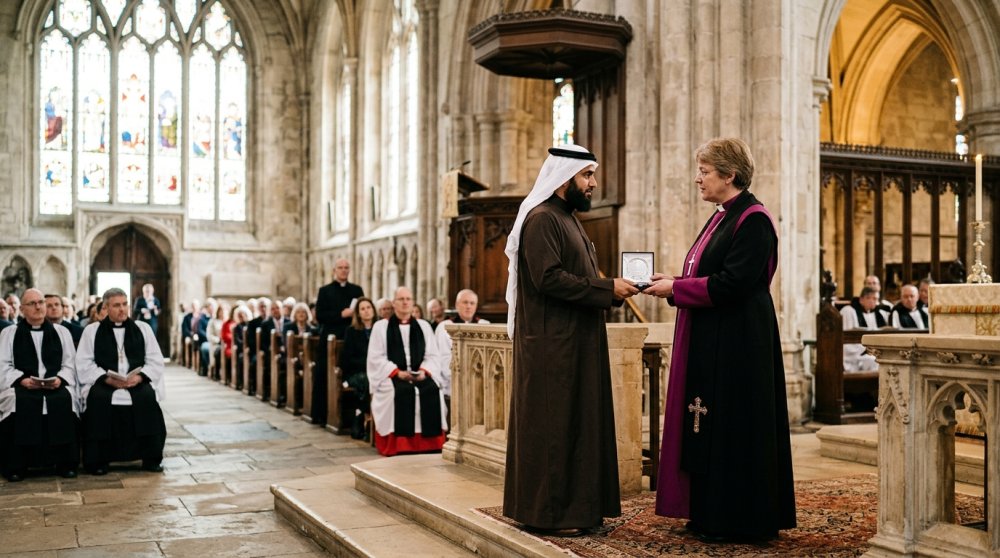
The Archbishop of Canterbury, Sarah Mullally, presented an award to a Muslim cleric who publicly praised Osama bin Laden on the anniversary of the September 11 terrorist attacks. The decision has sparked widespread outrage among Anglicans and conservative Christians across the United States and Britain.
A petition demanding her immediate resignation has quickly gained thousands of signatures. Supporters argue the award dishonors the memory of the victims and undermines the Church’s witness in a time of moral confusion.
“The timing and nature of this award represent a profound failure of leadership,” one petition organizer stated. “The Church must stand clearly against terrorism and for the values that built Western civilization.”
Many signers expressed concern that the gesture reflects a broader drift away from historic Christian teaching. They believe the Church should prioritize truth, national security, and the protection of innocent life rather than gestures of political correctness.
Critics also noted that honoring a cleric who praised the architect of the 9/11 attacks sends the wrong message to the faithful and to the watching world. The petition continues to gather support as more Anglicans and conservative Christians voice their objections.
Let us know what you think, please share your thoughts in the comments below.

Faith Facts
- Rev. Jim Rigby, longtime pastor of St. Andrew’s Presbyterian Church in Austin, Texas, has publicly questioned the historical reality of the Resurrection.
- Rigby has described the Lord’s Supper as akin to breastfeeding from a Gnostic goddess in resurfaced sermons.
- James Talarico, a Democratic candidate for U.S. Senate, has identified Rigby as his spiritual mentor.
Resurfaced sermons from Rev. Jim Rigby reveal teachings that challenge core Christian doctrines and frame the sacrament of Communion in unconventional terms.
The Presbyterian Church (USA) pastor of St. Andrew’s Presbyterian Church in Austin has described the Lord’s Supper as “breastfeeding from a Gnostic goddess.”
Texas U.S. Senate candidate James Talarico’s pastor (PCUSA) preaches during his Easter sermon that Jesus NEVER rose bodily from the dead and that he does NOT believe in a literal resurrection. pic.twitter.com/Z6ZH7hMJXg
— Protestia (@Protestia) September 21, 2026
In a shocking clip, James Talarico’s pastor interprets Communion through ancient divine-feminine and mother-goddess imagery, claiming that eating the divine represents breastfeeding:
“In the goddess religion, the blood that was being talked about was the blood of birth. The… pic.twitter.com/lrUcOuZAD2
— ???????????? ???????????? ???????? ???????????????????????????? ???????? (@creation247) September 18, 2026
Rev. Rigby has also questioned whether the Resurrection of Jesus Christ occurred as a historical event.
James Talarico, a Democratic candidate running for U.S. Senate, has publicly acknowledged Rigby as his spiritual mentor and pastor.
The comments, originally delivered in church settings, have drawn renewed attention as Talarico campaigns for higher office.
Critics argue that such teachings depart from historic Christian orthodoxy and the plain teaching of Scripture.
Supporters of traditional Christian doctrine maintain that the bodily Resurrection of Jesus is central to the faith and essential to the gospel message.
Let us know what you think, please share your thoughts in the comments below.


-

 Self-Reliance1 year ago
Trump’s Bold Move Uncovers Massive Social Security Fraud
-

 Faith1 year ago
New Clues Emerge in Noah’s Ark Mystery
-

 News2 years ago
Governor Walz’s Rhetoric Sparks National Controversy
-

 News1 year ago
Mel Gibson’s ‘The Passion of the Christ’ Sequel Title Announced
-

 Family2 years ago
Texas Lawmaker Targets Furries in Schools
-

 Freedom2 years ago
Maine Lawmaker Challenges Sports Fairness Controversy
-

 Family1 year ago
Canada’s Controversial Policy Sparks Ethical Debate
-
Faith10 months ago
Congress Hears Pleas for Nigerian Christians