Connect with us

Faith

Minnesota Churches Respond to Immigration Crisis

Published

on

Minnesota Churches Respond to Immigration Crisis
Faith Facts

  • Federal immigration enforcement in Minnesota has deeply impacted faith communities and immigrant neighborhoods.
  • Churches in the Twin Cities are uniting in prayer and fasting as fear and uncertainty grow among members.
  • Leaders are urging Christians to trust God, stay calm, and show compassion, while encouraging lawfulness and civic responsibility.

The recent surge of federal immigration enforcement has unsettled families and shifted the daily rhythms of many neighborhoods in Minnesota.

Local Christian leaders report that fear has led some congregation members to stay home and avoid community gatherings.

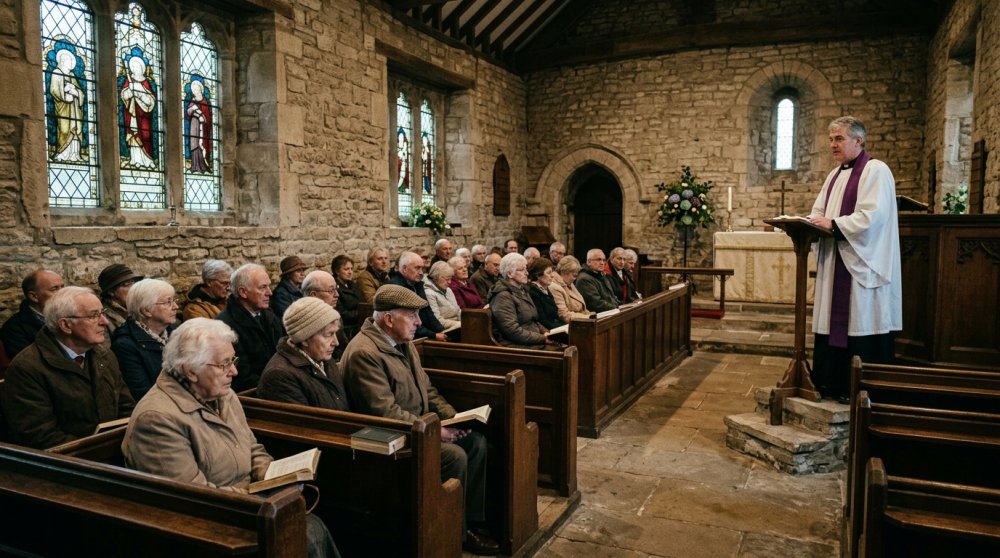
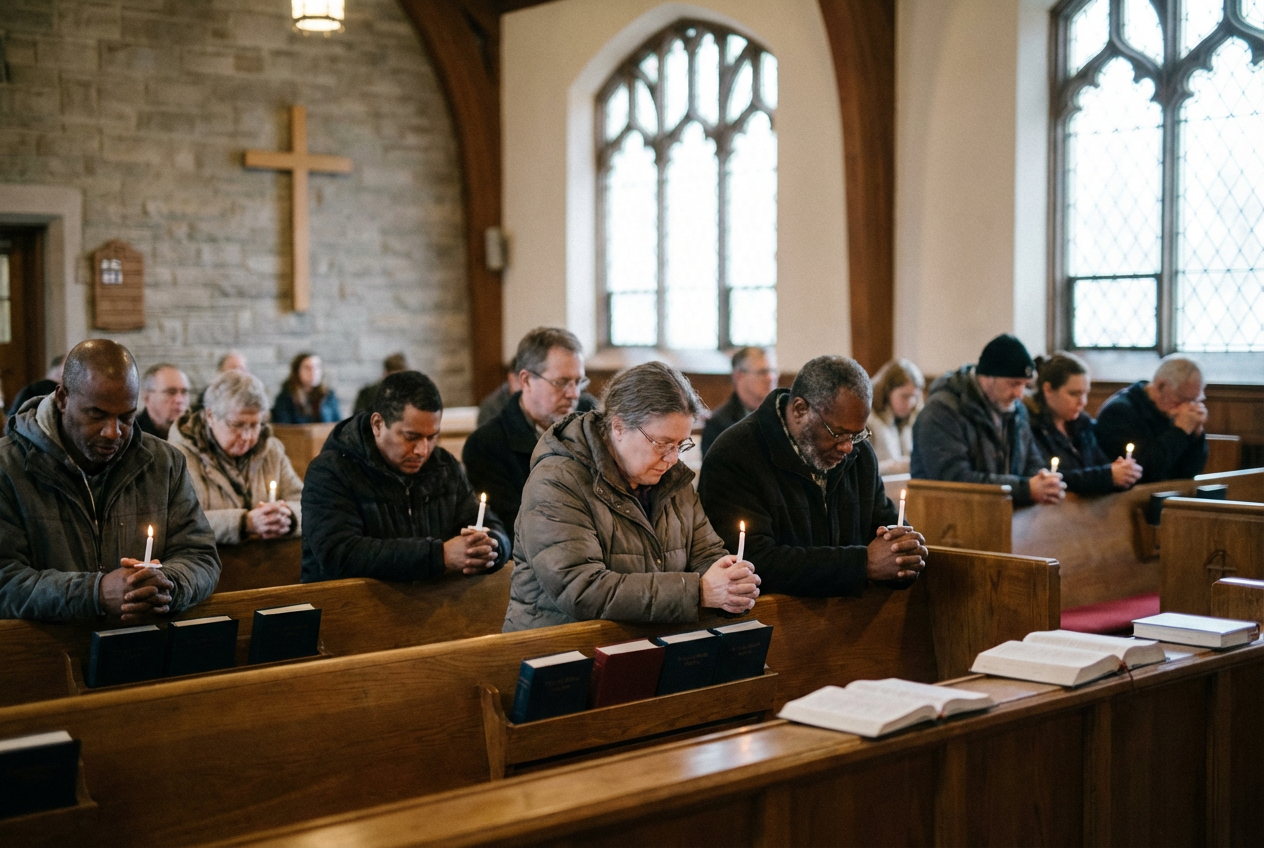
Churches of Christ across the Twin Cities have responded by dedicating time to prayer and worship, seeking divine peace and guidance for all those affected.

Congregational leaders emphasize the importance of faith over fear and the need to uphold Biblical foundations during times of crisis.

Ron Delamarter, elder at the Richfield Church of Christ, prayed:

“There are so many troubles that are on our minds this morning.”

“We look to you for guidance, knowing that your will will be done in this circumstance, Lord.”

Within miles of the tragic incidents, ministers encourage church members to keep their trust in God, even amid challenges.

Outreach efforts like weekly food distributions continue, though participation has dropped as people weigh safety concerns.

John Austion, elder from the Minneapolis Central Church of Christ, shared:

“ICE has been to my job twice, harassing my co-workers.”

“But I just want you to know that God has got us.”

Pastors are calling believers to prayer, fasting, and support for their neighbors, while teaching the importance of respecting the law.

Ministry leaders urge all citizens to pursue legal compliance and courageous faith, standing for justice while supporting one another in Christian love.

Now is the time for Christians to unite in prayer, compassion, and steadfast faith.

They are called to shine the light of Christ in their communities as they face uncertain days ahead.

Source

Continue Reading
Click to comment

Leave a Reply

Your email address will not be published. Required fields are marked *

Faith

Abducted Teen in Pakistan Sparks International Alarm

Published

on

Faith Facts

  • A 13-year-old Christian girl in Pakistan was allegedly abducted, forcibly converted to Islam, and married to an older Muslim man.
  • Her Christian family fears she may be trafficked and continues fighting for her recovery.
  • The case highlights ongoing religious persecution and child marriage concerns facing Pakistan’s Christian minority.

A Christian family in Pakistan is desperately fighting to recover a 13-year-old girl who was allegedly abducted from her home, forcibly converted to Islam, and married to an older Muslim man. The family now fears their young daughter could be trafficked as they navigate a legal system that has offered little protection.

The case has drawn attention to the ongoing plight of religious minorities in Pakistan, particularly Christians, who face systematic persecution and violence. Young Christian girls are especially vulnerable to abduction and forced conversion, with reports indicating hundreds of such cases occur each year in the predominantly Muslim nation.

According to family members, the girl was taken from her home against her will. Despite their pleas to authorities, the family has struggled to secure her return. Local advocates familiar with such cases warn that without swift intervention, the girl could be moved across provincial or even international borders as part of human trafficking networks.

Pakistan’s Christian community comprises roughly 2% of the nation’s population and faces significant discrimination. Reports from human rights organizations consistently document forced conversions, abductions, and sham marriages involving underage Christian and Hindu girls. Many of these cases involve fraudulent marriage certificates and conversion documents that are used to provide legal cover for what are effectively kidnappings.

The legal system often fails to protect these vulnerable children. Courts have been known to validate forced marriages even when the girls are clearly underage, citing conversion documents as evidence of consent. Family members are frequently threatened or intimidated when they attempt to pursue justice.

Religious freedom advocates are calling for international pressure on Pakistan to address this crisis. They emphasize that the Pakistani government must enforce existing laws against child marriage and human trafficking, and protect religious minorities from violence and coercion.

The plight of this 13-year-old girl represents a much larger pattern of abuse that threatens the safety and dignity of countless Christian families in Pakistan. As her relatives continue their legal fight, they are also pleading for prayers and support from the global Christian community.

This case serves as a stark reminder of the persecution facing believers around the world and the urgent need for advocacy on behalf of the vulnerable. The international community must not turn a blind eye to these injustices.

Let us know what you think, please share your thoughts in the comments below.

Continue Reading

Faith

Forgotten Muslim Convert’s Defense of Christianity Resurfaces After 170 Years

Published

on

Faith Facts

  • A 19th-century South Asian Muslim convert to Christianity authored a powerful defense of the faith that remains relevant today
  • The 1854 ‘Great Debate’ in Agra, India brought together Christian and Muslim scholars in formal theological discussion
  • This newly examined work offers historical insights and practical tools for modern Christian-Muslim dialogue

An academic work has brought renewed attention to a remarkable piece of Christian apologetics from 1854, when a Muslim convert to Christianity participated in the famous ‘Great Debate’ in Agra, India. The book examines both the original debate and subsequent writings by this courageous convert who defended his newfound faith in Christ.

The Great Debate represented a significant moment in interfaith dialogue, as Christian and Muslim scholars gathered for formal theological discussion in 19th-century South Asia. What makes this historical account particularly compelling is the perspective of someone who had intimate knowledge of both faiths.

The convert’s defense of Christianity drew on his deep understanding of Islamic theology, allowing him to address Muslim objections to Christian doctrine with unusual insight and authority. His writings continued beyond the original debate, as he felt compelled to provide a complete response to the questions raised.

For contemporary American Christians, this historical account offers more than academic interest. It provides a window into how believers in hostile environments have defended the truth of the Gospel with courage and intellectual rigor. The convert’s willingness to examine difficult theological questions demonstrates the strength of Christian truth claims.

The book serves as a resource for modern believers engaged in conversations with Muslim neighbors, colleagues, and friends. While the cultural context has changed significantly since 1854, the fundamental theological questions remain remarkably consistent. The convert’s arguments address core issues that still arise in Christian-Muslim dialogue today.

This historical study also highlights the universal nature of the Gospel message. Christianity transcends cultural and religious boundaries, as evidenced by this South Asian scholar who found truth in Christ despite the personal cost of conversion. His testimony reinforces the biblical truth that salvation is available to all who believe.

The academic nature of the work ensures careful documentation and scholarly rigor, making it a valuable addition to both historical and theological libraries. It demonstrates that Christianity can withstand intellectual scrutiny and that faith and reason work together rather than in opposition.

For American Christians seeking to understand how to engage respectfully yet firmly with other worldviews, this 19th-century example provides timeless wisdom. The convert’s approach combined doctrinal clarity with personal conviction, never compromising biblical truth while engaging seriously with alternative perspectives.

The resurrection of this historical debate comes at a time when Christian-Muslim relations remain a significant concern for many Americans. Rather than avoiding difficult conversations, this work encourages believers to engage thoughtfully, armed with both knowledge and faith.

Let us know what you think, please share your thoughts in the comments below.

Continue Reading

Faith

Asian Seminary Leaders Push Radical Shift in Training Tomorrow’s Pastors

Published

on

Faith Facts

  • A peer-reviewed journal from the Asia Theological Association has dedicated an entire volume to holistic Christian leader formation across Asia
  • Seminary leaders across the continent are calling for an integrative approach that develops students spiritually, relationally, and personally—not just academically
  • The emphasis reflects growing concern that traditional academic-only training fails to prepare pastors for the spiritual battles and relational demands of ministry

Theological institutions across Asia are sounding the alarm: academic training alone is no longer enough to prepare Christian leaders for the challenges of modern ministry. A new volume from a peer-reviewed journal published by the Asia Theological Association is shining a spotlight on efforts to transform how seminaries develop the next generation of pastors and missionaries.

The special journal volume focuses exclusively on what educators are calling an “integrative approach” to seminary education. Rather than prioritizing intellectual knowledge alone, schools are increasingly recognizing the need to form students who are spiritually mature, emotionally healthy, and relationally equipped for the rigors of Christian leadership.

The shift represents a recognition that many pastors and ministry leaders have been sent into the field with theological degrees but without the spiritual formation, character development, and relational skills needed to shepherd congregations effectively. Leaders in the Asia Theological Association are now calling for a comprehensive reimagining of how seminaries approach their mission.

For Christian families and churches, the stakes couldn’t be higher. The quality of pastoral leadership directly impacts the spiritual health of congregations, the strength of Christian witness in increasingly secular societies, and the ability of the Church to withstand cultural and political pressure.

The integrative approach being championed emphasizes whole-person development. This means seminary students aren’t just learning biblical languages and systematic theology in the classroom—they’re also receiving spiritual direction, participating in accountability relationships, and developing the emotional intelligence needed for pastoral care and church leadership.

This model reflects a return to older traditions of Christian education that understood ministry training as discipleship, not just degree completion. It echoes the approach of Jesus Himself, who spent three years living alongside His disciples, forming them through relationship and shared life as much as through teaching.

The focus on Asia is particularly significant given the explosive growth of Christianity across the continent and the unique challenges facing believers in nations where religious freedom is restricted or Christianity remains a minority faith. Pastors and missionaries in these contexts need not just academic credentials but deep spiritual roots and resilient character.

As Western seminaries continue to face criticism for producing graduates who are intellectually trained but spiritually unprepared, the conversation happening in Asia may offer important insights. The question being raised is fundamental: What does it really mean to prepare someone for Christian ministry in the 21st century?

The emphasis on holistic formation also addresses concerns about pastoral burnout, moral failure, and the personal struggles that have derailed too many ministry leaders. By investing in the whole person during seminary training, institutions hope to send out leaders who are better equipped to persevere through trials and remain faithful over the long haul.

For American Christians, the conversation is relevant beyond Asia’s borders. Many church leaders and Christian families here have witnessed firsthand the consequences when pastors lack spiritual maturity or relational health, regardless of their academic achievements. The call for integrative education speaks to a universal need within Christian leadership development.

Let us know what you think, please share your thoughts in the comments below.

Continue Reading

Trending