
Faith
Minnesota Church Shooting: Community Prays for Sophia

Faith Facts
- Sophia Forchas, a 12-year-old, remains hospitalized in critical condition after being shot during prayer at Annunciation Catholic Church in Minneapolis.
- The attack has already claimed the lives of two other students and left several injured; only Sophia remains in the hospital.
- Her father has called for continued prayer, expressing gratitude for the medical team and faith in God’s providence.
As believers, we mourn the violence suffered by children gathered in prayer and cling to hope through fervent faith. This tragedy reminds us to cover our families and communities in prayer, seeking God’s healing and comfort in times of deepest sorrow.
Neurologists describe Sophia’s survival as miraculous yet uncertain, but faith tells us that with God, all things are possible. Let us stand united, asking the Lord for her recovery and for peace to fill the hearts of all affected families.
“Continue to pray for Sophia, pray for peace. Pray with vigor. We need you to keep the fervor with which you are praying and when you pray, move your feet.”
Christians everywhere are encouraged to lift up the Forchas family, trust in God’s restorative power, and shine Christ’s love into a hurting world.



Faith Facts
- Christian public theology emphasizes serving all people as image-bearers of God, not merely as potential converts
- Authentic incarnational faith requires believers to actively engage in society, bringing Christian values to everyday life
- Biblical compassion extends to every person based on their inherent dignity as God’s creation, not contingent on their spiritual status
For Christians committed to living out their faith authentically, a crucial question emerges: Are we called to serve others only as a means to evangelism, or does our faith demand something deeper? The answer reveals the heart of what it means to bring incarnational Christianity into the public square.
Public theology rooted in biblical truth makes a compelling case for the latter approach. Every person we encounter bears the imago Dei—the image of God.
This foundational truth transforms how believers engage with their communities, workplaces, and civic institutions. Our calling extends beyond the church building into every sphere of influence where God has placed us.
When Christians embrace this incarnational approach, they don’t compartmentalize their faith into “spiritual” and “secular” categories. Instead, they recognize that Christ’s lordship extends over all creation, and that our service to others reflects God’s own character of love and justice.
This perspective doesn’t diminish the Great Commission or the urgency of sharing the Gospel. Rather, it enriches our witness by demonstrating that Christian compassion isn’t transactional.
We serve the poor, defend the vulnerable, and work for justice not merely as evangelistic strategy, but because God’s image in every person demands our respect and care. Our actions become a testimony to the transforming power of Christ working through His people.
The implications for American Christians are profound. In our polarized culture, incarnational faith calls us to engage political, economic, and social issues with both conviction and compassion—holding firmly to biblical truth while extending Christ’s love to all.
This approach challenges both the retreat into private spirituality and the reduction of faith to political activism. Instead, it calls believers to be salt and light, bringing kingdom values into every corner of society while maintaining the primacy of the Gospel message.
Let us know what you think, please share your thoughts in the comments below.
Faith Facts
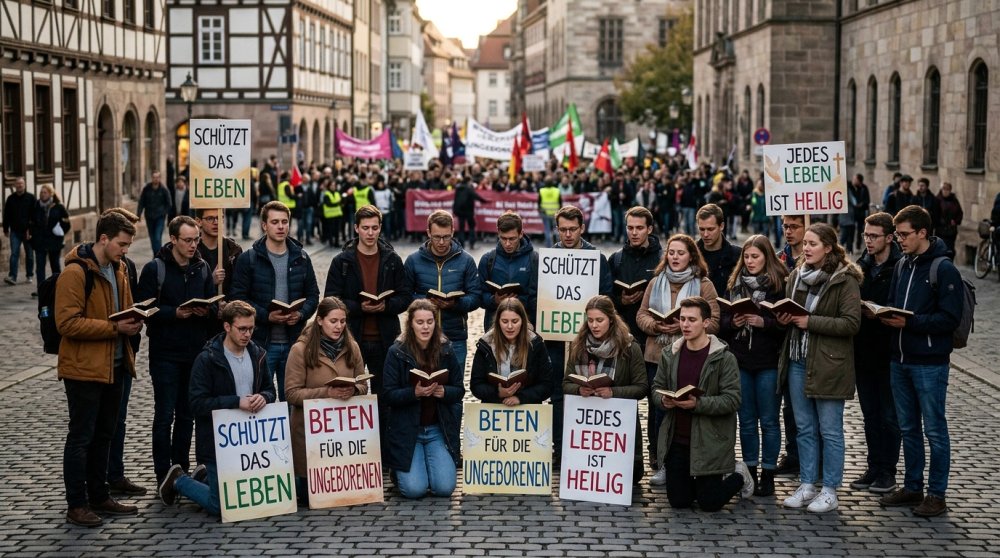
- About 200 counter-protesters attempted to attack 20 young Christians leaving a peaceful pro-life prayer event in Germany on August 15
- The Christians were participating in a prayer gathering opposing abortion when the attack was attempted
- The incident highlights growing hostility toward Christian values and religious freedom in Western Europe
A troubling incident in Germany has exposed the increasing violence and intolerance facing Christians who stand for the sanctity of life. About 200 counter-protesters attempted to attack 20 young Christians as they peacefully departed from a prayer gathering against abortion on August 15, according to a rights group report.
The young believers had gathered to pray and peacefully demonstrate their opposition to abortion, exercising their fundamental rights to religious expression and peaceful assembly. Their simple act of faith-based witness, however, was met with an overwhelming show of hostility from those who oppose the Christian worldview on the protection of unborn life.
The attempted attack represents a stark 10-to-1 numerical advantage by those seeking to silence Christian voices through intimidation and violence. This dramatic imbalance underscores the courage required for believers to stand publicly for biblical values in increasingly hostile secular environments across Europe.
The incident in Germany is part of a broader pattern of aggression against Christians and pro-life advocates throughout Western nations. As traditional Christian values come under mounting pressure from secular progressive movements, believers who maintain biblical convictions about the sanctity of life from conception often face social ostracism, legal challenges, and now physical threats.
The targeting of these young Christians sends a chilling message about religious freedom in modern Europe. What was once considered the heartland of Christian civilization now increasingly treats faithful believers as outsiders whose values are unwelcome in the public square.
For American Christians, this incident serves as a sobering reminder of the importance of protecting First Amendment freedoms at home. The ability to gather peacefully, pray publicly, and advocate for biblical values without fear of violent reprisal represents a precious heritage that must be vigilantly defended.
The courage demonstrated by these 20 young German Christians stands as an inspiration to believers worldwide. Despite being vastly outnumbered and facing a hostile crowd, they chose to stand for life and exercise their God-given conscience in the public arena.
As persecution of Christians intensifies globally, including in Western nations once considered safe havens for religious liberty, the Church must remain steadfast in proclaiming truth with both courage and compassion. The gospel message affirms the infinite value of every human life, including the unborn, and no amount of societal pressure can change this eternal truth.
Let us know what you think, please share your thoughts in the comments below.
Faith Facts
- Modern worship leaders are increasingly partnering with songwriters who do not profess Christian faith
- The personal beliefs and character of those writing congregational prayers matter deeply, as these songs shape the spiritual formation of millions
- Church leaders must carefully discern whether songs written by non-believers align with biblical truth and honor God’s holiness
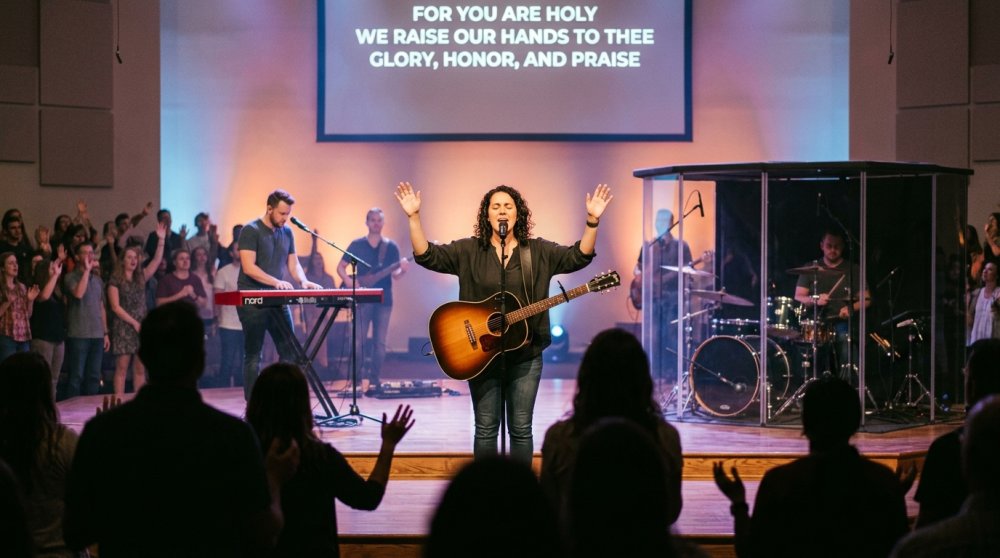
A crucial conversation is emerging in Christian worship communities across America: Should it matter who writes the songs we sing in our churches? As collaboration between worship leaders and secular artists becomes more common, believers are asking whether the spiritual condition of a songwriter affects the integrity of congregational worship.
Kenny Klinglesmith raises an essential question that strikes at the heart of authentic Christian worship. When we lift our voices together on Sunday mornings, we are doing far more than singing—we are praying, declaring truth, and forming our spiritual understanding of who God is.
The character and beliefs of those crafting these corporate prayers cannot be dismissed as irrelevant. Scripture is clear that truth matters, and the source of that truth matters deeply.
Throughout Church history, hymn writers and worship leaders have been theologians and devoted followers of Christ. Their personal walk with the Lord informed every word they penned. Charles Wesley, Fanny Crosby, and countless others wrote from lives saturated in Scripture and personal communion with God.
Today’s landscape looks markedly different. The commercial worship music industry has expanded dramatically, bringing with it writers and producers whose primary expertise may be musical rather than theological or spiritual.
The concern isn’t about musical quality or creative excellence. Non-Christian artists can certainly craft beautiful melodies and compelling lyrics. The question is whether songs intended to lead God’s people in worship should come from hearts that know and love Him personally.
When we sing, we teach. Children absorb theology through the songs they hear week after week. New believers form their understanding of God’s character through worship lyrics. Mature Christians reinforce their faith or, potentially, absorb subtle distortions.
A songwriter’s worldview inevitably shapes their work. Their understanding of sin, grace, redemption, and the nature of God flows from their relationship—or lack thereof—with Christ. Even well-intentioned lyrics from unbelieving writers may lack the depth of revelation that comes only through the Holy Spirit.
This doesn’t mean every worship song must come with a spiritual resume of its writer. But church leaders bear responsibility to carefully evaluate not just what is being sung, but the theological foundation from which it springs.
Scripture calls us to test everything and hold fast to what is good. This discernment applies to worship music just as it does to preaching and teaching. The songs we choose shape our congregations’ faith more profoundly than we often recognize.
Some argue that God can use anyone to communicate truth, pointing to biblical examples like Balaam or even Pharaoh. This is certainly true—God’s sovereignty knows no bounds. But the question isn’t whether God can use non-Christians; it’s whether we should actively seek out and elevate their words as the prayers of God’s people.
The commercial pressures facing modern worship are real. Record labels, streaming metrics, and concert tours have transformed worship music into big business. These market forces can prioritize what sells over what sanctifies.
Church leaders must resist the temptation to simply adopt whatever is popular or trending. Our worship should be formed by Scripture and led by the Spirit, not driven by industry charts or social media buzz.
This conversation requires wisdom and grace. Many worship leaders genuinely desire to serve their congregations well while also engaging with the broader creative community. The path forward isn’t rigid legalism but thoughtful discernment.
Perhaps the answer lies in returning to some fundamental questions: Does this song exalt Christ? Is it biblically sound? Does it lead people into genuine worship of the one true God? And yes—does the writer demonstrate a life and faith that honors the message they’ve penned?
Our worship matters to God. He desires worshipers who worship in spirit and truth. As we consider who writes our songs, we’re ultimately asking what kind of worship we want to offer our Holy God.
The stakes are high. We’re not just choosing entertainment for Sunday mornings; we’re selecting the words that will echo in hearts and minds throughout the week, shaping how believers understand and relate to their Creator.
American churches have the freedom to worship openly and choose their own expressions of praise. With that freedom comes responsibility—to ensure that what we sing honors God fully and forms His people faithfully.
Let us know what you think, please share your thoughts in the comments below.


-

 Self-Reliance1 year ago
Trump’s Bold Move Uncovers Massive Social Security Fraud
-

 Faith1 year ago
New Clues Emerge in Noah’s Ark Mystery
-

 News1 year ago
Governor Walz’s Rhetoric Sparks National Controversy
-

 News1 year ago
Mel Gibson’s ‘The Passion of the Christ’ Sequel Title Announced
-

 Family1 year ago
Texas Lawmaker Targets Furries in Schools
-

 Freedom1 year ago
Maine Lawmaker Challenges Sports Fairness Controversy
-

 Family1 year ago
Canada’s Controversial Policy Sparks Ethical Debate
-
Faith9 months ago
Congress Hears Pleas for Nigerian Christians