Connect with us

Faith

Major Streaming Platform Brings Acclaimed Biblical Theater to American Homes

Published

on

Faith Facts

  • Wonder Project partners with Sight & Sound to stream acclaimed biblical stage productions starting July 30
  • Sight & Sound’s theatrical productions have drawn millions of visitors to their Pennsylvania and Missouri locations
  • The partnership expands access to high-quality faith-based entertainment for Christian families nationwide

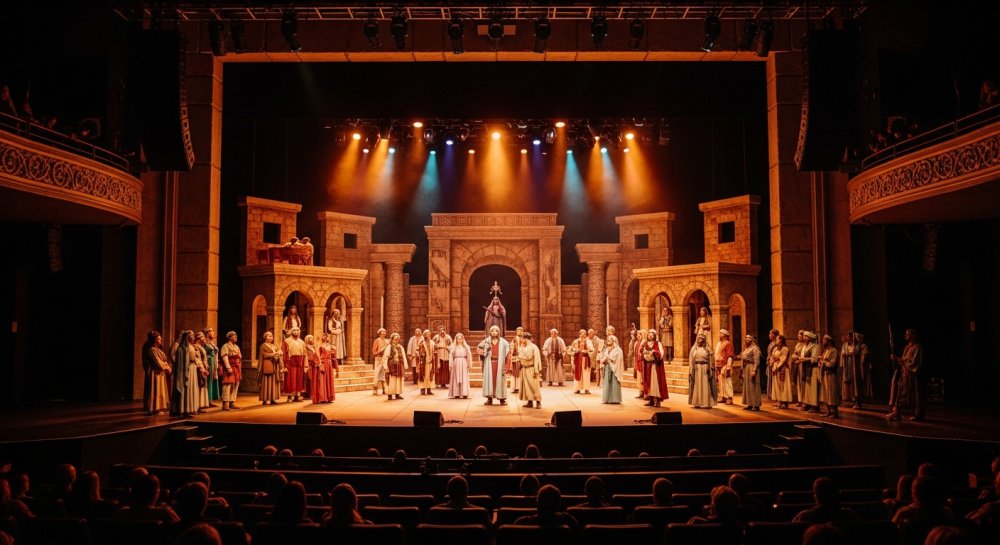
A significant expansion of faith-based streaming content is underway as Wonder Project announces a groundbreaking partnership with Sight & Sound, one of America’s most celebrated Christian theater companies. The collaboration will bring Sight & Sound’s renowned biblical stage productions directly into homes across the nation.

Beginning July 30, Wonder Project will launch a season-long rollout of these acclaimed theatrical experiences. The partnership marks a pivotal moment for Christian families seeking quality, scripturally-grounded entertainment options in an increasingly secular streaming landscape.

Sight & Sound has built a reputation over decades for creating spectacular, faith-affirming productions that bring biblical stories to life with extraordinary staging, music, and dramatic impact. Their theaters in Lancaster, Pennsylvania, and Branson, Missouri, have welcomed millions of visitors who have experienced these powerful presentations of Scripture.

The move to streaming represents a natural evolution for reaching believers who cannot travel to the physical theater locations but hunger for content that strengthens rather than undermines their Christian values. In an era when mainstream entertainment often conflicts with traditional American values, this partnership offers families a refreshing alternative.

Wonder Project’s commitment to expanding its faith-based library demonstrates the growing demand for Christian content in the digital age. As more Americans seek entertainment that aligns with their beliefs, platforms willing to prioritize these values are finding enthusiastic audiences.

The timing of this partnership couldn’t be more significant for Christian families looking to fill their homes with edifying content during summer months. Rather than defaulting to secular programming that may contradict biblical teachings, parents now have access to professionally produced theatrical experiences that reinforce scriptural truth.

This collaboration between Wonder Project and Sight & Sound signals a broader trend of faith-based organizations leveraging modern technology to spread the Gospel and strengthen Christian culture. It’s a reminder that believers don’t have to abandon quality or production value to maintain their commitment to biblical principles.

Let us know what you think, please share your thoughts in the comments below.

Continue Reading
Click to comment

Leave a Reply

Your email address will not be published. Required fields are marked *

Faith

Vice President Vance Defends Sacred Foundation Under Fire

Published

on

Faith Facts

  • Vice President JD Vance defended Texas law requiring Ten Commandments displays in public schools during Joe Rogan podcast appearance
  • Vance characterized the biblical text as a fundamental ‘cultural element of Western civilization’ rather than purely religious doctrine
  • The exchange highlights ongoing national debate over the proper role of faith expression in public education

Vice President JD Vance mounted a spirited defense of a Texas law requiring the Ten Commandments to be displayed in public school classrooms during a recent appearance on Joe Rogan’s podcast, pushing back against the host’s concerns about religious indoctrination.

The controversial Texas legislation has sparked intense debate about the relationship between faith and public education. Rogan, a comedian and podcast host whose show reaches millions of listeners, voiced skepticism about government-mandated religious displays in taxpayer-funded schools.

“I think it’s a cultural element of Western civilization,” Vance responded, framing the commandments as foundational to American society rather than sectarian religious content.

The vice president’s remarks underscore a broader conservative movement to restore traditional religious expression in the public square. For decades, progressive activists have sought to scrub faith from public institutions, arguing that any acknowledgment of America’s Judeo-Christian heritage violates the separation of church and state.

Conservative Christians counter that the erasure of biblical principles from schools has contributed to moral decline among young people. They argue that the Ten Commandments represent universal ethical principles that transcend any particular denomination.

The Texas law reflects a growing willingness among red-state legislatures to challenge decades of court precedent that have restricted religious expression in government settings. Several other states have considered similar legislation, signaling that the battle over faith in public life is far from settled.

Legal challenges to the Texas measure are virtually certain, with secularist organizations already preparing litigation. Previous attempts to display the Ten Commandments in public schools have faced mixed results in federal courts, with outcomes often depending on how the displays are framed and whether they appear alongside other historical documents.

Vance’s willingness to engage the issue on a platform like Rogan’s podcast demonstrates the administration’s commitment to defending religious liberty. Rather than retreating from controversial cultural questions, the vice president made a case for the commandments as essential to understanding Western legal and moral traditions.

The exchange also highlights the complex political coalitions shaping contemporary debates. Rogan, who has described himself as politically independent, represents a segment of Americans uncomfortable with government-imposed religious displays even if they personally respect faith traditions.

For many Christians, the Ten Commandments represent more than historical artifacts—they are divine instruction for righteous living. The prohibition against murder, theft, and bearing false witness forms the basis for much of Western law, while commandments about honoring parents and avoiding adultery reinforce family structures that have sustained civilizations for millennia.

The debate over classroom displays ultimately reflects deeper questions about American identity. Is the United States a nation rooted in biblical principles, or a purely secular democracy where faith must be privatized? How Americans answer that question will shape education policy, legal standards, and cultural norms for generations to come.

Let us know what you think, please share your thoughts in the comments below.
Continue Reading

Faith

Texas Judge Delivers Victory for Megachurch Leadership in Bitter Membership Dispute

Published

on

Faith Facts

  • A Texas judge ruled in favor of Second Baptist Church of Houston in a lawsuit challenging changes to church bylaws governing voting and accountability
  • The dispute centered on leadership authority versus congregational governance in one of America’s largest churches
  • The ruling reinforces the principle that courts generally defer to church governance structures in internal disputes

A Harris County judge has ruled in favor of Second Baptist Church of Houston, delivering a significant legal victory to church leadership in a contentious lawsuit filed by members who challenged recent changes to the church’s bylaws. The dispute, which has divided one of Texas’s most prominent congregations, revolved around fundamental questions of church governance, accountability, and the authority to modify institutional structures.

The members who filed suit claimed that church leadership improperly altered bylaws related to voting procedures and leadership accountability without proper congregational input. They argued these changes consolidated power in the hands of church leadership at the expense of traditional congregational governance.

Second Baptist Church, one of the largest congregations in the Houston area with multiple campuses and thousands of members, maintained that all procedural requirements were followed and that the changes fell within the scope of leadership’s authority under existing church governance documents. The church’s legal team argued that the modifications were necessary for effective administration of a large, multi-site ministry.

The judge’s ruling largely affirmed the church’s position, finding that leadership acted within its authority when implementing the bylaw changes. The decision reflects a longstanding legal principle that civil courts typically avoid intervening in internal church disputes, particularly those involving doctrine, governance, and ecclesiastical matters, unless clear violations of civil law or property rights are at stake.

Church governance disputes have become increasingly common in American Christianity as congregations grow larger and more complex. The tension between traditional congregational authority and streamlined administrative structures poses ongoing challenges for many churches navigating modern organizational demands while maintaining biblical principles of accountability and transparency.

Legal experts note that courts generally defer to churches’ own governance documents and internal decision-making processes, recognizing the First Amendment’s protection of religious autonomy. This deference becomes particularly important in disputes over procedural matters and institutional authority, where judges are reluctant to substitute their judgment for that of religious bodies.

For Second Baptist Church, the ruling provides legal vindication and allows leadership to move forward with the governance structure they believe best serves the church’s mission. For the dissenting members, the decision represents a setback in their effort to maintain what they view as essential checks and balances within the congregation.

The case underscores the importance of clear, well-drafted church bylaws and governance documents that anticipate potential conflicts and establish transparent procedures for institutional change. Churches that fail to maintain proper documentation or follow their own established procedures risk protracted legal battles that damage congregational unity and drain resources from ministry work.

Many church governance experts recommend that large congregations establish robust accountability mechanisms while preserving the leadership authority necessary for effective administration. Balancing these competing priorities remains an ongoing challenge for churches seeking to remain faithful to biblical principles while managing complex modern organizations.

Let us know what you think, please share your thoughts in the comments below.
Continue Reading

Faith

Pakistan Court Sentences Muslim Extremist for Attacks on Christians

Published

on

Faith Facts

  • A Pakistani court sentenced one Muslim man to 10 years in prison for his role in the August 2023 attacks on churches in Jaranwala
  • Thirteen other defendants were acquitted due to flawed police investigations into the violent anti-Christian attacks
  • The Jaranwala attacks saw mobs destroy dozens of churches and Christian homes following blasphemy accusations

A court in Pakistan has delivered its first conviction related to the devastating August 2023 attacks against Christians in Jaranwala, sentencing one Muslim man to a decade behind bars. The ruling marks a rare instance of accountability in a nation where violence against religious minorities often goes unpunished.

However, the court acquitted 13 other defendants charged in connection with the violent mob attacks that terrorized the Christian community. The acquittals stemmed from what sources described as deeply flawed police investigations, raising concerns about Pakistan’s commitment to protecting its religious minorities.

The August 2023 attacks in Jaranwala shook Pakistan’s Christian community when Muslim mobs rampaged through Christian neighborhoods. Fueled by blasphemy allegations, the attackers set fire to churches and homes, leaving families homeless and congregations without places of worship. The violence underscored the dangerous consequences of Pakistan’s blasphemy laws, which are frequently weaponized against Christians and other religious minorities.

The single conviction, while a step toward justice, highlights the systemic challenges Christians face in Pakistan. With only one perpetrator held accountable while others walk free, many believers question whether the Pakistani justice system can adequately protect them from religious persecution.

For American Christians who cherish religious freedom as a foundational right, the situation in Pakistan serves as a sobering reminder of the persecution believers endure worldwide. The constitutional protections Americans enjoy stand in stark contrast to the daily threats faced by Pakistani Christians simply for practicing their faith.

The inadequate police work that led to the mass acquittals raises troubling questions about whether authorities deliberately undermined the cases or simply lack the resources and will to defend religious minorities. Either scenario points to a justice system that fails to deliver equal protection under the law—a principle American Christians hold dear.

As persecution of Christians intensifies globally, the Jaranwala attacks and their aftermath demonstrate the urgent need for international pressure on countries that fail to protect religious minorities. Faith communities in the United States can play a vital role through prayer, advocacy, and support for persecuted believers abroad.

Let us know what you think, please share your thoughts in the comments below.
Continue Reading

Trending