
Faith
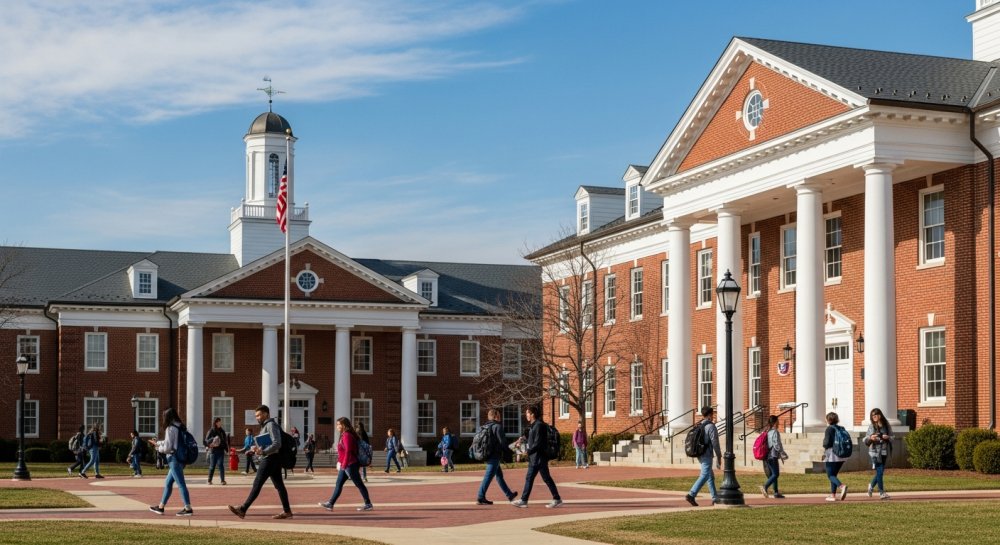
Liberty University Student Challenges Decades-Old Restriction on Religious Studies Funding

Faith Facts
- Attorneys representing a Liberty University student are petitioning the Supreme Court to overturn a decades-old precedent that bars religious studies majors from state-funded tuition assistance programs.
- Recent Supreme Court decisions have expanded protections for religious education, allowing taxpayer funds to support religious schools in certain contexts.
- The case challenges whether discriminating against students based on their choice to study theology violates constitutional protections for religious freedom.
A legal battle is brewing that could reshape the landscape of religious freedom in higher education. Lawyers representing a Liberty University student have filed a petition with the United States Supreme Court, challenging a long-standing ruling that prevents students majoring in religious studies from accessing state-funded tuition assistance programs.
The case strikes at the heart of whether government programs can discriminate against students based on their educational focus on faith and theology. For decades, a Supreme Court precedent has allowed states to exclude religious studies majors from otherwise generally available financial aid programs, treating these students differently than their peers studying secular subjects.
Recent Supreme Court decisions have signaled a shift in how the judiciary views religious liberty and education funding. Multiple rulings in recent years have expanded protections for religious schools and institutions, establishing that excluding religious organizations from generally available public benefits may itself constitute discrimination.
The Liberty University case builds on this momentum, arguing that the older precedent conflicts with the Court’s more recent approach to religious freedom. These newer decisions have affirmed that when states create public benefit programs, they cannot exclude religious institutions or individuals simply because of their religious character or mission.
For Christian students pursuing their calling to study Scripture, theology, and ministry, the current restrictions create an unfair burden. While their classmates studying business, science, or liberal arts can access state tuition assistance, those preparing for vocational ministry face denial of the same support solely because of their chosen field of study.
The broader implications extend beyond one student or one university. Across America, students at Christian colleges and universities face similar barriers when states refuse to extend tuition assistance programs to those studying religious subjects, even while funding nearly every other academic discipline.
This legal challenge represents an important test of whether our nation will truly protect religious freedom or whether government can continue to treat religious calling as second-class. The outcome could determine whether states must apply their educational assistance programs neutrally, without penalizing students who choose to study faith.
As the Supreme Court considers whether to take up this petition, the case highlights ongoing tensions between older precedents and the Court’s recent commitment to robust religious liberty protections. The justices will need to decide whether the time has come to harmonize decades of conflicting jurisprudence.
For families who value faith-based education and students called to ministry, the stakes are significant. Equal treatment under the law should mean that government programs don’t discriminate against religious vocations, and that students pursuing theological education receive the same opportunities as everyone else.
Let us know what you think, please share your thoughts in the comments below.

Faith Facts
- Adults comprised more than half of all 263,000 baptisms in Southern Baptist Convention churches last year, marking a significant demographic shift
- Lifeway Research analysis reveals changing patterns in who is responding to the Gospel message in America’s largest Protestant denomination
- The data suggests a growing spiritual hunger among adults seeking Christ in traditional church settings
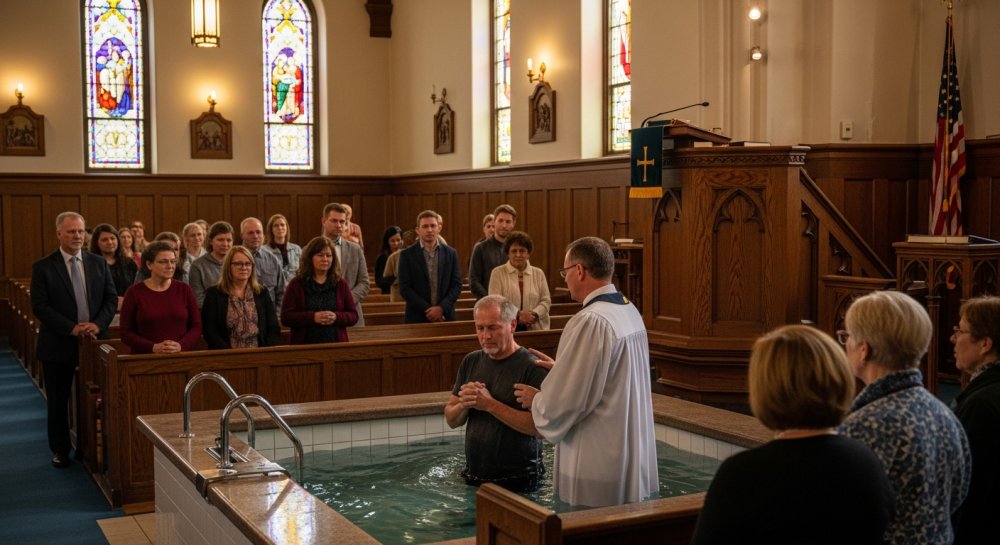
America’s largest Protestant denomination is witnessing a remarkable change in who is coming to faith in Jesus Christ. For the first time in recent memory, adults are responding to the Gospel in numbers that exceed younger converts, according to new research from Lifeway Research analyzing Southern Baptist Convention baptism data.
The Southern Baptist Convention reported more than 263,000 baptisms across its churches last year. What makes this figure particularly noteworthy is that adults accounted for the majority of these professions of faith—a shift that signals changing spiritual dynamics across the nation.
This demographic transformation in baptisms reflects a broader cultural moment where adults are increasingly seeking answers to life’s deepest questions. In an era marked by social upheaval, economic uncertainty, and cultural confusion, many Americans are turning to the timeless truths of Scripture and the hope found only in Christ.
The increase in adult baptisms also validates the faithful witness of Christian families, friends, and church communities who have been praying for and sharing the Gospel with those around them. It demonstrates that the message of salvation remains as powerful and relevant today as it was 2,000 years ago.
Southern Baptist churches have long been known for their commitment to evangelism and discipleship. This data suggests that their consistent Gospel witness is bearing fruit among adults who may have previously been unreached or resistant to the Christian message.
The shift toward adult conversions also carries significant implications for church ministry and discipleship. Adult believers often bring unique life experiences, questions, and challenges that require thoughtful biblical instruction and supportive Christian community as they grow in their newfound faith.
As our nation continues to grapple with moral and spiritual questions, these baptism statistics offer a glimmer of hope. They remind us that God is still at work in hearts and lives, drawing men and women to Himself through the power of the Gospel and the faithful witness of His people.
Let us know what you think, please share your thoughts in the comments below.

Faith Facts
- A comprehensive new report warns that Christians in Afghanistan face a credible risk of genocide five years after the Taliban returned to power
- Afghanistan ranks as the most dangerous nation on earth for Christians according to persecution watchdog organizations
- The Afghan Christian community practices their faith in complete secrecy due to the severe threat of execution under Taliban rule
Five years have passed since the Taliban reclaimed control of Afghanistan, and a disturbing new analysis reveals that believers in Christ living under their regime face conditions that meet the legal threshold for genocide. The findings paint a grim picture of what has become the world’s most perilous environment for practicing Christianity.
Dr. Martin Parsons, who authored the detailed report, explains that Afghan Christians exist in a state of complete concealment. The consequences for openly professing faith in Jesus Christ are severe and often fatal under the Taliban’s strict interpretation of Islamic law.
“Christians in Afghanistan live in absolute secrecy,” the report states. “Discovery of their faith can result in immediate execution, torture, or forced marriage of Christian women to Taliban fighters.”
The situation represents a humanitarian crisis that has received insufficient attention from Western nations and international bodies. While Afghanistan once hosted small communities of believers, the Taliban’s return has driven the faithful completely underground.
According to multiple persecution monitoring organizations, Afghanistan now holds the distinction of being the single most dangerous country globally for Christians. This ranking reflects not just restrictions on religious freedom, but active persecution that includes violence, imprisonment, and death.
The report documents systematic patterns of persecution that align with international legal definitions of genocide. These include the deliberate infliction of conditions calculated to bring about the physical destruction of the Christian community, prevention of births within the group through forced conversions and marriages, and the forcible transfer of children from Christian families.
Dr. Parsons emphasizes that the threat extends beyond individual acts of violence to a coordinated effort to eliminate Christianity from Afghan society entirely. The Taliban views conversion from Islam to Christianity as apostasy, a crime punishable by death under their interpretation of Sharia law.
“The systematic nature of this persecution, combined with the intent to destroy the Christian community, meets the criteria established by international law for genocide,” the report concludes.
Afghan believers face not only government persecution but also threats from family members and neighbors who view conversion to Christianity as a betrayal worthy of death. This creates an environment where practicing the faith requires extraordinary courage and constant vigilance.
The report calls on Western governments and Christian organizations to recognize the severity of the crisis and take concrete action to protect vulnerable believers. This includes expanding refugee programs specifically for Afghan Christians and increasing diplomatic pressure on the Taliban regime.
For American Christians, the findings serve as a sobering reminder of the precious nature of religious liberty and the urgent need to advocate for persecuted brothers and sisters around the world. The situation in Afghanistan demonstrates what happens when radical Islamic ideology gains unchecked power over a population.
The release of this report comes at a critical moment when international attention on Afghanistan has waned since the chaotic American withdrawal in 2021. The findings demand renewed focus on the human rights catastrophe unfolding under Taliban rule, particularly for religious minorities who lack any legal protection.
Prayer, advocacy, and support for organizations working to aid Afghan Christians remain essential responses from the global Church. The report makes clear that without sustained international pressure and assistance, the small community of Afghan believers faces the very real possibility of complete eradication.
Let us know what you think, please share your thoughts in the comments below.

Faith Facts
- Even a 97% eclipse leaves enough sunlight to illuminate the world, demonstrating the overwhelming power of God’s light over darkness
- Scripture promises in John 1:5 that “the light shines in the darkness, and the darkness has not overcome it”
- Natural phenomena like solar eclipses offer Christians powerful reminders of biblical truth and God’s sovereign design
A witness to a near-total solar eclipse discovered something profound: even when the moon blocks 97% of the sun, the remaining 3% still floods the earth with light. For Christians seeking encouragement in dark times, this astronomical reality offers a powerful illustration of biblical truth.
The observation came during a solar eclipse viewing, where despite the moon covering nearly the entire solar disk, daylight persisted with surprising strength. The experience brought immediate connection to Scripture’s promise that darkness cannot extinguish God’s light.
In John 1:5, we read a foundational promise of our faith: “The light shines in the darkness, and the darkness has not overcome it.” This verse takes on vivid meaning when we witness how a mere fraction of sunlight proves more powerful than the shadow attempting to cover it.
The spiritual parallel runs deep. In a world where darkness seems to advance—through persecution of Christians, erosion of biblical values, and increasing hostility to faith—believers can take heart from this natural demonstration of light’s superiority.
Our culture often feels overshadowed by forces opposed to Christian truth and traditional values. Yet just as 3% of the sun’s light proved impossible to overcome, so too does God’s truth and presence remain undefeatable, no matter how comprehensively the enemy attempts to block it.
This celestial lesson reminds us that we serve the God who spoke light into existence with a word. The same Creator who set the sun in the heavens and ordained its movements has promised that His light—embodied in Jesus Christ—will never be extinguished by the powers of darkness.
For families striving to raise children in biblical truth, for believers facing opposition in the workplace, for churches standing firm on Scripture while culture demands compromise—this eclipse offers tangible hope. You don’t need the full strength of the sun to dispel darkness; even a fraction of true light accomplishes what all the shadow in the world cannot prevent.
The eclipse also speaks to God’s meticulous design of creation. The precise mathematics that allow the moon to periodically align with the sun demonstrate the ordered intelligence behind the universe—a universe that declares the glory of its Maker, as Psalm 19:1 proclaims.
As Americans of faith navigate increasingly challenging times, we need these reminders that our hope rests not in political outcomes or cultural trends, but in the unchanging nature of God and His promises. Darkness may advance for a season, but it operates on borrowed time.
The temporary nature of an eclipse itself teaches this truth. The shadow passes. The sun emerges in full strength. Similarly, the trials and opposition Christians face are temporary, while our God and His truth endure forever.
This natural phenomenon invites us to trust more deeply in the promises of Scripture. When Jesus declared “I am the light of the world” in John 8:12, He wasn’t offering motivational sentiment—He was stating cosmic reality. The Light of the World cannot be overcome, not by 97% obstruction, not by 99%, not by any power in heaven or earth.
For believers feeling discouraged by the state of our nation or world, look to the eclipse. Remember that even when it seems darkness has nearly won, the smallest amount of God’s light proves insurmountable to the greatest darkness the enemy can muster.
Let us know what you think, please share your thoughts in the comments below.


-

 Self-Reliance1 year ago
Trump’s Bold Move Uncovers Massive Social Security Fraud
-

 Faith1 year ago
New Clues Emerge in Noah’s Ark Mystery
-

 News1 year ago
Governor Walz’s Rhetoric Sparks National Controversy
-

 News1 year ago
Mel Gibson’s ‘The Passion of the Christ’ Sequel Title Announced
-

 Family1 year ago
Texas Lawmaker Targets Furries in Schools
-

 Freedom1 year ago
Maine Lawmaker Challenges Sports Fairness Controversy
-

 Family1 year ago
Canada’s Controversial Policy Sparks Ethical Debate
-
Faith9 months ago
Congress Hears Pleas for Nigerian Christians