
Faith
Leprosy Mission Hails Focus on Health and Climate

Faith Facts
- Christian compassion calls us to support the vulnerable, especially those suffering from diseases like leprosy.
- Challenges in Sri Lanka highlight the importance of faith-driven action amid adversity.
- Community efforts aligned with biblical stewardship improve lives and restore dignity.
The Leprosy Mission applauds global leaders at COP30 for focusing on the intersection of health and climate. Peter Waddup, the charity’s chief executive, notes that the effects of changing weather patterns are already harming communities in Sri Lanka.
Drought, floods, and high temperatures have created food and water shortages. These hardships are made worse by ongoing economic and social crises.
Poor harvests deepen poverty and malnutrition, weakening resistance to diseases such as leprosy. The mission discovered 846 new leprosy cases from 2022 to 2024, underscoring the need for urgent action.
Waddup said, “We’re seeing the direct impact of climate change on health. In the communities where we work, the crisis is not imminent—it’s already a daily reality.”
Innovative solutions like ‘climate smart’ farming, nutrition classes, and seed banks help families build resilience. These initiatives reflect Christian values of stewardship and caring for all neighbors.
Waddup adds, “Communities like those we serve in Sri Lanka are too often overlooked in global climate strategies.”
“They’re excluded from climate-related disaster planning and underrepresented in policy discussions.”
“But they are the ones suffering most. Climate change is driving them deeper into poverty. We need governments to act faster and more boldly. The team in Sri Lanka is proving what’s possible with modest investment and shared knowledge.”
As Christians, we are called to stand with the suffering and work faithfully for justice and mercy. Let us pray for wisdom and action as we uplift those in need.


Faith Facts
- N.T. Wright, a well-known Anglican theologian, has cast doubt on the literal existence of Adam and Eve and the historicity of Jonah
- Wright describes Adam and Eve as possibly ‘human-like creatures’ and characterizes the account of Jonah as a ‘folk tale’
- The statements have raised concerns among Christians who hold to traditional biblical interpretation and the historical accuracy of Scripture
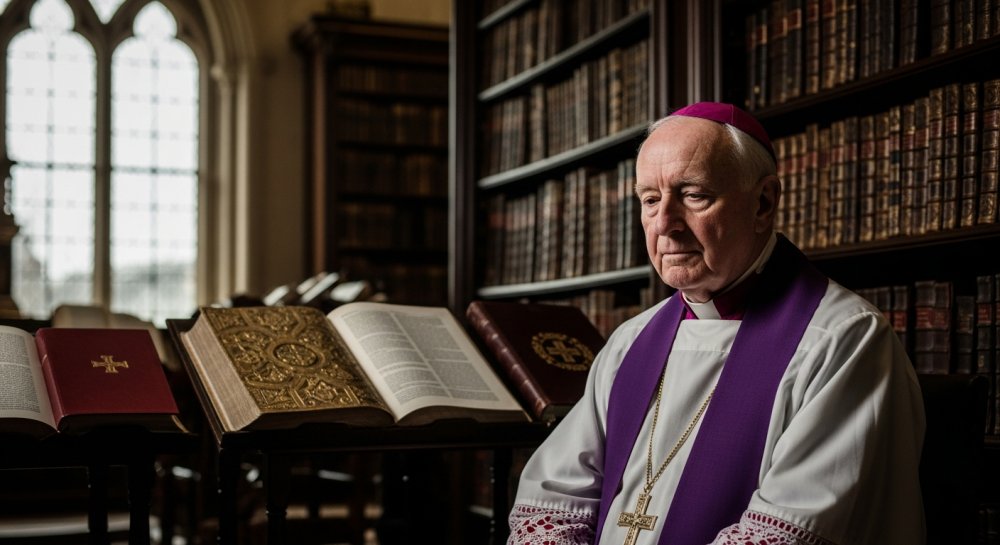
A prominent Anglican theologian has sparked controversy within Christian circles by questioning the historical reality of key biblical figures. N.T. Wright, a respected New Testament scholar and former Anglican bishop, has expressed uncertainty about whether some of the most well-known accounts in Scripture should be understood as literal history.
Wright’s comments specifically addressed the biblical accounts of Adam and Eve, as well as the story of Jonah and the great fish. Rather than affirming these as historical events involving real people, Wright has characterized them in ways that depart from traditional Christian teaching.
According to Wright’s perspective, Adam and Eve may have been “human-like creatures” rather than the literal first humans created by God as described in Genesis. This interpretation challenges the traditional understanding held by many Christians that Adam and Eve were real historical persons from whom all humanity descended.
Wright has also described the account of Jonah and the great fish as a “folk tale,” a characterization that suggests he does not view it as a factual historical event. This stance contrasts with the traditional Christian interpretation that treats Jonah as a real prophet whose experience in the belly of the great fish was an actual miracle.
These positions have raised concerns among Bible-believing Christians who maintain that Scripture is historically reliable and that these accounts describe real people and actual events. The doctrine of biblical inerrancy holds that the Bible is trustworthy in all it affirms, including historical matters.
The debate over how to interpret these biblical accounts touches on fundamental questions about the nature of Scripture and its authority. Many conservative Christians argue that dismissing these accounts as non-historical undermines the foundation of biblical faith and opens the door to questioning other essential doctrines.
Wright’s academic credentials and influence make his statements particularly significant. As a prolific author and widely-read theologian, his views reach a broad audience and carry weight in both scholarly and popular Christian circles.
The controversy highlights ongoing tensions within Christianity between those who hold to traditional interpretations of Scripture and scholars who adopt more critical approaches to biblical texts. These disagreements often center on questions of genre, historical context, and how modern believers should read and apply ancient texts.
For many American Christians, the historical reality of figures like Adam and Eve carries theological importance beyond mere historical curiosity. The apostle Paul references Adam directly in his theological explanations of sin and salvation, leading many to conclude that treating Adam as non-historical undermines core Christian doctrines.
Similarly, Jesus Christ himself referenced Jonah in the Gospels, appearing to treat the prophet as a real historical figure. Many Christians argue that Christ’s own words affirm the historical nature of these Old Testament accounts.
Let us know what you think, please share your thoughts in the comments below.
Faith Facts
- Pastor Craig Carlisle is expected to be nominated for first vice president of the Southern Baptist Convention at the June annual meeting
- The nomination represents a significant leadership opportunity within America’s largest Protestant denomination
- The Southern Baptist Convention’s annual meeting will determine key leadership positions for the coming year
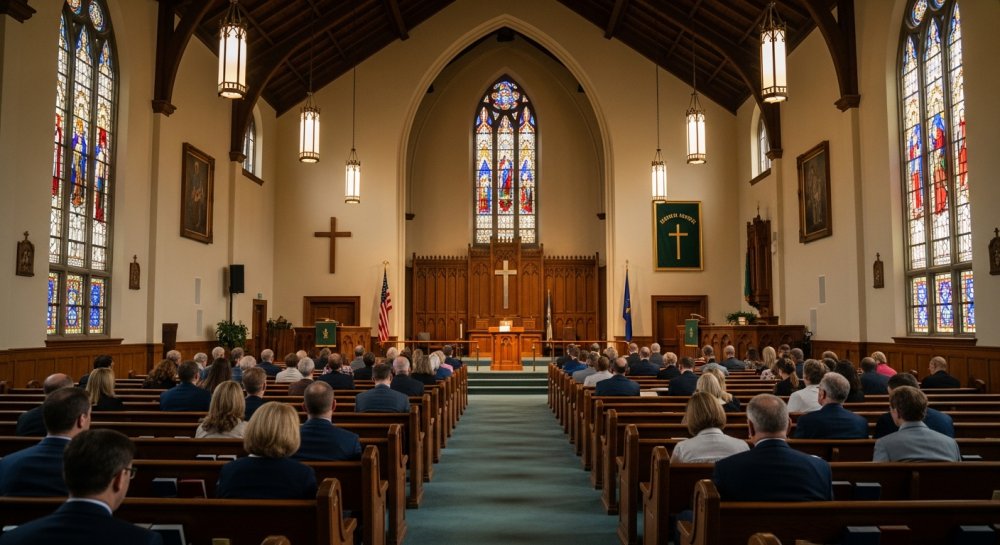
A prominent Alabama pastor is poised to take on a major leadership role in the Southern Baptist Convention, signaling potential shifts in direction for the nation’s largest Protestant denomination. Pastor Craig Carlisle is expected to receive a nomination for the position of first vice president at the SBC’s annual meeting scheduled for June.
The nomination comes at a crucial time for the Southern Baptist Convention as it continues to navigate questions of faith, governance, and cultural engagement in an increasingly secular society. The first vice president position serves as a key leadership role within the denomination’s structure, working alongside the president to guide the convention’s direction and priorities.
Carlisle’s expected nomination reflects ongoing discussions within Southern Baptist circles about the future of conservative Christian leadership in America. The denomination has been at the forefront of defending traditional biblical values and religious liberty in the public square.
The June annual meeting will bring together messengers from Southern Baptist churches across the country to vote on leadership positions and address important matters facing the denomination. These gatherings have historically served as pivotal moments for setting the direction of conservative evangelical Christianity in America.
As one of the most influential Protestant denominations in the United States, the Southern Baptist Convention’s leadership decisions carry weight far beyond its own churches, often influencing broader conversations about faith and family values in American culture. The convention has remained committed to biblical authority and traditional Christian teachings even as cultural pressures mount.
The nomination process and subsequent vote will take place during the annual meeting, where delegates will have the opportunity to affirm or contest proposed leadership. The outcome will help shape the convention’s priorities and public witness in the years ahead.
Let us know what you think, please share your thoughts in the comments below.

Faith Facts
- After 16 years under Viktor Orbán, Hungary has elected Peter Magyar as its new Prime Minister
- Magyar’s platform continues to emphasize Christian values and traditional family structures central to Hungarian governance
- Hungary’s constitutional commitment to Christian democracy remains unchanged despite the leadership transition
Hungary has ushered in a new era of leadership with the election of Peter Magyar as Prime Minister, ending Viktor Orbán’s 16-year tenure at the helm of the Central European nation. While some observers expect a dramatic shift in the country’s political trajectory, a closer examination reveals that Hungary’s foundational commitment to Christian conservative principles will likely endure.
The transition represents a change in leadership style rather than a fundamental reorientation of values. Hungary’s approach to governance, rooted deeply in Christian democratic traditions, has become embedded in the nation’s political culture over the past decade and a half.
Under Orbán’s leadership, Hungary gained international attention for its unapologetic defense of Christian heritage, traditional family structures, and national sovereignty. These principles were enshrined not just in policy but in the nation’s constitutional framework, making them resilient to changes in individual leadership.
Magyar’s platform, while distinct in some operational approaches, maintains the core commitments that have defined Hungarian politics in recent years. The emphasis on faith, family, and national identity continues to resonate with Hungarian voters who have consistently supported these values at the ballot box.
The Hungarian constitution explicitly references the country’s Christian heritage and the importance of family as the foundation of society. These constitutional protections ensure that any government, regardless of which party holds power, operates within a framework that prioritizes these timeless values.
Hungary’s approach has included practical policies supporting families, including generous tax benefits for married couples with children, constitutional protections for life from conception, and educational curricula that respect traditional moral teaching. These structural elements of Hungarian governance are unlikely to disappear with a change in prime ministerial leadership.
The country has also maintained a consistent position on protecting national borders and preserving cultural identity, positions that enjoy broad support among the Hungarian electorate. Magyar’s victory suggests that voters want continuity on these fundamental issues even as they welcomed new leadership.
International observers who expected Hungary to abandon its distinctive Christian democratic model may be surprised to find that the nation’s commitment to these principles transcends any single political figure. The values that have guided Hungary are not personality-driven but represent a deeper national consensus about the proper role of faith and tradition in public life.
As Hungary moves forward under new leadership, the world will be watching to see how Peter Magyar navigates the balance between fresh approaches and continuity with the Christian conservative vision that has defined his nation’s recent history. Early indications suggest that while the face of Hungarian leadership has changed, the heart of its political philosophy remains steadfast.
Let us know what you think, please share your thoughts in the comments below.

Prominent Anglican Scholar Questions Historical Reality of Biblical Figures

Alabama Pastor Set for Major Leadership Role in Nation’s Largest Protestant Denomination

Miss America Quietly Revises Contract After Contestant Raises Alarm Over Gender Language
-

 Self-Reliance1 year ago
Trump’s Bold Move Uncovers Massive Social Security Fraud
-

 Faith1 year ago
New Clues Emerge in Noah’s Ark Mystery
-

 News1 year ago
Governor Walz’s Rhetoric Sparks National Controversy
-

 News1 year ago
Mel Gibson’s ‘The Passion of the Christ’ Sequel Title Announced
-

 Family1 year ago
Texas Lawmaker Targets Furries in Schools
-

 Freedom1 year ago
Maine Lawmaker Challenges Sports Fairness Controversy
-

 Family11 months ago
Canada’s Controversial Policy Sparks Ethical Debate
-
Faith5 months ago
Congress Hears Pleas for Nigerian Christians