
News
Lebanese Christian Leader Confronts Israeli Claim About Village Annexation


Faith Facts
- A Christian village leader in Lebanon directly refuted Israeli Prime Minister Benjamin Netanyahu’s assertion that Christian communities requested annexation by Israel
- The dispute emerges amid Israel’s ongoing military operations targeting Hezbollah infrastructure in southern Lebanon
- The situation highlights the complex position of Christian minorities caught between regional powers in the Middle East conflict
A prominent Christian village leader in Lebanon has publicly challenged statements made by Israeli Prime Minister Benjamin Netanyahu regarding the desires of Lebanese Christian communities. The denial comes as Israeli military forces continue operations aimed at dismantling Hezbollah’s terror network infrastructure along the border region.
Netanyahu’s assertion that Christian villages in southern Lebanon had requested Israeli annexation has sparked immediate pushback from local Christian leadership. The claim has raised concerns about the accuracy of representations being made about minority Christian communities in the volatile region.
The situation underscores the precarious position facing Christian minorities throughout the Middle East, who often find themselves navigating between competing powers while trying to preserve their communities and ancient heritage. Lebanese Christians have maintained a continuous presence in the region for nearly two millennia, predating both modern political boundaries and current conflicts.
Israel’s stated objective in its current operations focuses on neutralizing Hezbollah’s military capabilities, which the terror organization has built up along Israel’s northern border. The group, designated as a terrorist organization by the United States and other Western nations, has long threatened Israeli security and has been supported by Iran.
For Christian communities in southern Lebanon, the conflict presents difficult challenges. Many have suffered under Hezbollah’s growing influence in the region, yet also maintain distinct Lebanese national identity. The disputed claims about annexation requests highlight how these communities’ voices can be misrepresented in broader geopolitical narratives.
The village leader’s swift denial emphasizes the importance of accurately representing the positions and desires of religious minorities in conflict zones. Christian advocacy organizations have long called for protection of Middle Eastern Christian communities while respecting their autonomy and self-determination.
As tensions continue along the Israeli-Lebanese border, the situation remains fluid. The welfare and voice of civilian populations, particularly vulnerable religious minorities, must remain a priority for all parties involved in the conflict.
Let us know what you think, please share your thoughts in the comments below.


Faith Facts
- Parents have the God-given responsibility to raise and guide their children in truth.
- School policies that hide critical information from parents undermine family authority and biblical values.
- Christian parents have the right to know what is being taught and discussed with their children in public schools.
A New Jersey school district has settled a Moms for Liberty lawsuit by agreeing never to readopt a gender identity policy that let staff keep students’ transitions secret from parents.
The settlement marks a significant win for parental rights in education. Families across the nation have grown increasingly concerned about schools inserting themselves between children and their parents on matters of identity and medical decisions.
Christian parents view this outcome as a reaffirmation of the biblical order where mothers and fathers hold primary responsibility for their children. The district’s reversal demonstrates that legal action can restore transparency when policies favor secrecy over family involvement.
“This settlement sends a clear message that schools cannot hide important information from parents,” said a Moms for Liberty spokesperson. “Parents deserve to know what is happening in their children’s lives at school.”
The agreement prevents the district from reinstating the controversial policy. This protects future students from similar situations where school staff might withhold information about gender identity issues from families.
Communities nationwide continue to push back against policies that prioritize activist agendas over parental involvement. The New Jersey case reflects a growing movement among families who refuse to allow schools to operate outside their oversight.
Let us know what you think, please share your thoughts in the comments below.
Faith Facts
- Character and integrity are essential for those who seek public office, as Scripture teaches that leaders should be above reproach.
- Christians are called to seek wisdom and discernment when evaluating political endorsements and their alignment with biblical values.
- Family legacy and tradition play a significant role in shaping the political and cultural direction of our nation.
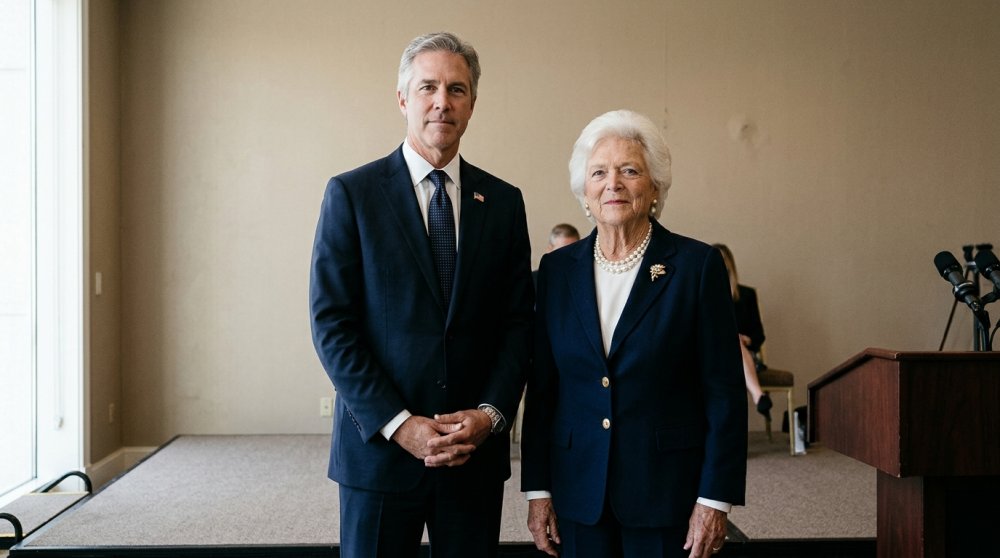
Barbara Bush and Neil Bush, daughter and brother of former President George W. Bush, have announced their support for Democratic Texas state Representative James Talarico in the upcoming U.S. Senate race. The endorsement has drawn sharp criticism from many conservatives who see it as a departure from the values the Bush family once represented.
Critics argue that the move further distances the Bush dynasty from the Republican base that once rallied behind them. They contend that supporting a candidate from the opposing party undermines the principles of limited government and traditional values long associated with the Bush name.
“Character matters more,” the family members stated in their endorsement of Talarico. The phrase has been repeated across social media and conservative outlets as evidence of shifting allegiances within one of America’s most prominent political families.
Many longtime Republican voters express disappointment, viewing the endorsement as yet another example of the Bush family prioritizing personal relationships over party loyalty and conservative convictions. The decision has reignited debates about legacy, loyalty, and the future of the Republican Party in Texas.
Let us know what you think, please share your thoughts in the comments below.

Faith Facts
- Scripture commands believers to uphold honesty in public office as a reflection of God’s truth (Proverbs 10:9).
- Christian teaching emphasizes that leaders must demonstrate integrity and accountability to the people they serve.
- Americans who value constitutional governance expect elected officials to meet the same standards of honesty as every other citizen.
President Trump has called for Democratic Congresswoman Ilhan Omar to resign immediately, claiming she used a false name when she was sworn into office. The president made the statement during a public appearance, asserting that the Minnesota representative misled voters and violated the trust placed in her by constituents.
“Ilhan Omar should immediately resign from Congress,” the president stated. “She used a fake name to get elected and then lied about it.”
The claim centers on the representative’s use of her birth name versus the name under which she filed candidacy papers. Supporters of the president argue that such discrepancies raise serious questions about eligibility and transparency in federal elections.
Critics of the congresswoman have long questioned her record on national security issues and her public statements regarding American foreign policy. The latest development adds another layer of scrutiny to an already controversial tenure in the House.
Christian voters who prioritize biblical principles of truth and justice will likely view this matter as a test of whether elected leaders are held to the same moral standards expected of ordinary citizens. The call for resignation reflects broader concerns about accountability in government.
Let us know what you think, please share your thoughts in the comments below.


-

 Self-Reliance2 years ago
Trump’s Bold Move Uncovers Massive Social Security Fraud
-

 Faith2 years ago
New Clues Emerge in Noah’s Ark Mystery
-

 News2 years ago
Governor Walz’s Rhetoric Sparks National Controversy
-

 News2 years ago
Mel Gibson’s ‘The Passion of the Christ’ Sequel Title Announced
-

 Family2 years ago
Texas Lawmaker Targets Furries in Schools
-

 Freedom2 years ago
Maine Lawmaker Challenges Sports Fairness Controversy
-

 Family1 year ago
Canada’s Controversial Policy Sparks Ethical Debate
-
Faith11 months ago
Congress Hears Pleas for Nigerian Christians