
Faith
Kenya’s Churches Defend Worship Freedom

Faith Facts
- Kenyan Christian leaders united against government oversight in the Religious Organisations Bill.
- Proposed laws threaten constitutional guarantees of religious freedom with heavy fines and prison terms.
- Leaders urge fair and faith-centered regulation that protects worship without state interference.
Church associations across Kenya voiced concern over proposed regulations that would give the government significant control over religious organizations. They argue that these bills infringe on the constitutional right to freedom of religion and undermine the nation’s commitment to having no state religion.
The Evangelical Association of Kenya and the Church and Clergy Association of Kenya rejected the draft legislation, describing it as unconstitutional and overly intrusive. They also questioned the vague definition of government oversight and warned it could be misused to restrict churches’ activities and autonomy.
“The bill introduces government oversight into religious organisations, treating them as if they are government-funded departments or parastatals,” their memorandum stated. “It infringes on the constitutional right to freedom of religion and the principle that Kenya shall have no State Religion.”
Bishop Hudson Ndeda of the CCAK called the proposed advisory board and registration requirements discriminatory and urged more time for churches to give input. He warned arbitrary government fines and penalties could limit religious work and were unnecessary interventions in church matters.
“The mention of some umbrella body and formation of a commission in the Bill is suspect and discriminatory and goes against our freedom of association,” Ndeda stated.
The Federation of Evangelical and Indigenous Christian Churches in Kenya cautioned that the proposed laws would suppress independent and indigenous churches if enacted. Bishop Samuel Njiriri raised concerns that this approach could block legitimate ministries while failing to address genuine extremism.
These legislative recommendations followed the Shakahola massacre, with the aim of stopping extremism carried out in the name of religion. Kenyan law already requires registration for religious groups to ensure legal recognition, but the current bills propose even stricter oversight under a new commission.
The Religious Organisations Policy, 2024 claims its main objective is to exercise religious freedom in line with the Constitution. However, Christian leaders caution that the risk of government control outweighs potential benefits and weakens Kenya’s longstanding tradition of faith-led community service and worship.
President William Ruto recently affirmed his administration’s support for robust religious freedom, assuring the public that the government will not impose restrictions on worship. He encouraged leaders to guide their own self-regulation and promised to uphold freedom of worship without compromise.
“We will defend freedom of worship without compromise, and there will be no limitations imposed.”
As believers, we are called to remain steadfast in defending the God-given right to worship and to advocate for laws that respect both religious liberty and public good. Let us pray for discernment and courage for Kenya’s Christian leaders as they stand firm for faith, family, and freedom.


Faith Facts
- Mainline Protestant denominations have experienced decades of steep membership decline while losing cultural influence
- Political scientist Ryan P. Burge left Southern Baptist roots for American Baptist Churches USA, reflecting shifting denominational loyalties
- The collapse of once-dominant Protestant bodies raises questions about the future of traditional Christianity in America
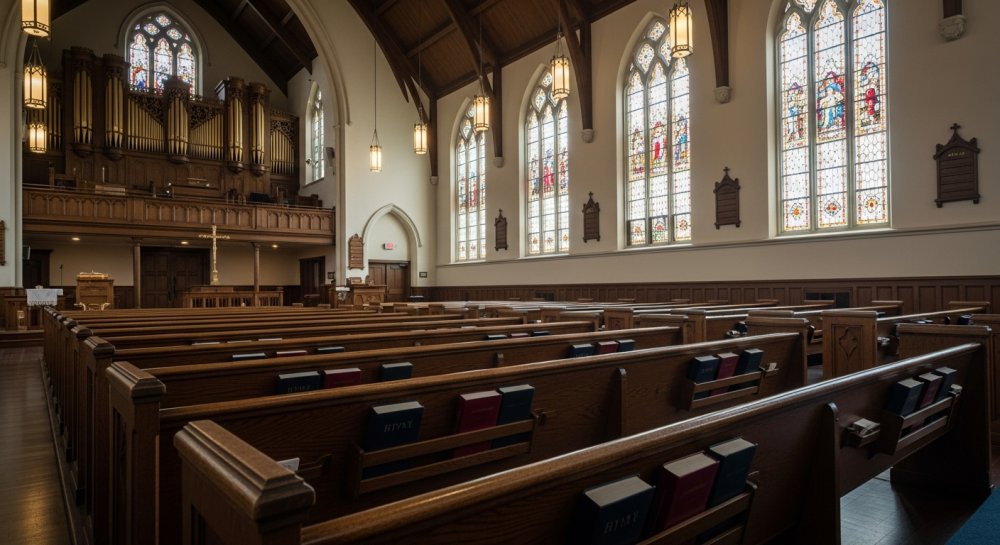
America’s historic Protestant denominations, once the backbone of the nation’s religious and cultural life, face an uncertain future as membership rolls continue to shrink and cultural influence wanes. The institutions that helped shape American values for generations now struggle to fill their pews and maintain relevance in an increasingly secular society.
Ryan P. Burge, a political scientist and researcher who tracks religious trends, exemplifies the shifting landscape. Raised in the Southern Baptist tradition, he eventually found what he considered a more suitable spiritual home in an American Baptist Churches USA congregation approximately two decades ago.
His journey reflects broader patterns of movement within American Christianity, as believers navigate changing doctrinal emphases and cultural positions within various denominations. The mainline Protestant churches—including Presbyterian Church (USA), the Episcopal Church, the United Methodist Church, and the Evangelical Lutheran Church in America—have watched their membership decline steadily for decades.
These denominations, which once wielded significant influence over American public life and moral discourse, now face questions about their long-term viability. The exodus from mainline pews has coincided with theological shifts that have often moved these bodies away from traditional biblical interpretation and orthodox Christian teaching.
Conservative Christians have long expressed concern that when churches prioritize cultural accommodation over scriptural fidelity, they lose both their prophetic voice and their appeal to believers seeking unchanging truth. The statistical evidence appears to support this concern, as denominations that have embraced progressive theological positions have experienced the steepest declines.
Meanwhile, evangelical and non-denominational churches that maintain traditional biblical teaching have often shown greater resilience, though they too face challenges in an increasingly post-Christian culture. The fate of mainline Protestantism serves as a cautionary tale about the consequences of abandoning foundational Christian beliefs in pursuit of contemporary relevance.
For many faithful Christians, the decline of these historic institutions represents not just a statistical trend but a spiritual tragedy. Churches that once stood as pillars of biblical Christianity have, in many cases, become unrecognizable to the very communities they were founded to serve.
The question now facing American Christianity is whether these mainline bodies can recover their biblical moorings or whether they will continue their slide toward cultural irrelevance and institutional collapse. The answer will shape not only the future of these denominations but the broader landscape of faith in America.
Let us know what you think, please share your thoughts in the comments below.
Faith Facts
- The Church of the Nazarene has launched the Ireland Partnership to support church planting and theological education across the entire island of Ireland
- The initiative aims to strengthen ministry efforts in both the Republic of Ireland and Northern Ireland
- The partnership represents a strategic investment in evangelism and Christian education in a region experiencing spiritual need
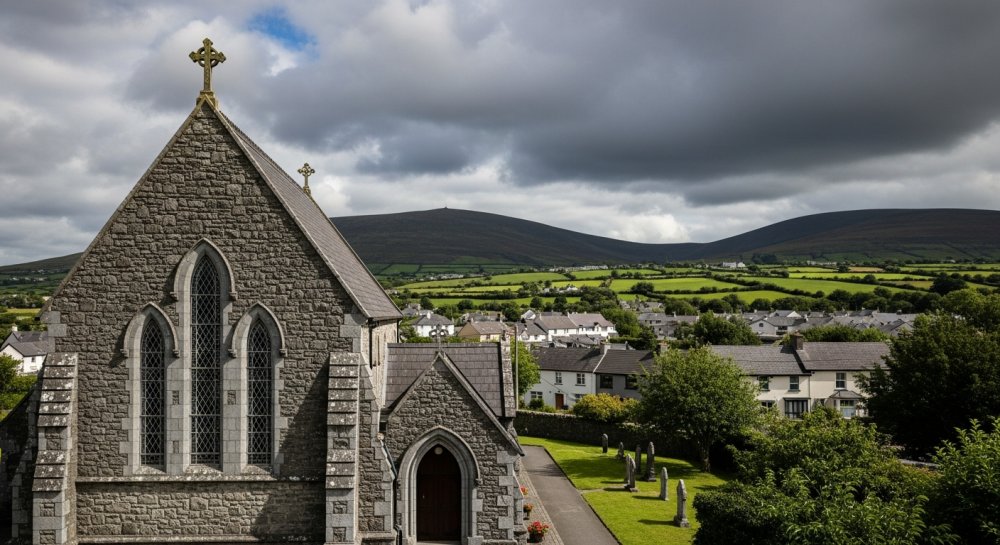
In a significant development for Christian ministry in Ireland, the Church of the Nazarene has unveiled a comprehensive new strategy designed to revitalize evangelical presence across the island. The Ireland Partnership represents a unified approach to church planting and theological education that transcends political borders, focusing on the shared spiritual needs of communities in both the Republic of Ireland and Northern Ireland.
This initiative comes at a critical time for Christianity in Ireland, a nation historically shaped by Christian faith but increasingly characterized by secularization and declining church attendance. The Ireland Partnership seeks to reverse these trends through intentional evangelism, church planting, and robust theological training for future ministry leaders.
The Church of the Nazarene’s approach emphasizes not just establishing new congregations, but equipping them with solid biblical teaching and sustainable leadership structures. By investing in theological education alongside church planting, the denomination is demonstrating a commitment to long-term spiritual transformation rather than temporary programs.
Ireland’s unique cultural and political landscape presents both challenges and opportunities for Christian witness. The partnership’s island-wide scope reflects an understanding that the gospel message transcends human divisions and that the Church’s mission is fundamentally spiritual rather than political.
For American Christians observing this initiative, the Ireland Partnership offers important lessons about strategic evangelism and the importance of theological education in establishing healthy, growing churches. The focus on equipping leaders and building sustainable ministries rather than simply counting numbers reflects biblical priorities for church health and multiplication.
This development also highlights the global nature of Christian mission work and the importance of supporting evangelical efforts in regions experiencing spiritual decline. As Western nations face increasing secularization, strategic initiatives like the Ireland Partnership become essential for maintaining and expanding Christian witness.
The Church of the Nazarene’s commitment to both Northern Ireland and the Republic of Ireland demonstrates that true Christian unity is found in shared faith and mission, not political or denominational boundaries. This approach models how the Church can effectively serve divided communities by focusing on the unifying power of the gospel.
Let us know what you think, please share your thoughts in the comments below.
Faith Facts
- A woman was fatally shot at a church in western Jamaica during a recent attack
- The Jamaica Evangelical Alliance condemned the violence and called for justice
- The pastor announced the church will continue services without hiring private security, trusting in God’s protection
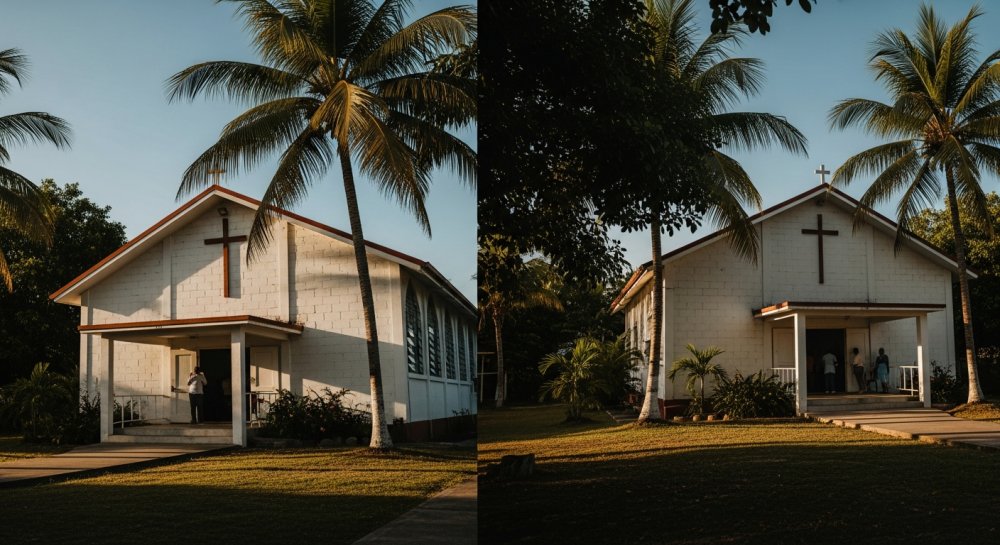
A Jamaican church is standing firm in faith after a tragic shooting claimed the life of one of its members during a service in western Jamaica. The congregation’s pastor has announced they will continue gathering for worship despite the deadly attack, refusing to implement private security measures and instead placing their trust in divine protection.
The Jamaica Evangelical Alliance issued a strong condemnation of the fatal shooting, which has sent shockwaves through the Christian community in the Caribbean nation. The organization expressed solidarity with the grieving congregation and called for swift justice in the case.
In a demonstration of unwavering faith, the church’s pastor made clear that the congregation would not be intimidated by violence. The decision to forgo private security guards reflects a deep commitment to trusting God’s sovereignty and protection over His people, even in the face of dangerous circumstances.
The shooting highlights growing concerns about violence affecting houses of worship, even in communities where church attendance remains a central part of cultural life. Jamaica has struggled with rising crime rates in recent years, though attacks directly targeting church services remain relatively uncommon.
The Jamaica Evangelical Alliance represents numerous Protestant churches across the island nation and has been vocal in addressing both spiritual and social issues affecting the country. Their condemnation of the attack underscores the Christian community’s unified stance against violence and lawlessness.
While details about the shooting victim and the circumstances surrounding the attack were limited, the incident serves as a sobering reminder of the challenges facing faithful believers in various parts of the world. The congregation’s determination to continue meeting reflects the biblical principle that believers should not forsake assembling together, regardless of external threats.
The pastor’s decision not to employ private security represents a counter-cultural approach in an era where many churches have implemented extensive safety protocols. This choice demonstrates a conviction that spiritual warfare requires spiritual weapons, and that God remains the ultimate protector of His church.
Let us know what you think, please share your thoughts in the comments below.


-

 Self-Reliance1 year ago
Trump’s Bold Move Uncovers Massive Social Security Fraud
-

 Faith1 year ago
New Clues Emerge in Noah’s Ark Mystery
-

 News1 year ago
Governor Walz’s Rhetoric Sparks National Controversy
-

 News1 year ago
Mel Gibson’s ‘The Passion of the Christ’ Sequel Title Announced
-

 Family1 year ago
Texas Lawmaker Targets Furries in Schools
-

 Freedom1 year ago
Maine Lawmaker Challenges Sports Fairness Controversy
-

 Family11 months ago
Canada’s Controversial Policy Sparks Ethical Debate
-
Faith5 months ago
Congress Hears Pleas for Nigerian Christians