
Faith
Joel Osteen Sees Something in Kanye West That Critics Don’t

Faith Facts
- Joel Osteen publicly affirmed Kanye West’s spiritual heart despite the rapper’s controversial past
- West has previously apologized for antisemitic statements that drew widespread condemnation
- The Lakewood Church pastor believes the music mogul has genuine faith and desire to do right
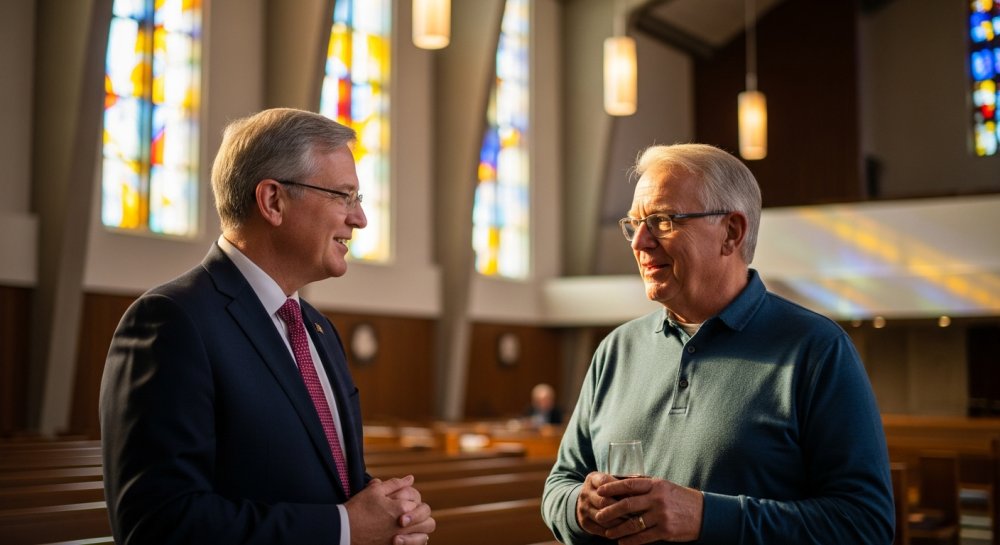
Megachurch pastor Joel Osteen is standing by controversial rapper and music producer Kanye West, now known professionally as Ye, offering words of encouragement as the artist continues to face fallout from past antisemitic remarks. The Houston pastor says he sees something deeper in West—a genuine spiritual core that transcends public controversy.
Osteen, who leads one of America’s largest congregations at Lakewood Church in Texas, spoke publicly about his perspective on West’s character and faith journey. Despite the ongoing criticism West faces for statements he has since apologized for, Osteen expressed confidence in the rapper’s spiritual foundation.
“He has a heart for God, and a heart to do the right thing,” Osteen said of West.
The statement reflects Osteen’s longstanding approach to ministry—one that emphasizes redemption, second chances, and the transformative power of faith. For Christian conservatives who value forgiveness and spiritual growth, Osteen’s words serve as a reminder that no one is beyond God’s grace or the possibility of genuine change.
West’s journey has been tumultuous in recent years. The multi-platinum artist faced intense backlash for antisemitic comments that cost him business partnerships and public support. However, West has publicly apologized for those statements, a step that many believers recognize as essential to genuine repentance and restoration.
The rapper’s spiritual evolution has been documented publicly, including his Sunday Service gatherings and the release of his gospel album “Jesus Is King,” which topped Christian music charts. These expressions of faith have resonated with many Christians who see in West a modern example of a public figure wrestling with faith in a hostile culture.
Osteen’s affirmation of West comes at a time when the culture increasingly demands permanent cancellation rather than offering pathways to redemption. For many Christians, this represents a troubling departure from biblical principles of forgiveness and restoration that are central to the faith.
The pastor’s willingness to publicly support someone facing cultural opposition aligns with Christian teaching about standing with the repentant and believing in transformation through Christ. It also raises important questions about how the church should respond to public figures who stumble but seek to return to faith.
West’s influence in both secular and Christian music communities remains significant. His willingness to speak openly about faith, mental health struggles, and personal failures has made him a complicated but compelling figure for many believers trying to navigate faith in the modern world.
For Osteen and Lakewood Church, the message appears consistent with a gospel-centered approach that prioritizes spiritual condition over public perception. The pastor’s comments suggest he sees beyond the headlines to someone genuinely seeking to align his life with God’s purposes.
Let us know what you think, please share your thoughts in the comments below.


Faith Facts
- A new survey indicates Generation Z adults are more likely than older Americans to describe themselves as religious.
- Many in this generation also engage in practices that conflict with traditional Christian teaching.
- The findings highlight both the spiritual interest and the doctrinal challenges facing younger believers today.
A recent poll finds that Generation Z stands out as the age group most inclined to identify as religious. The data challenges assumptions that younger Americans are drifting away from faith altogether.
At the same time, researchers note that many who claim a religious identity still participate in activities that run counter to biblical standards. This mix of self-identification and inconsistent practice raises questions about the depth of their convictions.
“Generation Z adults are more likely than older Americans to describe themselves as ‘religious,’ even as many also engage in practices at odds with Christian teaching, according to a new survey.”
Let us know what you think, please share your thoughts in the comments below.

Faith Facts
- God’s timing is perfect even when it stretches across decades.
- Persistent prayer reflects trust in the Lord’s promises.
- Every answered prayer serves as a testimony that strengthens future generations.
Last week I stood inside a Portuguese factory and gazed at the very thing I had waited twenty-two and a half years to see: a simple slab of concrete.
That slab will soon become part of the Eternal Wall of Answered Prayer, a monumental structure rising in the heart of the United Kingdom to commemorate more than a million answered prayers submitted by believers across the nation.
“Twenty-two years ago, the Lord placed this vision on my heart,” said the project’s founder. “Every delay has been preparation, not punishment.”
The wall will eventually stand over a quarter-mile long, its panels engraved with handwritten prayers that testify to God’s faithfulness in healing, provision, and restoration.
Construction crews are now casting the first of thousands of concrete panels, each one destined to bear the weight of countless stories of answered prayer.
“We are not building a monument to ourselves,” the founder continued. “We are raising a witness that generations after us will read and know that the God of the Bible still moves.”
The project has drawn support from churches across denominational lines, reminding believers that unity in Christ transcends differences when hearts are fixed on prayer and the glory of God.
Volunteers continue to collect new prayers, confident that the finished wall will stand as an enduring declaration that no season of waiting is wasted when placed in the hands of the Lord.
Let us know what you think, please share your thoughts in the comments below.
Faith Facts
- Financial collaboration among believers strengthens the collective witness of God’s Kingdom.
- Generosity rooted in shared stewardship builds stronger Christian families and communities.
- Collaborative giving reduces competition among churches and fuels ministry outreach.
Financial collaboration helps foster a stronger, more united witness to God’s Kingdom in countless ways.
It often builds up a culture of generosity within families.
It supports ministries that might otherwise struggle to reach the communities they serve.
It even cultivates a culture of collaboration, rather than competition, between local churches.
Let us know what you think, please share your thoughts in the comments below.


-

 Self-Reliance1 year ago
Trump’s Bold Move Uncovers Massive Social Security Fraud
-

 Faith1 year ago
New Clues Emerge in Noah’s Ark Mystery
-

 News2 years ago
Governor Walz’s Rhetoric Sparks National Controversy
-

 News1 year ago
Mel Gibson’s ‘The Passion of the Christ’ Sequel Title Announced
-

 Family2 years ago
Texas Lawmaker Targets Furries in Schools
-

 Freedom2 years ago
Maine Lawmaker Challenges Sports Fairness Controversy
-

 Family1 year ago
Canada’s Controversial Policy Sparks Ethical Debate
-
Faith10 months ago
Congress Hears Pleas for Nigerian Christians