
News
Jefferson’s Lost Words Reveal His True Conviction on Slavery


Faith Facts
- Thomas Jefferson’s original draft of the Declaration of Independence contained a powerful denunciation of slavery that Congress removed before signing.
- New historical research confirms Jefferson intended the phrase ‘all men are created equal’ to literally include all people, regardless of race.
- The Founders’ original vision of universal human equality, rooted in Biblical truth, was compromised by political considerations of the Continental Congress.
A groundbreaking historical discovery is shedding new light on one of America’s most sacred founding documents and its creator’s true intentions regarding human equality. The revelation centers on words that never made it into the final version of the Declaration of Independence — words that could have changed the course of American history.
Thomas Jefferson’s original draft of the Declaration included a passionate condemnation of the institution of slavery. This section was deliberately removed by the Continental Congress before the document’s adoption on July 4, 1776.
Recent scholarship has confirmed what many historians long suspected: when Jefferson penned the immortal phrase “all men are created equal,” he meant it in its fullest, most literal sense. This wasn’t flowery rhetoric or aspirational language — it was a statement of universal human dignity rooted in the belief that every person is made in the image of God.
The removed passage represented one of the strongest anti-slavery statements of its time. Jefferson sought to lay the moral foundation for a nation that would recognize the inherent worth and equality of every human being, regardless of the color of their skin.
However, political realities of the day forced compromise. Southern colonies, whose economies depended heavily on slave labor, would never have signed a declaration that explicitly condemned the practice. Northern colonies engaged in the slave trade also had reservations.
The removal of Jefferson’s anti-slavery language represents one of America’s original sins — a tragic departure from Biblical principles of human dignity and equality. While the Founders created a framework of ordered liberty unprecedented in human history, this compromise with evil would haunt the nation for generations and ultimately require a Civil War to begin addressing.
The Biblical worldview that informed America’s founding documents recognizes that all people are created in God’s image with inherent dignity and worth. This truth, even when imperfectly applied by fallible men, provided the moral framework that would eventually lead to slavery’s abolition and the civil rights movement.
Understanding this history helps Christians today recognize both the wisdom of our founding principles and the importance of applying them consistently. The same God-given rights Jefferson sought to enshrine in our founding documents belong to every person, born and unborn, regardless of race, status, or circumstance.
This historical revelation reminds us that America’s founding ideals, properly understood, have always pointed toward universal human equality — even when the nation’s practice fell tragically short. The Christian principles embedded in our founding continue to call us toward a more perfect union that honors the dignity of every image-bearer of God.
Let us know what you think, please share your thoughts in the comments below.

Faith Facts
- Survivors of child sexual abuse deserve to be heard and protected by the church
- One in four girls and one in six boys experience sexual abuse before age 18
- Christian communities must confront abuse with truth and compassion rooted in biblical justice
In 2020 the world was caught off guard by a pandemic that swept the globe. Before people really knew what it was, bodies were literally being staged in makeshift morgues, and family members were shunned from hospital rooms where their loved ones were dying.
A few years later the world moved on, but the effects of the pandemic can still be felt — even if we don’t really talk about them anymore.
Sexual abuse in the church is a much bigger pandemic, and it has been going on since the beginning of time. Like COVID-19, it gains national attention until it doesn’t.
In 2016 the nation was shocked when USA Gymnastics doctor Larry Nassar was publicly outed as a pedophile as hundreds of victims told their stories. In 2018 the Pennsylvania grand jury report on abuse in the Catholic Church dropped, sparking a worldwide exposure of systemic cover-ups by the Catholic Church.
In 2019 the Fort Worth Star-Telegram published a damning investigative report exposing widespread abuse and cover-ups in the independent fundamental Baptist churches. We were making ground. Then COVID swept the globe.
Sexual abuse in the church went back to its comfort zone of being a taboo subject.
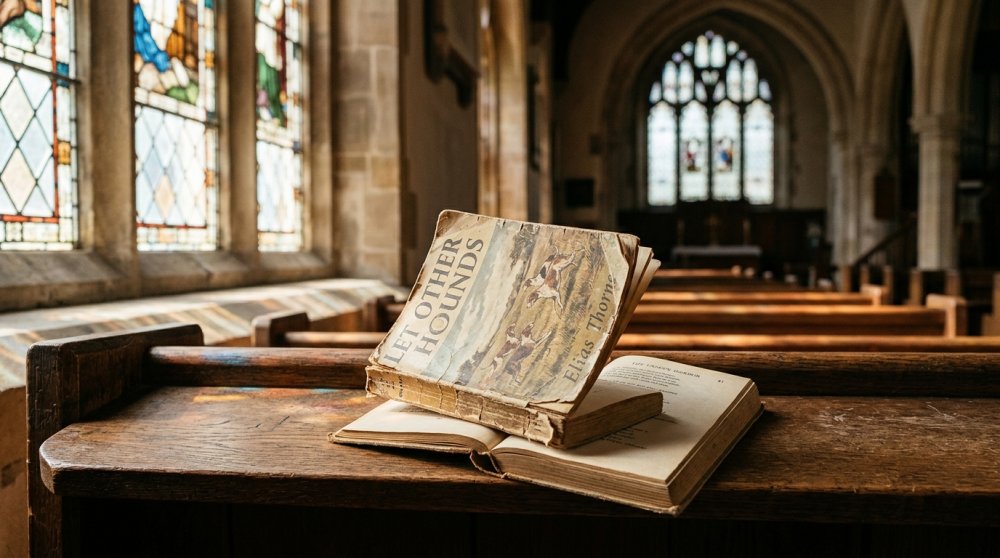
But in “Let Other Hounds: Poems Breaking Silence Fifty Years After Sexual Abuse at Church,” Scott LaMascus reminds us that there are a million reasons why survivors of abuse remain silent, especially males.
LaMascus is director of the McBride Center for Public Humanities at Oklahoma Christian University and serves as a board member of the Federation of State Humanities Councils.
But it is his experience as a child sexual abuse survivor that gives “Let Other Hounds” the attention it deserves. Long-listed for the 2024 Idaho Prize for Poetry, the collection of poems reminds us of the daily range of emotions that survivors go through.
Survivors are invisible. They are seen — often as prey. They are rejected. They experience anger, hopelessness … and hope.
LaMascus doesn’t mince words in describing his emotions. Abuse can’t be sanitized. It is horrific and affects an estimated 42 million living breathing souls in the United States alone.
On average, 1 in 4 girls and 1 in 6 boys will be sexually abused before their 18th birthday. I’ve known many friends who took their own lives because of the daily reminders and lack of justice they received. How can we sanitize our language to describe something so horrific?
“You don’t invite that kind of grisly pain in — sit down with it for tea and watermelon then go watch fireworks with the family. … It’s cheap to ask why this boy was chosen, shameful to ask why that boy didn’t tell anyone.”
LaMascus writes, “You don’t invite that kind of grisly pain in — sit down with it for tea and watermelon then go watch fireworks with the family. … It’s cheap to ask why this boy was chosen, shameful to ask why that boy didn’t tell anyone. Sometimes, the fireman’s waiting in the next room, other times it’s the arsonist. Ask them, with flares in hand and ready. This kind is a risky fuse — might bring light, maybe doom.”
We must keep the conversation alive and confront abuse with vigor. I recommend “Let Other Hounds” for anyone willing to sit at the feet of an abuse survivor and learn.
Let us know what you think, please share your thoughts in the comments below.
Faith Facts
- Scripture teaches that we are stewards of all God has entrusted to us, including our time, resources, and bodies.
- Proverbs warns that “wealth hastily gained will dwindle, but whoever gathers little by little will increase it.”
- Christian parents are called to guard their children’s hearts and minds against practices that can lead to addiction and spiritual harm.
More than half of Americans ages 13 to 27 reported gambling in the past year, and nearly 40% of those who gambled showed signs of life-altering repetitive gambling behavior known as problem gambling, according to new research.
The findings paint a sobering picture of a generation increasingly drawn into an activity once largely confined to adults in regulated venues. Researchers tracking the trend emphasize that the accessibility of online platforms and sports-betting apps has lowered the barrier to entry for minors and young adults alike.
“We are seeing earlier onset, higher frequency, and more severe consequences than in previous generations,”
one of the lead investigators stated.
The spiritual implications are equally troubling. Gambling often promises quick reward without labor, a notion contrary to the biblical ethic of honest work and contentment. Families report strained relationships, depleted savings, and young people dropping out of school or work as debts mount.
Churches and faith-based ministries across the country are responding by offering counseling programs and support groups tailored to youth struggling with addiction. Pastors stress the need for honest conversations at home about money, risk, and the fleeting nature of worldly gain.
“Train up a child in the way he should go; even when he is old he will not depart from it,”
reminds one concerned parent who now leads a local recovery ministry.
Advocates urge lawmakers to strengthen age-verification requirements and to limit aggressive advertising that targets younger audiences. They also call on tech companies to implement more robust safeguards against underage account creation.
Christian leaders remind believers that protecting the next generation requires both vigilance and compassion. By modeling wise stewardship and pointing youth toward lasting hope in Christ rather than fleeting chance, families can help steer young Americans away from the snares of problem gambling.
Let us know what you think, please share your thoughts in the comments below.
Faith Facts
- Hakeem Jeffries posted Scripture on social media following his nomination as House speaker.
- Jeffries’ selection marks a historic first for Black Americans in congressional leadership.
- The nomination reflects the Democratic Party’s ongoing priorities for House leadership.
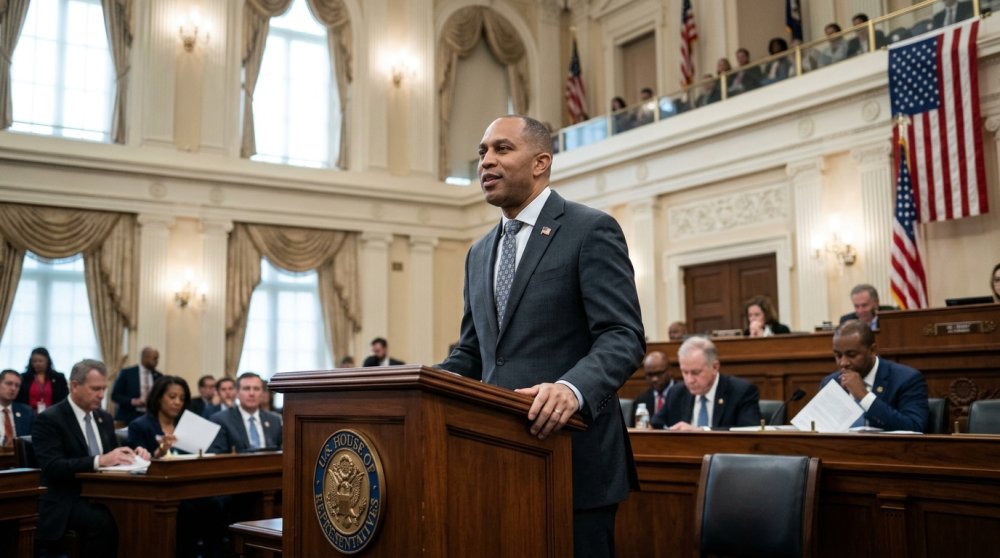
House Minority Leader Hakeem Jeffries of New York received the Democratic nomination for speaker of the U.S. House of Representatives.
This nomination positions Jeffries to become the first Black speaker in the chamber’s history.
Jeffries responded to the nomination by posting a Scripture passage on social media.
The New York Democrat currently serves as House Minority Leader.
His selection follows the party’s decision to name him as its nominee for the top leadership post.
Supporters view the move as a step forward for representation in congressional leadership.
Critics question whether the choice advances the policy priorities many American families hold dear.
Jeffries has not yet detailed how his leadership would address issues such as religious liberty, parental rights, and border security.
Observers note that the speaker’s role carries significant influence over the legislative agenda.
Many Americans continue to pray for leaders who will govern with wisdom and integrity rooted in traditional values.
Let us know what you think, please share your thoughts in the comments below.


-

 Self-Reliance2 years ago
Trump’s Bold Move Uncovers Massive Social Security Fraud
-

 Faith2 years ago
New Clues Emerge in Noah’s Ark Mystery
-

 News2 years ago
Governor Walz’s Rhetoric Sparks National Controversy
-

 News2 years ago
Mel Gibson’s ‘The Passion of the Christ’ Sequel Title Announced
-

 Family2 years ago
Texas Lawmaker Targets Furries in Schools
-

 Freedom2 years ago
Maine Lawmaker Challenges Sports Fairness Controversy
-

 Family1 year ago
Canada’s Controversial Policy Sparks Ethical Debate
-
Faith12 months ago
Congress Hears Pleas for Nigerian Christians