Faith
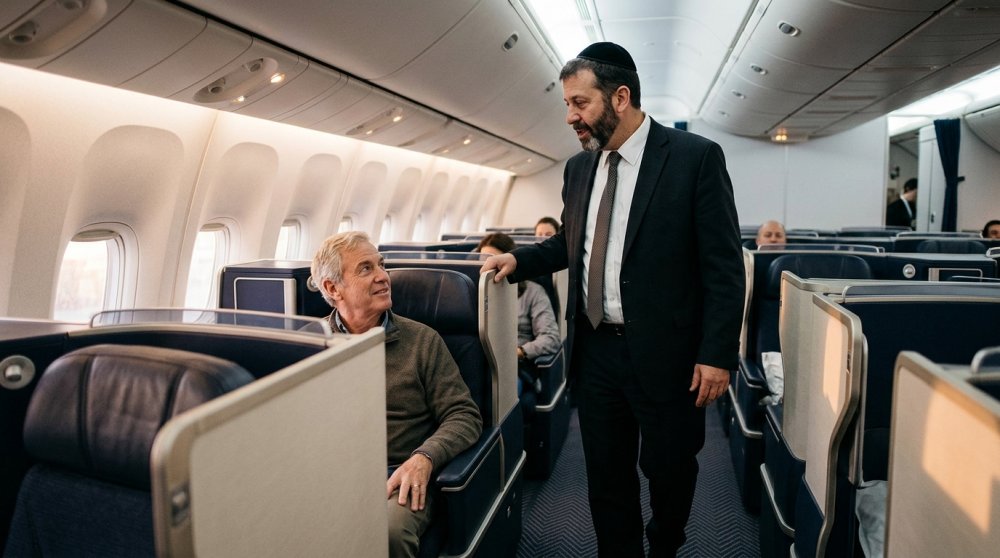
James MacDonald Settles Lawsuits, Turns to Ministry
Faith Facts
- James MacDonald resolved defamation lawsuits for nearly $10 million, clearing his name after years of legal dispute.
- The lawsuits included actions against his former church, Harvest Bible Chapel, and radio personality Erich “Mancow” Muller.
- MacDonald continues to serve men recovering from addiction and emphasizes the importance of Christian restoration.
James MacDonald reached significant settlements to address allegations and restore his reputation after a lengthy legal battle. The outcome marks the close of a difficult season, as MacDonald expresses gratitude for the opportunity to refocus on ministry and serving others in Christ’s name.
“These lawsuits were about anyone who’s ever been slandered by those who believe their microphone makes them untouchable, or their board seat puts them beyond reach,” MacDonald stated.
He maintained that his goal was to defend integrity in ministry and to protect the truth for the church community. The settlement also reflects the serious responsibility that comes with leadership in faith, and highlights the costliness of protecting one’s name from malicious accusation.
MacDonald is moving forward after years of dispute, seeking to help restore lives and renew faith through his work with Act Like Men Sobriety Houses. His focus remains on offering hope and redemption, rooted in Christian doctrine and compassion for those seeking new beginnings and God’s grace.
“My desire is to help shape a future where broken lives are restored, faith is renewed, and the hope of Christ is never out of reach for anyone,” MacDonald declared.
Faith calls believers to truth and reconciliation, rejecting the slander that divides communities. MacDonald’s story stands as a reminder for Christians to uphold righteousness and use challenges as an opportunity to witness for Christ, defend one’s integrity, and forgive as taught by Scripture.
Stay informed on stories that shape the church and our communities; walk forward in faith, defending truth and serving with humility for God’s greater purpose.
Faith
Survey Claims Trump Drives Young Adults From Church — But the Numbers Tell a Different Story
Faith Facts
- A survey conducted before the 2024 election and released two years later claims President Trump is causing young adults to leave church, raising questions about timing and motivation.
- The data shows church attendance decline among young Americans began long before Trump’s political career, rooted in decades of cultural shifts away from faith.
- Christian leaders emphasize that addressing genuine spiritual hunger and biblical teaching matters far more than political blame games.
A curious survey has emerged nearly two years after it was conducted, claiming that former President Donald Trump is driving Generation Z away from church. The timing of the release has raised eyebrows among many who question why researchers would wait so long to publish findings from a pre-election poll.
The survey, conducted in the months leading up to the 2024 presidential election, suggests a correlation between political affiliations and declining church attendance among young adults. However, critics point out that this narrative ignores decades of documented trends showing young people leaving organized religion long before Trump entered politics.
Data from Pew Research and other credible sources demonstrate that church attendance among young Americans has been declining steadily since the 1990s. This trend accelerated in the early 2000s, driven by cultural shifts toward secularism, changing family structures, and the rise of digital entertainment that competes for Sunday morning attention.
Conservative Christian leaders argue that blaming any political figure for spiritual decline misses the fundamental issue: the church’s responsibility to preach the Gospel faithfully and engage young people with truth and authenticity. Rather than pointing fingers at political leaders, they emphasize the need for strong biblical teaching and genuine community.
“The question isn’t about Trump or any politician,” one pastor noted. “The question is whether the church is offering something transcendent and true that speaks to the deep hunger in every human heart.”
Many observers see the delayed release of this survey as politically motivated, designed to influence public opinion during a time of ongoing political division. The tactic of using faith communities as political battlegrounds has become increasingly common, with various groups attempting to weaponize religious affiliation for partisan purposes.
The reality is that young Americans are searching for meaning, purpose, and authentic community. When churches focus on the timeless message of Christ rather than partisan politics from either side, they create environments where genuine faith can flourish across generational and political lines.
Statistics show that churches experiencing growth among young adults are those that emphasize biblical authority, worship excellence, service opportunities, and real relationships. Political affiliation of members matters far less than theological clarity and spiritual vitality.
As America continues to navigate cultural and political tensions, the church’s mission remains unchanged: to make disciples of all nations, teaching them to observe everything Christ commanded. That calling transcends election cycles, political personalities, and polling data.
Let us know what you think, please share your thoughts in the comments below.
Faith
Israel Prepares for Historic 2030 Milestone That Could Draw Millions of Believers
Faith Facts
- Israel’s Foreign Ministry is forming a special task force to prepare for the 2,000th anniversary of Jesus’ baptism in 2030
- The historic milestone is expected to draw millions of Christian pilgrims to the Holy Land
- A special envoy to the Christian world will lead the coordination efforts for this once-in-two-millennia event
In a move that acknowledges the profound significance of the Holy Land to believers worldwide, Israel’s Foreign Ministry has announced the formation of a dedicated task force to prepare for one of Christianity’s most momentous anniversaries.
The group, led by Israel’s special envoy to the Christian world, will coordinate preparations for the 2,000th anniversary of Jesus’ baptism, anticipated to occur in 2030. This historic milestone represents a once-in-two-millennia opportunity for Christians to connect with the physical location where Jesus’ public ministry began, as recorded in the Gospels of Matthew, Mark, Luke, and John.
The baptism of Jesus in the Jordan River marks a pivotal moment in Christian faith — the moment when God the Father proclaimed Jesus as His beloved Son, and the Holy Spirit descended like a dove. For two thousand years, this event has been commemorated by believers as the beginning of Christ’s earthly ministry and a model for Christian baptism.
Israeli officials anticipate that millions of Christian pilgrims from around the world will journey to the baptismal site during the anniversary period. This projection underscores the enduring connection between Christian faith and the physical geography of Scripture, a connection that draws hundreds of thousands of believers to Israel annually even in non-anniversary years.
The formation of this special task force demonstrates Israel’s recognition of the economic and diplomatic importance of Christian tourism, while also providing an unprecedented opportunity for believers to walk where Jesus walked at a historically significant moment. The coordination effort will likely involve infrastructure improvements, security arrangements, and logistical planning to accommodate what could be the largest gathering of Christian pilgrims in modern history.
For American Christians and believers worldwide, the 2030 anniversary represents more than a historical commemoration — it offers a tangible connection to the foundations of their faith. The Jordan River baptismal site has long been a destination for those seeking to deepen their spiritual walk by experiencing the landscapes of Scripture firsthand.
The six-year preparation period allows churches, ministries, and individual believers ample time to plan pilgrimages that could become defining spiritual experiences. This initiative also highlights the complex relationship between modern Israel and the Christian world, where shared historical connections to the land create opportunities for cooperation despite theological differences.
As the world approaches this significant anniversary, the event serves as a reminder that the Gospel accounts describe real events that occurred in real places — places that can still be visited today. For believers who hold Scripture as the inspired Word of God, the opportunity to stand at the Jordan River in 2030 carries profound meaning that transcends mere tourism.
Let us know what you think, please share your thoughts in the comments below.
Faith
Why Christians Must Not Abandon Broken Institutions
Faith Facts
- The United Nations Refugee Convention celebrates 75 years on July 28, prompting reflection on Christian engagement with global institutions
- Biblical wisdom calls believers to work within imperfect systems rather than withdraw from them
- Christian voices remain essential in shaping humanitarian policies that reflect God’s call to care for the vulnerable
As the United Nations Refugee Convention reaches its 75th anniversary this July 28, believers across America face a critical question about their role in the public square. When institutions appear ineffective, unresponsive, or disconnected from the concerns of faith communities, should Christians disengage or continue to engage?
This question resonates deeply in our current cultural moment. Many faithful Americans feel increasingly alienated from international bodies and domestic institutions that seem hostile to traditional values and Christian principles.
Yet the answer, grounded in Scripture and Christian tradition, points toward continued engagement rather than retreat. Throughout biblical history, God’s people have worked within imperfect systems to bring light into darkness and advocate for the vulnerable.
The United Nations Refugee Convention represents one such institution where Christian voices remain desperately needed. Despite its flaws and the legitimate critiques of international bureaucracy, this framework has provided protection for millions fleeing persecution, war, and violence over the past three-quarters of a century.
From Joseph serving in Pharaoh’s court to Daniel advising Babylonian kings, Scripture provides clear precedent for believers engaging with institutions that do not share their faith. These biblical examples demonstrate that withdrawal is not the answer when systems fall short of God’s standards.
The call to care for refugees and strangers runs throughout Scripture, from Old Testament commands to New Testament teachings. This mandate does not change based on the imperfection of the institutions through which such care is delivered.
Christian engagement with international humanitarian frameworks offers opportunities to advocate for policies that reflect biblical principles of compassion, justice, and human dignity. When believers step back, secular voices fill the void, often pushing agendas that conflict with traditional values.
The Church’s responsibility extends beyond critique to active participation in shaping better solutions. This means bringing Christian wisdom to bear on complex questions of refugee protection, asylum policies, and humanitarian assistance.
American Christians, in particular, have both the freedom and the platform to influence these conversations in ways believers in many other nations cannot. This privilege comes with responsibility to steward our voice wisely and effectively.
Engagement does not mean uncritical acceptance of every policy or position. Rather, it requires discernment to distinguish between an institution’s foundational purpose and its current failings, working to reform rather than abandon.
The alternative—complete disengagement—cedes the field to those who may have little regard for the sanctity of life, religious freedom, or the family structures that faith communities hold dear. It surrenders influence at precisely the moment when Christian perspective is most needed.
As we mark 75 years of the Refugee Convention, believers should recommit to principled engagement with institutions that serve the vulnerable. This engagement must be rooted in biblical truth, guided by wisdom, and motivated by love for our neighbors, including those forced to flee their homes.
The path forward requires Christians to be both faithful to our convictions and present in the institutions that shape our world. We must resist the temptation to retreat into isolation while also refusing to compromise core biblical principles.
Let us know what you think, please share your thoughts in the comments below.
-
Self-Reliance1 year agoTrump’s Bold Move Uncovers Massive Social Security Fraud
-

Faith1 year agoNew Clues Emerge in Noah’s Ark Mystery
-

News1 year agoGovernor Walz’s Rhetoric Sparks National Controversy
-

News1 year agoMel Gibson’s ‘The Passion of the Christ’ Sequel Title Announced
-

Family1 year agoTexas Lawmaker Targets Furries in Schools
-

Freedom1 year agoMaine Lawmaker Challenges Sports Fairness Controversy
-

Family1 year agoCanada’s Controversial Policy Sparks Ethical Debate
-
Faith8 months ago
Congress Hears Pleas for Nigerian Christians