
News
Israeli Military Leader Issues Stark Warning About Iran Threat


Faith Facts
- Former Israeli Navy Commander Maj.-Gen. Eliezer Marom warns Israel must prepare for repeated military confrontations with Iran
- The retired general argues that U.S. diplomatic agreements with Tehran will not bring lasting regional stability
- Israel faces the prospect of a prolonged conflict cycle with the Iranian regime regardless of international negotiations
A high-ranking former Israeli military leader is sounding the alarm about the threat posed by Iran, cautioning that the Jewish state must prepare for ongoing military conflict with the Islamic Republic despite any diplomatic deals brokered by Washington.
Maj.-Gen. Eliezer Marom, who formerly commanded Israel’s Navy, delivered a sobering assessment of the security challenges facing the nation. His warning comes as concerns mount about Iran’s nuclear ambitions and its support for terrorist proxies throughout the Middle East.
The retired general’s stark message emphasizes that Israel cannot rely on international agreements to guarantee its security. Any deal between the United States and Iran, he argues, is unlikely to produce the kind of lasting peace and stability that the region desperately needs.
Marom’s warning reflects a broader skepticism among Israeli military and political leaders about Iran’s intentions. The Islamic Republic has repeatedly called for Israel’s destruction while funding and arming groups like Hamas and Hezbollah that actively seek to harm Israeli civilians.
This assessment underscores the precarious security situation Israel faces, surrounded by hostile forces and threatened by a regime that openly declares its commitment to the Jewish state’s elimination. For Israel, the question is not whether conflict will come, but when and how to prepare for it.
The general’s comments also highlight the complex relationship between Israel and the United States on Iran policy. While America remains Israel’s closest ally, the two nations have sometimes differed on the best approach to containing Iranian aggression and preventing Tehran from obtaining nuclear weapons.
Israel’s position reflects the understanding that when it comes to national survival, the Jewish state cannot afford to place its faith in the promises of its enemies or the diplomatic assurances of even well-meaning allies. Military preparedness remains essential for deterring aggression and defending the nation.
As Iran continues to advance its nuclear program and expand its influence across the region, Israel faces difficult decisions about how to protect its citizens and preserve its security. The warnings from experienced military leaders like Marom serve as a reminder of the serious threats confronting the nation.
Let us know what you think, please share your thoughts in the comments below.

Faith Facts
- Scripture teaches believers to guard against alliances that compromise the defense of truth and righteousness (2 Corinthians 6:14-15).
- American elections remain a sacred trust entrusted to voters who must weigh candidates’ associations with care.
- Christian voters have a duty to examine every candidate’s record on religious liberty and national security.
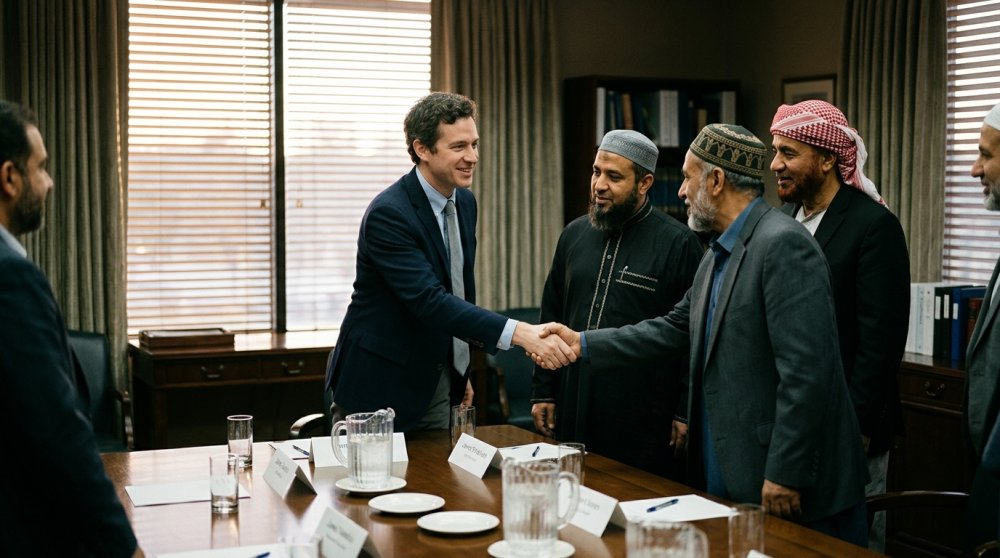
Democratic U.S. Senate candidate James Talarico is under fresh scrutiny after hosting a closed-door fundraising meet-and-greet with Muslim community leaders. Reports indicate that one of the organizers belongs to a coalition that has previously appeared alongside the Council on American-Islamic Relations.
The private event has raised eyebrows among Texas voters who worry that Talarico may be courting groups whose public stances clash with core American principles of religious freedom and security.
“Transparency matters,” one longtime Texas voter said. “Texans deserve to know exactly whom their candidates are meeting behind closed doors.”
Critics point out that the Council on American-Islamic Relations has long been viewed skeptically by many Americans because of its documented ties to organizations that do not share our nation’s Judeo-Christian heritage.
Supporters of Talarico insist the gathering was simply outreach to a growing demographic. Yet the closed nature of the event leaves unanswered questions about what commitments, if any, were discussed.
“We are committed to building relationships with every community,” a Talarico campaign spokesperson stated. “This was one of many conversations we are having across Texas.”
Breaking News: James Talarico fundraises with the Dallas Palestine Coalition… a group with close ties to CAIR, the group designated a terror organization by TX Governor Abbott. Is this who you want in the Senate? https://t.co/exjIhzEjI4
— Grant Stinchfield (@stinchfield1776) October 20, 2026
Faith leaders across the state are urging voters to measure any candidate’s associations against biblical standards of wisdom and discernment.
Let us know what you think, please share your thoughts in the comments below.
News
German Free Evangelical Federation Names First General Secretary Under New Leadership Structure

Faith Facts
- The Federation of Free Evangelical Churches in Germany has created a new general secretary position as part of its national leadership restructuring.
- Longtime staff leader Sascha Rützenhoff has been elected as the federation’s first general secretary.
- The denomination continues to uphold traditional Christian values in its governance and ministry approach.
The Federation of Free Evangelical Churches in Germany has taken a significant step in its organizational development. The denomination elected longtime staff leader Sascha Rützenhoff as its first general secretary. This new position was created as part of a restructuring of the denomination’s national leadership framework.
The move reflects the federation’s commitment to strengthening its leadership structure while maintaining its evangelical mission. Rützenhoff’s election brings experienced leadership to the newly established role. His longstanding service within the organization positions him to guide the federation through this transitional period.
Let us know what you think, please share your thoughts in the comments below.

Faith Facts
- A Nigerian Christian mother endured 19 months in prison on blasphemy charges before her full acquittal.
- The Shahbaz Bhatti Freedom Award recognizes those who defend religious liberty at great personal cost.
- Christians worldwide continue to face unjust imprisonment for their faith in hostile regions.
A Nigerian Christian mother who endured 19 months in prison on blasphemy charges has now been honored with the 2026 Shahbaz Bhatti Freedom Award after her complete acquittal.
The award is named after the Pakistani Christian minister Shahbaz Bhatti, who was martyred in 2011 for his courageous defense of religious minorities. Her case highlights the ongoing persecution of believers who are targeted simply for their faith.
“We thank God for His protection and for the justice that has finally prevailed,” she shared in her testimony following the verdict.
The 19-month ordeal underscores the real cost of standing firm in Christ when laws are weaponized against the faithful. Families across Nigeria and beyond continue to pray for those still imprisoned for their beliefs.
The Shahbaz Bhatti Freedom Award stands as a powerful reminder that courage and faith can overcome even the darkest trials.
Let us know what you think, please share your thoughts in the comments below.


-

 Self-Reliance2 years ago
Trump’s Bold Move Uncovers Massive Social Security Fraud
-

 Faith2 years ago
New Clues Emerge in Noah’s Ark Mystery
-

 News2 years ago
Governor Walz’s Rhetoric Sparks National Controversy
-

 News2 years ago
Mel Gibson’s ‘The Passion of the Christ’ Sequel Title Announced
-

 Family2 years ago
Texas Lawmaker Targets Furries in Schools
-

 Freedom2 years ago
Maine Lawmaker Challenges Sports Fairness Controversy
-

 Family1 year ago
Canada’s Controversial Policy Sparks Ethical Debate
-
Faith11 months ago
Congress Hears Pleas for Nigerian Christians