
Faith
Illinois Church Refuses to Back Down After LGBT Protest

Faith Facts
- A Chicago-area church stood firm on its biblical messaging about marriage and sexuality after facing protests from LGBT activists
- Dozens of protesters gathered outside the church following calls from a Democratic state official’s activist group
- The pastor defended the church’s right to proclaim biblical truth and rejected demands to remove their digital sign messaging
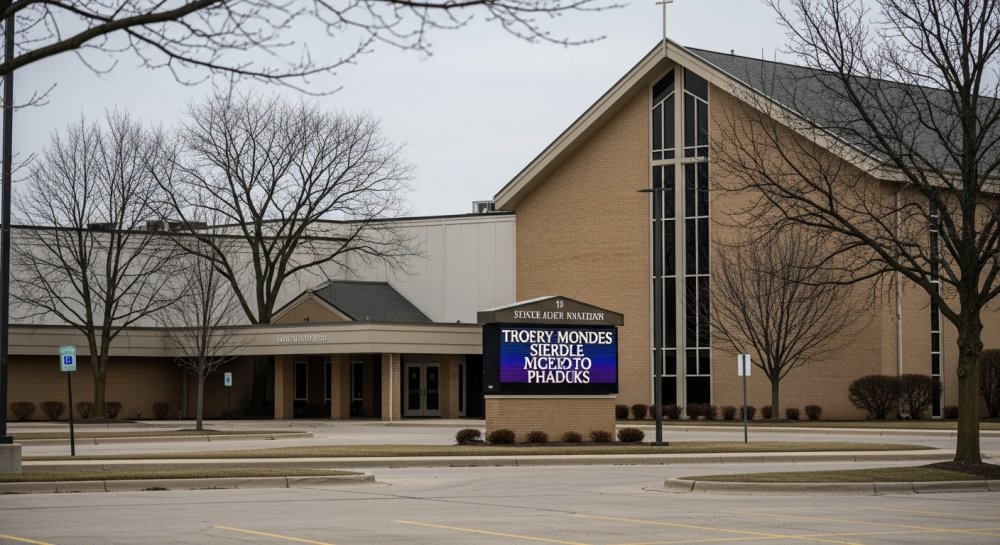
A Chicago-area pastor is refusing to back down after his church faced coordinated protests over its digital sign messaging defending biblical sexuality and marriage. The demonstration, organized by an LGBT activist group founded by a Democratic state official, drew dozens of protesters to the church property last Friday.
The controversy erupted when the church’s digital sign displayed messages affirming traditional Christian teaching on marriage and human sexuality. Rather than acquiesce to pressure from activists demanding the removal of the messaging, church leadership has chosen to stand firm in their constitutional right to proclaim biblical truth.
The pastor defended the church’s position, emphasizing that the messaging reflects core Christian doctrine that has been upheld by believers for thousands of years. He noted that the church has both a religious freedom right and a moral obligation to teach what Scripture clearly states about God’s design for marriage and sexuality.
The protest was organized by an LGBT activist organization founded by a Democratic state official, raising questions about the intersection of political activism and attempts to silence religious expression. The group mobilized supporters through social media, calling on members to demonstrate against what they characterized as harmful messaging.
Church members have rallied around their pastoral leadership, expressing support for the decision to maintain the biblical messaging despite outside pressure. Many congregants view the protest as an attack on religious liberty and an attempt to force the church to compromise foundational Christian beliefs.
The incident highlights the growing tension between religious freedom and LGBT activism in America. Churches across the nation increasingly find themselves targeted for maintaining traditional biblical teaching on sexuality and marriage, even when that teaching is expressed on their own property.
Legal experts note that houses of worship enjoy robust First Amendment protections for their religious speech and expression. The church’s digital sign, located on its own property, falls clearly within protected religious communication.
Despite the organized opposition, the pastor indicated the church has no plans to alter its messaging or retreat from biblical truth. He emphasized that loving one’s neighbor, as Christ commanded, does not require abandoning or hiding what God’s Word teaches about sin and righteousness.
The situation serves as a reminder to Christians nationwide of the importance of standing firm in faith, even when cultural pressure intensifies. As secular activists become more aggressive in demanding conformity, churches must decide whether they will compromise biblical truth or remain faithful to Scripture regardless of opposition.
Let us know what you think, please share your thoughts in the comments below.

Faith Facts
- An Indian pastor was falsely accused in a criminal case while his church building and residence were burned down on June 14
- The pastor’s wife is seeking the arrest of a Sikh man suspected of deliberately setting the fire
- Christian persecution in India continues to escalate under the watch of Hindu nationalist authorities
Christian pastors in India are facing a disturbing pattern of persecution, as evidenced by a recent attack that left one ministry leader falsely accused and his church in ashes. The incident highlights the growing hostility toward followers of Christ in a nation where religious freedom is rapidly deteriorating.
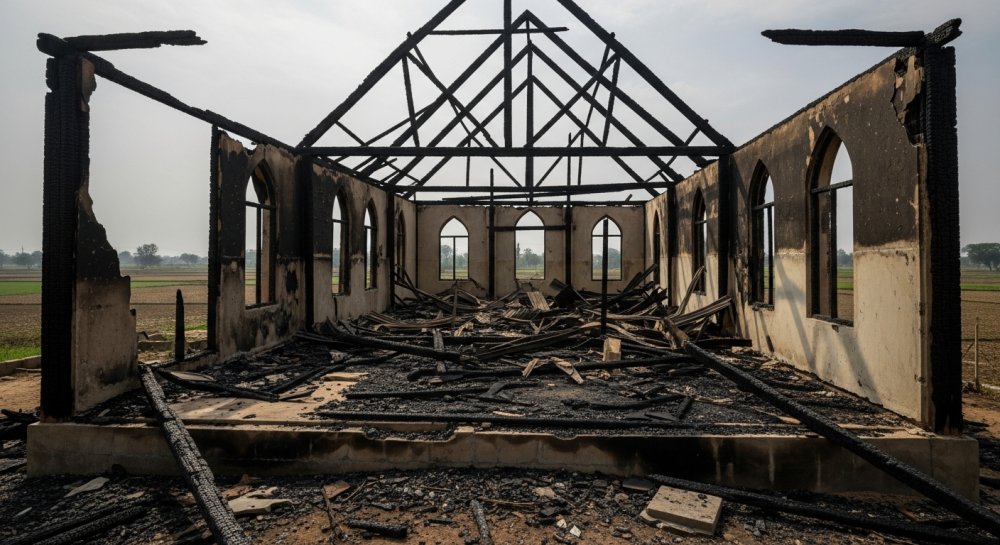
According to sources close to the situation, a pastor’s wife has taken action to seek justice after her husband was wrongly named in a criminal case. At the same time, she is calling for the arrest of a Sikh man believed to be responsible for burning down their church building and family residence on June 14.
The dual assault on this Christian family—through both false legal accusations and physical destruction of their place of worship—reflects a calculated strategy to silence the Gospel in regions where Hindu nationalist sentiment runs strong. These attacks are not random; they are part of a broader campaign to marginalize Christian communities and drive them from their homes.
The timing of the false charges alongside the arson attack suggests a coordinated effort to intimidate this pastor and his congregation. By manufacturing legal troubles while simultaneously destroying their physical ministry base, persecutors aim to eliminate any platform from which the Christian message can be proclaimed.
India has seen a dramatic increase in violence against Christians in recent years, with churches burned, pastors beaten, and believers arrested on fabricated charges. Religious freedom watchdog organizations have repeatedly sounded the alarm about the deteriorating conditions for Christians in the world’s largest democracy.
The plight of this pastor and his family should serve as a wake-up call to American Christians. While we enjoy unprecedented religious liberty in the United States, our brothers and sisters in nations like India face daily threats simply for professing faith in Jesus Christ. We must pray fervently for their protection and speak boldly on their behalf.
As this case moves forward, the pastor’s wife continues to pursue legal remedies and accountability for the arson attack. Her courage in the face of such persecution is a testament to the strength that comes from unwavering faith in God, even when earthly authorities fail to provide justice.
American believers should take note: the persecution of Christians abroad is not a distant concern. It reminds us to cherish our own freedoms, support persecuted believers worldwide, and remain vigilant against any encroachment on religious liberty here at home.
Let us know what you think, please share your thoughts in the comments below.
Faith Facts
- The U.S. men’s national soccer team celebrated their World Cup round-of-16 qualification with prayer following a 2-0 victory over Bosnia and Herzegovina
- The team will face Belgium in Seattle on Monday without their leading scorer, striker Folarin Balogun
- The public display of faith demonstrates the continued importance of prayer and Christian values in American sports
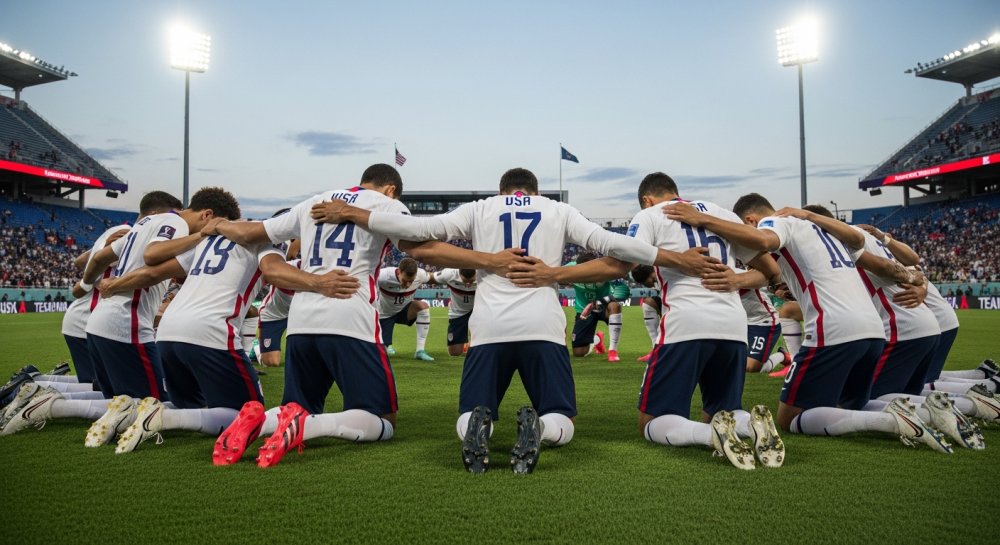
In a powerful display of faith on the world stage, the United States men’s national soccer team gathered in prayer after securing their place in the World Cup round-of-16 with a hard-fought 2-0 victory over Bosnia and Herzegovina on Wednesday. The moment of collective gratitude reminded millions watching that America’s strength comes not just from athletic prowess, but from our nation’s unwavering reliance on God.
The victory was both a cause for celebration and concern. While Team USA demonstrated the grit and determination that reflects American values, they will enter their crucial match against Belgium in Seattle, Washington, on Monday without their top offensive weapon, striker Folarin Balogun.
Mark McKenzie led the USMNT in prayer after the Americans moved on to the Round of 16 ???? pic.twitter.com/scEBXAO3ow
— SportsCenter (@SportsCenter) July 2, 2026
The team’s public prayer following the match stands as a testament to the role faith continues to play in American athletics, even as secular forces in our culture attempt to push religion to the sidelines. This moment of worship serves as an encouraging reminder that many of our nation’s athletes still recognize the source of their talents and blessings.
As the tournament progresses, the absence of Balogun will test the team’s depth and resilience. The striker has been instrumental in the American squad’s success throughout the competition, and his loss creates a significant challenge as the team faces a formidable Belgian side.
The match in Seattle represents not just an athletic contest, but an opportunity for Americans to rally behind a team that isn’t afraid to publicly acknowledge their faith. In an era where Christian expression is increasingly marginalized in public life, these athletes are setting an example worth celebrating.
The round-of-16 clash with Belgium will require the same determination and unity that Team USA has displayed throughout the tournament. With faith as their foundation and the support of millions of Americans behind them, the team enters this critical match with more than just tactical preparation—they carry the prayers of a nation.
Let us know what you think, please share your thoughts in the comments below.
Faith Facts
- Jan Hus was martyred on July 6, 1415, for standing against corrupt church practices and defending biblical truth
- America’s first Catholic cathedral broke ground in Baltimore during a pivotal time in the nation’s religious development
- Pope Martin I was consecrated centuries ago, marking an important moment in early church leadership
This week marks the anniversaries of three pivotal events that shaped the course of Christian history across different centuries. From martyrdom to architectural milestones, these moments remind us of the enduring faith that has sustained believers through triumph and persecution alike.
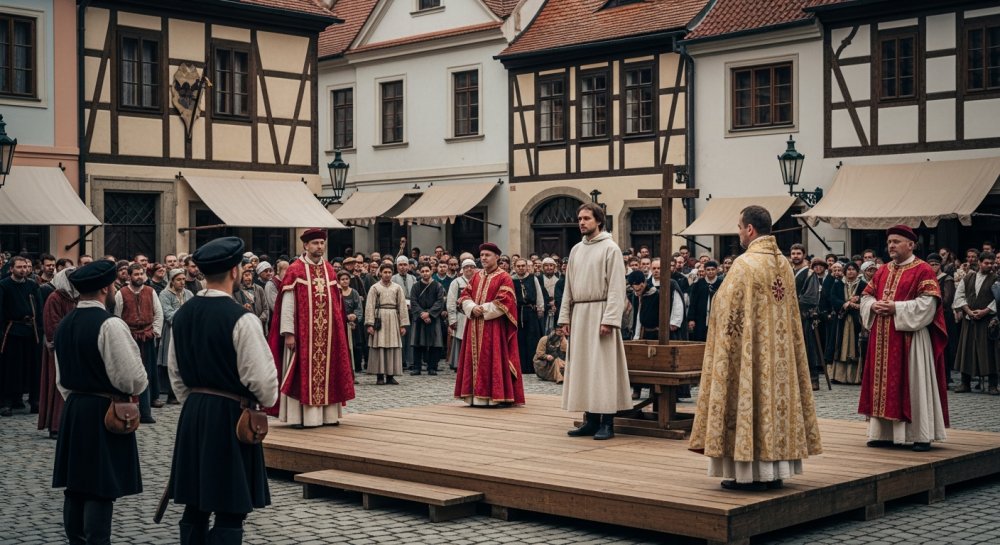
On July 6, 1415, Jan Hus, a Czech priest and early church reformer, was executed by burning at the stake for his unwavering stand against corruption within the institutional church. Hus had openly challenged the sale of indulgences and called for Scripture to be the ultimate authority over church tradition. His courage in defending biblical truth, even unto death, inspired later reformers including Martin Luther and laid groundwork for the Protestant Reformation that would transform Christianity over a century later.
Hus had been promised safe conduct to the Council of Constance, but church authorities broke their word and condemned him as a heretic. Rather than recant his biblically-grounded convictions, he chose martyrdom, reportedly singing hymns as the flames consumed him.
In a very different chapter of Christian history, the cornerstone for the Baltimore Basilica was laid on July 7, 1806, establishing what would become the first Roman Catholic cathedral built in the United States. The neoclassical structure represented a significant moment for American Catholics, who had long faced discrimination and legal restrictions in the colonies.
Designed by Benjamin Henry Latrobe, who also worked on the U.S. Capitol, the cathedral symbolized the growing acceptance and establishment of Catholic faith in the young American republic. The building still stands today as a testament to religious freedom and the diverse Christian heritage that helped build our nation.
Pope Martin I was consecrated on July 5, 649, during a turbulent period in church history. His papacy would be marked by his defense of orthodox Christian doctrine against imperial pressure. Martin I stood firm against the monothelite heresy, which denied that Christ had both a human and divine will, despite facing persecution from Byzantine Emperor Constans II for his theological stand.
The pope was eventually arrested, exiled, and died from the harsh treatment he endured. Like Jan Hus centuries later, Martin I exemplified the willingness of faithful Christians to suffer for truth rather than compromise essential doctrines.
These three events, though separated by centuries and circumstances, share a common thread: the faithfulness of Christians who stood firm in their convictions. Whether through martyrdom, building projects, or doctrinal stands, these historical moments reveal the enduring strength of Christian witness across generations.
Let us know what you think, please share your thoughts in the comments below.


-

 Self-Reliance1 year ago
Trump’s Bold Move Uncovers Massive Social Security Fraud
-

 Faith1 year ago
New Clues Emerge in Noah’s Ark Mystery
-

 News1 year ago
Governor Walz’s Rhetoric Sparks National Controversy
-

 News1 year ago
Mel Gibson’s ‘The Passion of the Christ’ Sequel Title Announced
-

 Family1 year ago
Texas Lawmaker Targets Furries in Schools
-

 Freedom1 year ago
Maine Lawmaker Challenges Sports Fairness Controversy
-

 Family1 year ago
Canada’s Controversial Policy Sparks Ethical Debate
-
Faith7 months ago
Congress Hears Pleas for Nigerian Christians