
Faith
How Christian Missionaries Could Save Civilization From the Coming AI Dark Age

Faith Facts
- Christian missionaries pioneered global literacy by teaching people to read the Bible, fundamentally shaping modern civilization
- Artificial intelligence threatens to disrupt literacy in ways not seen since the fall of Rome
- Faith-driven literacy efforts may prove essential to preserving knowledge and culture in the digital age
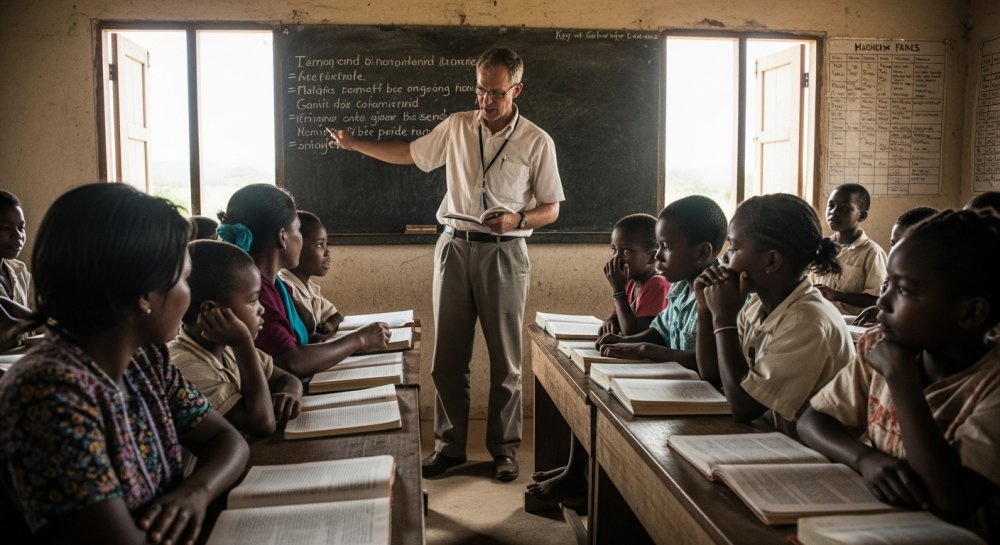
Throughout history, Christian missionaries have stood as guardians of knowledge and literacy, carrying the Word of God to every corner of the globe. In doing so, they didn’t just spread the Gospel—they taught entire civilizations to read, write, and think critically about the world around them.
Today, as artificial intelligence threatens to fundamentally reshape how humanity processes and retains information, those same missionary principles may be our best defense against a new dark age. The parallels to previous periods of civilizational decline are striking and sobering.
For centuries, Christian missionaries understood a simple truth: to know God’s Word, people must be able to read it. This conviction drove unprecedented literacy campaigns across Africa, Asia, Latin America, and the Pacific Islands. Where missionaries went, schools followed. Where schools were built, communities were transformed.
The impact cannot be overstated. Modern education systems in countless nations trace their roots directly to missionary efforts. The preservation of indigenous languages, the development of written forms for oral traditions, the establishment of universities—all flow from the missionary commitment to biblical literacy.
Now we face a different kind of barbarian at the gates. Artificial intelligence promises to do our reading, writing, and thinking for us. Already, students rely on AI to write essays they’ll never actually compose themselves. Professionals use chatbots to generate reports they’ll barely skim. The temptation to outsource our mental labor grows stronger by the day.
The danger isn’t just that we’ll forget how to write. It’s that we’ll forget how to think deeply, to wrestle with complex ideas, to engage seriously with truth claims—including those found in Scripture. When reading becomes optional, so does the careful reasoning that reading cultivates.
This represents a literacy crisis as profound as any in human history. Just as the fall of Rome led to centuries where classical knowledge survived only in monastery scriptoriums, our digital age could usher in a time when genuine literacy becomes the rare province of a faithful few.
But here’s where the missionary tradition offers hope. The same commitment that once drove believers to remote villages with Bibles and primers could now inspire a new generation to preserve genuine literacy and critical thinking. Christian educators, homeschooling families, and faith communities may become the new monasteries—keeping alive the dying art of careful reading and thoughtful writing.
The stakes are civilization itself. A society that cannot read deeply cannot think clearly. A culture that outsources its reasoning to algorithms will eventually lose the capacity to reason at all. And a church that doesn’t read Scripture for itself will be blown about by every wind of doctrine.
The barbarians are indeed at the gates once more. But they come not with swords but with seductive promises of effortless knowledge and instant answers. Against this threat, the missionary spirit—that stubborn insistence on teaching people to read God’s Word for themselves—may be exactly what preserves human flourishing.
Christians have saved civilization before through literacy. We may be called to do so again.
Let us know what you think, please share your thoughts in the comments below.

Faith Facts
- The Bible affirms the sanctity of human life from conception, grounding the pro-life position in Scripture.
- James Talarico’s claim that Scripture is silent on abortion overlooks multiple passages that protect the unborn.
- Christian teaching on life is rooted in the unchanging Word of God rather than shifting cultural arguments.
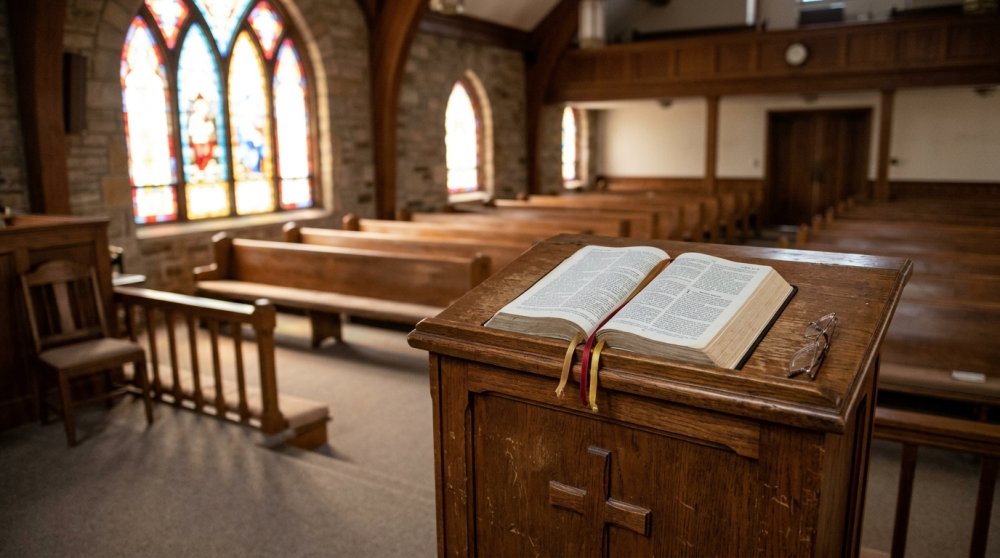
While the Bible does not use the modern term abortion, the absence of contemporary terminology does not mean the absence of biblical teaching. Scripture consistently affirms the value of life in the womb and condemns the shedding of innocent blood.
Old Testament law explicitly protects the unborn child, establishing a moral framework that transcends modern political debates.
Psalm 139 declares that God forms each person in the womb, knitting them together with purpose and intention.
“For you created my inmost being; you knit me together in my mother’s womb.”
This divine craftsmanship leaves no room for treating the unborn as disposable.
The prophetic witness in Jeremiah reinforces this truth, showing that God knows and calls individuals before birth.
“Before I formed you in the womb I knew you, before you were born I set you apart.”
Such language underscores the personhood and destiny of the child from the earliest moments of existence.
New Testament teaching on love and justice further strengthens the case for defending the defenseless.
Proverbs 24 warns against failing to rescue those being led away to death, a command that applies directly to the unborn.
Christian voters and lawmakers who uphold these biblical principles stand in continuity with generations of believers who treasured life as a gift from God.
Let us know what you think, please share your thoughts in the comments below.

Faith Facts
- Actress Danica McKellar credits Candace Cameron Bure with leading her to a personal relationship with Jesus Christ.
- McKellar is best known for her childhood role as Winnie Cooper on the beloved family series “The Wonder Years.”
- Bure, a committed believer, has consistently used her platform to point others toward faith and traditional values.
Danica McKellar opened up about the meaningful influence of her longtime friend Candace Cameron Bure in her journey toward faith. The two former child stars developed a friendship that extended far beyond their early careers in Hollywood.
McKellar explained that Bure was the one who introduced her to Jesus in a personal way. Their shared history in the entertainment industry gave McKellar a trusted voice to hear when spiritual matters came up.
“Wonder Years” actress Danica McKellar shares how fellow child star Candace Cameron Bure helped bring her to Jesus.
McKellar has spoken openly about her growing faith and the importance of surrounding herself with fellow believers. She has described how that friendship helped anchor her during seasons of change and uncertainty.
The story reflects a pattern seen among many in Hollywood who quietly seek truth and community outside the spotlight. For McKellar, that path led her straight to the feet of Jesus through the faithful witness of a friend.
Let us know what you think, please share your thoughts in the comments below.

Faith Facts
- Danica McKellar credits Candace Cameron Bure with leading her to Christ four years ago.
- McKellar now views her acting career through a faith-centered lens.
- She seeks roles that reflect her Christian values and convictions.
Actress Danica McKellar has opened up about the moment she found faith in Christ. She credits longtime friend and fellow former child star Candace Cameron Bure for guiding her on that journey four years ago.
McKellar shared that her new relationship with Jesus has transformed the way she sees her career and the projects she now chooses to pursue. Instead of simply chasing roles for fame or success, she is now more intentional about the stories she tells on screen.
“It’s been Jesus this whole time”
McKellar’s transformation reflects a deeper commitment to living out her faith both on and off the screen. She has expressed gratitude for the spiritual mentorship she received from Bure, whose own public witness as a believer has long been a steady presence in Hollywood.
The actress says her faith has redefined her purpose, helping her to focus on projects that align with her Christian convictions rather than simply accepting work based on popularity or financial gain.
Let us know what you think, please share your thoughts in the comments below.


-

 Self-Reliance2 years ago
Trump’s Bold Move Uncovers Massive Social Security Fraud
-

 Faith2 years ago
New Clues Emerge in Noah’s Ark Mystery
-

 News2 years ago
Governor Walz’s Rhetoric Sparks National Controversy
-

 News2 years ago
Mel Gibson’s ‘The Passion of the Christ’ Sequel Title Announced
-

 Family2 years ago
Texas Lawmaker Targets Furries in Schools
-

 Freedom2 years ago
Maine Lawmaker Challenges Sports Fairness Controversy
-

 Family1 year ago
Canada’s Controversial Policy Sparks Ethical Debate
-
Faith11 months ago
Congress Hears Pleas for Nigerian Christians