
Faith
Historic Trail Opens Honoring the Man Who Gave Us the English Bible


Faith Facts
- A new 60-mile walking trail in south-west England celebrates William Tyndale, who translated the Bible into English 500 years ago
- Tyndale was executed in 1536 for translating Scripture, but his work formed the foundation of the King James Bible
- The trail connects key sites in Tyndale’s life, offering Christians a pilgrimage experience honoring Biblical literacy
A remarkable new walking route has opened in south-west England, honoring one of Christianity’s greatest heroes—William Tyndale, the scholar who gave English-speaking people direct access to God’s Word. The Tyndale Trail marks 500 years since his revolutionary English New Testament first reached readers in 1526.
The long-distance path traces pivotal locations in Tyndale’s life across the beautiful countryside where he was born and raised. For centuries, ordinary believers were denied Scripture in their own language, forced to depend entirely on clergy who controlled Latin texts.
Tyndale changed everything. His translation work, done in secret and at great personal risk, put the Bible directly into the hands of common people. His phrases and word choices became so deeply embedded in English that they still echo through our language today.
The trail offers modern Christians a chance to walk where this faithful translator once walked, reflecting on the price paid for Biblical accessibility. Tyndale’s commitment to Scripture cost him his life—he was executed by strangulation and burning in 1536, condemned as a heretic for his faithful service to God’s Word.
Yet his legacy endures. Scholars estimate that the King James Bible, which has shaped English-speaking Christianity for over four centuries, draws approximately 80 percent of its New Testament directly from Tyndale’s original translation work.
The new trail provides both a physical journey and a spiritual pilgrimage. Walkers can contemplate the courage required to defy powerful religious and political authorities who sought to keep Scripture locked away from ordinary believers.
This commemoration arrives at a crucial moment when Biblical literacy faces new challenges. While Tyndale risked everything to make Scripture available, many modern believers take that access for granted, leaving Bibles unopened on shelves.
The trail serves as a powerful reminder that the religious freedom Americans cherish—including unfettered access to God’s Word in our own language—came at tremendous cost. Faithful servants like Tyndale endured persecution, exile, and martyrdom so that we might read Scripture for ourselves.
By walking the Tyndale Trail, Christians honor not just one man’s sacrifice, but the transformative power of Scripture made accessible to all. Tyndale believed every plowboy should be able to read the Bible—a revolutionary concept that helped spark both the Reformation and the spread of democratic ideals.
His final prayer, reportedly spoken before his execution, captures his heart: “Lord, open the King of England’s eyes.” Within a year, English Bibles were authorized for public reading in churches throughout England.
Let us know what you think, please share your thoughts in the comments below.


Faith Facts
- Texas State Rep. James Talarico admitted he was ‘intentionally provocative’ when he previously called God ‘non-binary’
- Talarico, a Democratic U.S. Senate nominee, attempted to defuse Republican criticism over his past statements mixing religion and gender ideology
- The Texas lawmaker simultaneously attacked his opponent, Attorney General Ken Paxton, calling him ‘the most corrupt politician in America’
A Texas Democratic lawmaker is backtracking from controversial statements he made about God and gender after facing mounting criticism from conservatives and Christians across the state.
Texas State Rep. James Talarico, who is running as the Democratic nominee for U.S. Senate, acknowledged Wednesday that his past remarks calling God “non-binary” were deliberately provocative. The admission comes as Republicans have increasingly spotlighted his statements that blend religious language with progressive gender ideology.
Talarico’s recantation represents a significant retreat from positions that have alarmed Christian voters and traditional values advocates. His original comments appeared to redefine biblical doctrine through the lens of modern gender theory, a move that many faith leaders have condemned as incompatible with Scripture.
The Texas representative’s attempt to walk back his statements comes at a critical juncture in his Senate campaign. While trying to soften his image on matters of faith, Talarico simultaneously launched attacks against his opponent, Attorney General Ken Paxton.
“The most corrupt politician in America,” Talarico said of Paxton, escalating the rhetoric in what has become an increasingly contentious race.
The controversy highlights the ongoing tension between progressive Democrats and Christian conservatives over fundamental questions of faith and biblical interpretation. Talarico’s admission that he was “intentionally provocative” suggests a calculated effort to generate attention, though it appears to have backfired among religious voters.
For many Christians, the characterization of God using terminology rooted in contemporary gender ideology represents a troubling departure from orthodox theology. The Bible consistently uses masculine pronouns when referring to God, and traditional Christian doctrine affirms the triune nature of God as Father, Son, and Holy Spirit.
Talarico’s effort to distance himself from his previous statements may prove challenging, as his words were widely circulated and documented. The damage among faith-based voters who prioritize biblical fidelity and traditional Christian teaching may already be done.
The incident serves as a reminder of the fundamental divide between secular progressive ideology and Christian orthodoxy on matters of gender and identity. As candidates across the nation navigate these cultural flashpoints, voters are watching closely to see who stands firm on biblical principles.
Let us know what you think, please share your thoughts in the comments below.
Faith Facts
- Christians and Jews share the same foundational Scriptures and worship the God of Abraham, Isaac, and Jacob
- Jesus Christ was Jewish, making antisemitism fundamentally incompatible with Christian faith
- Biblical prophecy ties the fate of nations directly to how they treat the Jewish people
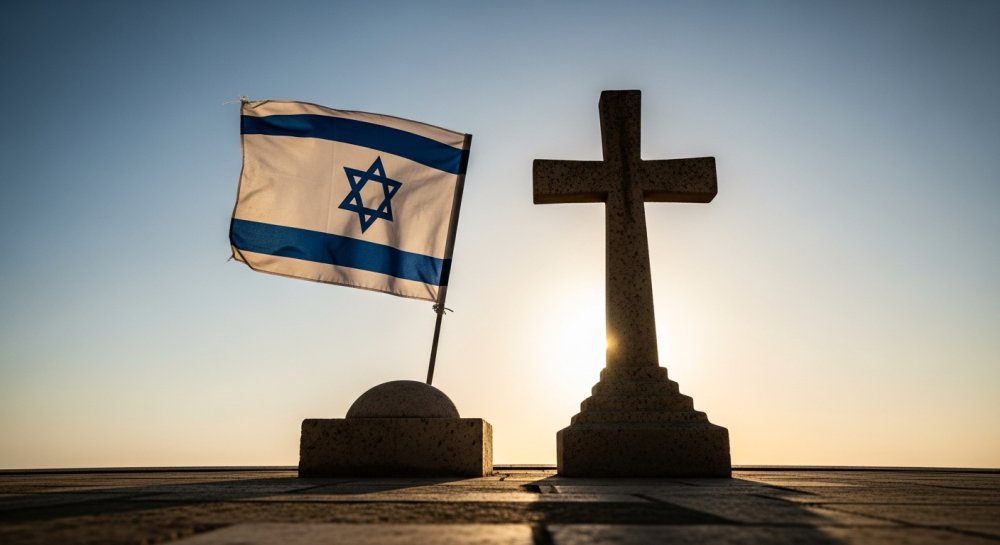
The rise of antisemitism across America and the world isn’t just a Jewish problem—it’s a direct assault on the Christian faith itself. Believers who understand Scripture recognize that hatred of the Jewish people contradicts the very foundation of Christianity.
First, Christians worship a Jewish Messiah. Jesus Christ was born a Jew, lived as a Jew, and fulfilled Jewish prophecy. Every Christian prayer, every Scripture reading, and every worship service connects directly to the Jewish roots of our faith. To hate Jews while claiming to follow a Jewish Savior reveals a profound spiritual contradiction that cannot be reconciled with genuine faith.
Second, the Bible Christians cherish was written primarily by Jewish authors under divine inspiration. From Moses to the prophets, from the Psalms to the Gospels, God chose the Jewish people as the vessel through which His Word came to the world. The apostles who spread the Gospel were Jewish men who risked everything to share the message of salvation. Rejecting or hating the Jewish people means rejecting the very instruments God used to bring us His truth.
Third, Scripture is crystal clear about God’s eternal covenant with the Jewish people. In Genesis 12:3, God promises Abraham, “I will bless those who bless you, and whoever curses you I will curse.” This wasn’t a temporary arrangement or a conditional promise—it remains in effect today. Nations and individuals who stand with Israel and the Jewish people align themselves with God’s purposes, while those who oppose them place themselves in opposition to the Almighty.
Fourth, the spiritual battle against antisemitism is ultimately a battle against God’s plan for human redemption. Satan has always sought to destroy the Jewish people because through them came the Messiah, the Scriptures, and God’s revelation to mankind. From Pharaoh to Haman to Hitler, the enemy has used Jew-hatred as a weapon against God’s purposes. Christians who understand spiritual warfare recognize antisemitism as demonic in origin and antithetical to the Kingdom of God.
The connection between Christianity and Judaism isn’t merely historical—it’s theological, spiritual, and eternal. The roots of Christian faith run deep into Jewish soil, watered by the same God who chose Abraham and sent His Son to save the world.
As antisemitism surges in universities, city streets, and even some churches, Christians face a defining moment. Will we stand with our Jewish brothers and sisters, or will we remain silent? Will we defend the people through whom God gave us everything, or will we turn away when they need allies most?
The answer for faithful Christians should be obvious. We cannot claim to love God while hating those He called His chosen people. We cannot honor Christ while dishonoring His heritage. We cannot read our Bibles with gratitude while harboring animosity toward those who wrote it.
Christian support for the Jewish people isn’t about politics—it’s about faithfulness to Scripture and obedience to God. It’s about recognizing that the same demonic hatred that filled concentration camps now masquerades as political activism on college campuses and city streets.
Every generation of Christians faces tests of faith and courage. This is ours. Standing against antisemitism isn’t optional for believers—it’s commanded by Scripture, modeled by Christ, and essential to authentic Christian witness.
The God we serve doesn’t change, and His promises to the Jewish people haven’t been revoked. Christians who understand this truth will not hesitate to condemn antisemitism wherever it appears, whether in the political left’s anti-Israel activism or in fringe movements claiming Christian identity while preaching hatred.
Let us know what you think, please share your thoughts in the comments below.

Faith Facts
- Christians in Bangladesh are facing increased sectarian violence, particularly in regions dominated by the Islamist Jamaat-e-Islami party
- Believers are living in heightened fear following recent elections, as extremist elements have intensified their targeting of religious minorities
- The attacks represent a troubling escalation of religious persecution against the Christian community in this Muslim-majority nation
Faithful Christians in Bangladesh find themselves navigating a landscape of mounting danger as Islamist extremists ramp up their campaign of intimidation and violence. The situation has become particularly dire in areas where the radical Jamaat-e-Islami party holds significant influence, leaving believers to worship under the shadow of persecution.
The Christian community, though small in this predominantly Muslim nation, has long maintained a quiet presence focused on worship, service, and family. Now, however, that peaceful existence is under direct assault from those who would deny the fundamental human right to practice one’s faith freely.
This escalating persecution serves as a stark reminder of the cost of discipleship in regions hostile to the Gospel. While many American Christians enjoy constitutional protections and religious liberty, their brothers and sisters in Bangladesh face real threats to their safety, their livelihoods, and even their lives simply for following Christ.
The timing of these attacks—coinciding with the electoral period—suggests a calculated effort by extremist elements to exploit political transitions for sectarian purposes. Such violence contradicts the principles of freedom and human dignity that form the bedrock of civilized society and Christian teaching.
For believers committed to the Great Commission and the global body of Christ, the plight of Bangladeshi Christians demands both prayer and advocacy. Religious freedom is not merely a political preference but a God-given right that transcends borders and cultures.
As persecution intensifies, the faith and resilience of these believers stands as a powerful testimony. Their willingness to remain steadfast despite mounting pressure exemplifies the courage that has characterized the Church throughout its history, from the Roman catacombs to modern-day restricted nations.
The international community, particularly nations founded on Judeo-Christian principles like the United States, bears a moral responsibility to shine a light on such persecution and to support policies that protect religious minorities worldwide. Faith is not a crime, and those who practice it peacefully deserve protection, not persecution.
Let us know what you think, please share your thoughts in the comments below.


-

 Self-Reliance1 year ago
Trump’s Bold Move Uncovers Massive Social Security Fraud
-

 Faith1 year ago
New Clues Emerge in Noah’s Ark Mystery
-

 News1 year ago
Governor Walz’s Rhetoric Sparks National Controversy
-

 News1 year ago
Mel Gibson’s ‘The Passion of the Christ’ Sequel Title Announced
-

 Family1 year ago
Texas Lawmaker Targets Furries in Schools
-

 Freedom1 year ago
Maine Lawmaker Challenges Sports Fairness Controversy
-

 Family1 year ago
Canada’s Controversial Policy Sparks Ethical Debate
-
Faith6 months ago
Congress Hears Pleas for Nigerian Christians