
Faith
Historic Shrine to Honor America’s First Black Priest

Faith Facts
- Father Augustine Tolton became America’s first publicly recognized black priest in the late 19th century
- A new shrine will be built at St. Boniface Church in Quincy, Illinois, where he celebrated his first public Mass
- Father Tolton’s cause for canonization is currently under consideration by the Vatican
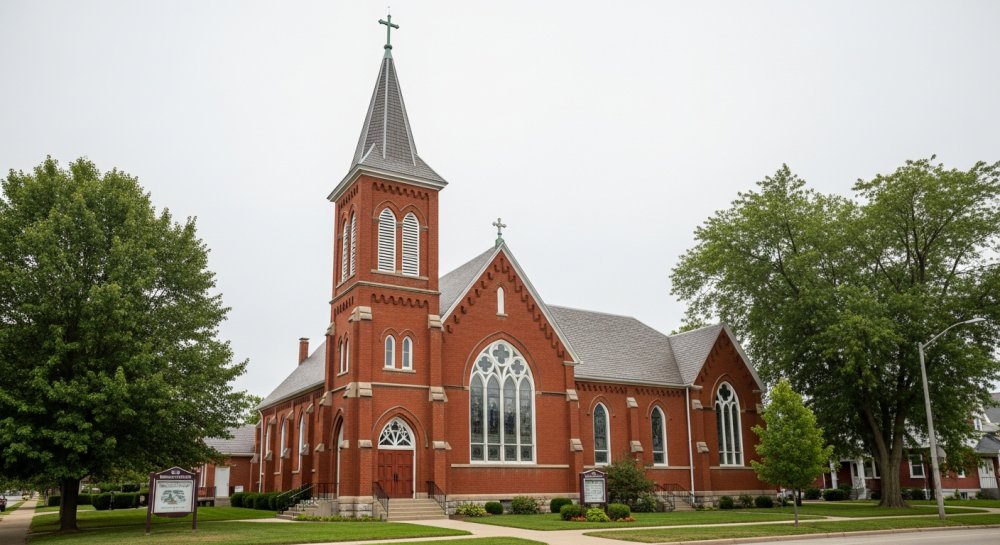
A powerful testament to faith and perseverance is being commemorated in Quincy, Illinois, where a new shrine will honor Father Augustine Tolton, America’s first publicly recognized black priest. The shrine will be erected at the historic site of St. Boniface Church, where Father Tolton offered his first public Mass to an American congregation.
Father Tolton’s remarkable journey from slavery to the priesthood stands as an inspiring example of Christian dedication in the face of overwhelming adversity. Born into slavery in 1854, Tolton and his family escaped to freedom when he was a child, eventually settling in Quincy.
Despite facing significant racial prejudice even within the Church, Tolton pursued his calling with unwavering determination. When no American seminary would accept him due to his race, he traveled to Rome to complete his theological studies at the Pontifical Urbaniana University.
After his ordination in 1886, Father Tolton returned to America to serve his community with distinction and grace. He ministered primarily to black Catholics in Quincy and later in Chicago, building congregations and touching countless lives through his faithful service.
The new shrine at St. Boniface Church represents more than just a memorial to one man’s achievements. It stands as a reminder of the universal call to holiness that transcends racial boundaries and cultural divisions, reflecting the true heart of Christian teaching that all are equal in God’s eyes.
Father Tolton’s cause for sainthood is currently under review by the Vatican. In 2019, Pope Francis declared him “Venerable,” recognizing his heroic virtue and moving him one step closer to potential canonization.
The shrine project aims to preserve Father Tolton’s legacy for future generations and provide a place of pilgrimage for those seeking inspiration from his extraordinary example of faith. Church officials hope the site will serve both as a spiritual destination and an educational resource highlighting this important chapter in American Catholic history.
Father Tolton died in 1897 at the age of 43, but his impact on the American Church continues to resonate today. His life demonstrates that God’s calling knows no racial boundaries and that faithful service can overcome even the most daunting obstacles.
Let us know what you think, please share your thoughts in the comments below.

Faith Facts
- Phil Johnson, executive director of Grace to You ministry for 43 years, has announced his retirement following a diagnosis of incurable cancer.
- Johnson’s departure comes less than a year after the death of Pastor John MacArthur, the ministry’s founder and longtime leader.
- Johnson emphasized the need for a new generation of leadership to carry forward the ministry’s mission of biblical teaching and evangelism.
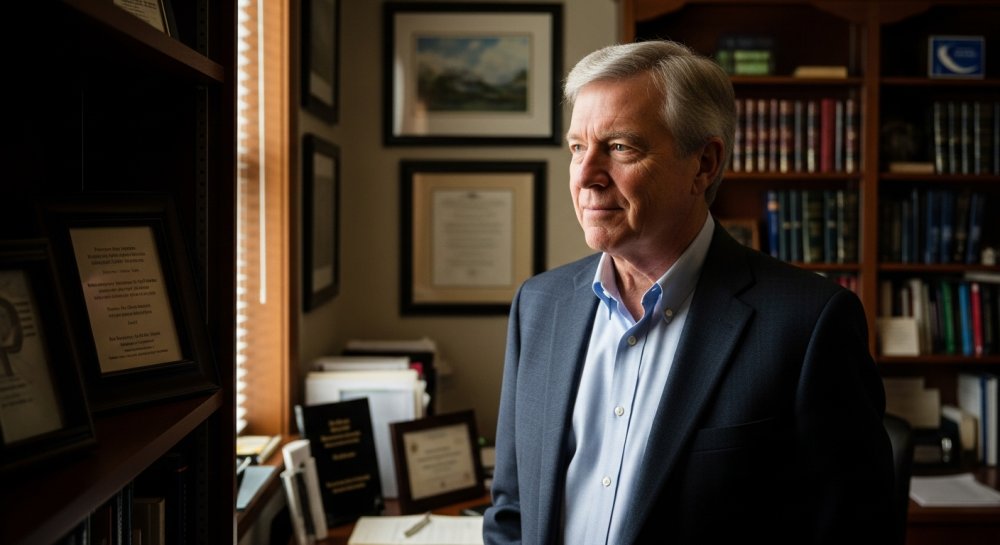
A beloved figure in Christian ministry is stepping aside after more than four decades of faithful service. Phil Johnson, who has served as the executive director of Grace to You ministry for 43 years, announced his retirement in a statement that revealed both his personal health struggles and his vision for the ministry’s future.
Johnson disclosed that he has been diagnosed with incurable cancer, a reality that has shaped his decision to transition leadership responsibilities. His announcement comes at a particularly poignant time for the ministry, arriving less than a year after the passing of Pastor John MacArthur, the founder and spiritual cornerstone of Grace to You.
Throughout his tenure, Johnson has been instrumental in expanding the reach and impact of Grace to You, helping to disseminate MacArthur’s expository preaching and biblical teaching to millions worldwide. The ministry has grown into one of the most respected voices for sound doctrine and faithful biblical exposition in the evangelical world.
In his retirement announcement, Johnson emphasized the importance of preparing the next generation to carry forward the ministry’s commitment to Scripture and theological faithfulness. His focus on succession planning reflects a servant’s heart and wisdom about the continuity of gospel work beyond any single individual.
Johnson’s leadership has been marked by unwavering dedication to biblical truth and a commitment to supporting MacArthur’s teaching ministry. His work behind the scenes has enabled countless believers to access solid biblical teaching through books, broadcasts, and digital media.
The Christian community has responded with gratitude for Johnson’s decades of service and prayers for his health during this difficult season. His legacy includes not only the institutional growth of Grace to You but also his personal mentorship and encouragement of countless ministry leaders and believers.
As Grace to You enters this new chapter, the foundation laid by MacArthur and strengthened by Johnson’s faithful stewardship positions the ministry to continue its mission of proclaiming biblical truth. The transition represents both an ending and a beginning—the close of one faithful servant’s active ministry and the opportunity for new leaders to step forward in service to Christ and His church.
Let us know what you think, please share your thoughts in the comments below.

Faith Facts
- A major global conference on Western civilization’s future emphasized Christianity’s essential role in cultural restoration
- Speakers at the Alliance for Responsible Citizenship (ARC) conference argued that rebuilding the West cannot happen without returning to Christian foundations
- Growing recognition among thought leaders that faith-based values are indispensable for renewing traditional Western society
The second day of the Alliance for Responsible Citizenship (ARC) conference shifted from diagnosing the problems plaguing Western civilization to exploring the path forward. After day one’s sobering assessment of cultural decline, attendees turned their attention to a question that matters deeply to millions of faithful Americans: what will it take to rebuild our civilization?
The answer, according to numerous speakers and participants, cannot be found without Christianity at its center. This recognition marks a significant shift in mainstream discourse about the future of Western nations.
For too long, secular voices have dominated conversations about culture, policy, and the common good. Yet increasingly, thinkers across disciplines are acknowledging what Christians have always known: a society built on anything less than biblical truth will crumble under its own weight.
The ARC conference represents a growing movement of leaders who understand that technical solutions, economic reforms, and political changes—while important—cannot restore what has been lost without spiritual renewal. The foundations of the West were laid by men and women who believed in absolute truth, human dignity rooted in being made in God’s image, and the moral framework provided by Scripture.
As families struggle with broken institutions, children face ideological confusion in schools, and communities fragment under the weight of relativism, the case for Christianity’s indispensable role becomes clearer. The conference’s focus on reconstruction rather than mere criticism signals a mature understanding that complaint without solutions leads nowhere.
This conversation matters because it speaks to the heart of what many Americans are experiencing: a longing for the restoration of a culture that honors God, strengthens families, and upholds the values that made Western civilization a beacon of freedom and human flourishing. The recognition that Christianity must be central to this restoration is not nostalgia—it’s wisdom born from observing what happens when societies abandon their spiritual moorings.
The road ahead requires more than policy wins or electoral victories. It demands a return to the faith that built hospitals, universities, and systems of justice rooted in the belief that every person bears the image of their Creator.
Let us know what you think, please share your thoughts in the comments below.
Faith Facts
- The Declaration of Independence proclaimed ‘all men are created equal’ 250 years ago, yet unborn children remain excluded from this fundamental promise.
- Over 63 million abortions have been performed in America since Roe v. Wade, representing a moral crisis that demands Christian conviction.
- Compromise on life issues has failed to protect the unborn, making principled action more essential than ever.
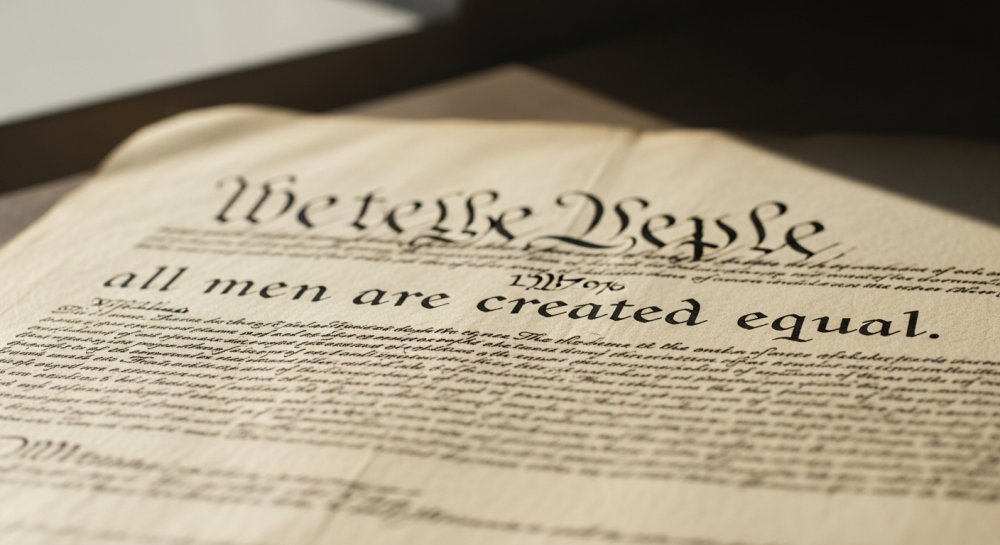
As America approaches the 250th anniversary of the Declaration of Independence, the nation faces a sobering reality: the self-evident truth that “all men are created equal” has never fully extended to those waiting to be born.
The contradiction between our founding principles and the treatment of unborn life represents one of the most profound moral failures in American history. Since the Supreme Court’s Roe v. Wade decision in 1973, more than 63 million lives have been ended through abortion—a staggering toll that dwarfs any other tragedy in our nation’s story.
For Christians and conservatives who believe life begins at conception, this anniversary serves as both a celebration of American ideals and a stark reminder of how far we’ve fallen short. The Declaration’s assertion that our Creator endows us with unalienable rights, including life itself, rings hollow when the most vulnerable among us receive no protection.
The path forward requires conviction, not compromise. Too often, political calculations and cultural pressures have led defenders of life to settle for incremental progress while millions continue to perish.
America’s children—born and unborn—deserve leaders willing to stand firmly on principle. They deserve a nation that extends the promise of equality to every human being from the moment of conception. They deserve better than a country that celebrates freedom while denying the most basic right to its smallest citizens.
As we reflect on 250 years of the American experiment, we must ask ourselves whether we will finally honor the Declaration’s promise in full. Will we be a nation that truly believes all are created equal? Or will we continue to exclude those who cannot yet speak for themselves?
The answer to that question will define not just our legal framework, but our character as a people. It will determine whether future generations look back at this moment as the turning point when America finally embraced all human life—or as another chapter in our ongoing failure to live up to our founding ideals.
Let us know what you think, please share your thoughts in the comments below.


-

 Self-Reliance1 year ago
Trump’s Bold Move Uncovers Massive Social Security Fraud
-

 Faith1 year ago
New Clues Emerge in Noah’s Ark Mystery
-

 News1 year ago
Governor Walz’s Rhetoric Sparks National Controversy
-

 News1 year ago
Mel Gibson’s ‘The Passion of the Christ’ Sequel Title Announced
-

 Family1 year ago
Texas Lawmaker Targets Furries in Schools
-

 Freedom1 year ago
Maine Lawmaker Challenges Sports Fairness Controversy
-

 Family1 year ago
Canada’s Controversial Policy Sparks Ethical Debate
-
Faith7 months ago
Congress Hears Pleas for Nigerian Christians