
Faith
Historic Biblical Treasures From Jordan Coming to Nation’s Capital

Faith Facts
- Museum of the Bible in Washington, D.C., has signed an agreement with Jordan’s Ministry of Tourism and Antiquities to host a major biblical heritage exhibit
- The “Jordan: Dawn of Christianity” exhibit will showcase key archaeological evidence from biblical sites in modern-day Jordan
- The international collaboration highlights the historical foundations of Christianity in the Middle East
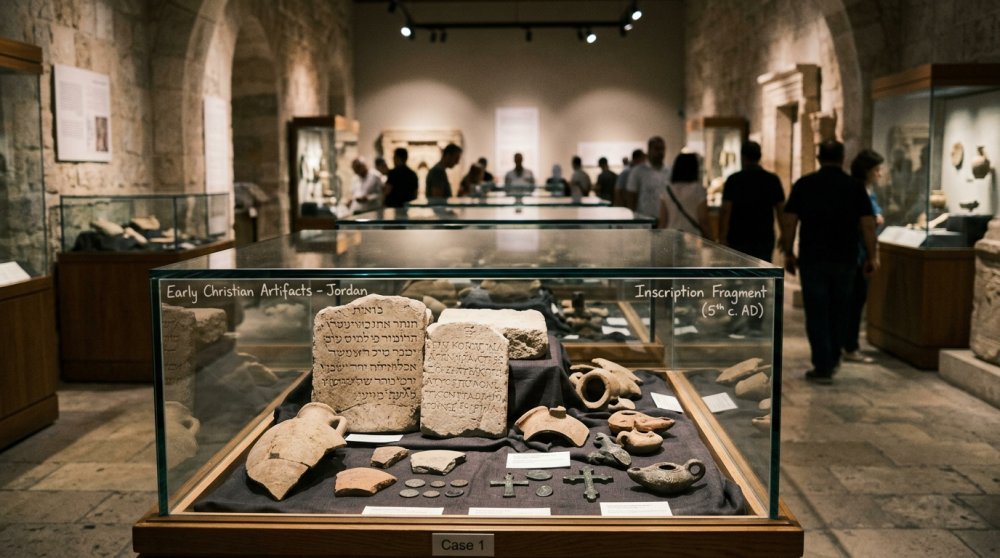
A groundbreaking exhibit is coming to the nation’s capital that will bring the ancient roots of Christianity to life for American visitors. The Museum of the Bible in Washington, D.C., has entered into a historic agreement with Jordan’s Ministry of Tourism and Antiquities to host “Jordan: Dawn of Christianity,” an international exhibition that will trace the biblical heritage preserved in modern-day Jordan.
The agreement, signed on August 1, marks a significant cultural and religious partnership between the United States and Jordan. The exhibit will showcase archaeological discoveries and historical evidence from sites mentioned throughout Scripture, offering visitors a tangible connection to the lands where early Christianity took root.
Jordan holds a unique place in biblical history, with numerous sites referenced in both the Old and New Testaments. From the wilderness where John the Baptist preached to the plains of Moab where Moses viewed the Promised Land, the region contains countless locations that shaped the narrative of God’s people.
This collaboration represents an important opportunity for American Christians to deepen their understanding of the geographical and historical context of their faith. The Museum of the Bible has established itself as a premier institution for exploring Scripture’s impact on history and culture.
The exhibit promises to bring rarely seen artifacts and archaeological evidence to American audiences, providing fresh insights into the dawn of Christianity in the Middle East. For believers seeking to strengthen their faith through historical understanding, this will be an invaluable educational experience.
The partnership also underscores Jordan’s role as a guardian of Christian heritage in a region where religious freedom faces ongoing challenges. By sharing these treasures with the world, Jordan is helping preserve and promote the historical truth of Christianity’s origins.
Let us know what you think, please share your thoughts in the comments below.


Faith Facts
- Pro-life advocates argue hormonal contraception represents a significant oversight in the natural wellness movement
- The Society for the Protection of Unborn Children calls for greater scrutiny of contraception’s health effects on women
- Growing consumer interest in clean living has not extended to questioning synthetic hormone use
As American women increasingly embrace clean eating, natural products, and holistic wellness, a prominent pro-life organization is raising questions about a major inconsistency in this health-conscious movement.
The Society for the Protection of Unborn Children (SPUC) argues that while consumers carefully scrutinize ingredients in their food and personal care products, hormonal contraception receives remarkably little examination despite its powerful effects on women’s bodies.
This observation highlights a troubling disconnect in modern wellness culture. Women who refuse to consume artificial sweeteners or chemical preservatives often think nothing of introducing synthetic hormones into their systems daily for years or even decades.
The pro-life group contends that the widespread acceptance of hormonal birth control represents a significant “blindspot” in women’s health discussions. Despite the wellness industry’s emphasis on natural living and avoiding synthetic chemicals, contraceptive hormones are rarely questioned with the same rigor applied to other pharmaceutical interventions.
This issue touches on fundamental questions about how our society values women’s health and fertility. The normalization of suppressing healthy bodily functions through synthetic hormones stands in stark contrast to wellness principles that emphasize working with the body’s natural rhythms rather than against them.
For Christian conservatives who prioritize both life and authentic health, this inconsistency raises important concerns. The same culture that celebrates organic produce and chemical-free cosmetics has largely ignored potential long-term health implications of hormonal contraception.
SPUC’s observation invites a broader conversation about medical treatments that have become so commonplace they escape critical examination. As Americans become more discerning consumers of health information, questions about contraception’s effects deserve the same thoughtful consideration given to other wellness choices.
The organization’s stance reflects a growing awareness that true women’s health advocacy must include honest discussions about all factors affecting female well-being, including widely accepted medical practices that may carry underappreciated risks.
Let us know what you think, please share your thoughts in the comments below.

Faith Facts
- Religious education teaching positions are becoming harder to fill despite growing student demand for faith-based learning
- Schools across the country are facing critical shortages of qualified religious studies instructors
- The crisis is creating unequal access to religious education depending on geographic location
America’s schools are facing a growing crisis that threatens the spiritual foundation of the next generation. Despite increasing student interest in understanding faith and religion, fewer qualified teachers are stepping forward to fill these vital classroom positions.
The shortage of religious studies educators is intensifying across the nation, creating what experts are calling a “postcode lottery” where a child’s access to quality faith education depends entirely on where they live. This disparity undermines the equal opportunity that should exist for all students to explore questions of faith, morality, and spiritual truth.
The crisis reflects broader cultural challenges facing people of faith in educational settings. As secular ideologies dominate many academic institutions, teachers committed to presenting religious perspectives fairly and thoroughly often find themselves marginalized or unsupported.
Schools in rural and underserved communities are particularly hard-hit by the shortage. Students in these areas may go entire academic years without access to structured religious education, leaving critical gaps in their understanding of faith traditions that have shaped Western civilization and American values.
The teaching profession as a whole has struggled with recruitment and retention, but the religious studies field faces unique obstacles. Many qualified candidates who could teach about Christianity, Judaism, and other faith traditions are choosing alternative career paths where their beliefs are more welcomed and respected.
This shortage comes at a time when understanding religious principles is more important than ever. As American society grapples with fundamental questions about truth, morality, and purpose, young people need educators who can guide them through the wisdom of religious traditions and help them develop a strong moral compass.
The uneven distribution of religious education resources across different regions creates an educational inequity that should concern all Americans who value fairness and opportunity. Children in some communities receive robust instruction in faith and ethics, while others receive little to nothing.
Addressing this crisis will require renewed commitment from educational institutions to support teachers who bring religious perspectives into the classroom. It will also demand that communities of faith encourage qualified believers to consider teaching as a calling, not just a career.
Let us know what you think, please share your thoughts in the comments below.
Faith Facts
- Canterbury Cathedral hosted a silent disco featuring 1980s music on August 15, sparking outrage among Christian commentators
- Critics called the event a desecration of one of Christianity’s most historic sacred spaces
- The incident highlights growing concerns about secularization and irreverence toward traditional Christian worship spaces
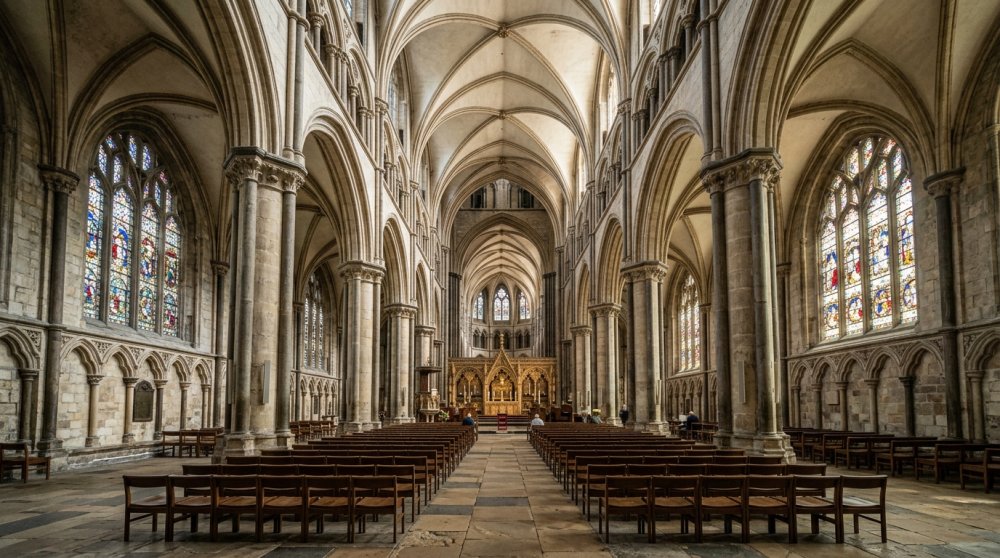
One of Christianity’s most sacred and historic sites has become the center of controversy after hosting a secular dance party. Canterbury Cathedral, the mother church of the worldwide Anglican Communion, allowed a silent disco featuring 1980s music to take place within its hallowed walls on August 15, prompting sharp criticism from Christian leaders and commentators who view the event as a profound act of disrespect.
The decision to transform the ancient cathedral into a dance venue has been met with widespread condemnation from those who believe such activities desecrate holy ground. For centuries, Canterbury Cathedral has stood as a beacon of Christian faith and tradition, serving as the seat of the Archbishop of Canterbury and a pilgrimage site of immense spiritual significance.
Christian commentators have not minced words in their response to the event. Many have described the silent disco as a “desecration” of sacred space, arguing that it represents a troubling trend of secularization within the Church of England and a departure from reverence for God’s house.
The controversy raises important questions about the proper use of church buildings and whether modern attempts to make religious spaces more “relevant” or “accessible” come at too high a cost. Critics argue that allowing secular entertainment in consecrated spaces undermines the very purpose these buildings were created to serve — the worship of Almighty God.
Canterbury Cathedral has witnessed pivotal moments in Christian history, including the martyrdom of Archbishop Thomas Becket in 1170. The building itself stands as a testament to centuries of faith, sacrifice, and devotion. For many believers, using such a space for dancing to secular music represents an unacceptable compromise with worldly culture.
This incident reflects broader concerns among traditional Christians about the direction of mainline denominations, particularly the Church of England. As attendance declines in many historic churches, some leaders have pursued unconventional approaches to attract visitors and generate revenue, sometimes at the expense of maintaining the sanctity and reverence these spaces deserve.
The silent disco controversy also highlights the tension between preserving Christian heritage and adapting to contemporary culture. While some church leaders argue that such events can introduce new audiences to historic Christian sites, critics maintain that the ends do not justify the means when it involves compromising the sacred character of God’s house.
For faithful Christians who hold traditional views on worship and reverence, the Canterbury Cathedral silent disco serves as a sobering reminder of the ongoing cultural battles facing the Church. The question remains whether institutions entrusted with preserving Christian tradition will stand firm in their mission or continue to accommodate secular influences in pursuit of popularity and financial sustainability.
Let us know what you think, please share your thoughts in the comments below.


-

 Self-Reliance1 year ago
Trump’s Bold Move Uncovers Massive Social Security Fraud
-

 Faith1 year ago
New Clues Emerge in Noah’s Ark Mystery
-

 News1 year ago
Governor Walz’s Rhetoric Sparks National Controversy
-

 News1 year ago
Mel Gibson’s ‘The Passion of the Christ’ Sequel Title Announced
-

 Family1 year ago
Texas Lawmaker Targets Furries in Schools
-

 Freedom1 year ago
Maine Lawmaker Challenges Sports Fairness Controversy
-

 Family1 year ago
Canada’s Controversial Policy Sparks Ethical Debate
-
Faith9 months ago
Congress Hears Pleas for Nigerian Christians