Connect with us

Faith

Heritage Christian University Welcomes New President

Published

on

Heritage Christian University Welcomes New President
Faith Facts

  • Michael D. Jackson will serve as the fifth president of Heritage Christian University.
  • Jackson brings decades of experience in biblical education and ministry leadership.
  • The university remains committed to advancing Christian faith and service through education.

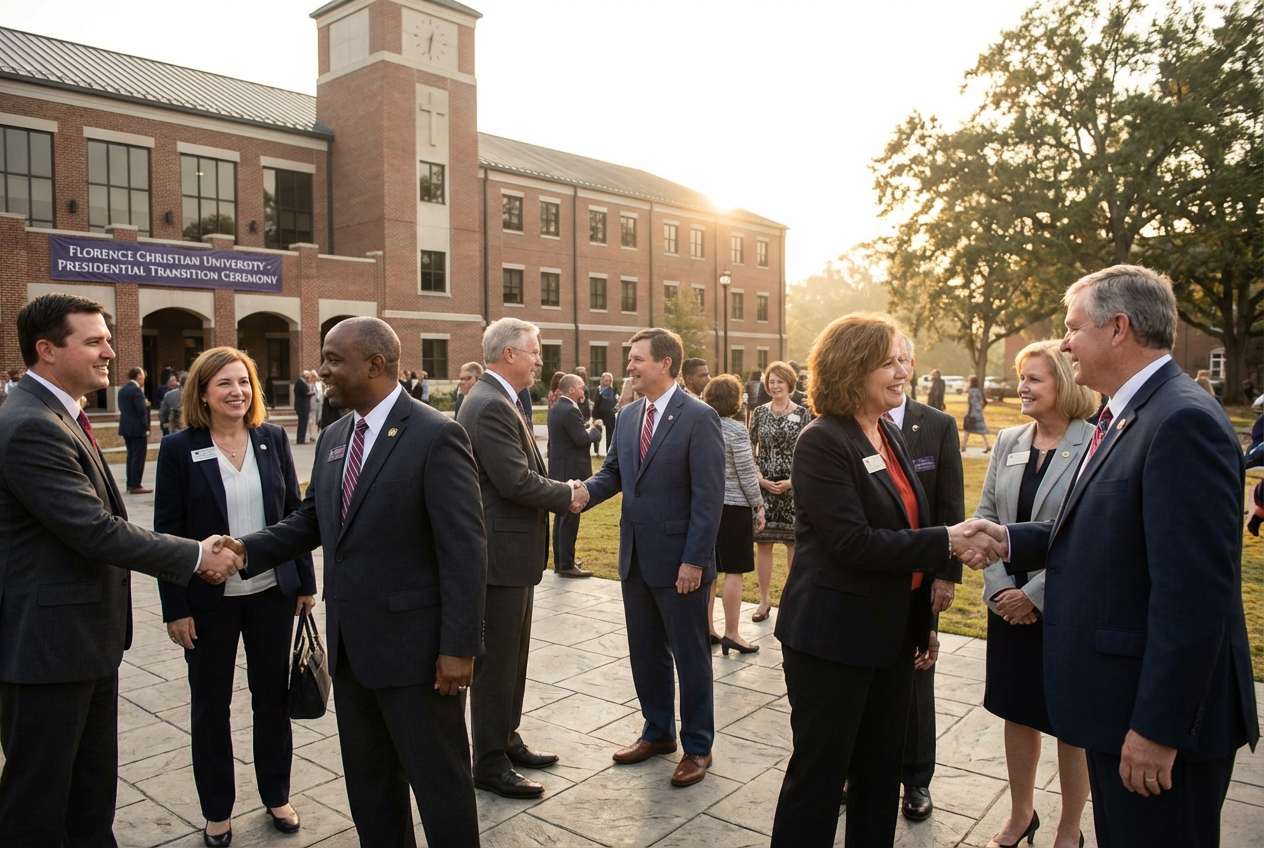
Michael D. Jackson, a dedicated alumnus, has been named the next president of Heritage Christian University in Florence, Alabama.

He brings leadership from his work with the Association for Biblical Higher Education and many years of service in Christian education.

Jackson is recognized for his biblical scholarship, having earned advanced degrees focused on the New Testament and education.

He serves as an elder at Highland Park Church of Christ and has ministered within the local faith community.

In the university’s announcement, the board praised Jackson’s commitment, noting his “clear vision aligned with HCU’s mission of advancing the Churches of Christ by equipping servants for real-world ministry.”

Board chair Alan Laguna stated, “He understands our mission, values the heritage that has defined HCU, and has the leadership experience to guide us with wisdom and faith. We are grateful to God for His faithful guidance throughout this search.”

Jackson responded, “I look forward to being a steward of the HCU mission with humility, faith, and purpose. I’m grateful for President W. Kirk Brothers’ faithful leadership and service to HCU, and I look forward to our future as we seek to advance the church in this generation.”

President W. Kirk Brothers will step down at the conclusion of the 2025-2026 school year and will remain part of the faculty.

This transition reflects a steadfast commitment to Christian principles and the ongoing mission of equipping faithful servants for ministry.

Read the full report at The Christian Chronicle

Continue Reading
Click to comment

Leave a Reply

Your email address will not be published. Required fields are marked *

Faith

What Most Families Miss About Staying Home This Summer

Published

on

Faith Facts

  • Financial stewardship through staycations allows families to avoid debt while still creating meaningful memories together
  • Prioritizing family time at home strengthens relationships and provides opportunities for spiritual growth without the stress of expensive travel
  • Exploring local attractions and creating intentional experiences can teach children gratitude and contentment, key Christian virtues

Many American families face the same dilemma every year: the desire to create special memories with their children while navigating the reality of tight budgets and rising costs. The pressure to provide elaborate vacations can feel overwhelming, especially when social media shows seemingly perfect family getaways.

But there’s wisdom in recognizing financial limits and choosing stewardship over debt. A staycation—spending vacation time at home or exploring local areas—offers benefits that many families overlook in their pursuit of expensive trips.

First, staycations eliminate the financial stress that often accompanies traditional vacations. Between airfare, hotels, dining out, and entertainment, a typical family vacation can cost thousands of dollars. By staying home, families can allocate those funds toward debt reduction, savings, or other pressing needs. This demonstrates biblical stewardship and teaches children that contentment doesn’t require extravagant spending.

Second, staycations provide deeper rest and relaxation. Travel often involves exhausting schedules, long drives or flights, and the stress of navigating unfamiliar places. Staying home allows families to truly rest, recharge, and enjoy unhurried time together without the pressure of squeezing in every tourist attraction.

Third, exploring local attractions often reveals hidden treasures in your own community. Many families discover museums, parks, hiking trails, historical sites, and other activities they’ve never experienced despite living nearby for years. This fosters appreciation for God’s blessings in your own backyard and builds community connection.

Fourth, staycations create opportunities for intentional family bonding. Without the distractions of travel logistics, families can focus on meaningful activities: game nights, backyard camping, cooking together, serving at a local ministry, or simply having extended conversations. These moments often create stronger memories than expensive theme parks.

When explaining the decision to children, honesty combined with enthusiasm works best. Frame it as an adventure rather than a disappointment. Involve them in planning activities, and create special traditions that make home feel like a destination.

Financial peace and family connection matter more than Instagram-worthy vacation photos. A staycation honors both biblical stewardship and the true purpose of family time: strengthening relationships and creating memories rooted in love, not debt.

Let us know what you think, please share your thoughts in the comments below.

Continue Reading

Faith

When Political Leaders Are Portrayed as Messiahs, Believers Must Sound the Alarm

Published

on

Faith Facts

  • A social media post portraying a political leader in messianic terms sparked immediate controversy and was subsequently deleted
  • Christian ethics demand a clear distinction between earthly leaders and divine authority
  • The incident serves as a crucial reminder for believers to guard against idolatry in political engagement

A recent social media controversy has reignited an essential conversation within the American Church about the boundaries between political support and spiritual devotion. When a post describing a political figure in explicitly messianic language appeared and was later removed, it crossed a line that every believer must recognize and reject.

The incident raises fundamental questions about how Christians engage with political leaders. While supporting elected officials and advocating for policies aligned with biblical values remains both appropriate and necessary, the language we use matters profoundly.

Throughout Scripture, believers are commanded to honor governing authorities while reserving worship for God alone. The Apostle Paul instructed the early Church to pray for kings and those in authority, yet never suggested they possessed divine qualities or messianic roles.

This moment serves as a critical warning for American Christians navigating an increasingly polarized political landscape. Our faith must never become subordinate to our politics, nor should our political preferences blur the distinction between earthly power and heavenly sovereignty.

The Church has witnessed throughout history what happens when political leaders are elevated to quasi-divine status. From ancient Rome to modern totalitarian regimes, the conflation of political power with spiritual authority has consistently led believers astray and damaged the Gospel witness.

Christian voters can and should evaluate leaders based on their policies, character, and commitment to protecting religious liberty and traditional values. Support for candidates who defend faith, family, and freedom represents faithful civic engagement.

However, that support must never cross into language or attitudes that attribute messianic qualities to any human leader. Only Jesus Christ holds the title of Savior, Redeemer, and Great Physician of souls.

The swift deletion of the controversial post suggests an awareness that the language had overstepped appropriate bounds. This recognition provides an opportunity for the broader Christian community to reaffirm proper biblical priorities.

Believers must remain vigilant against the subtle idolatry that can emerge when political passions run high. Our ultimate hope rests not in Washington, D.C., but in the Kingdom of God.

The American Church has a prophetic responsibility to speak truth to power, regardless of which party holds office. This includes calling out language and imagery that elevates any political figure to a status reserved for Christ alone.

As we approach future elections and navigate ongoing political debates, may Christians demonstrate wisdom in distinguishing between legitimate political support and inappropriate spiritual devotion. Our witness depends on maintaining this crucial boundary.

Let us know what you think, please share your thoughts in the comments below.
Continue Reading

Faith

British Peer Reveals the True Purpose Behind His Business Empire

Published

on

Faith Facts

  • Lord Edmiston, a successful British businessman and member of the House of Lords, states that evangelism—not wealth accumulation—drives his business endeavors.
  • He emphasizes the biblical principle of stewardship, viewing his business success as a tool for advancing Christian mission work globally.
  • The peer’s testimony highlights how faith-based values can shape business practices and redirect financial resources toward spreading the Gospel.

A prominent British businessman and member of the House of Lords has opened up about the deeper motivation behind his entrepreneurial success, pointing not to personal enrichment but to the Great Commission. Lord Edmiston’s candid reflections offer a powerful counter-narrative to the secular business world’s focus on profit maximization.

In his testimony, Lord Edmiston made clear that his approach to commerce has always been rooted in something far greater than building a financial empire. The peer explained that evangelism serves as the foundational driver of his work, with wealth creation functioning as a means rather than an end.

“I was driven by evangelism, not the creation of wealth for its own sake,” Lord Edmiston stated, articulating a philosophy that places Kingdom work at the center of business activity.

This perspective reflects a biblical understanding of stewardship—the idea that Christians are caretakers of God’s resources, responsible for using them wisely to advance His purposes. Rather than hoarding wealth or pursuing luxury, Lord Edmiston sees his business success as a divine trust, one that carries with it both opportunity and obligation.

His focus on global mission work demonstrates how business acumen and faithful stewardship can combine to support the spread of Christianity around the world. In an era when many corporations embrace progressive ideologies that conflict with traditional Christian values, Lord Edmiston’s testimony stands as a reminder that commerce can serve God’s kingdom.

The peer’s comments also speak to a growing movement among Christian entrepreneurs who reject the purely materialistic metrics of success. Instead of measuring achievement solely by stock prices or market share, these business leaders evaluate their work by its impact on eternal matters—souls saved, churches planted, and communities transformed by the Gospel.

For American Christians watching cultural battles unfold in the corporate sphere, Lord Edmiston’s example offers encouragement. It shows that believers in positions of influence can maintain their faith convictions while achieving professional success, and that business platforms can become launching pads for ministry.

His emphasis on evangelism over enrichment challenges the popular notion that faith and business must remain separate. Instead, it suggests that when properly understood, entrepreneurship can become an extension of Christian witness—a way to generate resources that fuel the Great Commission while modeling integrity and biblical values in the marketplace.

The British peer’s testimony arrives at a crucial moment when many wonder whether traditional Christian values can survive in modern commerce. His answer is clear: not only can they survive, but when faithfully applied, they can transform business into mission.

Let us know what you think, please share your thoughts in the comments below.

Continue Reading

Trending