
Faith
Healing Through Faith: A Journey Beyond Abortion’s Pain


In a deeply moving episode of the “Politely Rude” podcast, pro-life advocate Abby Johnson and author Robin Gerblick have brought to light the often-hidden wounds of abortion and the profound healing that can be found through faith in Jesus Christ. This conversation is a testament to the enduring power of Christian values and the importance of faith in overcoming life’s deepest regrets.
Abby Johnson, a stalwart in the fight against abortion, opened the episode by reaffirming her commitment to defending the unborn and highlighting the profound harm that abortion inflicts not only on children but also on women. “I think everyone knows that my primary fight in our culture today is the fight against abortion, the fight against the murder of the unborn in the womb,” she stated, setting the stage for a heartfelt discussion on the subject.
Robin Gerblick, who has personally experienced the devastating impact of abortion, shared her story with raw honesty. Her journey began in 1973, the same year Roe v. Wade was decided, and it led her down a path of pain and confusion until she found solace in her Christian faith. Reflecting on her past, she recalled, “I just moved to San Diego to start attending college, and he was my boyfriend, for sure, but also the love of my life.”
Gerblick’s experience at a clinic was one of isolation and pressure, highlighting the lack of support for women facing unplanned pregnancies. “There’s just no support, there’s no anything, and you’re just told … you need to have an abortion,” she recounted. This narrative is all too familiar in a society that often normalizes abortion, a point Johnson emphasized by noting, “It’s really interesting how normalized abortion has become, and how the abortion industry has done such a great job … of making abortion feel normal and compassionate for women.”
For Gerblick, the aftermath of her abortion was akin to “40 years of wandering in the desert,” a poignant reference to the Israelites’ journey in the Old Testament. She grappled with feelings of shame and a loss of self-worth, seeking validation in all the wrong places. “I was so desperate for love and so desperate for validation and worth,” she confessed.
However, it was her encounter with Jesus Christ that marked the beginning of her healing. “He could do what no other man on Earth could do, and that was love me unconditionally. And that was a life changer for me,” Gerblick shared, illustrating the transformative power of divine love.
A pivotal moment in her journey came when she visited a crisis pregnancy center and saw images of fetal development for the first time. Overwhelmed with emotion, she named a small model of a 10-week-old fetus “Grace,” symbolizing the life she lost and the grace she found in Christ.
Gerblick’s story is a powerful reminder of the importance of naming and grieving one’s past, a process she believes is essential for true healing. “Although with our faith we know that we’re forgiven, we also have to be able to forgive ourselves,” she explained, emphasizing the need for self-compassion and understanding.
Her message to women carrying the burden of abortion is one of hope and redemption: “There is grace for them.” She has encountered women who have carried their secret for decades, urging them to find solace in the Savior who came to deliver us from our burdens.
Through her book, “Giving Up Grace: The Spiritual Rebranding of the Soul,” Gerblick chronicles her journey of redemption, offering a beacon of hope for others seeking healing. “Sometimes you need to give up the grace you don’t know in order to get the grace that you really need,” she concluded, pointing to the transformative power of Jesus’ grace.
In a world that often strays from traditional values, this podcast episode serves as a poignant reminder of the healing power of faith, the sanctity of life, and the enduring strength found in embracing Christian principles.
Let us know what you think, please share your thoughts in the comments below.



Faith Facts
- Religious Studies GCSE enrollment is increasing across the United Kingdom despite a critical shortage of qualified teachers
- The shortage of specialist religious education teachers continues to worsen, threatening students’ access to faith-based learning
- Experts warn the crisis could limit young people’s understanding of Christianity and other world religions at a crucial developmental stage
A troubling crisis is unfolding in British schools as demand for Religious Studies courses climbs while the number of qualified teachers to instruct them plummets. The shortage threatens to deny an entire generation of students the opportunity to explore questions of faith, morality, and spiritual heritage.
Despite rising interest in Religious Studies as a GCSE subject—a qualification typically pursued by students aged 14-16—education experts across the United Kingdom are sounding the alarm about the dwindling pool of specialist teachers equipped to lead these courses. The gap between student demand and teacher availability continues to widen, creating what some describe as an educational emergency.
For Christian parents and community leaders, the implications are profound. Religious education offers young people a structured opportunity to examine the Christian foundations of Western civilization, explore theological concepts, and develop moral reasoning rooted in biblical principles. Without qualified instructors, schools cannot adequately meet this need, leaving students with diminished access to faith-based learning during formative years.
The shortage also raises questions about educational priorities in modern Britain. While subjects like science and mathematics receive substantial investment and recruitment focus, religious education appears increasingly marginalized despite its role in character formation and cultural literacy. This imbalance reflects broader secular trends that often sideline faith perspectives in public institutions.
The consequences extend beyond individual students. A society that fails to educate its youth about religious heritage risks losing connection to the values, traditions, and wisdom that have shaped its history. For Christians, this represents not merely an academic concern but a spiritual one—a lost opportunity to plant seeds of faith and understanding in young hearts.
The crisis also highlights the importance of Christian involvement in education. As government schools struggle to staff religious studies programs, faith communities must consider how they can support religious literacy through church-based education, mentorship, and advocacy for policies that prioritize faith-friendly curricula.
The situation in the United Kingdom serves as a cautionary tale for Americans concerned about religious education. It demonstrates how quickly institutional support for faith-based learning can erode, even when student interest remains strong. Vigilance and active engagement are essential to preserve educational opportunities that honor our spiritual heritage.
Let us know what you think, please share your thoughts in the comments below.
Faith Facts
- Church leaders and Christians in Sudan’s Nuba Mountains are experiencing increasing killings, abductions, and violent attacks.
- The violence is intensifying in Sudan’s South Kordofan state as rival armed factions battle for control.
- Christian watchdog organization Open Doors has raised urgent concerns about the persecution facing believers in the region.
Believers in Sudan are enduring a terrifying surge of violence that threatens the very survival of Christian communities in the region. What many Americans may not realize is that while we enjoy religious freedom, our brothers and sisters in Christ face daily threats to their lives simply for holding fast to their faith.
The Nuba Mountains region has become a flashpoint of persecution as rival armed groups wage brutal campaigns across South Kordofan state. Christian leaders report that their congregations are being specifically targeted in what amounts to systematic religious persecution.
Open Doors, a respected international ministry that monitors and responds to Christian persecution worldwide, has issued urgent warnings about the deteriorating situation. Their reports document a disturbing pattern of kidnappings, murders, and coordinated attacks on Christian communities that appear designed to drive believers from their ancestral lands.
The civil conflict in Sudan has provided cover for those who seek to eliminate Christian witness from the region. Armed factions are exploiting the chaos to settle old scores and pursue ideological agendas that leave no room for religious minorities.
Church leaders on the ground describe a climate of constant fear where worship services become potential targets and simply identifying as a Christian can mark someone for violence. Families are torn apart by abductions, with many victims never seen again.
This crisis demands the attention and prayers of American Christians. The persecution in Sudan represents a grave threat to religious freedom and human dignity. As believers who cherish our own liberty to worship freely, we have a moral obligation to stand with those who face persecution for the same faith we hold dear.
The situation also highlights the ongoing failure of international bodies to protect vulnerable religious minorities in conflict zones. Despite numerous reports and documentation of atrocities, effective intervention remains elusive while Christians continue to suffer.
Organizations like Open Doors provide vital support to persecuted believers, but they cannot solve this crisis alone. American Christians must raise their voices, contact their elected representatives, and demand that our government prioritize religious freedom in its foreign policy.
The faithful in Sudan’s Nuba Mountains need more than our sympathy—they need our active advocacy and sustained prayer. Their courage in maintaining their Christian witness under such dire circumstances should inspire us to greater faithfulness in our own walk with Christ.
Let us know what you think, please share your thoughts in the comments below.
Faith Facts
- More than 1,500 participants from 17 nations gathered in Kyiv for Ukraine’s third National Prayer Breakfast
- European evangelical leaders joined Ukrainian believers in prayers for the nation’s survival and continued international support
- The prayer breakfast took place as Ukraine prepares to celebrate 35 years of independence amid ongoing war
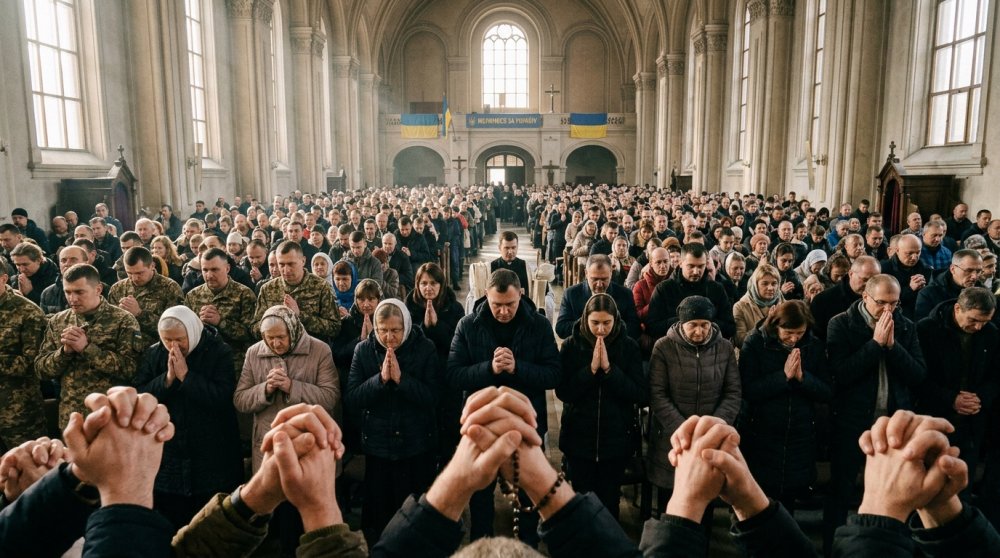
A powerful display of Christian solidarity unfolded in the heart of Kyiv as evangelical leaders from across Europe joined forces with Ukrainian believers in prayer. More than 1,500 participants from 17 countries gathered for Ukraine’s third National Prayer Breakfast on Sunday, August 23, demonstrating that the global Christian community has not forgotten this embattled nation.
The gathering comes at a critical moment as Ukraine approaches the milestone of 35 years of independence. The event served as both a celebration of faith and a stark reminder that the fight for freedom continues in the face of aggression.
European evangelical leaders used the platform to deliver a clear message to the international community: do not grow weary of supporting Ukraine in its time of need. Their presence in Kyiv itself spoke volumes about the commitment of Christians worldwide to stand with those facing persecution and war.
The prayer breakfast represents more than a symbolic gesture. It reflects the deep spiritual bonds that unite believers across borders and the conviction that prayer remains a powerful force in times of crisis. These Christian leaders recognized that Ukraine’s struggle is not merely a geopolitical conflict but a battle for the values of freedom and self-determination that align with biblical principles.
As the world’s attention sometimes wavers, these evangelical voices are calling for sustained support—both material and spiritual. Their message resonates with the Christian understanding that perseverance in doing good is a fundamental duty, especially when standing alongside those who suffer.
The gathering in Kyiv demonstrates the enduring power of faith communities to provide hope and encouragement when circumstances seem darkest. For Ukrainian believers who have endured years of conflict, the presence of international Christian leaders offers tangible proof that they have not been abandoned in their hour of need.
This National Prayer Breakfast stands as a testament to the universal nature of the Christian faith and the obligation believers feel to support their brothers and sisters facing trials. It challenges comfortable Western Christians to remember those who worship under the shadow of war and to continue lifting them up in prayer and action.
Let us know what you think, please share your thoughts in the comments below.


-

 Self-Reliance1 year ago
Trump’s Bold Move Uncovers Massive Social Security Fraud
-

 Faith1 year ago
New Clues Emerge in Noah’s Ark Mystery
-

 News1 year ago
Governor Walz’s Rhetoric Sparks National Controversy
-

 News1 year ago
Mel Gibson’s ‘The Passion of the Christ’ Sequel Title Announced
-

 Family1 year ago
Texas Lawmaker Targets Furries in Schools
-

 Freedom1 year ago
Maine Lawmaker Challenges Sports Fairness Controversy
-

 Family1 year ago
Canada’s Controversial Policy Sparks Ethical Debate
-
Faith9 months ago
Congress Hears Pleas for Nigerian Christians