
Faith
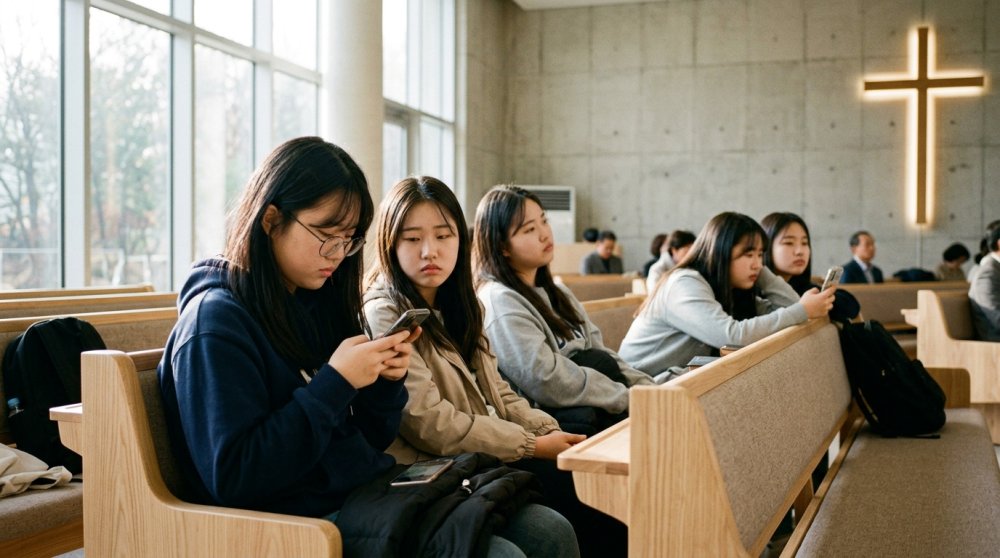
Half of Korean Christian Teens Cannot Defend Their Faith

Faith Facts
- Less than half of female middle and high school students in South Korean churches express confidence in the Christian gospel
- Youth worship attendance remains significantly below pre-pandemic levels
- Family influence emerges as critical factor in youth spiritual formation
A troubling new survey reveals a crisis of faith among South Korea’s youngest generation of Christians. Fewer than half of female middle and high school students attending churches in the country say they are confident in sharing and defending the gospel message.
The findings paint a sobering picture of the challenges facing Christian families and churches in one of Asia’s most vibrant Christian nations. Youth worship attendance has not recovered to pre-pandemic levels, suggesting lasting damage from lockdown policies that kept young believers away from regular fellowship and discipleship.
The survey underscores what many Christian leaders have long emphasized: the family remains the primary vessel for transmitting faith to the next generation. When parents fail to model vibrant Christianity at home, church programs alone cannot fill the void.
This pattern is not unique to South Korea. Across the Western world, Christian parents are rediscovering that faith formation begins at the dinner table, not just in Sunday school. The data confirms that children whose parents actively practice and discuss their faith at home demonstrate far stronger spiritual confidence than those who only encounter Christianity in formal church settings.
The gender disparity in gospel confidence also raises important questions. Christian educators and youth pastors must examine whether current ministry approaches are effectively reaching and equipping young women to become bold witnesses for Christ.
South Korea has been a beacon of Christian growth in East Asia for decades, sending missionaries around the world and building some of the largest congregations on earth. But sustaining that legacy requires every generation to own their faith personally, not merely inherit it culturally.
American Christians should take note. The same forces undermining youth faith in South Korea—cultural pressure, digital distraction, and passive parenting—are equally present in the United States. No church heritage or denominational tradition can substitute for intentional, daily discipleship in the home.
The solution begins with parents who take seriously their God-given responsibility to train up children in the way they should go. It continues with churches that equip families rather than attempting to replace them.
Let us know what you think, please share your thoughts in the comments below.


Faith Facts
- YouVersion convened Christian leaders in Mexico City to announce strategic partnerships expanding Bible access across Latin America
- The Bible app platform continues its mission to bring Scripture closer to Spanish and Portuguese-speaking communities
- Major Christian organizations are joining forces to strengthen digital discipleship in the region
YouVersion gathered leaders from major Christian organizations in Mexico City this week to announce new partnerships and highlight the Bible app’s expansion across Latin America. The meeting signals a significant push to bring digital Scripture resources to one of the world’s most vibrant Christian communities.
The expansion represents a strategic effort to serve the growing number of believers seeking accessible Bible study tools in their native languages. Latin America has emerged as a region of tremendous spiritual growth, with millions embracing faith and seeking deeper engagement with Scripture.
YouVersion’s partnerships with established Christian organizations demonstrate a collaborative approach to digital ministry that respects local church leadership while providing modern tools for discipleship. The app has already transformed how millions of believers around the world engage with God’s Word daily.
This initiative comes at a crucial time when technology offers unprecedented opportunities to reach people with the Gospel message. By strengthening alliances with regional leaders, YouVersion is ensuring that Bible access remains both culturally relevant and theologically sound for Spanish and Portuguese-speaking audiences.
The Bible app platform has proven its ability to help believers develop consistent Scripture reading habits, with features designed to encourage daily engagement with God’s Word. These tools are now being tailored to meet the specific needs and cultural contexts of Latin American Christians.
As digital ministry continues to grow worldwide, initiatives like this demonstrate how technology can serve the timeless mission of making Scripture accessible to all people. The expansion into Latin America represents not just technological progress, but a commitment to equipping believers with the spiritual resources they need to grow in faith.
Let us know what you think, please share your thoughts in the comments below.

Faith Facts
- Christian communities in Northern Nigeria continue facing escalating violence despite increased international attention to their plight
- Years of advocacy have brought global awareness, yet tangible protection and intervention remain absent
- The worsening crisis reveals a gap between international recognition and meaningful action to protect persecuted believers
For years, the global Christian community pleaded for the world to recognize the systematic persecution of believers in Northern Nigeria. That recognition has finally come — yet the violence against our brothers and sisters in Christ continues to intensify.
The brutal reality on the ground tells a sobering story. Despite increased international awareness, Christian communities across Northern Nigeria face an unrelenting campaign of terror that shows no signs of abating.
The escalation of attacks reveals a disturbing pattern: acknowledgment without action has done little to protect vulnerable believers. Churches remain targets, villages continue to be raided, and faithful Christians live under constant threat.
This crisis exposes a fundamental gap between awareness and intervention. While media coverage has increased and advocacy efforts have gained traction, concrete measures to protect persecuted Christians have not materialized in meaningful ways. The international community’s response has largely remained at the level of statements and condemnations, while Nigerian Christians desperately need security and protection.
The situation demands more than sympathy — it requires decisive action. Religious freedom advocates have documented countless atrocities, yet perpetrators continue operating with relative impunity. The lack of accountability emboldens those who seek to drive Christianity from the region.
Nigerian believers have demonstrated extraordinary faith and resilience in the face of unimaginable hardship. Their commitment to Christ despite persecution stands as a powerful testimony. Yet their courage should not be met with passive observation from the global Church.
The failure to translate awareness into protection raises difficult questions about international priorities and the effectiveness of advocacy efforts. What good is global attention if it does not lead to tangible safety for those being targeted for their faith?
This ongoing crisis serves as a sobering reminder that religious persecution remains one of the defining challenges of our time. Christians in Nigeria need more than our prayers and attention — they need the world to act with the same urgency that their dire circumstances demand.
Let us know what you think, please share your thoughts in the comments below.

Faith Facts
- Modern culture encourages picking and choosing spiritual elements from different religions like items from a menu
- Colossians teaches that Christ cannot be reduced to one option among many philosophical choices
- True Christianity requires complete surrender to Jesus Christ, not selective adoption of convenient teachings
In today’s relativistic culture, faith has become a buffet. Many Americans treat spirituality like a custom meal plan — take mindfulness from Buddhism, borrow virtue ethics from Stoicism, add a dash of meaning from Christianity. It sounds enlightened, even humble. But this approach hides a fundamental problem: someone still has to play god and decide which pieces make the cut.
The Bible’s book of Colossians directly confronts this exact issue. Written to believers facing pressure to blend Christianity with popular philosophies of their day, Paul’s letter delivers a clear message: Christ is not a choice among options. He is the choice that defines all reality.
When we treat Jesus as one ingredient in our personalized spiritual recipe, we fundamentally misunderstand who He claimed to be. Christ didn’t present Himself as a helpful teacher offering useful tips alongside Buddha, Confucius, or Marcus Aurelius. He declared Himself as the image of the invisible God, the one in whom all things hold together, the fullness of deity in bodily form.
The spiritual buffet approach reveals something troubling about our hearts. We want the comfort of religion without the cost of surrender. We desire the benefits of faith without bowing to a King. We seek purpose and peace, but only on our own terms.
Colossians dismantles this illusion. If Christ truly is who He says He is — the Creator and Sustainer of all things — then He cannot be reduced to a helpful philosophy or a comforting perspective. He is either Lord of all, or not Lord at all.
The modern marketplace of ideas promotes tolerance and personal choice as the highest virtues. But Christianity has never fit comfortably in that framework. Jesus Himself said He is the way, the truth, and the life — not “a way” among many valid paths. That exclusivity offends contemporary sensibilities, but it remains central to authentic Christian faith.
When we pick and choose from various spiritual traditions, we’re not being open-minded. We’re being our own ultimate authority. We’re placing ourselves above these traditions, judging which parts align with our preferences and which we’ll discard. That’s not humility — it’s the oldest sin in the book, the desire to be like God, determining good and evil for ourselves.
Colossians calls believers to recognize the supremacy of Christ in all things. This means submitting our intellect, our will, our choices to Him — not selecting which of His teachings we’ll accept. It means recognizing that we don’t stand above Scripture, editing it to match our cultural moment. Instead, we stand under it, allowing God’s Word to edit us.
America was founded on principles of religious freedom, and that freedom remains precious. But freedom to choose our beliefs doesn’t mean all choices lead to truth. We’re free to believe the earth is flat, but that doesn’t make it so. Similarly, we’re free to construct our own customized spirituality, but that doesn’t make it true or salvific.
The Gospel offers something far better than a customizable spirituality. It offers rescue from our slavery to self and sin. It offers forgiveness we could never earn. It offers a relationship with the God who made us and knows us completely. But these gifts come as a package deal with the Giver — we cannot separate Christ’s benefits from His lordship.
For Christian families navigating this cultural moment, Colossians provides essential guidance. Our children are growing up in a world that treats all beliefs as equally valid personal preferences. We must teach them that Christianity makes exclusive truth claims because Christ makes exclusive truth claims. We’re not offering one lifestyle brand among many — we’re proclaiming the truth about reality itself.
This doesn’t mean Christians should be arrogant or dismissive toward other worldviews. We should engage respectfully with different perspectives, understanding them accurately before responding. But respect for people doesn’t require treating all ideas as equally true. Love means offering people the truth that can actually set them free, not affirming them in bondage to lies.
The spiritual buffet promises freedom and fulfillment, but it delivers neither. It leaves us as our own ultimate authority, which is a crushing burden. It provides no objective truth to ground our lives, no external standard to guide our choices, no hope that extends beyond our own limited perspectives and temporary existence.
Christ offers something infinitely better. He offers Himself — not as one option among many, but as the source and summit of all truth, beauty, and goodness. He invites us not to sample Him alongside other options, but to surrender everything to Him and discover that in losing our lives, we find them. That’s not on the menu of customizable spirituality. That’s the feast that satisfies forever.
Let us know what you think, please share your thoughts in the comments below.


-

 Self-Reliance1 year ago
Trump’s Bold Move Uncovers Massive Social Security Fraud
-

 Faith1 year ago
New Clues Emerge in Noah’s Ark Mystery
-

 News1 year ago
Governor Walz’s Rhetoric Sparks National Controversy
-

 News1 year ago
Mel Gibson’s ‘The Passion of the Christ’ Sequel Title Announced
-

 Family1 year ago
Texas Lawmaker Targets Furries in Schools
-

 Freedom1 year ago
Maine Lawmaker Challenges Sports Fairness Controversy
-

 Family1 year ago
Canada’s Controversial Policy Sparks Ethical Debate
-
Faith9 months ago
Congress Hears Pleas for Nigerian Christians