
Faith
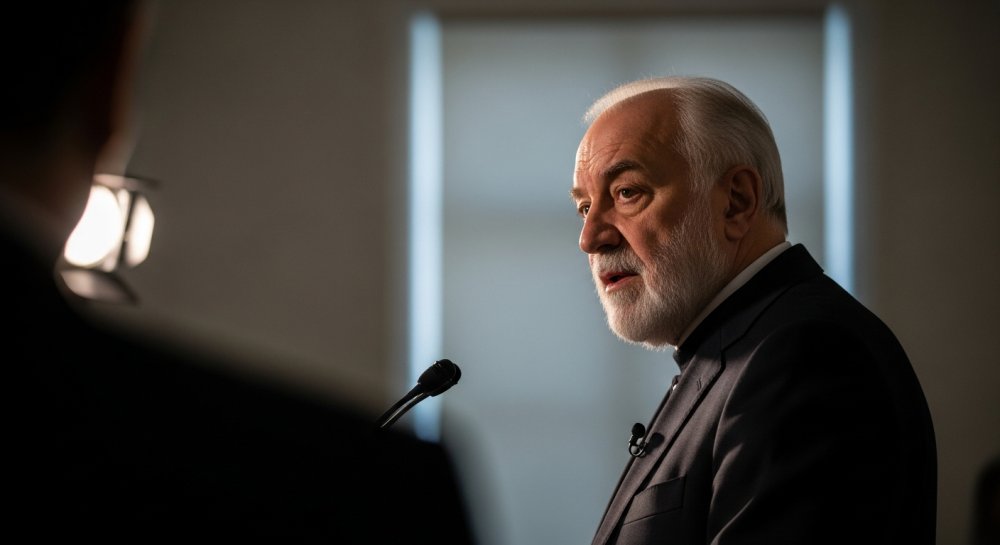
Graham Defends Trump Amid Media Firestorm Over Viral Image

Faith Facts
- Franklin Graham dismissed criticism of President Trump’s AI-generated image, calling it ‘a lot to do about nothing’
- The image depicted Trump in a robed, Christ-like figure with light emanating from his hands before being deleted from social media
- Graham stated the backlash reflects media bias and misunderstanding of the President’s intentions
Evangelist Franklin Graham, CEO of Samaritan’s Purse, issued a public statement Thursday defending President Donald Trump against mounting criticism over a since-deleted social media post. The post featured an AI-generated image depicting the President as a robed, Christ-like figure with light emanating from his hands.
Graham characterized the controversy as overblown, dismissing what he described as manufactured outrage from Trump’s political opponents and mainstream media outlets. The evangelical leader suggested the backlash represents yet another example of attacks against the President rooted in political bias rather than genuine concern.
The image in question appeared briefly on the President’s social media account before being removed. Critics claimed the depiction was blasphemous and inappropriate, crossing a line by portraying a political figure in messianic imagery. However, supporters countered that the controversy was being deliberately exaggerated to damage Trump’s standing among Christian voters.
Franklin Graham, son of the late evangelist Billy Graham, has been a consistent defender of President Trump throughout his political career. The Samaritan’s Purse leader has frequently spoken out against what he perceives as unfair treatment of the President by media outlets and political adversaries.
The statement comes at a time when President Trump continues to maintain strong support among evangelical Christians, who cite his policies on religious freedom, judicial appointments, and defense of traditional values. Many Christian conservatives view attacks on the President as part of a broader assault on their faith and values.
Graham’s dismissal of the controversy reflects a sentiment shared by many in the Christian conservative community who believe the President’s opponents will seize on any opportunity to create division and undermine his leadership. Supporters argue that the focus should remain on policy achievements rather than manufactured scandals.
The incident highlights the ongoing cultural divide in America, where interpretations of religious imagery and political expression continue to generate heated debate. For many Christian conservatives, the reaction to the image represents another example of selective outrage applied inconsistently across the political spectrum.
Let us know what you think, please share your thoughts in the comments below.

Faith Facts
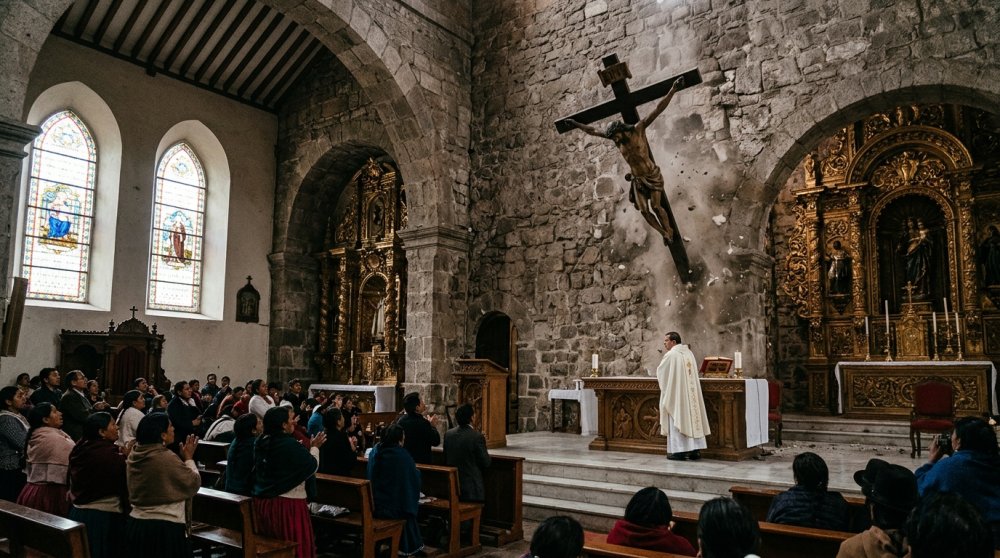
- A priest in Ecuador died during a church service when a large crucifix fell from the wall.
- Kenny Kinglesmith addresses unbelieving friends in an open letter about hope in Jesus amid suffering.
- Christian believers continue to place their trust in Christ even when tragedy strikes inside the sanctuary.
The sudden death of a priest while leading worship has shaken believers across Ecuador. Questions about suffering and divine purpose are rising again.
Kenny Kinglesmith has written an open letter to friends who do not believe. He explains why his hope in Jesus remains firm despite the pain.
“In the face of inexplicable suffering, I still choose to place my hope in Jesus.”
Many Christians are wrestling with how a loving God could allow such a loss inside His house. The event has prompted renewed reflection on the mystery of suffering.
Kinglesmith does not offer easy answers. Instead he points to the cross itself, where Christ endured the ultimate injustice yet brought redemption.
“I still choose to place my hope in Jesus.”
The tragedy has become a moment for believers to examine their own trust in God. It is also an opportunity to demonstrate compassion to those who question.
Kinglesmith urges Christians to live out their faith openly. He believes the witness of steadfast hope can speak louder than arguments.
“In the face of inexplicable suffering, I still choose to place my hope in Jesus.”
Let us know what you think, please share your thoughts in the comments below.
Faith Facts
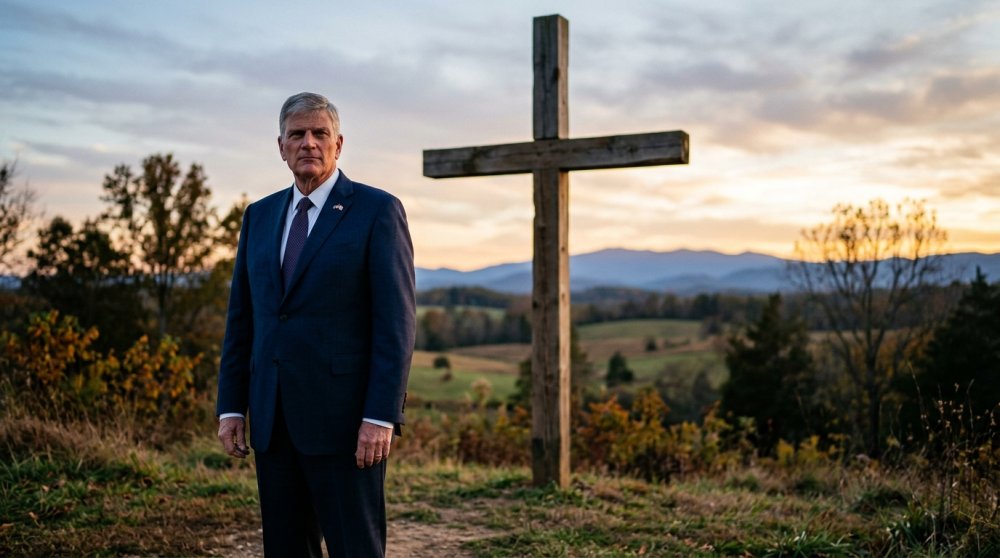
- Franklin Graham was raised in the shadow of his father Billy Graham, one of the most influential Christian leaders of the twentieth century.
- He has publicly stated that he never tried to become Billy Graham and instead sought to follow the distinct path God set before him.
- The younger Graham has carried the Gospel message across the globe through Samaritan’s Purse and the Billy Graham Evangelistic Association while maintaining a clear Christian conservative witness.
Franklin Graham recently opened up about the challenges of growing up in the household of the twentieth century’s most renowned evangelist. He explained that being the son of Billy Graham carried both a tremendous blessing and a heavy weight of expectations.
Despite the public scrutiny and inevitable comparisons, Graham made a deliberate choice early in life. He decided he would not attempt to replicate his father’s ministry or persona in any way.
“I never try to be Billy Graham,”
he said. This statement reflects the conviction that God equips each believer for a unique assignment rather than a copy of someone else’s.
Graham’s own ministry has grown into a powerful force for the Gospel through both the Billy Graham Evangelistic Association and the international relief work of Samaritan’s Purse. His approach has been marked by direct, unapologetic proclamation of biblical truth on issues ranging from religious liberty to the sanctity of life and traditional marriage.
“I never try to be Billy Graham,”
he reiterated, underscoring that his calling has always been to serve the Lord faithfully in the time and culture where God has placed him.
Today Franklin Graham continues to lead large-scale evangelistic events across the United States and around the world. He remains a steady voice for Christian values at a time when many pulpits have grown silent on cultural matters.
Let us know what you think, please share your thoughts in the comments below.
Faith Facts
- James Talarico is a member of the Presbyterian Church (U.S.A.)
- Rev. Jim Rigby serves as Talarico’s longtime pastor
- Talarico describes his Senate campaign as a form of ministry
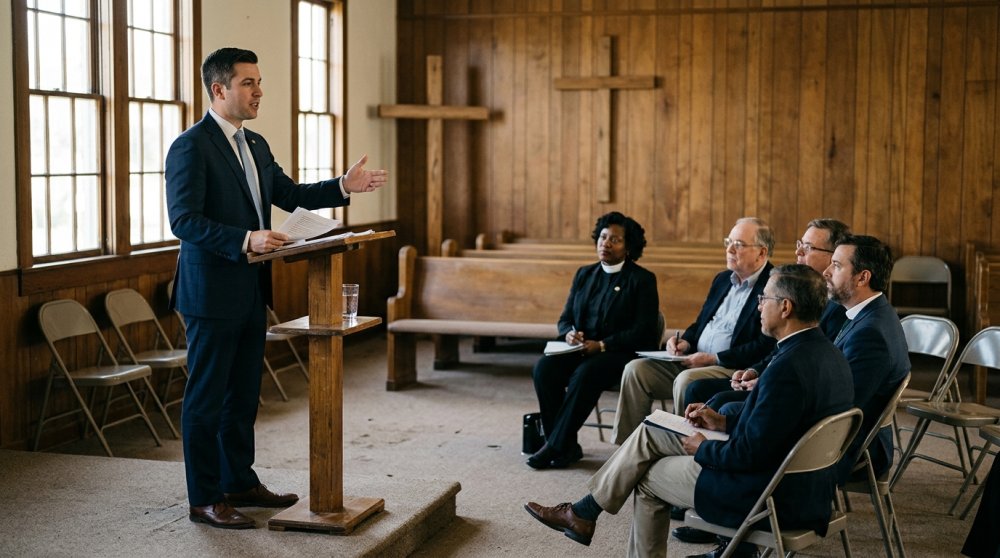
Democratic Texas state Rep. James Talarico addressed a gathering of faith leaders on Monday evening. The lawmaker shared how his pastor encouraged him to seek higher office.
Talarico credited the Rev. Jim Rigby with shaping his decision to run for the U.S. Senate. He presented the campaign as an extension of his Christian calling.
“A form of ministry.”
The PCUSA pastor reportedly framed political service as a faithful response to God’s calling. Talarico embraced this view in his remarks to the audience.
The Presbyterian Church (U.S.A.) has long maintained a progressive stance on social and political issues. Talarico’s comments align with that denominational direction.
Texas voters will soon weigh whether this interpretation of ministry resonates with their understanding of Christian citizenship. The race promises to test competing visions of faith and public service.
Let us know what you think, please share your thoughts in the comments below.


-

 Self-Reliance2 years ago
Trump’s Bold Move Uncovers Massive Social Security Fraud
-

 Faith2 years ago
New Clues Emerge in Noah’s Ark Mystery
-

 News2 years ago
Governor Walz’s Rhetoric Sparks National Controversy
-

 News2 years ago
Mel Gibson’s ‘The Passion of the Christ’ Sequel Title Announced
-

 Family2 years ago
Texas Lawmaker Targets Furries in Schools
-

 Freedom2 years ago
Maine Lawmaker Challenges Sports Fairness Controversy
-

 Family1 year ago
Canada’s Controversial Policy Sparks Ethical Debate
-
Faith11 months ago
Congress Hears Pleas for Nigerian Christians