
Faith
Gen Z Leads in Church Attendance, Study Finds

Faith Facts
- New research shows Gen Z attends church more frequently than older generations in the U.S.
- Barna Group reports Gen Z averages 1.9 church visits per month, a record high compared to other age groups.
- Older generations have seen a decrease in attendance, with baby boomers and elders now attending less often than in previous decades.
Recent findings reveal a shift toward greater church involvement among America’s youngest adults, reversing years of decline. This uptick suggests a hunger for community and spiritual renewal rooted in Biblical values.
The Barna Group’s survey, gathering responses from thousands of U.S. churchgoers, highlights how both Gen Z and millennials are returning to faith-based routines. Their commitment demonstrates hope for the future of the church in our nation.
As American society wrestles with many challenges, this renewed drive toward faith and fellowship is a powerful reminder that God continues to work through each generation.
Faithful engagement, passing down of spiritual legacies, and active participation in church life build strong families and strengthen our free nation.
As believers, let’s pray for continued revival among young people and encourage involvement that honors Christ’s calling for His church.


Faith Facts
- Pastor Robert Guanco died at Big Church Festival when a falling sign struck him, leaving behind a wife and family
- Six others were injured in the accident at the Christian music festival
- The tragedy has prompted deep questions about God’s providence and why suffering touches even sacred gatherings
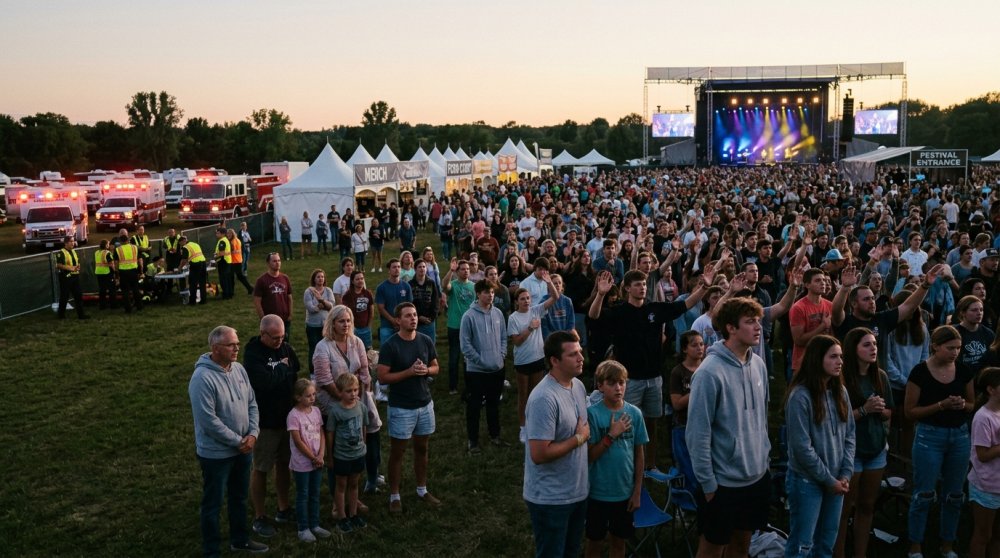
The question every believer dreads came this week from a heartbroken 21-year-old: How could God allow a beloved pastor to die at a Christian festival? When a sign fell at Big Church Festival this weekend, it took the life of Robert Guanco—a faithful pastor, devoted husband, and loving father. Six others were injured in the tragic accident.
For Amy Orr-Ewing, the young man’s godmother, the question demanded more than platitudes. Her godson needed truth that could bear the weight of real grief.
This isn’t the sanitized Christianity of feel-good slogans and prosperity promises. This is the faith that walks through the valley of the shadow of death and still proclaims God’s goodness. It’s the faith that doesn’t crumble when tragedy strikes in the very places we gather to worship.
The death of Pastor Guanco has sent shockwaves through the Christian community. Here was a man serving God, attending a festival celebrating faith, surrounded by fellow believers—and yet calamity struck. The question echoes through the ages: Why do the righteous suffer?
Orr-Ewing’s response to her godson reflects a theology tested by fire. She didn’t offer empty comfort or pretend the pain wasn’t real. Instead, she pointed toward the God who entered into human suffering Himself.
Our faith has never promised us immunity from the brokenness of this fallen world. Christ Himself was a man of sorrows, acquainted with grief. The apostles faced shipwrecks, imprisonments, and martyrdom. The question isn’t whether Christians will suffer—it’s how we understand that suffering in light of God’s sovereignty and love.
The Guanco family now faces an unimaginable loss. A wife has lost her husband. Children have lost their father. A congregation has lost their shepherd. And the broader body of Christ mourns with those who mourn.
Yet even in this darkness, the Christian hope remains. We don’t grieve as those who have no hope. We believe in a God who conquered death, who promises resurrection, and who works all things—even tragedies we cannot comprehend—for the good of those who love Him.
This is not the time for glib answers or theological debates divorced from compassion. This is the time for the Church to surround the Guanco family with prayer, practical support, and the reminder that they do not walk this valley alone.
The accident at Big Church Festival reminds us that our gathering places are not force fields against the consequences of living in a broken world. Accidents happen. Signs fall. Lives are cut short. But God’s character doesn’t change based on our circumstances.
For the young man wrestling with how to reconcile this tragedy with his faith, Orr-Ewing offers a model of honest Christianity—one that acknowledges the pain while clinging to eternal truth. This is the faith that has sustained believers through persecutions, plagues, and personal loss for two millennia.
Pastor Robert Guanco’s life of service stands as a testament to faithfulness. His unexpected death raises questions we may never fully answer this side of eternity. But it also calls us to examine our own hearts: Do we serve God only when life makes sense, or do we trust Him even when it doesn’t?
The Christian community continues to lift up the Guanco family and those injured in the accident. In times like these, the body of Christ demonstrates its true strength—not in avoiding suffering, but in bearing one another’s burdens and pointing each other toward the hope that anchors our souls.
Let us know what you think, please share your thoughts in the comments below.
Faith Facts
- Conservative principles derive their moral authority from biblical foundations, not secular philosophy
- The pro-life movement’s power stems directly from the Christian belief that life is sacred because humans are created in God’s image
- A Christianity-free conservatism removes the transcendent moral framework necessary for preserving American freedoms and traditional values
America’s conservative movement faces an existential question: Can it survive without Christ at its center? According to thoughtful voices within the movement, the answer is a resounding no.
The argument is straightforward and compelling. Conservative values—the sanctity of life, the importance of family, personal responsibility, and limited government—are not free-floating ideas that exist in a vacuum. They are rooted in a Christian worldview that recognizes God as the ultimate authority and human beings as created in His image.
Consider the pro-life position, one of conservatism’s defining moral stands. What gives it power and coherence?
“Take that away, and you take away all the power behind the pro-life argument.”
Without the Christian understanding that every human life bears the image of God from conception, the pro-life position becomes just another opinion in the marketplace of ideas. It loses its transcendent grounding and becomes vulnerable to the shifting sands of cultural preference and utilitarian calculation.
The same principle applies across the conservative agenda. Traditional marriage is sacred because God ordained it. Religious liberty matters because our rights come from our Creator, not from government. Human dignity is inviolable because we are fearfully and wonderfully made.
Strip away the Christian foundation, and conservatism becomes merely a set of preferences—no more authoritative than any competing ideology. It becomes conservatism in name only, unable to answer the fundamental question: Why should we conserve these things?
Some have attempted to build a purely secular conservatism based on classical liberalism, natural law, or pragmatic considerations. But these frameworks, while valuable, lack the comprehensive worldview and moral urgency that Christianity provides. They cannot sustain a movement through cultural opposition and generational change.
History demonstrates this reality. The American founding was deeply influenced by Christian principles, even among founders who weren’t orthodox believers. The civil rights movement drew its moral force from biblical justice. Every major conservative achievement has been animated by people who believed they were advancing God’s purposes, not merely political preferences.
This doesn’t mean non-Christians cannot hold conservative positions or join conservative causes. Many do, and their contributions are welcome and valuable. But the movement itself requires a Christian center to maintain its coherence and power.
The implications are significant for how conservatives engage in public life. It’s not enough to win political battles or pass legislation. The deeper work involves cultural renewal—calling America back to the faith that made its freedoms possible.
A Christless conservatism might achieve temporary political victories, but it cannot preserve the civilization it claims to defend. Without the rock of Christian truth, even the best conservative ideas become sand, shifting with every cultural tide.
The path forward requires conservatives to embrace, not hide, the Christian roots of their convictions. It means articulating how biblical truth speaks to contemporary issues with clarity and compassion. It means recognizing that cultural transformation precedes political change.
America’s future depends not on a conservatism that awkwardly tiptoes around faith, but on one that boldly proclaims the lordship of Christ over every sphere of life—including politics, culture, and governance.
Let us know what you think, please share your thoughts in the comments below.
Faith Facts
- Christian influencer Bryce Crawford appeared on comedian Howie Mandel’s podcast to discuss faith, salvation, and the supernatural
- Crawford defended the biblical teaching that Jesus Christ is the only way to salvation
- The conversation addressed spiritual matters including the legitimacy of psychics and the nature of truth
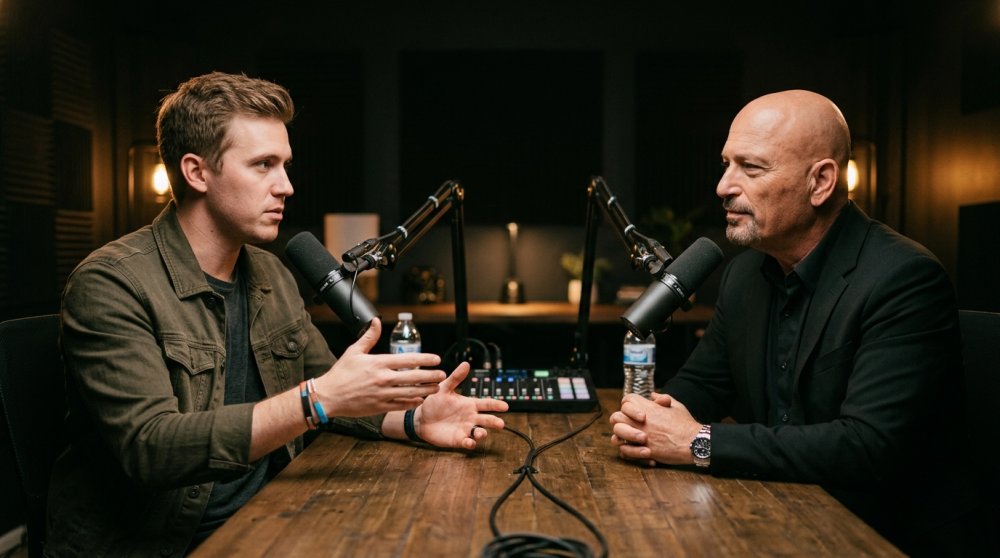
In a thought-provoking conversation that’s gaining attention across social media, Christian influencer Bryce Crawford joined comedian and television personality Howie Mandel for an in-depth discussion about matters of eternal significance. The wide-ranging interview touched on fundamental questions of faith, the path to salvation, and supernatural claims that challenge biblical truth.
Crawford, known for his bold proclamation of Christian truth to online audiences, didn’t shy away from defending core Christian doctrine during the exchange. He articulated the biblical position that salvation comes exclusively through Jesus Christ, a fundamental teaching rooted in Scripture that distinguishes Christianity from all other belief systems.
The conversation also ventured into territory concerning psychics and supernatural phenomena. Crawford challenged the legitimacy of psychic claims, maintaining a biblical worldview that distinguishes between God’s truth and deceptive spiritual counterfeits.
This interview represents a growing trend of Christian voices engaging in mainstream media spaces to share the Gospel message. Crawford’s willingness to speak clearly about exclusive Christian claims demonstrates the kind of confident faith that resonates with believers who refuse to compromise biblical truth for cultural acceptance.
The exchange between Crawford and Mandel highlights the continuing cultural conversation about religious truth claims in an increasingly pluralistic society. For Christians, the doctrine that Jesus is “the way, the truth, and the life” and that “no one comes to the Father except through” Him remains non-negotiable, regardless of how countercultural that message may be.
Crawford’s appearance on a platform hosted by someone outside the Christian faith community demonstrates the importance of believers being prepared to give an answer for the hope that is within them, speaking truth with both conviction and grace.
Let us know what you think, please share your thoughts in the comments below.


-

 Self-Reliance1 year ago
Trump’s Bold Move Uncovers Massive Social Security Fraud
-

 Faith1 year ago
New Clues Emerge in Noah’s Ark Mystery
-

 News1 year ago
Governor Walz’s Rhetoric Sparks National Controversy
-

 News1 year ago
Mel Gibson’s ‘The Passion of the Christ’ Sequel Title Announced
-

 Family1 year ago
Texas Lawmaker Targets Furries in Schools
-

 Freedom1 year ago
Maine Lawmaker Challenges Sports Fairness Controversy
-

 Family1 year ago
Canada’s Controversial Policy Sparks Ethical Debate
-
Faith9 months ago
Congress Hears Pleas for Nigerian Christians