
Faith
Franklin Graham Sees Faith Rising in Youth

Faith Facts
- Franklin Graham attributes higher church attendance among young adults to their rejection of “anti-God socialism.”
- Barna Group reports Generation Z and millennials attend church more frequently than older generations.
- Younger Americans were inspired to take spiritual action after the loss of Christian leader Charlie Kirk.
Franklin Graham, leader of Samaritan’s Purse, celebrates growing faith among younger Americans who are turning away from secular ideologies.
He notes that Gen Z and millennials are attending church more often, seeking truth and purpose rooted in faith, rather than worldly promises.
“They have been fed the lie of socialism and socialism is basically anti-God.”
Graham shared, highlighting a hunger for spiritual truth among youth.
Barna Group studies show church attendance rates among young adults nearly doubled from 2020 to 2025, with many taking personal steps to grow in faith.
Bible sales are rising, indicating a renewed commitment by young believers to seek God’s Word and embrace Biblical wisdom.
Some reports indicate challenges in church engagement.
A faith-filled response is emerging as youth desire deeper spiritual connection and encouragement.
“People are wanting to know the truth and that’s the thing. … Charlie was teaching truth.”
Graham affirmed, emphasizing the powerful influence of Biblical teaching.
As faith, family, and freedom are rediscovered by the new generation, our nation finds hope in their pursuit of godly values.
Stay informed on how faith continues to shape our nation for the better: Read more on this story


Faith Facts
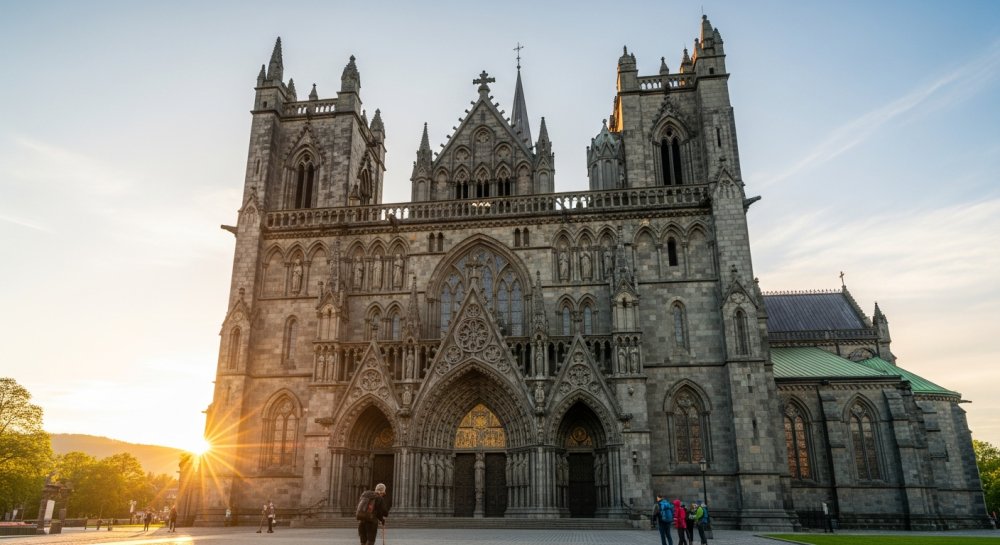
- Norway’s St. Olav Ways pilgrimage route stretches over 400 miles to the medieval Nidaros Cathedral in Trondheim, burial site of King Olav II
- The pilgrimage tradition dates back nearly 1,000 years to when St. Olav, who brought Christianity to Norway, was martyred in 1030
- The ancient Christian route offers American believers a chance to walk in the footsteps of medieval pilgrims while experiencing Norway’s stunning natural landscapes
For American Christians seeking a meaningful pilgrimage experience beyond the well-trodden paths of Rome or Jerusalem, Norway offers one of Europe’s most historically significant yet overlooked sacred journeys. The St. Olav Ways—a network of ancient routes converging on Trondheim—beckons believers to connect with nearly a millennium of Christian heritage.
The pilgrimage centers on King Olav II Haraldsson, who united Norway under Christian rule in the early 11th century. After his death in battle in 1030, miracles were reported at his burial site, and he was canonized as St. Olav, becoming Norway’s patron saint and a symbol of the nation’s Christian foundation.
The Nidaros Cathedral, built over St. Olav’s tomb, became one of medieval Europe’s most important pilgrimage destinations, rivaling Santiago de Compostela and Canterbury. For centuries, thousands of faithful journeyed across Scandinavia to pray at the saint’s shrine, seeking healing, spiritual renewal, and divine intercession.
Today’s pilgrims can choose from several historic routes, with the most popular stretching over 400 miles from Oslo to Trondheim. The journey typically takes three to four weeks on foot, though many modern pilgrims complete shorter sections.
The pilgrimage offers more than physical challenge—it provides spiritual renewal through prayer, reflection, and connection with Christian history. Along the route, medieval stone churches, wayside crosses, and ancient prayer sites remind travelers of the countless believers who walked these paths before them.
Unlike more commercialized pilgrimage routes, the Norwegian paths maintain an authentic, contemplative atmosphere. The dramatic Nordic landscapes—fjords, mountains, forests, and valleys—create natural spaces for encountering God’s creation and finding spiritual clarity away from modern distractions.
For American Christians, the St. Olav pilgrimage represents an opportunity to experience European Christian heritage in a nation that, despite modern secularization, maintains deep respect for its religious roots. The journey honors a king who sacrificed his life to establish Christianity as his nation’s foundation—a testament to faith’s transformative power.
Local churches and pilgrim centers along the route welcome travelers, offering accommodation, meals, and fellowship. Many pilgrims report that the communal aspect—sharing meals and stories with fellow believers from various nations—enriches their spiritual experience as much as the solitary walking.
The pilgrimage season runs from May through September, when weather conditions are most favorable and services are fully operational. Pilgrims who complete the journey receive a certificate at Nidaros Cathedral, marking their accomplishment and spiritual commitment.
This ancient Christian pilgrimage stands as a reminder that faith has shaped European civilization for centuries, and that sacred traditions continue to offer modern believers pathways to deeper spiritual life. For those willing to make the journey, Norway’s pilgrimage routes provide an unforgettable encounter with Christian history, natural beauty, and personal transformation.
Let us know what you think, please share your thoughts in the comments below.
Faith Facts
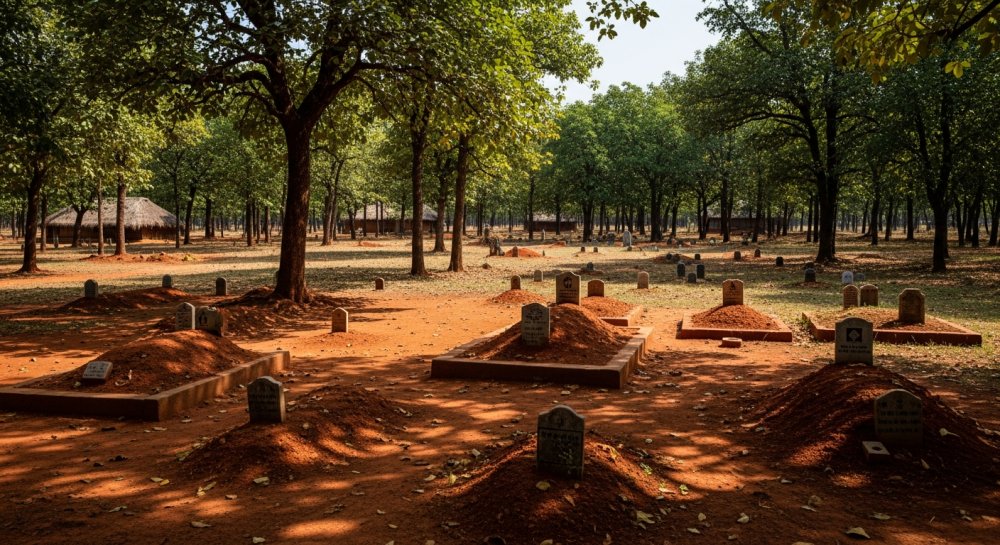
- Followers of a tribal religion in India’s Chhattisgarh state exhumed and burned the skeletal remains of a Christian man buried 20 years ago
- The disturbing incident occurred in Bastar District and represents an escalation of anti-Christian violence in central India
- The desecration of this believer’s grave underscores the growing persecution faced by Christians in regions where traditional tribal religions dominate
In a shocking act of religious violence, followers of a tribal religion in central India’s Chhattisgarh state recently exhumed the grave of a Christian man who had been buried two decades earlier. The perpetrators dug up his skeleton, burned his remains, and scattered the ashes in what authorities describe as a deliberate act of religious desecration.
The disturbing incident took place in Bastar District, a region where traditional tribal religious practices often clash with Christian communities. The victim had been laid to rest 20 years ago, making this violation not only an attack on the faith community but also a profound desecration of human dignity and the sanctity of burial grounds.
This grave desecration represents a troubling escalation in the persecution of Christians throughout India, particularly in rural areas where tribal populations maintain strong traditional religious practices. Such acts of violence against Christian communities—both living and deceased—highlight the severe challenges believers face in maintaining their constitutional right to religious freedom.
The incident underscores a broader pattern of anti-Christian hostility in various regions of India, where believers often face harassment, social ostracism, and physical violence simply for practicing their faith. The willingness of persecutors to violate even the sanctity of Christian burial sites demonstrates the depth of animosity some communities harbor toward followers of Christ.
For American Christians, this disturbing account serves as a reminder of the precious gift of religious liberty we enjoy and the urgent need to stand in solidarity with persecuted believers worldwide. As brothers and sisters in Christ face such profound violations of human dignity, the global Church must not remain silent.
The desecration also raises questions about local authorities’ ability or willingness to protect religious minorities and their sacred spaces. The fact that such a brazen act could occur—targeting remains buried for two decades—suggests either insufficient legal protections or inadequate enforcement of existing laws.
Let us know what you think, please share your thoughts in the comments below.
Faith Facts
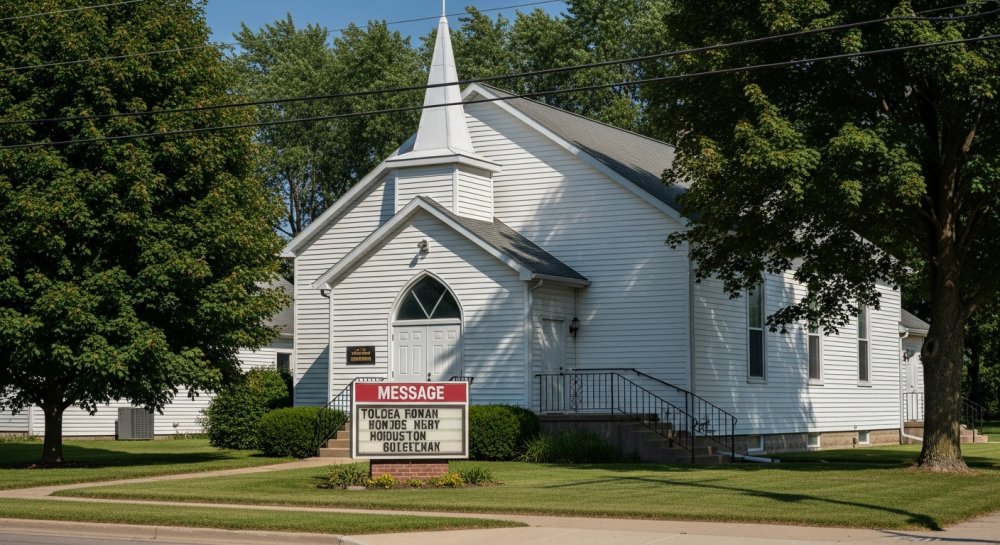
- Several LGBT activists with bullhorns protested outside a small Iowa church during Sunday worship over a sign reading “Ditch Pride. Embrace Humility!”
- The church’s pastor clarified the sign was about Christian humility and biblical teaching, not targeting any specific group or spreading hatred
- Church members responded to protesters by offering them water and showing Christ’s love in action despite the disruption
A small Iowa congregation found itself at the center of controversy Sunday morning when LGBT activists with bullhorns gathered outside their church building to protest a sign they perceived as offensive. The sign simply read: “Ditch Pride. Embrace Humility!”
Rather than responding with anger or defensiveness, church members demonstrated the very humility their sign promoted. They offered water to protesters and engaged peacefully despite the disruption to their worship service.
The pastor of the church explained that the message was rooted in biblical teaching about the virtue of humility and the sin of pride in the Christian context. The sign was not intended as a political statement or an attack on any particular group, but rather as a timeless Christian principle applicable to all people.
This incident highlights the growing tension between traditional Christian teaching and activist movements that view biblical messages as inherently hostile. Churches across America are increasingly finding themselves pressured to alter or soften core theological principles to avoid controversy.
The congregation’s response, however, offers a model for how believers can stand firm on biblical truth while simultaneously extending grace and love to those who disagree. By offering water and kindness to those protesting outside their doors, these Christians embodied the command to love one’s enemies and pray for those who persecute you.
The church did not back down from their message about humility, nor did they escalate the confrontation. Instead, they chose to live out the very message their sign proclaimed—setting aside pride and embracing the humility that comes from following Christ.
This approach stands in stark contrast to the aggressive tactics employed by some activist groups who seek not just acceptance but the silencing of religious expression they deem offensive. The use of bullhorns during a worship service demonstrates a lack of respect for religious freedom that should concern all Americans regardless of their personal beliefs.
Religious liberty remains a cornerstone of American freedom, and churches have every right to proclaim biblical teaching without intimidation or harassment. The Constitution protects the free exercise of religion, which includes the right to display messages consistent with one’s faith on church property.
As cultural conflicts over values intensify, this small Iowa church has shown that it’s possible to maintain doctrinal integrity while extending genuine Christian love. Their example reminds us that humility is not weakness, and standing for truth does not require abandoning compassion.
Let us know what you think, please share your thoughts in the comments below.


-

 Self-Reliance1 year ago
Trump’s Bold Move Uncovers Massive Social Security Fraud
-

 Faith1 year ago
New Clues Emerge in Noah’s Ark Mystery
-

 News1 year ago
Governor Walz’s Rhetoric Sparks National Controversy
-

 News1 year ago
Mel Gibson’s ‘The Passion of the Christ’ Sequel Title Announced
-

 Family1 year ago
Texas Lawmaker Targets Furries in Schools
-

 Freedom1 year ago
Maine Lawmaker Challenges Sports Fairness Controversy
-

 Family1 year ago
Canada’s Controversial Policy Sparks Ethical Debate
-
Faith7 months ago
Congress Hears Pleas for Nigerian Christians