Faith
Franklin Graham Brings Hope to Venezuela After Devastating Earthquakes
Faith Facts
- Franklin Graham visited Venezuela to meet with earthquake survivors following back-to-back magnitude 7.5 and 7.2 earthquakes on June 24
- Samaritan’s Purse is providing humanitarian aid to thousands affected by the earthquakes that killed thousands and injured even more
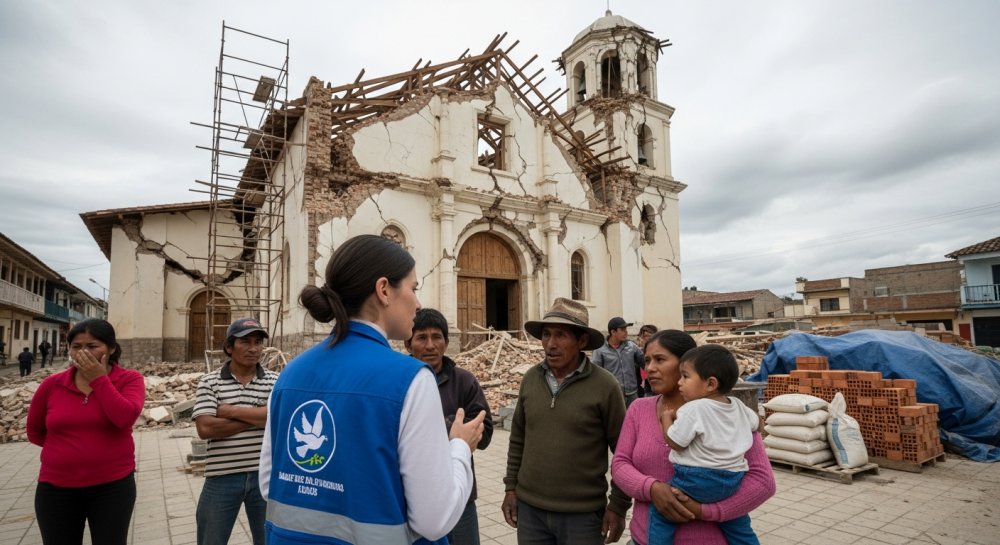
- Graham visited a church that was mostly collapsed in the disaster, demonstrating the ministry’s commitment to serving devastated communities
Evangelist Franklin Graham traveled to Venezuela this week on a mission of mercy and compassion. The head of Samaritan’s Purse met with earthquake survivors whose lives have been forever changed by the twin natural disasters that struck the nation.
On June 24, Venezuela was rocked by two massive earthquakes measuring magnitude 7.5 and 7.2. The back-to-back tremors killed thousands of people and injured even more, leaving entire communities in ruins.
During his visit, Graham stopped at a church building that suffered catastrophic damage in the quakes. The structure had mostly collapsed, a sobering reminder of the destruction that swept across the region.
Samaritan’s Purse, the international Christian relief organization led by Graham, has been actively providing humanitarian assistance to the thousands of Venezuelans whose lives have been upended. The ministry’s response reflects its long-standing commitment to bringing help and hope to those suffering in crisis situations around the world.
The organization’s work in Venezuela continues the biblical mandate to care for those in distress. Through practical aid and spiritual encouragement, Samaritan’s Purse is serving communities struggling to recover from one of the most devastating natural disasters in the nation’s recent history.
Let us know what you think, please share your thoughts in the comments below.
Faith
Young Believers Turn to AI for Spiritual Guidance Instead of Their Pastors
Faith Facts
- A growing number of Christians in their 20s and 30s are consulting AI chatbots for biblical questions and spiritual guidance before seeking counsel from pastors or church leaders
- Pastors warn this trend undermines the biblical model of discipleship and accountability that requires human relationships and spiritual mentorship
- Church leaders emphasize that artificial intelligence cannot replace the Holy Spirit’s work through authentic Christian community and pastoral care
An alarming trend is emerging among younger believers that has church leaders sounding the alarm. Christians in their twenties and thirties are increasingly turning to artificial intelligence platforms for answers to spiritual questions, biblical interpretation, and guidance on life decisions — often before ever consulting their pastor or church elders.
The shift represents a fundamental departure from the biblical model of discipleship and spiritual formation. For centuries, Christians have relied on seasoned believers, pastors, and church communities to provide wisdom, accountability, and biblical counsel grounded in relationship and prayer.
Pastors across the country are expressing concern that this technological shortcut undermines the God-ordained structure of spiritual mentorship. While AI can quickly generate responses to theological questions, it lacks the discernment that comes from the Holy Spirit working through mature believers who know an individual’s struggles, context, and spiritual journey.
The appeal of AI for young Christians appears to stem from several factors: instant availability, lack of judgment, and the comfort of anonymity. Unlike scheduling a meeting with a pastor or opening up in a small group, AI chatbots provide immediate responses without requiring vulnerability or relationship.
However, church leaders emphasize that this convenience comes at a steep spiritual cost. Biblical discipleship requires transparency, accountability, and the willingness to submit to godly authority — elements that cannot be replicated by an algorithm, no matter how sophisticated.
The concern extends beyond mere convenience. Pastors worry that reliance on AI for spiritual guidance creates a generation of believers disconnected from the body of Christ and lacking the deep relationships Scripture commands.
The Bible repeatedly emphasizes the importance of seeking counsel from wise, godly individuals rather than relying solely on one’s own understanding or impersonal sources. Proverbs speaks extensively about the value of seeking multiple counselors, while the New Testament highlights the role of elders, pastors, and mature believers in guiding and shepherding God’s people.
Furthermore, AI lacks the capacity to pray with someone, to bear their burdens in a Christ-like manner, or to provide the comfort and wisdom that flows from the Holy Spirit’s guidance through a spiritually mature mentor. Technology cannot replicate the power of a pastor who knows a believer’s history, family dynamics, and spiritual walk.
Church leaders acknowledge that AI tools may have limited utility for basic biblical facts or historical context. However, they stress that genuine spiritual formation requires human relationship, accountability, and the presence of the Holy Spirit working through the community of faith.
The solution, pastors suggest, lies in renewed emphasis on biblical community and intentional discipleship relationships. Churches must create environments where young believers feel comfortable asking questions, expressing doubts, and seeking wisdom from those further along in their faith journey.
This means pastors and church leaders must remain accessible and approachable, demonstrating genuine care for the spiritual development of younger members. It also requires teaching young Christians about the irreplaceable value of biblical community and the dangers of substituting technology for genuine spiritual mentorship.
As artificial intelligence continues to advance and integrate into daily life, the church faces a critical decision point. Will believers maintain the biblical pattern of iron sharpening iron through authentic relationships, or will convenience and comfort lead them toward isolated, technology-mediated spirituality that lacks the depth and accountability Scripture requires?
The stakes are high for the next generation of Christian leaders and the future health of the church. Spiritual maturity cannot be downloaded or generated by an algorithm — it requires the messy, beautiful, and essential work of real relationships within the body of Christ.
Let us know what you think, please share your thoughts in the comments below.

Faith
Seven Christians Begin Five-Year Prison Sentence Under India’s Anti-Conversion Law
Faith Facts
- Six pastors and one Christian believer in India have begun serving five-year prison sentences under the state’s anti-conversion law
- The seven believers were falsely accused at a child’s birthday party two years ago and have now exhausted their legal appeals
- India’s anti-conversion laws increasingly target Christians for practicing and sharing their faith, criminalizing religious freedom under the guise of preventing forced conversions
In a troubling escalation of religious persecution, seven Christians in India have begun serving five-year prison sentences after being falsely accused of violating the country’s controversial “anti-conversion” law. The case, which originated at a child’s birthday party two years ago, has now concluded with these believers behind bars after exhausting their legal options.
Six pastors and one fellow Christian were targeted under legislation that criminalizes alleged forced religious conversions, laws that human rights advocates say are systematically weaponized against the Christian community. The arrests at what should have been a joyful family celebration underscore how these statutes enable false accusations and legal persecution of believers simply for practicing their faith.
Anti-conversion laws in several Indian states have created an environment of fear and intimidation for Christians, who face arrest and imprisonment for sharing the Gospel or even gathering for worship. Critics argue these laws violate fundamental religious freedom and are disproportionately enforced against religious minorities, particularly Christians, while perpetuating a climate of intolerance.
The imprisonment of these seven believers represents a broader pattern of persecution facing Christians throughout India. False accusations, often made by radical nationalist groups, lead to arrests, trials, and convictions that devastate families and communities. These laws effectively criminalize religious freedom, turning acts of faith into punishable offenses.
For American Christians who cherish religious liberty as a foundational right, the plight of Indian believers serves as a sobering reminder of what happens when government restricts the free exercise of faith. The situation demands attention from policymakers and prayer from believers who understand that religious freedom is a universal human right that must be defended globally.
The case also highlights the urgent need for international pressure on the Indian government to repeal these discriminatory laws and protect the rights of all religious minorities. As these seven Christians begin their unjust sentences, their sacrifice calls the global church to stand in solidarity and advocate for those who suffer for their faith.
Let us know what you think, please share your thoughts in the comments below.

Faith
African Cardinal Warns of Western Powers Imposing Radical Agenda on Sovereign Nations
Faith Facts
- Cardinal Robert Sarah condemns European Union efforts to force abortion and LGBT ideology on African nations through international law
- The Cardinal warns that Western powers are using legal and economic pressure to undermine traditional Christian values in Africa
- African nations face increasing demands to abandon their cultural and religious principles in exchange for international aid and recognition
A prominent African Cardinal has issued a stark warning about the European Union’s efforts to impose radical social policies on sovereign African nations. Cardinal Robert Sarah spoke out against what he describes as an aggressive campaign to force abortion access and LGBT ideology onto countries that remain committed to traditional Christian values.
The Cardinal’s comments highlight a growing tension between Western institutions and African nations that refuse to abandon their religious and cultural heritage. African countries, many with deeply Christian populations, increasingly find themselves under pressure from international organizations and Western governments to adopt progressive social policies that conflict with their values.
Cardinal Sarah has been a consistent voice defending traditional Christian teaching and warning against the erosion of religious freedom worldwide. His critique focuses specifically on how international law and economic leverage are being weaponized to compel African nations to embrace ideologies that contradict their faith traditions.
The European Union and other Western bodies have frequently tied aid, trade agreements, and international recognition to demands that African countries liberalize their laws on abortion and redefine marriage. This practice has sparked accusations of cultural imperialism and neo-colonialism from leaders across the African continent who see it as an assault on their sovereignty and religious liberty.
Many African nations maintain laws protecting unborn life and upholding traditional marriage, reflecting the values of their predominantly Christian populations. These countries now face coordinated international pressure to abandon these protections despite widespread public support for maintaining them.
Cardinal Sarah’s warning serves as a reminder that the battle for religious freedom and traditional values is a global struggle. African Christians find themselves on the front lines, resisting efforts by powerful Western institutions to impose an agenda that undermines the family, disregards the sanctity of life, and challenges the biblical understanding of human sexuality.
The Cardinal’s courage in speaking truth stands as an example for Christians worldwide who face similar pressures to conform to secular ideologies. His defense of African sovereignty and Christian principles demonstrates that the faith remains vibrant and uncompromising in parts of the world where Western Christianity has often grown weak.
As Western institutions continue their efforts to export progressive ideology globally, African leaders like Cardinal Sarah provide vital resistance. Their unwillingness to trade their Christian heritage for Western approval offers hope that traditional values will endure despite institutional pressure.
Let us know what you think, please share your thoughts in the comments below.

-
Self-Reliance1 year agoTrump’s Bold Move Uncovers Massive Social Security Fraud
-

Faith1 year agoNew Clues Emerge in Noah’s Ark Mystery
-

News1 year agoGovernor Walz’s Rhetoric Sparks National Controversy
-

News1 year agoMel Gibson’s ‘The Passion of the Christ’ Sequel Title Announced
-

Family1 year agoTexas Lawmaker Targets Furries in Schools
-

Freedom1 year agoMaine Lawmaker Challenges Sports Fairness Controversy
-

Family1 year agoCanada’s Controversial Policy Sparks Ethical Debate
-
Faith8 months ago
Congress Hears Pleas for Nigerian Christians