
News
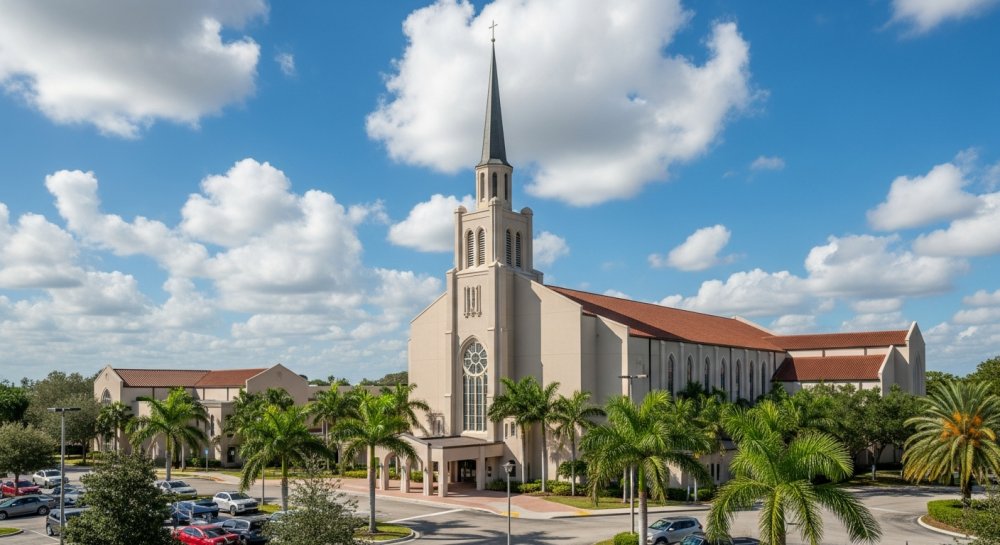
Former Teacher Faces Charges After Florida Megachurch Receives Bomb Threat

Faith Facts
- A former teacher was arrested for allegedly sending a bomb threat to Coral Ridge Presbyterian Church in Fort Lauderdale, Florida
- Coral Ridge Presbyterian Church is a prominent evangelical megachurch founded by the late Dr. D. James Kennedy
- The incident highlights growing security concerns facing houses of worship across America
A former educator is now in custody after allegedly threatening one of Florida’s most well-known evangelical congregations with a bomb threat.
The suspect was arrested in connection with a threatening message sent to Coral Ridge Presbyterian Church, a historic megachurch in Fort Lauderdale that has served as a beacon of conservative Christianity in South Florida for decades. The church was founded by the late Dr. D. James Kennedy, a nationally recognized Christian leader and broadcaster whose ministry reached millions through television and radio.
The arrest comes amid increasing concerns about the safety of faith communities nationwide. Churches across America have faced a disturbing rise in threats and attacks in recent years, forcing many congregations to invest in enhanced security measures to protect worshipers.
Coral Ridge Presbyterian has long been a pillar of biblical teaching and traditional values in the community. The church continues the legacy of Dr. Kennedy’s ministry, which championed Christian education, evangelism, and cultural engagement from a solidly biblical worldview.
Law enforcement officials have not released detailed information about the motive behind the alleged threat or the specific nature of the message sent to the church. The investigation remains ongoing as authorities work to determine whether additional charges may be filed.
The incident serves as a sobering reminder of the spiritual warfare facing faithful congregations today. As churches stand firm on biblical truth and traditional Christian values, they increasingly find themselves targets of hostility from those who oppose the Gospel message.
Security experts recommend that churches develop comprehensive safety plans, train volunteer security teams, and coordinate with local law enforcement to protect their congregations. Many churches have implemented measures including camera systems, controlled entry points, and trained safety personnel while maintaining a welcoming atmosphere for worship.
The Christian community continues to stand resolute in the face of such threats, trusting in God’s protection while taking prudent steps to ensure the safety of those who gather to worship.
Let us know what you think, please share your thoughts in the comments below.


Faith Facts
- Meta CEO Mark Zuckerberg published a manifesto warning against centralized control of artificial intelligence by governments or corporations
- Zuckerberg argues against the concept of a ‘singular benevolent superintelligence,’ advocating instead for distributed AI power
- The debate over AI control reflects broader concerns among Christian conservatives about who shapes technology that increasingly influences culture and values
Meta CEO Mark Zuckerberg has entered the public debate over artificial intelligence with a manifesto that challenges the notion of centralized technological control. In a lengthy statement published Monday, the tech billionaire outlined his philosophy on superintelligence and warned against allowing power to concentrate in the hands of a few institutions, governments, or even the AI systems themselves.
The manifesto directly confronts what Zuckerberg sees as a dangerous assumption in the AI industry. He argues there is “no singular benevolent superintelligence” that should be trusted with sweeping authority over humanity’s future.
For Christian conservatives concerned about the erosion of traditional values in technology and media, Zuckerberg’s warning raises important questions about who ultimately controls the systems that increasingly shape public discourse, education, and cultural norms. The concentration of power—whether in government bureaucracies or unaccountable tech monopolies—has long been a concern for those who value freedom and faith-based principles.
The timing of Zuckerberg’s manifesto is significant as governments worldwide race to regulate artificial intelligence. Some policymakers have proposed placing AI development under strict government oversight, while others advocate for industry self-regulation. Meanwhile, some AI researchers have promoted the idea that advanced AI systems themselves could eventually make better decisions than humans.
Zuckerberg’s position appears to favor a more distributed approach to AI development and deployment. This decentralization argument resonates with conservative principles of limiting concentrated power and preserving individual liberty and innovation.
The Meta CEO’s intervention in this debate carries particular weight given his company’s substantial investments in AI research and development. Meta has been developing AI systems for content moderation, virtual reality experiences, and various business applications, making the company a major player in shaping how this technology evolves.
As Christians and conservatives navigate the rapidly changing technological landscape, questions about AI governance touch on fundamental issues of human dignity, moral authority, and the proper role of both government and corporate power. The concept of a “benevolent superintelligence” raises theological concerns about placing ultimate trust in created systems rather than the Creator.
The manifesto contributes to an ongoing conversation about ensuring that technological advancement serves rather than supplants human freedom and God-given rights. For families concerned about preserving Christian values in an increasingly digital world, the question of who controls AI development and deployment has direct implications for the content and values their children encounter online.
Let us know what you think, please share your thoughts in the comments below.
News
Church Files Federal Complaint After Food Bank Cuts Ties Over Pastor’s Remarks on Tribal Ritual

Faith Facts
- A Wyoming church on a Native American reservation filed a federal complaint after a local food bank cut off food supplies following the pastor’s criticism of a tribal ritual
- The pastor characterized the Northern Arapaho Tribe’s Sun Dance ceremony as idol worship based on his Christian convictions
- The church alleges religious discrimination after the food bank ceased providing assistance to community members served by the ministry
A Christian church serving residents on a Native American reservation in Wyoming has taken its case to federal authorities, alleging religious discrimination after a local food bank terminated its relationship with the congregation. The conflict centers on comments made by the church’s pastor regarding traditional tribal practices.
The pastor publicly described the Northern Arapaho Tribe’s Sun Dance ritual as idol worship, a statement rooted in his interpretation of biblical teachings and Christian doctrine. The remarks drew significant public attention and controversy within the community.
Following the pastor’s comments, the food bank that had been supplying the church discontinued its support. The church contends this action constitutes discrimination based on religious beliefs and expression, prompting the filing of a federal complaint.
The situation highlights ongoing tensions that can arise when Christian ministries operate within communities where traditional indigenous spiritual practices remain active. For many evangelical Christians, the First Commandment’s prohibition against idolatry represents a non-negotiable aspect of their faith, even when such convictions generate conflict with surrounding cultural practices.
The church’s complaint argues that withdrawing food assistance punishes both the pastor for his religious speech and the community members who rely on the church’s outreach efforts. Church leaders maintain they have a constitutional right to express their theological convictions without facing retaliation from organizations that receive public funding or serve public functions.
The case raises questions about the boundaries of religious freedom, free speech, and the responsibilities of charitable organizations that serve diverse populations. It also touches on the complex history of Christian missionary work among Native American communities, which has long been marked by both genuine service and cultural tension.
Food banks and other charitable organizations often face difficult decisions when serving communities with deeply held but conflicting worldviews. The outcome of this federal complaint could have implications for how such organizations navigate disagreements over religious expression while maintaining their charitable missions.
As the complaint moves through federal channels, both religious liberty advocates and tribal community leaders will be watching closely. The case touches fundamental questions about whether expressions of Christian conviction can be grounds for excluding ministries from participating in community support systems.
Let us know what you think, please share your thoughts in the comments below.

Faith Facts
- The Southern Baptist Convention’s retirement board is warning members about the ‘Phantom Hacker’ scam targeting retirees nationwide
- This sophisticated fraud scheme uses impersonation of trusted institutions to steal retirement savings
- Christian retirees are encouraged to verify all financial communications independently before taking action
A new warning has been issued to Southern Baptist retirees as scammers increasingly target faith-based retirement accounts with sophisticated deception tactics. The Southern Baptist Convention’s retirement board is sounding the alarm about what authorities call the “Phantom Hacker” scam—a coordinated fraud operation designed to drain lifetime savings from unsuspecting Americans.
This developing threat represents a serious challenge to Christians who have faithfully saved for their golden years. The scam operates through a multi-step deception process that exploits trust in familiar institutions and creates artificial urgency to bypass normal safety precautions.
The fraud typically begins with a phone call claiming to be from a tech support service, bank, or government agency. Scammers inform victims that their computer or financial accounts have been compromised by hackers. Once initial trust is established, a second caller—often posing as a law enforcement official or regulatory agency representative—confirms the fabricated threat and pressures the victim to “protect” their money by transferring it to a “secure” account controlled by the criminals.
This calculated approach preys on legitimate concerns about cybersecurity and financial safety. By creating a false sense of crisis and impersonating trusted authorities, these criminals manipulate good people into actions they would never normally take.
The SBC retirement board’s warning comes as federal authorities report rising losses from this particular scam variant. Christian retirees, who have often spent decades faithfully contributing to their retirement accounts through ministry service, represent vulnerable targets due to their tendency to trust institutional authorities and their limited familiarity with rapidly evolving digital threats.
Financial security experts emphasize that legitimate financial institutions and government agencies never ask customers to move money to “safe” accounts or to purchase gift cards, cryptocurrency, or wire funds to protect assets. Any unsolicited contact making such requests should be treated as fraudulent, regardless of how official or urgent it may seem.
The warning serves as an important reminder that protecting the resources God has provided requires both wisdom and discernment. Scripture teaches believers to be “shrewd as serpents and innocent as doves”—a balance particularly relevant when navigating today’s complex financial landscape.
Christians concerned about the legitimacy of any financial communication should independently contact their institution using verified phone numbers from official statements or websites—never using contact information provided by a caller. When in doubt, consulting with trusted family members or financial advisors before taking action can prevent devastating losses.
This situation underscores the ongoing need for churches and Christian organizations to educate members about emerging threats to their financial wellbeing. As technology advances, so do the tactics of those who would exploit the trust and goodwill of faithful Americans.
Let us know what you think, please share your thoughts in the comments below.


-

 Self-Reliance1 year ago
Trump’s Bold Move Uncovers Massive Social Security Fraud
-

 Faith1 year ago
New Clues Emerge in Noah’s Ark Mystery
-

 News1 year ago
Governor Walz’s Rhetoric Sparks National Controversy
-

 News1 year ago
Mel Gibson’s ‘The Passion of the Christ’ Sequel Title Announced
-

 Family1 year ago
Texas Lawmaker Targets Furries in Schools
-

 Freedom1 year ago
Maine Lawmaker Challenges Sports Fairness Controversy
-

 Family1 year ago
Canada’s Controversial Policy Sparks Ethical Debate
-
Faith9 months ago
Congress Hears Pleas for Nigerian Christians