
Faith
Five Biblical Steps to Combat Rising Workplace Racism


Faith Facts
- A TUC report reveals racism is increasing in British workplaces, including promotion discrimination and physical violence
- Christians are called to be salt and light in their workplaces, applying biblical principles to combat injustice
- Five practical, faith-based actions can help believers address racial discrimination while maintaining a Christ-centered witness
As workplaces across Britain face a troubling rise in racism—from overlooked promotions to outright physical violence—Christians are uniquely positioned to respond with both truth and grace. A new report from the Trade Union Congress (TUC) documents the disturbing escalation of racial discrimination in professional settings, challenging believers to live out their faith in practical, transformative ways.
Christine Jeske offers five concrete steps that Christians can take to be salt and light in their workplaces, grounded in biblical principles of justice, love, and dignity for all people created in God’s image. These actionable approaches enable believers to stand against discrimination while maintaining a witness that honors Christ.
The first step involves educating yourself about the specific challenges your colleagues from different backgrounds face. This means listening with humility and seeking to understand experiences that may differ from your own. Scripture calls us to “rejoice with those who rejoice, weep with those who weep,” a command that requires genuine awareness of others’ struggles and triumphs.
Second, Christians must speak up when witnessing discriminatory behavior or language. Silence in the face of injustice can be interpreted as complicity. Proverbs instructs believers to “speak up for those who cannot speak for themselves, for the rights of all who are destitute.” This biblical mandate applies directly to workplace situations where colleagues face unfair treatment based on their race or ethnicity.
The third practical step involves examining your own heart and actions for unconscious bias. All people struggle with preconceptions and prejudices shaped by culture and upbringing. Regular self-examination, prayer, and accountability help believers identify and root out attitudes that conflict with the biblical truth that all people bear God’s image equally.
Fourth, use your influence—whatever its scope—to advocate for fair policies and practices. Whether you’re in leadership or not, you can support equitable hiring, promotion, and workplace culture initiatives. This represents faithful stewardship of the platform God has given you, using it to advance justice and equal opportunity.
Finally, build genuine relationships across racial and cultural lines. Authentic friendship breaks down barriers and challenges stereotypes more effectively than any policy alone. Jesus modeled this approach by crossing cultural boundaries and dignifying those society marginalized, demonstrating that the Kingdom of God transcends earthly divisions.
The TUC report’s findings serve as a sobering reminder that racism remains a persistent challenge in modern Britain. For Christians, this reality presents not just a social problem but a spiritual opportunity—to demonstrate Christ’s love in tangible ways and to advance His kingdom values of justice, mercy, and human dignity in the workplace.
By taking these five practical steps, believers can fulfill their calling to be agents of reconciliation and justice. This witness becomes particularly powerful when rooted in the transformative truth that in Christ, there is “neither Jew nor Gentile, neither slave nor free”—all are one in Him.
The rise of workplace racism demands a response from people of faith. Christians equipped with biblical truth and motivated by Christ’s love can make a meaningful difference, one conversation, one relationship, one act of courage at a time.
Let us know what you think, please share your thoughts in the comments below.

Faith Facts
- Tony Rucinski urges Christian men to embrace courage, self-control, and sacrificial service as the foundation of biblical masculinity.
- The call emphasizes a return to traditional manhood grounded in Scripture and family responsibility.
- Churches are challenged to raise men willing to speak truth in a culture that often rejects these values.
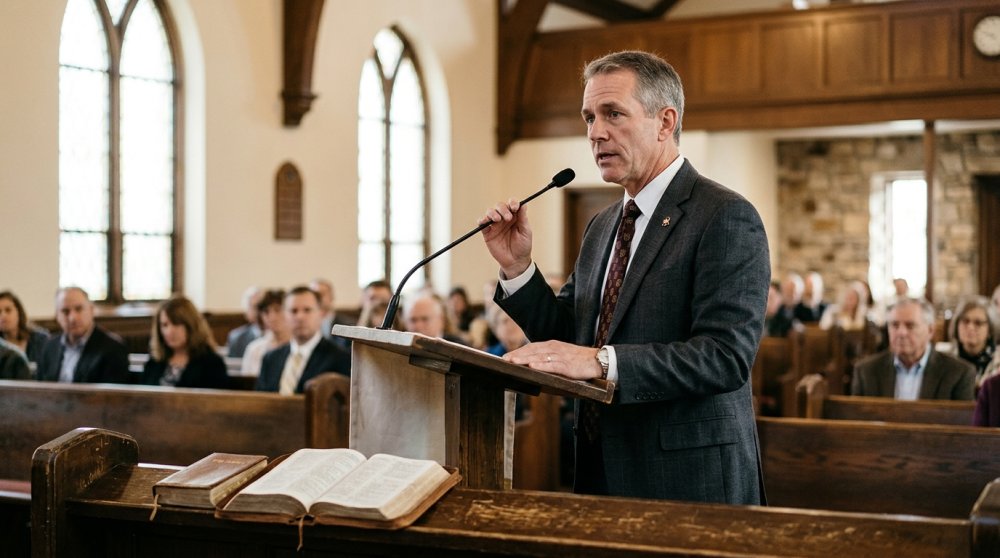
Tony Rucinski is calling on Christian men to recover a biblical vision of masculinity centered on courage, self-control, and sacrificial service. He believes the church needs men who are unafraid to speak up for truth in a time when such convictions are increasingly under attack.
According to Rucinski, modern culture has distorted the role of men, leaving many confused about their God-given responsibilities. He argues that true masculinity is not defined by cultural trends but by the clear teachings of Scripture.
“The church needs men willing to speak up,” Rucinski stated, stressing that silence is no longer an option for faithful believers.
His message challenges husbands and fathers to lead their families with conviction, modeling self-control and sacrificial love as Christ did for the church. Rucinski sees this as essential for restoring strong homes and communities.
The campaigner also warns that when men abandon their biblical roles, society suffers. He points to rising fatherlessness and moral confusion as evidence of what happens when traditional manhood is dismissed.
Rucinski calls on pastors and church leaders to boldly teach these truths rather than soften them to fit cultural preferences. He believes that a renewed commitment to biblical masculinity will strengthen both families and the wider body of Christ.
Let us know what you think, please share your thoughts in the comments below.
Faith Facts
- Pastor Gary Hamrick leads Cornerstone Chapel in Leesburg, Virginia, and affirms unwavering U.S. support for Israel based on biblical principles.
- The pastor directly counters Vice President JD Vance’s suggestion that the U.S.-Israel relationship harmed Republican midterm results.
- Christian conservatives continue to view America’s alliance with Israel as both a strategic and moral imperative rooted in Scripture.
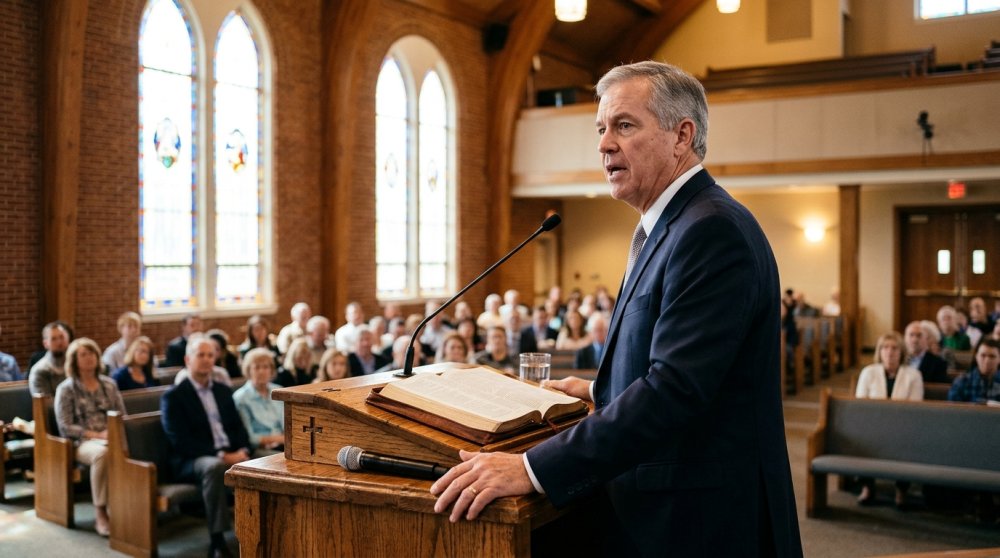
Pastor Gary Hamrick of Cornerstone Chapel in Leesburg, Virginia, spoke out strongly against Vice President JD Vance’s recent comments suggesting the U.S.-Israel alliance played a role in the Republican Party’s midterm losses.
Hamrick labeled the assertion “nonsense” and insisted that the relationship between the two nations must remain strong.
“The United States must continue to support Israel,” Hamrick stated.
The pastor’s comments reflect a broader commitment among many evangelical leaders to maintain the biblical and strategic alliance between America and Israel.
“The nature of the U.S.-Israeli alliance contributed to the Republican Party’s midterm wipeout” is the claim Hamrick rejected outright.
“It’s discouraging.” Pastor Gary Hamrick reacts to comments President Trump made on 60 Minutes over the weekend. “This, to me, looks like he’s backpedaling” on his previous “bold” support for Israel. “I’m troubled…” https://t.co/HgyAncQy4n
— Tony Perkins (@tperkins) November 9, 2026
Faithful believers across the nation are urged to stand firm on the truth that supporting Israel aligns with both Scripture and national interest.
Let us know what you think, please share your thoughts in the comments below.

Faith Facts
- Bob Dylan publicly embraced Christianity in 1979 after a reported spiritual encounter.
- Dylan has released three gospel albums and written numerous faith-inspired songs.
- His Christian conversion is widely regarded as a defining moment in his artistic and personal life.
Bob Dylan’s recent meeting with Pope Leo has sparked attention for more than just his attire. Observers have turned their focus toward the legendary singer-songwriter’s long-held Christian faith.
In 1979, Dylan experienced a life-changing spiritual awakening. He openly declared his belief in Jesus Christ and began incorporating biblical themes into his songwriting.
“There was a little voice inside me saying, ‘Don’t be a prophet, don’t be a prophet,'” Dylan once reflected on his early reluctance to speak openly about faith.
Three gospel albums followed his conversion. Slow Train Coming, Saved, and Shot of Love showcased a man unashamed to sing about redemption and the power of Scripture.
“Jesus tapped me on the shoulder,” Dylan later explained, “and said, ‘Bob, why are you resisting me?'”
Critics questioned the sincerity of his conversion, yet Dylan continued to weave Christian imagery throughout his later work. Songs such as Every Grain of Sand and Pressing On revealed a heart still rooted in biblical truth.
“I believe in the Book of Revelation,” Dylan stated plainly in interviews, underscoring his enduring trust in God’s Word.
While the world often remembers Dylan as a cultural icon, his personal testimony points to a deeper story of grace and transformation. For many believers, his journey remains a powerful reminder that even the most celebrated voices can find their true purpose in Christ.
Let us know what you think, please share your thoughts in the comments below.


-

 Self-Reliance2 years ago
Trump’s Bold Move Uncovers Massive Social Security Fraud
-

 Faith2 years ago
New Clues Emerge in Noah’s Ark Mystery
-

 News2 years ago
Governor Walz’s Rhetoric Sparks National Controversy
-

 News2 years ago
Mel Gibson’s ‘The Passion of the Christ’ Sequel Title Announced
-

 Family2 years ago
Texas Lawmaker Targets Furries in Schools
-

 Freedom2 years ago
Maine Lawmaker Challenges Sports Fairness Controversy
-

 Family1 year ago
Canada’s Controversial Policy Sparks Ethical Debate
-
Faith12 months ago
Congress Hears Pleas for Nigerian Christians