
Faith
First Lumbee Missionaries Answer Call to Reach Canada’s Forgotten Communities


Faith Facts
- The International Mission Board has commissioned RJ and Elayna Locklear, the first Lumbee Native American missionary couple, to serve Canada’s First Nations communities.
- The couple will minister in and around Calgary, Alberta, bringing the Gospel to indigenous communities often overlooked by traditional missionary efforts.
- This historic commissioning represents a powerful bridge between Native American believers and Canada’s First Nations people, demonstrating the universal reach of Christian faith.
In a historic moment for both Native American Christianity and international missions, the International Mission Board has commissioned RJ and Elayna Locklear as its first Lumbee Native American missionary couple. The Locklears have been sent to serve Canada’s First Nations communities in and around Calgary, Alberta, bringing the transformative message of the Gospel to indigenous peoples who have long awaited dedicated Christian ministry.
This groundbreaking commissioning represents more than just another missionary appointment—it signifies a powerful connection between Native American believers and Canada’s First Nations people. The Lumbee tribe, recognized as one of the largest Native American tribes in the eastern United States, has a rich Christian heritage that the Locklears now carry northward across the border.
The assignment to Calgary and surrounding First Nations communities addresses a critical need in modern missions. Indigenous populations in Canada have historically faced significant spiritual and social challenges, with many communities experiencing the devastating effects of generational trauma, substance abuse, and cultural displacement. Christian outreach to these communities has often been limited or ineffective, making the Locklears’ calling all the more significant.
By sending a Native American couple to minister among Canada’s First Nations people, the International Mission Board demonstrates wisdom in cross-cultural missions strategy. The shared indigenous heritage between the Locklears and the communities they will serve provides natural bridges for relationship-building and cultural understanding. This approach reflects biblical principles of reaching people where they are, with messengers who can authentically relate to their experiences.
The commissioning of the Locklears also highlights the growing diversity and strength of American Christian missions. For too long, Native American believers have been underrepresented in international missionary work. This historic appointment not only honors the faith legacy of the Lumbee people but also opens doors for other Native American Christians to answer the Great Commission’s call to all nations.
Calgary, Alberta, serves as a strategic base for the Locklears’ ministry. The city sits in proximity to numerous First Nations reserves and communities, providing access to populations desperately needing hope and spiritual renewal. As they establish their ministry, the couple will face unique challenges—navigating complex cultural dynamics, addressing deep-seated hurts, and building trust within communities that have sometimes been wary of outside religious influence.
Yet the Christian faith has proven time and again that it transcends cultural barriers when presented with genuine love and respect. The Locklears carry with them not just their Lumbee heritage but the timeless truth of Scripture that offers redemption, healing, and purpose to all who believe.
This commissioning arrives at a crucial time when religious freedom and traditional Christian values face increasing pressure in North America. The work of faithful missionaries like the Locklears demonstrates that the Gospel remains the most powerful force for positive transformation in individuals, families, and entire communities. Their ministry will undoubtedly encounter obstacles, but their obedience to God’s calling exemplifies the sacrificial spirit that has always characterized authentic Christian missions.
As the Locklears begin their service among Canada’s First Nations people, they join a long tradition of missionaries who have left comfort and familiarity to share Christ’s love with those who have never heard. Their unique position as Native Americans ministering to fellow indigenous peoples positions them to make an extraordinary impact for the Kingdom of God.
Let us know what you think, please share your thoughts in the comments below.


Faith Facts
- Christian leaders are debating whether artificial intelligence should be the foundation of ministry or simply a supportive tool
- A new perspective argues AI must remain infrastructure beneath human relationships, not the driving force of discipleship
- The focus of ministry must stay centered on people, community, theological reflection, and human discernment guided by the Holy Spirit
As artificial intelligence continues to reshape nearly every aspect of modern life, Christian ministries face a critical question: Should technology lead our mission, or should it serve the timeless work of building relationships and communities centered on Christ?
A thoughtful opinion piece challenges the concept of “AI-Native ministry,” warning that making artificial intelligence the foundation of church outreach misses the heart of what ministry is called to be. Instead, the perspective advocates for a “ministry with” approach—one where technology remains in its proper place as a tool, not a guide.
The core concern is clear: AI should function as infrastructure underneath a mutual learning ecosystem, not as the focal point or driving force of Christian ministry. When technology becomes the primary lens through which we engage in discipleship, we risk losing sight of what truly matters—people created in the image of God.
This vision for technology in ministry keeps the proper priorities in order. The focus must remain on people, relationships, and communities. It must center on local knowledge that respects the unique needs of each congregation and cultural context. Theological reflection, grounded in Scripture and tradition, cannot be replaced by algorithms. And human discernment—the ability to seek God’s wisdom through prayer, counsel, and the leading of the Holy Spirit—remains irreplaceable.
The debate reflects a broader tension in American church culture. As technology offers ever more sophisticated tools for outreach, administration, and communication, the temptation grows to let efficiency and innovation drive ministry strategy. But the Christian faith has always been fundamentally relational. Jesus invested deeply in twelve disciples. Paul planted churches through personal presence and letters. The early church grew through fellowship, breaking bread together, and bearing one another’s burdens.
AI can certainly assist these efforts. It can help organize data, streamline communication, and provide resources for teaching and discipleship. But it cannot replace the pastor who prays with a family in crisis, the small group that walks through grief together, or the mentor who disciples a younger believer face-to-face.
The call for a human-centered learning ecosystem in ministry acknowledges technology’s benefits while maintaining proper boundaries. It recognizes that the work of the Gospel is ultimately a work of the Spirit, accomplished through faithful people who love God and love their neighbors. Technology can enhance this work, but it cannot substitute for it.
As churches navigate an increasingly digital age, this perspective offers an important corrective. Ministry is not about adopting the latest tools simply because they exist. It’s about faithfully stewarding every resource—including technology—in service of the Great Commission and the Great Commandment.
The wisdom here is rooted in Scripture’s consistent emphasis on relationship. God didn’t send an algorithm to redeem the world; He sent His Son. Jesus didn’t establish a system; He called followers. The Holy Spirit doesn’t operate through code; He works through hearts surrendered to God.
Christian ministry in the 21st century can use AI wisely without being driven by it. The question is not whether technology has a place in the church—it does. The question is whether we will keep technology in its proper place: as a servant of mission, not its master.
Let us know what you think, please share your thoughts in the comments below.

Faith Facts
- Early Christians publicly renounced Satan before entering baptismal waters, declaring a legal transfer of allegiance from darkness to light
- Baptism in the ancient church was understood as a binding covenant and change of citizenship, not merely a symbol or ritual
- The early baptismal ceremony included explicit declarations of loyalty to Christ and rejection of the enemy’s kingdom
Long before the first Christians were lowered beneath the water, they performed an act that has been largely forgotten in modern practice. They turned to face the darkness and spoke directly to the enemy.
This wasn’t symbolic language or theatrical flourish—it was a declaration of war.
The early church understood baptism as something far more potent than many Christians realize today. It wasn’t merely an outward sign of an inward change, nor was it a mystical incantation that automatically conferred grace. Baptism was a treaty—a formal, legal transfer of allegiance from one kingdom to another, sealed with water and witnessed by heaven and earth.
In the ancient baptismal liturgies, candidates would physically turn toward the west—the direction associated with darkness and the setting sun—and verbally renounce Satan, his works, and his ways. Only after this public repudiation would they turn eastward, toward the rising sun and the light of Christ, to profess their new loyalty.
This was citizenship language. Covenant language. The language of defection and oath-taking.
The waters of baptism represented a border crossing, a point of no return. Believers were publicly declaring that they had changed kingdoms, changed masters, and changed their ultimate authority. They were transferring ownership of their lives from the dominion of darkness into the kingdom of God’s beloved Son.
This understanding has profound implications for how Christians view their identity today. If baptism is a treaty, then the Christian life is not about trying harder to be good—it’s about living according to the terms of the agreement. It’s about recognizing that you belong to a new King, operate under new laws, and have access to new resources and protections.
The early church’s baptismal practice also underscores the reality of spiritual warfare. The explicit renunciation of Satan wasn’t superstition—it was an acknowledgment that there are real powers at work in the world, and that choosing Christ means rejecting all other claimants to our loyalty. This is not a passive, private decision. It is a public, binding declaration with eternal consequences.
For modern believers, recovering this understanding of baptism can restore a sense of gravity and purpose to the Christian walk. We are not merely forgiven sinners trying to muddle through life with a little divine help. We are defectors who have crossed enemy lines, been granted asylum in a new kingdom, and now live as ambassadors of that kingdom in hostile territory.
The implications are staggering. If baptism is a treaty, then every baptized believer has legal standing before the throne of God. We have rights, protections, and responsibilities. We are not spiritual orphans hoping for mercy—we are adopted sons and daughters with full inheritance rights.
This also means that the church is not a social club or a self-help group. It is an embassy, a colony of heaven planted in enemy territory. Our gatherings are not merely therapeutic or educational—they are strategic meetings of a resistance movement, equipping citizens of another world to live faithfully in this one.
The early Christians understood this. That’s why martyrdom made sense to them. That’s why they could sing in prison, forgive their executioners, and face death with joy. They knew they had changed kingdoms, and no earthly power could alter that reality.
Today, many churches have lost this robust understanding of baptism. It has become a sentimental moment, a family photo opportunity, or a denominational requirement. But when we recover the biblical and historical understanding of baptism as a treaty—a legal transfer of ownership, a public oath of allegiance, a point of no return—it transforms everything.
It transforms how we understand conversion. It transforms how we view spiritual warfare. It transforms how we approach suffering, persecution, and cultural hostility. And it transforms how we see ourselves—not as consumers of religious goods and services, but as defectors, refugees, and citizens of a coming kingdom that will outlast every earthly power.
Let us know what you think, please share your thoughts in the comments below.
Faith Facts
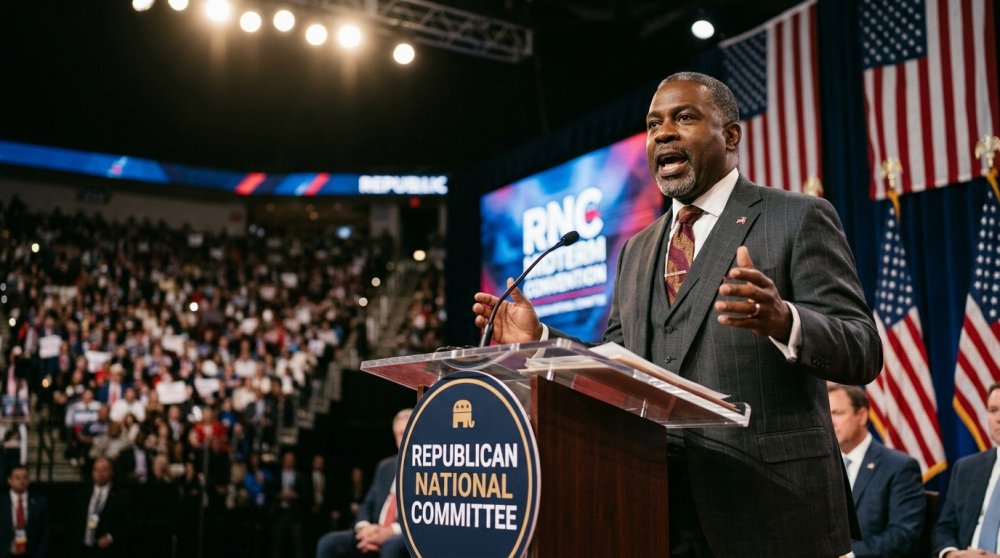
- Pastor Lorenzo Sewell of Detroit’s 180 Church delivered a powerful message at the Republican National Committee’s inaugural Midterm Convention
- Sewell, who prayed at President Trump’s second inauguration, titled his address ‘Enough Is Enough’
- The pastor continues to bridge faith and politics, calling believers to stand firm on traditional values
A Detroit pastor who captured national attention during President Donald Trump’s second inauguration returned to the political stage Wednesday night with a clarion call for action. Pastor Lorenzo Sewell of 180 Church addressed the Republican National Committee’s historic first-ever Midterm Convention, delivering what he described as a sermon titled “Enough Is Enough.”
Sewell’s appearance marks a continuation of his increasing prominence at the intersection of faith and conservative politics. The pastor has emerged as a significant voice among Christian leaders willing to engage directly with the political process, standing firm on biblical principles in the public square.
His message Wednesday evening resonated with the Republican faithful gathered at the unprecedented midterm event. The RNC’s decision to hold its first mid-cycle convention signals the party’s commitment to maintaining momentum and energizing its base between presidential election cycles.
Pastor Sewell’s “Enough Is Enough” theme speaks to growing frustration among many Christian conservatives who believe traditional American values are under sustained attack. The pastor has built a reputation for direct, uncompromising messages that challenge believers to take action rather than remain passive observers of cultural decline.
His prayer at Trump’s second inauguration drew widespread praise from conservatives for its boldness and biblical grounding. Sewell’s willingness to stand publicly with President Trump reflects a broader movement among evangelical and traditional Christians who see the former president as a defender of religious liberty and traditional values.
The Detroit pastor’s ministry at 180 Church has focused on urban revitalization and community transformation through biblical principles. His involvement in national political events brings attention to the church’s work and demonstrates how Christian leadership can influence both local communities and national conversations.
As the Republican Party prepares for upcoming electoral battles, voices like Pastor Sewell’s provide spiritual grounding and moral clarity. His message that “enough is enough” echoes the sentiments of many Americans who believe the nation has drifted too far from its founding principles and Christian heritage.
Let us know what you think, please share your thoughts in the comments below.


-

 Self-Reliance1 year ago
Trump’s Bold Move Uncovers Massive Social Security Fraud
-

 Faith1 year ago
New Clues Emerge in Noah’s Ark Mystery
-

 News1 year ago
Governor Walz’s Rhetoric Sparks National Controversy
-

 News1 year ago
Mel Gibson’s ‘The Passion of the Christ’ Sequel Title Announced
-

 Family1 year ago
Texas Lawmaker Targets Furries in Schools
-

 Freedom1 year ago
Maine Lawmaker Challenges Sports Fairness Controversy
-

 Family1 year ago
Canada’s Controversial Policy Sparks Ethical Debate
-
Faith10 months ago
Congress Hears Pleas for Nigerian Christians