
News
Federal Judge Shields Church From Tithing Lawsuit on Constitutional Grounds


Faith Facts
- A federal judge dismissed a class-action lawsuit against Gateway Church and former pastor Robert Morris, citing First Amendment protections that prevent civil courts from adjudicating how churches manage charitable funds.
- The lawsuit alleged misappropriation of millions in tithes and donations, but the court ruled that such disputes fall under ecclesiastical matters protected by religious freedom.
- The decision reinforces the constitutional separation between church governance and state interference, a principle central to American religious liberty.
A significant legal victory for religious freedom has emerged from a Texas courtroom, where a federal judge has dismissed a class-action lawsuit targeting Gateway Church and its former leadership. The suit had accused the church of misusing millions of dollars in congregant donations.
U.S. District Judge ruled that the First Amendment’s protection of religious institutions prevents civil courts from intervening in matters of church governance, including how churches collect, manage, and distribute charitable contributions. This constitutional shield exists to preserve the independence of religious organizations from government oversight in their internal affairs.
The lawsuit had sought to hold Gateway Church and former pastor Robert Morris accountable for alleged financial mismanagement. Plaintiffs claimed that tithes and offerings were not used in accordance with donor expectations or biblical principles.
However, the court determined that adjudicating such claims would require judicial authorities to interpret religious doctrine and evaluate ecclesiastical decisions—actions explicitly prohibited under the First Amendment’s Establishment and Free Exercise Clauses. The ruling reinforces longstanding precedent that civil courts must remain neutral in matters of church polity and religious practice.
This decision underscores a fundamental principle of American constitutional law: the separation of church and state protects not only individuals’ freedom to worship, but also religious institutions’ autonomy to govern themselves according to their own beliefs and traditions. Courts have consistently held that government interference in church operations threatens the very foundation of religious liberty.
For Christian conservatives, this ruling represents an important safeguard against encroachment on church independence. While financial transparency and accountability remain important values within church communities, the constitutional framework recognizes that such matters must be resolved through internal church processes, denominational structures, or voluntary accountability mechanisms—not through litigation that would empower secular courts to dictate religious practices.
The case highlights the ongoing tension between calls for institutional accountability and the preservation of religious autonomy. Many faith leaders have expressed concern that allowing courts to second-guess ecclesiastical decisions about resource allocation could open the door to broader government interference in church affairs, from hiring decisions to theological teachings.
Gateway Church has faced scrutiny in recent months following revelations about former pastor Robert Morris. The dismissal of this lawsuit, however, centers not on the merits of the underlying allegations but on the constitutional barriers that prevent civil courts from assuming jurisdiction over such disputes.
Legal experts note that the ruling aligns with decades of Supreme Court precedent affirming that religious organizations must be free to manage their internal affairs without judicial oversight. This principle has been applied across denominations and faith traditions, protecting the pluralistic religious landscape that characterizes American society.
The decision serves as a reminder that religious liberty includes not just individual conscience rights, but also the institutional independence necessary for churches to function according to their own convictions. As threats to religious freedom continue to emerge in various contexts, this ruling reaffirms that constitutional protections for faith communities remain robust.
Let us know what you think, please share your thoughts in the comments below.


Faith Facts
- At least 47 people were killed and 22 others injured when gang members attacked a church sheltering displaced families near Port-au-Prince, Haiti
- The violent gang rampage included burning animals alive and targeting Christians seeking refuge in a house of worship
- Haiti continues to face unprecedented lawlessness as armed gangs control large portions of the nation, threatening innocent civilians and religious communities
A horrific act of violence has shocked the Caribbean nation of Haiti as gang members stormed a church providing shelter to displaced families, killing at least 47 innocent people and injuring 22 others. The attack occurred just outside the capital city of Port-au-Prince, according to the United Nations.
The church had been serving as a sanctuary for Haitians forced from their homes by the escalating gang violence that has plagued the impoverished nation. These families sought safety within the walls of a Christian house of worship, only to face unspeakable brutality from the very lawlessness they were fleeing.
Reports indicate the gang members not only massacred those taking refuge but also engaged in acts of cruelty including burning animals alive. The attack represents another devastating blow to Haiti’s Christian community and the nation’s ongoing humanitarian crisis.
Haiti has descended into chaos as armed gangs have seized control of large swaths of territory, including significant portions of Port-au-Prince. These criminal organizations operate with virtual impunity, terrorizing civilians, disrupting essential services, and creating a humanitarian emergency that has displaced hundreds of thousands of people.
The targeting of a church specifically highlights the complete breakdown of moral order and respect for sacred spaces in Haiti. Churches have traditionally served as sanctuaries and centers of hope in Haitian communities, making this attack particularly devastating for a deeply Christian population.
The international community has struggled to respond effectively to Haiti’s deteriorating security situation. Despite various intervention proposals and limited security assistance, the gang violence continues to escalate, claiming innocent lives and destroying the social fabric of what was once known as the first Black republic.
For American Christians, this tragedy serves as a sobering reminder of the persecution and violence believers face in lawless regions around the world. It also underscores the urgent need for prayer, humanitarian assistance, and thoughtful engagement to help restore order and protect vulnerable populations in Haiti.
The attack on this church sanctuary demonstrates what happens when societies lose the rule of law and moral foundations that protect human dignity. Haiti’s crisis should move people of faith to intercede for the nation and support efforts to bring peace, justice, and the Gospel’s hope to a suffering people.
Let us know what you think, please share your thoughts in the comments below.
Faith Facts
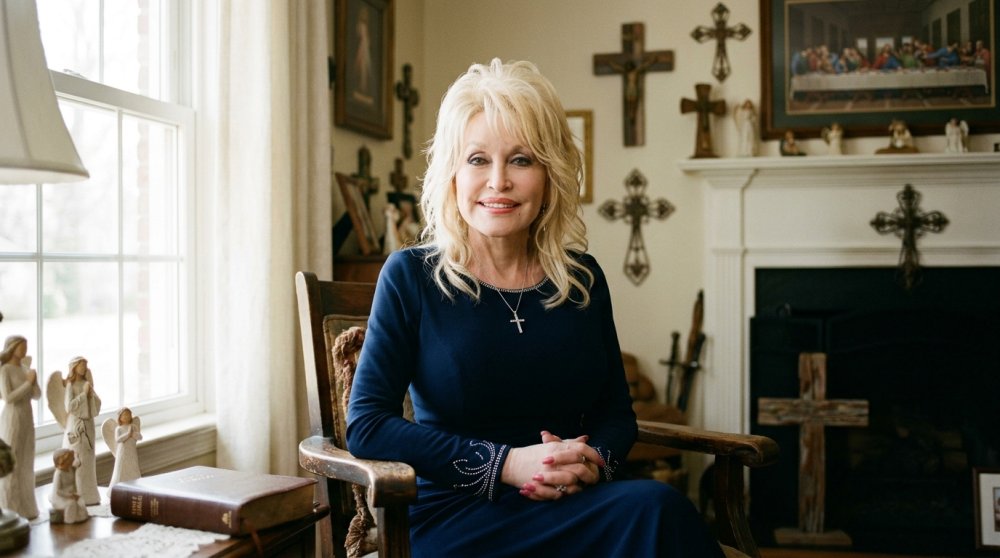
- Dolly Parton, legendary country singer and devoted Christian, passed away at age 80 in Nashville, Tennessee
- The beloved entertainer carried hymns from her small Tennessee mountain church throughout her decades-long career
- Parton achieved No. 1 hits on Christian radio, using her platform to share her faith with millions
The nation is in mourning following the passing of Dolly Parton, a treasured American icon whose faith in Jesus Christ remained at the heart of everything she did. The country music legend died Tuesday in Nashville, Tennessee, at the age of 80.
Parton’s journey began in the humble setting of a small mountain church in Tennessee, where the hymns and spiritual songs she learned as a child would shape not only her musical style but her entire life’s mission. She never forgot those roots, and her commitment to sharing the Gospel through her music touched countless lives across generations.
Throughout her remarkable career, Parton used her God-given talents to bring hope and inspiration to millions. Her success on Christian radio charts demonstrated that her faith was not just a private matter, but a public testimony she was eager to share with the world.
The singer-songwriter’s life exemplified what it means to be a faithful steward of the blessings God provides. From her humble beginnings in the Smoky Mountains to becoming one of America’s most beloved entertainers, Parton never wavered in her devotion to Christ or her love for traditional American values.
Her passing marks the end of an era, but her legacy of faith, family values, and service to others will continue to inspire Christians and Americans for generations to come. Dolly Parton now rests in the arms of Jesus, the Savior she served so faithfully throughout her life.
Let us know what you think, please share your thoughts in the comments below.

Faith Facts
- Dolly Parton, who attended the Radnor Church of Christ in Nashville with her husband Carl Dean, passed away at age 80
- A 1966 church directory photograph documented the newlywed couple as active members of the congregation
- Parton’s family announced her passing on Tuesday, August 25, 2026, following her husband’s death in March 2025
The black-and-white photograph labeled “Mr. & Mrs. Carl Dean” appeared in a 1966 directory of the Radnor Church of Christ in Nashville. It captured a moment when one of America’s most beloved entertainers was simply known as Mrs. Dean, a young bride attending worship alongside her husband.
Mrs. Dean, who met her future husband on the day she moved to Music City after her 1964 high school graduation, became known to the world as country music superstar Dolly Parton. Her family announced her passing Tuesday, August 25, 2026, at age 80.
A message from the family of Dolly Parton. pic.twitter.com/9DNRgRx0uH
— Dolly Parton (@DollyParton) August 25, 2026
The legendary singer’s connection to Churches of Christ represented an important chapter in her life story, one that reflected the faith values she carried throughout her remarkable career. Carl Dean, her husband of nearly 60 years, died March 3, 2025, at age 82.
Parton’s ties to the Church of Christ community remained a testament to her roots and the values that shaped her character. Her marriage to Carl Dean, documented in that simple church directory photograph, endured through decades of fame and fortune—a rarity in the entertainment industry.
The country music icon’s life reflected traditional American values of faith, family, and hard work. From her humble beginnings in rural Tennessee to international stardom, Parton maintained connections to the church community that welcomed her as a young bride in Nashville.
Her legacy extends far beyond her musical achievements, encompassing her charitable work, her commitment to literacy through the Imagination Library, and her steadfast devotion to her husband and family values. These principles aligned with the Christian foundation evident in her early years attending the Radnor Church of Christ.
Let us know what you think, please share your thoughts in the comments below.


-

 Self-Reliance1 year ago
Trump’s Bold Move Uncovers Massive Social Security Fraud
-

 Faith1 year ago
New Clues Emerge in Noah’s Ark Mystery
-

 News1 year ago
Governor Walz’s Rhetoric Sparks National Controversy
-

 News1 year ago
Mel Gibson’s ‘The Passion of the Christ’ Sequel Title Announced
-

 Family1 year ago
Texas Lawmaker Targets Furries in Schools
-

 Freedom1 year ago
Maine Lawmaker Challenges Sports Fairness Controversy
-

 Family1 year ago
Canada’s Controversial Policy Sparks Ethical Debate
-
Faith9 months ago
Congress Hears Pleas for Nigerian Christians