
Faith
Faith Under Fire: Universities Abandon Theology While Nation Hungers for Truth


Faith Facts
- The number of theology departments in UK universities has been cut in half over the past decade, with major institutions eliminating programs dedicated to religious study
- The University of Exeter recently announced deep cuts to its theology department, continuing a troubling trend of secular institutions abandoning biblical scholarship
- Christian education advocates warn that universities are shuttering theological programs precisely when Western culture faces a deepening spiritual crisis and needs religious wisdom most urgently
A disturbing pattern is emerging across Western academia: universities are systematically dismantling their theology departments at the exact moment society is crying out for spiritual guidance. The latest casualty is the University of Exeter, which has announced significant cuts to its theology program, joining dozens of other institutions that have abandoned the study of faith entirely over the past ten years.
The decline represents more than just budget adjustments. It signals a fundamental rejection of religious scholarship by institutions that once recognized theology as the “queen of the sciences.”
In the United Kingdom alone, the number of theology departments has been slashed by 50 percent in just one decade. This wholesale retreat from religious education comes at a time when Western civilization grapples with profound questions about meaning, purpose, and moral truth—precisely the issues that theological study has addressed for centuries.
The timing couldn’t be worse. As our culture drifts further from its Christian moorings, universities are closing the very departments that could provide desperately needed wisdom and perspective. Young people are searching for answers to life’s deepest questions, yet the academic institutions entrusted with higher learning are shutting down the disciplines best equipped to help them.
This trend reflects a broader hostility toward traditional Christianity in secular academia. Rather than engaging with theological thought and the rich intellectual tradition of the Church, universities are simply erasing it from their curricula. The message is clear: faith-based knowledge is no longer valued in the modern university system.
The consequences extend far beyond campus boundaries. Theological education has historically trained pastors, missionaries, chaplains, and faith leaders who serve communities across the nation. It has also provided rigorous intellectual formation for believers entering secular professions, equipping them to think critically about faith in the public square.
When universities abandon theology, they’re not just closing academic departments—they’re cutting off a vital pipeline of educated Christian leaders who can speak truth into our confused and hurting culture. They’re depriving students of the opportunity to study Scripture, church history, and Christian philosophy at the highest levels of scholarship.
Perhaps most troubling is the circular logic at work. As fewer institutions offer theological education, fewer students can access it. As enrollment declines, universities use low numbers to justify further cuts. The result is a self-fulfilling prophecy that threatens to eliminate serious Christian scholarship from university life entirely.
The irony is unmistakable. In an age of information overload, universities are eliminating the study of ultimate questions. In a time of moral confusion, they’re shuttering the departments dedicated to ethics and virtue. In an era hungry for meaning, they’re closing the “knowledge factories” that produce wisdom.
This crisis demands action from the Christian community. Churches, seminaries, and Christian colleges must step into the gap, ensuring that rigorous theological education remains available to the next generation. Parents and students must recognize the value of faith-based learning and actively seek institutions that take biblical scholarship seriously.
The collapse of theological education in secular universities may be inevitable, but it doesn’t have to be the end of the story. Christian institutions can preserve and advance this vital work. The question is whether we will recognize the urgency of the moment and respond accordingly.
Our culture is indeed hungry for wisdom. The tragedy is that universities are abandoning their responsibility to provide it just when it’s needed most.
Let us know what you think, please share your thoughts in the comments below.


Faith Facts
- Dennis Hogan, a Kentucky church minister, faced stage four cancer three times with only a 1 percent chance of survival in his final diagnosis
- The biblical account of Joseph demonstrates that God’s presence remains constant even when circumstances suggest abandonment
- True faith means trusting God not for what He will do, but for who He is and what He has already done through Christ’s sacrifice
What do you do when you are on the tightrope of life and there is no net? We really have but two choices: Trust God with all you have, or blame God for allowing you to be in this position.
Dennis Hogan, a minister at the Horse Cave Church of Christ in Kentucky, knows this choice intimately. In 2014, he sat in a doctor’s office and was told he had stage four cancer, squamous-cell carcinoma — for the third time.
The words hit like a kick to the gut. This time he was given a 1 percent chance to survive.
Do the math. He was facing a 99 percent chance this would be his end on Earth.
Tightropes come in many forms: Financial ruin. Death of a loved one. Marital collapse. Every time — every circumstance — we face the same choice. Trust God, or blame him.
We see this play out throughout the Bible. One of the greatest heroes who truly lived a life of trust was Joseph. Early in Genesis 37, we see that God had chosen him for something extraordinary — giving him dreams and the boldness to share them even when it cost him.
“And Joseph dreamed a dream, and he told it his brethren: and they hated him yet the more” — Genesis 37:5.
But being called by God did not guarantee an easy life. In fact, the opposite was true. Joseph lived an extraordinarily difficult, painful and lonely life.
Somehow we develop the false idea that when we become a Christian, “God will take care of me” — meaning we won’t have to face hardship. That wasn’t the case for Joseph.
He was thrown into a pit by his own brothers, sold into slavery, wrongly accused and spent years in prison for a crime he did not commit. Where was God? On the surface, it would appear God had abandoned Joseph in that foreign land and that dingy dungeon.
That is precisely where blame is born. Not in rebellion — but in silence.
When God doesn’t answer on our schedule, when the pit gets deeper instead of shallower, blame feels like the only honest response.
But God was there 100 percent of the time.
“The Lord was with Joseph so that he prospered. His master saw that the Lord was with him and that the Lord gave him success in everything he did” — Genesis 39:2-3.
A pagan noticed the presence of God in Joseph’s life.
“But the Lord was with Joseph and showed him steadfast love and gave him favor in the sight of the keeper of the prison” — Genesis 39:21.
“The warden paid no attention to anything under Joseph’s authority, because the Lord was with him, and the Lord made everything he did successful” — Genesis 39:23.
A second pagan observed it.
Joseph could have thrown up his hands and blamed God for everything. And yet he chose to trust. God’s presence and providence were not always felt — but they were always there. That is the kind of trust we need. Always.
Trusting God is not a transactional process. It is not quid pro quo — I trust you, so you owe me something good in return.
Why then should we trust God? Because his timing is perfect. His love is unwavering. His mission is holy. And his sacrifice for us is unimaginable.
The tightrope is real. The net is gone. But the God who was with Joseph in the pit and in the prison is the same God who is with you right now.
Trust him — not because of what he will do but because of who he is and what he has already done. The cross settled that question forever.
Dennis Hogan is a three-time cancer survivor and the author of “Trusting God Without a Net.”
Let us know what you think, please share your thoughts in the comments below.

Faith Facts
- Foreign aid budgets are increasingly being used to promote contested Western ideologies rather than genuine humanitarian relief
- Biblical stewardship calls for careful examination of how taxpayer dollars are spent in the name of charity
- True Christian compassion requires accountability and alignment with traditional values, not blind support of government programs
Supporting those in need across the globe has long been understood as a cornerstone of Christian duty. Yet when foreign aid becomes a vehicle for imposing controversial Western social agendas on developing nations, believers must ask whether such spending truly reflects biblical compassion or something far different.
Lois McLatchie Miller raises an important question that challenges conventional assumptions about foreign aid. The issue extends beyond simple generosity to matters of stewardship, accountability, and the proper role of government in expressing charitable values.
When aid dollars are tied to the adoption of progressive social policies that conflict with the traditional values of recipient nations, the moral calculus changes dramatically. What appears as charity on the surface may function as ideological coercion beneath, pressuring vulnerable countries to embrace secular Western worldviews in exchange for desperately needed resources.
Christian conservatives have long championed genuine humanitarian assistance that respects the dignity and sovereignty of receiving nations. Scripture calls believers to care for the poor and vulnerable, but it also demands wisdom and discernment in how that care is administered.
The concern is not with helping those in genuine need, but with the strings attached to modern aid packages. When governments condition assistance on the acceptance of gender ideology, abortion access, or other policies that contradict biblical teaching, they transform charity into cultural imperialism.
Accountability matters in every area of stewardship, especially when it involves the hard-earned tax dollars of American families. Christians have a responsibility to ensure their resources—whether given voluntarily or collected through taxation—are used in ways that align with their values and truly serve those in need.
True compassion requires both generosity and wisdom. It means examining not just the intention behind aid programs, but their actual implementation and effects on the ground.
The debate over foreign aid priorities reflects a broader tension between genuine Christian charity and the modern progressive project. While both may use the language of compassion, their underlying worldviews and ultimate goals often diverge significantly.
As Americans face difficult budget decisions at home, the question of how foreign aid is allocated and conditioned deserves serious scrutiny. Supporting our brothers and sisters overseas remains important, but not at the expense of imposing ideologies that undermine the very values we claim to uphold.
Let us know what you think, please share your thoughts in the comments below.
Faith Facts
- The Church of England has voted to engage with a controversial Palestinian Christian document known as Kairos Palestine II
- Palestinian Christian Jack Nassar urges the church to listen to the lived experiences of his community in the Holy Land
- The document addresses the ongoing struggles and perspectives of Christians living in Palestinian territories
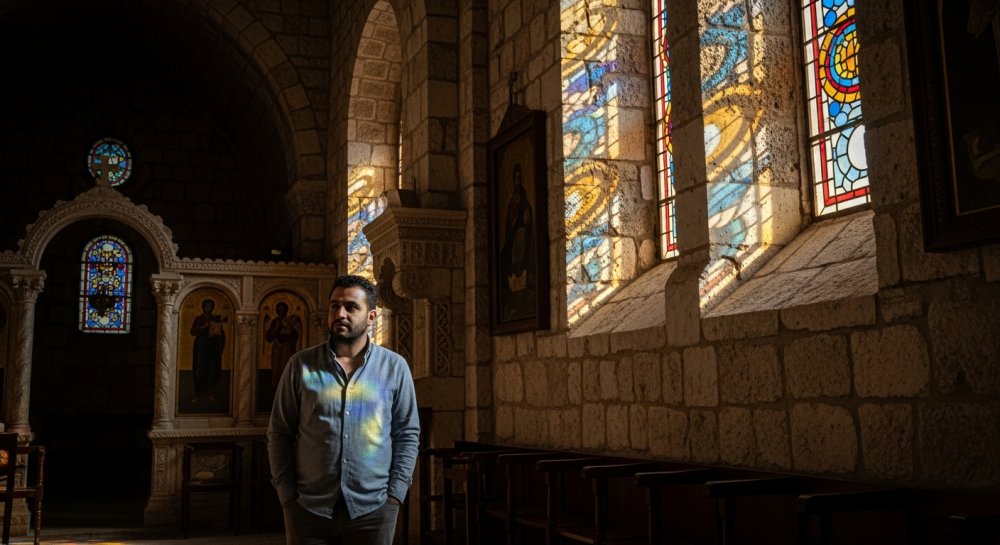
A Palestinian Christian is calling on the global Church to pay closer attention to the voices and experiences of believers living in the Holy Land. Jack Nassar welcomed the Church of England’s recent decision to engage with a document that has sparked both support and controversy among Western Christians.
The document, known as Kairos Palestine II, represents the testimony and concerns of Palestinian Christians regarding their daily reality. While its contents have divided opinion, Nassar argues that the fundamental issue goes beyond agreement or disagreement with specific positions.
“Whether you agree with it or not, the lived experience of Palestinian Christians deserves the dignity of being heard and believed,” Nassar said.
The Church of England’s vote to formally ‘hear’ the document marks a significant moment for Palestinian Christian advocacy. For many in the West, the very existence of a thriving Christian community in Palestinian territories comes as a surprise, despite Christianity’s roots in the region.
Palestinian Christians trace their heritage directly to the earliest days of the faith, maintaining an unbroken presence in Bethlehem, Jerusalem, and surrounding areas for two millennia. Today, however, this ancient community faces mounting pressures that threaten its continued existence in the land where Christ walked.
Nassar emphasized that hearing these voices doesn’t require Western Christians to abandon their own perspectives or political positions. Rather, it’s about extending Christian compassion and acknowledging the struggles of fellow believers who live under circumstances most Americans can scarcely imagine.
The Kairos Palestine documents—the first released in 2009 and the second more recently—emerged from Palestinian Christian leaders seeking to articulate their community’s challenges and calling for solidarity from the global Church. These documents have proven divisive, with some viewing them as necessary prophetic witness and others as politically problematic.
For Nassar and many Palestinian Christians, the core request remains simple: that their brothers and sisters in Christ would listen with open hearts to their testimony. They seek not necessarily agreement, but the basic Christian courtesy of being heard with respect and having their experiences acknowledged as valid.
The diminishing Christian population in the Middle East has become a concern for believers worldwide. In Palestinian territories, economic hardship, political instability, and lack of opportunity have driven many Christian families to emigrate, threatening the future of communities that have maintained the faith since apostolic times.
As Western churches grapple with how to respond to complex Middle Eastern realities, Palestinian Christians ask for what all believers should extend to one another: a willingness to listen, to pray, and to bear one another’s burdens as Scripture commands.
Let us know what you think, please share your thoughts in the comments below.


-

 Self-Reliance1 year ago
Trump’s Bold Move Uncovers Massive Social Security Fraud
-

 Faith1 year ago
New Clues Emerge in Noah’s Ark Mystery
-

 News1 year ago
Governor Walz’s Rhetoric Sparks National Controversy
-

 News1 year ago
Mel Gibson’s ‘The Passion of the Christ’ Sequel Title Announced
-

 Family1 year ago
Texas Lawmaker Targets Furries in Schools
-

 Freedom1 year ago
Maine Lawmaker Challenges Sports Fairness Controversy
-

 Family1 year ago
Canada’s Controversial Policy Sparks Ethical Debate
-
Faith8 months ago
Congress Hears Pleas for Nigerian Christians