
Faith
Faith Triumphs Over Sorrow In Difficult Times

Faith Facts
- Tisha B’Av marks the tragic destruction of Jerusalem, yet only in faith can ultimate hope and redemption be found.
- True repentance and intentional righteousness are needed over hollow religious practice to avoid repeating the failures of the past.
- Throughout history, even in exile and suffering, God’s promises of hope and restoration endure, culminating in the hope of redemption.
The Fast of Av, or Tisha B’Av, reminds the faithful of the profound loss when Jerusalem was destroyed not once, but twice. For believers, it stands as a somber occasion—yet within it, glimmers the promise that faith and hope persist, even in mourning.
Rabbi Shear Yashuv Cohen, deeply committed to Jerusalem, reflected on the city’s unique nature:
“I profoundly love this city. I love her because she is a city of contradictions and conflicts. I love her for her twists and turns, her hopes and despairs… For, in the midst of the squabbling, the in-fighting and the dissent, one thing unites all Jerusalemites; their unique love of Jerusalem, a love like no others: ‘Seek the peace of Jerusalem; may they prosper that love thee’ (Psalms 122:6).”
Even within turmoil, the enduring love for Jerusalem unites people, ultimately bringing peace not through ease but through resilience—lessons echoed throughout Scripture and in the Christian walk.
Scripture reveals that the First Temple’s fall was due to the grave sins of idolatry, immorality, and bloodshed, while the Second Temple’s destruction stemmed from “sinat chinam”—baseless hatred. Despite apparently keeping outward commandments, inward division can undo even the most pious community, a timeless warning to value true unity, humility, and God-honoring intention over complacency and routine.
The prophet Micah provides guidance: “to do justice, love kind deeds and walk unobtrusively with God” (Micah 6:8). Righteousness, compassion, and humble faith are always needed. Without right intention and genuine love, even good deeds fall short. Historical failures can be traced to hearts grown cold by habits and pride.
During the Second Temple period, God’s prophetic voice grew silent, and the Shekhina—the Divine Presence—departed. Sacrifices continued, but unity and divine blessing faded, finally giving way to exile and suffering under pagan rule. Even so, the darkness was never total.
In the bleakest moment, rabbinic tradition reminds us, hope was born: “From the moment the Temple was destroyed, the Messiah was born.” This profound truth assures that even as oppression deepens, God’s deliverance is being prepared. Prophets like Amos spoke hope in dark times: “She has fallen. No more. Rise, virgin of Israel.” That hope, often overlooked, is vital to the faith-driven life.
Turning to Lamentations (Eicha), the prophet Jeremiah’s record of tragedy for Jerusalem also finds a turning point amid pain:
“My soul remembers well and makes me despondent. Yet this is how I respond to my heart. Therefore I still hope. I have hope in Him [God].”
In Hebrew, “hope” carries the sense of waiting in expectation—sometimes through struggle and sometimes in patient quietness. Both forms matter for a life of faith, as Jeremiah wrote: “The Lord is good to those who hope/wait patiently… Let one sit in solitude and silence… there may yet be hope [tikvah].”
This passage echoes Isaiah’s call to humility and readiness to “turn the other cheek,” and resonates deeply with believers enduring hardship and waiting for God.
Crucially, the faithful are not called to rote acts or external habits, but to take responsibility, to “search and examine our ways and then return right up to the Lord.” Real repentance—teshuvah—reaches God’s throne and brings transformation. As the Talmud teaches, “Great is teshuvah [return/repentance], for it reaches right up to the Throne of Glory.” Genuine worship combines hands and hearts, justice and mercy, in all things striving to walk humbly as Micah urged.
God’s voice is often found not in the spectacle, but in the “still small voice” of quiet conviction, as Elijah discovered. Endurance, faith, and continual return to the Lord build the foundation for lasting hope and national renewal.
One week after Jerusalem’s reunification in 1967, hundreds of Jews marched in unity to the Western Wall, fulfilling ancient hope and prophecy. Rabbi Shear Yashuv Cohen walked with the revered Reb Aryeh Levin, who whispered:
“My whole life I have not been able to understand what is meant by those words of Scripture: ‘When the Lord accompanied the captivity of Zion on their return— we were like dreamers’… But now I understand. It is characteristic of a dream that in a single instant a person can see events that have actually taken place over a long period… Through a dream moment you comprehend a whole era, a whole history, a whole story. In that very instant you experience the entire existence of generations past… This is exactly what is happening to us now… How fortunate we are to merit this moment, the moment of the rebirth of Israel the moment when Am Yisrael are once more in control of the City of Jerusalem. How fortunate we are to be worthy of reaching these times: the times of the beginning of the redemption. And if we all do Teshuva right now and repent, there is no doubt that redemption will soon be complete.”
This account powerfully testifies to God’s faithfulness amidst affliction. For Christians and Jews alike, such moments confirm that even in exile or persecution, the Lord’s promises endure and can bring joy from mourning.
As we remember destruction, let us live out hope—striving for righteousness, walking humbly, and trusting that redemption is always near for those who remain faithful. May God grant that our times of sorrow become seasons of joy, and that faith always triumphs over despair.


Faith Facts
- Polling data on religious decline may be significantly skewed by methodological issues and uncounted believers
- A massive group labeled “Others” in surveys represents millions of faithful Americans whose beliefs aren’t properly measured
- Religious “switching” often reflects denominational changes rather than abandonment of Christian faith
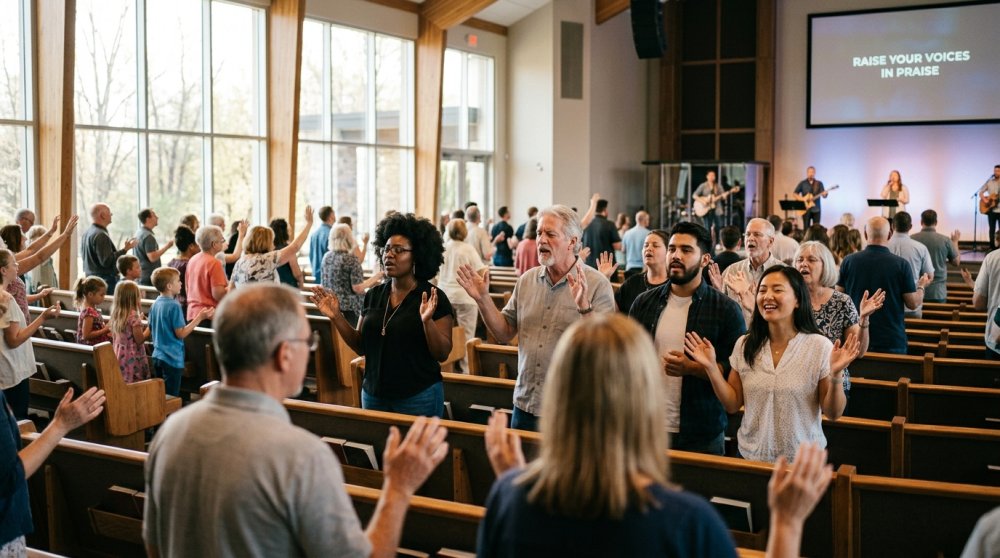
For years, headlines have proclaimed the death of American Christianity, pointing to rising numbers of “Nones” — those who claim no religious affiliation — as proof that faith is fading from our nation. But what if the story we’ve been told is incomplete, or even misleading?
A closer examination of the data reveals that America’s religious landscape is far more nuanced than the narrative of inevitable decline suggests. The truth is that polling methods may be obscuring the real picture of faith in America.
The so-called “Nones” category has indeed grown in recent decades, but this classification masks important distinctions. Many who check “no religious affiliation” on surveys still hold spiritual beliefs, pray regularly, and identify with Christian values. They may have left institutional churches without abandoning their faith in God.
Even more significant is a massive group that researchers label “Others” — Americans whose religious beliefs don’t fit neatly into pollsters’ predetermined categories. This group includes millions of believers whose faith is very real but simply isn’t captured by conventional survey questions designed for traditional denominational affiliations.
Religious “switching” presents another misunderstood phenomenon. While pollsters count every denominational change as evidence of instability, the reality is often quite different. A Baptist who becomes Presbyterian, or a Methodist who joins a nondenominational church, hasn’t abandoned Christianity — they’ve simply found a different expression of the same faith.
The data also fails to account for the vitality of faith communities that exist outside traditional structures. Home churches, online congregations, and informal fellowship groups have exploded in recent years, particularly among younger believers who value authentic community over institutional affiliation. These believers are deeply committed to their faith, but they’re often invisible to pollsters who equate religious commitment with membership in established denominations.
Furthermore, survey methodology itself introduces bias. Phone surveys increasingly miss younger Americans who rely solely on cell phones and are less likely to participate in lengthy interviews. Online surveys skew toward those with particular demographic characteristics. In-person surveys face their own challenges in an era of declining response rates.
The questions themselves can be problematic. When surveys offer limited options for religious identification, many faithful Americans are forced into categories that don’t accurately represent their beliefs. A charismatic Christian who attends a nondenominational church might not know how to answer questions designed for Lutheran, Catholic, or Baptist respondents.
Immigration patterns also complicate the picture. America continues to welcome immigrants from Latin America, Africa, and Asia — regions where Christian faith remains vibrant and central to daily life. These new Americans bring a strong religious commitment that enriches the nation’s spiritual landscape, yet their contributions are often underrepresented in surveys that focus on traditional American denominational categories.
The evidence suggests that reports of American Christianity’s demise have been greatly exaggerated. While the religious landscape has certainly changed, change doesn’t necessarily mean decline. The faith that has sustained this nation since its founding remains alive and active, even if it looks different than it did in previous generations.
Americans of faith should take heart that the narrative of religious collapse may be built on shaky statistical ground. The polling industry’s methods, designed for a different era, struggle to capture the full complexity of modern American spirituality. The reality is that millions of Americans continue to trust in God, seek His guidance, and live according to biblical principles — even if they don’t fit neatly into pollsters’ boxes.
As we move forward, it’s crucial to look beyond simplistic headlines and examine the deeper realities of American faith. The story is not one of inevitable decline, but of transformation and adaptation as believers find new ways to live out timeless truths in a changing world.
Let us know what you think, please share your thoughts in the comments below.

Faith Facts
- Britain’s new guidance explicitly tells asylum seekers that rape and abuse are wrong, sparking debate about universal moral truths
- The backlash against the booklet reveals deep confusion about whether right and wrong are objective or merely cultural preferences
- The controversy underscores the Christian teaching that moral law is written on every human heart by God, not invented by societies
A new British government booklet aimed at asylum seekers has ignited fierce debate—not because it says anything controversial, but because it states what should be obvious: rape and abuse are wrong.
The guidance, designed to help newcomers understand British laws and values, explicitly tells asylum seekers that sexual violence, forced marriage, and abuse have no place in the United Kingdom. For many, this seems like common sense worth communicating clearly to those arriving from cultures with different norms.
But the backlash has been swift. Critics have denounced the booklet as offensive, condescending, or even racist—suggesting that stating such moral absolutes implies some cultures don’t already know these things. The outrage reveals something far more significant than a policy dispute: it exposes the West’s deep confusion about the very nature of right and wrong.
For centuries, Christian teaching has held that certain moral truths are universal—not because any government declares them, but because God has written His law on human hearts. The Apostle Paul described this in Romans 2:14-15, explaining that even those without Scripture show “the work of the law written on their hearts, their conscience also bearing witness.”
This is the doctrine of natural law: the idea that human beings, made in God’s image, have an innate sense of justice, mercy, and basic morality. Murder is wrong not merely because Britain says so, but because it violates the divine design for human life. Rape is evil not because of cultural preference, but because it desecrates the dignity God grants every person.
Yet modern secularism has systematically dismantled this foundation. If there is no Creator, then there is no created moral order—only competing preferences and power struggles. Right and wrong become matters of opinion, subject to cultural negotiation rather than divine decree.
This philosophical shift has profound consequences. If morality is merely cultural, then who are we to tell newcomers that their practices are wrong? If truth is relative, then insisting rape is universally evil becomes an act of cultural imperialism rather than moral clarity.
The controversy over Britain’s booklet thus becomes a window into our civilization’s spiritual crisis. We want to maintain moral standards—to say that some things really are wrong—but we’ve abandoned the only foundation that makes such claims coherent.
Christians have long understood what secular philosophy cannot explain: that conscience is real because God is real. We can recognize evil across cultures because evil is an objective reality, not a social construct. We recoil at injustice because we are made for justice by a just Creator.
The truth is that there are things we “can’t not know”—moral realities so fundamental that no honest person can entirely escape them. C.S. Lewis called this the “Tao” or natural law, the basic moral framework common to civilizations throughout history. Even those who deny God’s existence still appeal to concepts like fairness, dignity, and rights—borrowing from a moral capital they claim doesn’t exist.
Britain’s decision to explicitly teach asylum seekers that rape is wrong shouldn’t be controversial—it should be obvious. The fact that it has become a flashpoint reveals how far our culture has drifted from its moral moorings.
We live in a time when stating moral absolutes is considered offensive, yet we still expect people to behave as if those absolutes exist. We reject the idea of God-given conscience while demanding that everyone follow their conscience. We deny natural law while appealing to human rights that make no sense without it.
This incoherence cannot hold indefinitely. A society that refuses to name the source of its moral convictions will eventually lose those convictions altogether. Without the anchor of divine truth, we drift toward a world where might makes right and the powerful define morality for everyone else.
The Christian response is not to retreat from moral clarity but to ground it where it belongs—in the character of God Himself. Right and wrong are not arbitrary rules imposed by governments or cultures. They reflect the eternal nature of a holy, loving Creator who designed human beings for goodness and holds us accountable when we choose evil.
Britain’s booklet may seem like a small administrative matter, but the debate surrounding it touches the deepest questions of human existence. Where does morality come from? Is conscience real? Can we truly say anything is wrong?
The answers matter—not just for policy, but for the soul of civilization itself. And the Christian tradition offers what secular philosophy cannot: a coherent foundation for the moral truths we can’t not know, rooted in the God we can’t finally escape.
Let us know what you think, please share your thoughts in the comments below.
Faith Facts
- Grammy-winning gospel artist and pastor Donnie McClurkin publicly rebuked Pastor Jamal Bryant for comparing the magic phrase ‘abracadabra’ to Romans 4:17
- Romans 4:17 describes God’s power to ‘call those things which do not exist as though they did,’ a biblical principle of faith distinct from magic or superstition
- The rebuke highlights ongoing concerns about Word of Faith teachings that some believe distort biblical truth into formula-based spirituality
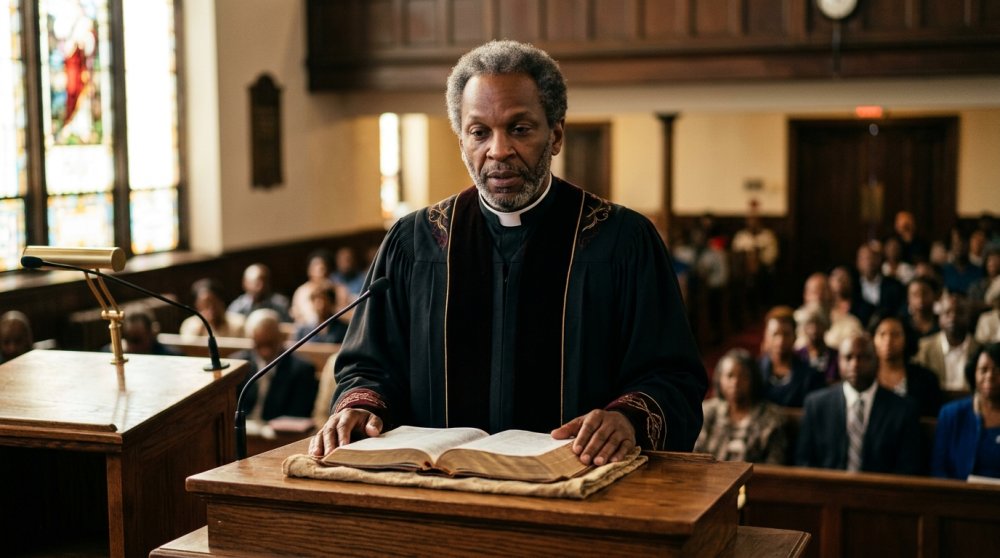
Gospel music icon and pastor Donnie McClurkin has taken a firm public stand against teaching he believes misrepresents Scripture and misleads believers. The Grammy-winning artist recently called out Pastor Jamal Bryant for drawing a parallel between the magical incantation “abracadabra” and the biblical text of Romans 4:17.
The controversy centers on Bryant’s apparent suggestion that the magic word shares something in common with the apostle Paul’s description of God’s creative power. Romans 4:17 speaks of God “who gives life to the dead and calls those things which do not exist as though they did,” a passage Christians have long understood as describing God’s sovereign authority over creation and His faithfulness to His promises.
McClurkin, known both for his powerful vocals and his commitment to sound biblical teaching, did not mince words in his response. The pastor recognized the serious danger in conflating God’s divine power with human attempts at manipulation through mystical formulas or positive confession divorced from genuine faith.
The rebuke touches on a broader theological concern within American Christianity about prosperity gospel and Word of Faith movements. Critics argue these movements sometimes reduce biblical faith to a formula—as if the right words spoken with enough conviction can manipulate spiritual laws to produce desired outcomes, much like a magic spell.
Faithful Christians understand Romans 4:17 not as a technique for believers to master, but as a description of God’s unique nature and power. The verse appears in Paul’s discussion of Abraham’s faith, emphasizing that the patriarch trusted in God’s promise even when circumstances seemed impossible. Abraham didn’t create reality through his words; he believed in the God who creates reality through His Word.
The distinction matters profoundly. Biblical faith rests on the character and promises of God, not on the power of human speech or positive thinking. When teachers blur this line, they risk leading people away from humble dependence on God toward a self-centered spirituality that makes the believer, rather than God, the ultimate source of power.
McClurkin’s willingness to publicly correct another pastor demonstrates the kind of spiritual watchfulness the Bible commends. Scripture repeatedly warns believers to guard against false teaching and to test all instruction against God’s revealed Word. In an era when celebrity pastors often avoid confrontation with one another, McClurkin’s rebuke reflects a commitment to truth over popularity.
Pastor Jamal Bryant leads New Birth Missionary Baptist Church in Atlanta and has a significant platform across social media and television. His influence makes theological precision all the more important, as thousands look to him for spiritual guidance and biblical understanding.
The incident serves as a reminder that American Christians must remain discerning about the teaching they receive. Popular preachers, engaging personalities, and inspirational messages cannot substitute for careful, context-aware study of Scripture. The health of the American church depends on believers who know God’s Word well enough to recognize when it’s being mishandled, even by charismatic leaders.
As families across the nation seek spiritual grounding in troubled times, the difference between biblical faith and spiritual manipulation becomes increasingly vital. Parents teaching children to pray, believers facing genuine hardship, and seekers investigating Christianity all need teachers who will present God’s Word accurately rather than twisting it to fit popular formulas.
McClurkin’s rebuke ultimately points Christians back to the source of true power and hope: not magical words or positive confessions, but the living God who keeps His promises and works all things according to His perfect will.
Let us know what you think, please share your thoughts in the comments below.


-

 Self-Reliance1 year ago
Trump’s Bold Move Uncovers Massive Social Security Fraud
-

 Faith1 year ago
New Clues Emerge in Noah’s Ark Mystery
-

 News1 year ago
Governor Walz’s Rhetoric Sparks National Controversy
-

 News1 year ago
Mel Gibson’s ‘The Passion of the Christ’ Sequel Title Announced
-

 Family1 year ago
Texas Lawmaker Targets Furries in Schools
-

 Freedom1 year ago
Maine Lawmaker Challenges Sports Fairness Controversy
-

 Family1 year ago
Canada’s Controversial Policy Sparks Ethical Debate
-
Faith9 months ago
Congress Hears Pleas for Nigerian Christians