
Faith
Faith Leaders Push Back on Alarming New Threats to Religious Freedom


Faith Facts
- Religious freedom advocates are responding to growing efforts to classify evangelism and Christian witness as harmful or even criminal behavior
- Critics of faith-based speech are increasingly framing gospel proclamation as a violation of human rights rather than an exercise of religious liberty
- Christian leaders emphasize that sharing truth in love remains both a biblical mandate and a constitutional right protected under the First Amendment
A troubling trend has emerged in modern discourse: the redefinition of Christian evangelism as an offense against human dignity. What our founders enshrined as a fundamental freedom—the right to freely practice and share one’s faith—is now being challenged by secular voices who claim religious speech itself constitutes a form of harm.
This represents a dangerous inversion of American values and constitutional principles.
The effort to silence Christian witness goes beyond mere disagreement. It seeks to fundamentally reframe religious expression as aggression, turning the First Amendment on its head. Rather than protecting the free exercise of religion, this new framework would punish it.
For centuries, the Christian understanding has been clear: love compels us to share truth, even when that truth challenges contemporary sensibilities. The gospel message has always been countercultural, calling people to repentance and transformation. This has never been considered a violation of rights—it is, in fact, an act of profound care for eternal souls.
The claim that evangelism violates human rights rests on a fundamental misunderstanding of both rights and love. True human rights protect the ability of individuals to hear, consider, and respond to ideas—including religious truth claims. Shielding people from uncomfortable truths doesn’t protect their dignity; it diminishes their capacity for meaningful choice.
When Christians share the gospel, they exercise the same freedom of speech and religion that protects all Americans. They do not coerce, they do not compel, they simply offer the most important truth they possess: that salvation is available through Jesus Christ.
The loving thing is indeed to tell the truth, even when it’s uncomfortable. Throughout Scripture, we see examples of faithful witnesses who spoke boldly despite opposition, knowing that eternal stakes far outweigh temporary discomfort. From the apostles before hostile authorities to modern missionaries in restricted nations, Christians have understood that genuine love means sharing hope, not withholding it to avoid offense.
This principle applies not only to evangelism but to all biblical teaching. When the culture embraces behaviors that Scripture identifies as sinful, Christians face a choice: remain silent to preserve social acceptance, or speak truth motivated by love for both God and neighbor. The latter has always been the faithful path, even when labeled as intolerant or harmful.
Religious freedom in America has traditionally meant that all citizens—regardless of faith tradition—can freely practice, proclaim, and persuade others of their beliefs. This marketplace of ideas strengthens rather than weakens society, allowing truth to be tested and embraced voluntarily rather than imposed by force or suppressed by censorship.
The attempt to criminalize or marginalize evangelism represents an existential threat not only to Christianity but to the entire framework of American liberty. If sharing religious truth can be deemed a rights violation, then free speech itself becomes conditional, subject to the sensibilities of those in power. This path leads inevitably to authoritarianism, where approved thoughts flourish and dissent is punished.
Defenders of religious liberty must remain vigilant and articulate. The stakes extend beyond any single issue or denomination—they encompass the foundational freedoms that have allowed faith to flourish in America for nearly 250 years. Allowing evangelism to be redefined as harm would fundamentally alter the American experiment.
Christians must continue to engage the culture with both grace and truth. This means speaking boldly while living compassionately, defending constitutional freedoms while demonstrating the love of Christ through action. The gospel has always advanced through persuasion, not coercion—a model that respects human dignity far more than the censorship increasingly demanded by secular voices.
As cultural pressure intensifies, believers should remember that their commission to share the good news predates the Constitution and will outlast any earthly government. While we defend our legal rights as American citizens, our ultimate allegiance remains to a higher authority who commands us to make disciples of all nations.
Let us know what you think, please share your thoughts in the comments below.


Faith Facts
- Christians are called to redeem every tool for God’s glory and the spread of the Gospel.
- Artificial intelligence is a human creation and remains under God’s sovereign authority.
- Believers must approach emerging technologies with wisdom rooted in Scripture.
Christians around the world are asking an important question as artificial intelligence grows more powerful. How can this technology be captured for the glory of God and the advancement of the Gospel?
Scripture teaches that every good gift comes from above. Technology itself is not evil, but its use must be directed by truth and righteousness.
AI systems are built by people and trained on data created by people. They reflect human choices and remain limited by the boundaries God has established.
Believers have a responsibility to guide these tools toward purposes that honor Christ and serve others. That includes sharing the Gospel, protecting life, and strengthening families.
“Whether therefore ye eat, or drink, or whatsoever ye do, do all to the glory of God,” 1 Corinthians 10:31 reminds us.
Churches and ministries are already exploring ways to use AI for translation, accessibility, and discipleship resources. These efforts must stay anchored in sound doctrine and prayerful discernment.
At the same time, Christians are right to raise concerns about privacy, truth, and the temptation to place ultimate trust in machines rather than in the Lord.
“Trust in the Lord with all thine heart; and lean not unto thine own understanding,” Proverbs 3:5 declares.
Ultimately, the future belongs to the One who created all things, not to any algorithm or invention of man. AI will never have the final word over humanity.
Let us know what you think, please share your thoughts in the comments below.
Faith Facts
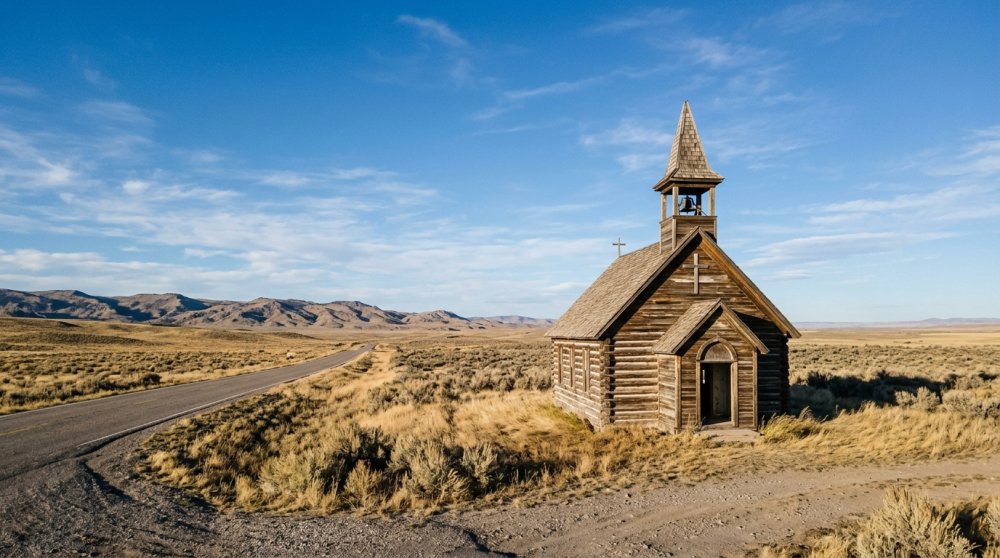
- The little log church has stood along the historic Oregon Trail route, serving as a steadfast reminder of Christian faith amid the rugged American frontier.
- U.S. Highway 191 passes near this enduring structure, connecting modern travelers to the spiritual legacy of pioneer families who settled the West.
- The church continues to bear witness to the traditional values of faith, family, and freedom that shaped our nation’s westward expansion.
Along U.S. Highway 191 stands a little log church that looks as though it has occupied this windswept landscape since the days of wagon trains.
The humble structure serves as a tangible link to the pioneer families who carried their Bibles and their faith across the plains in search of new beginnings.
Its weathered logs and simple steeple rise against the vast Western sky, a quiet testament to the enduring strength of Christian witness in America.
Travelers passing by are reminded that the values of hard work, self-reliance, and devotion to God helped build this nation from the ground up.
Let us know what you think, please share your thoughts in the comments below.
Faith Facts
- Scripture teaches that creation groans under the weight of sin and awaits redemption
- Christian teaching holds that believers are called to reflect God’s compassion through practical help
- History shows the church has long been first on the scene after floods, fires, and storms
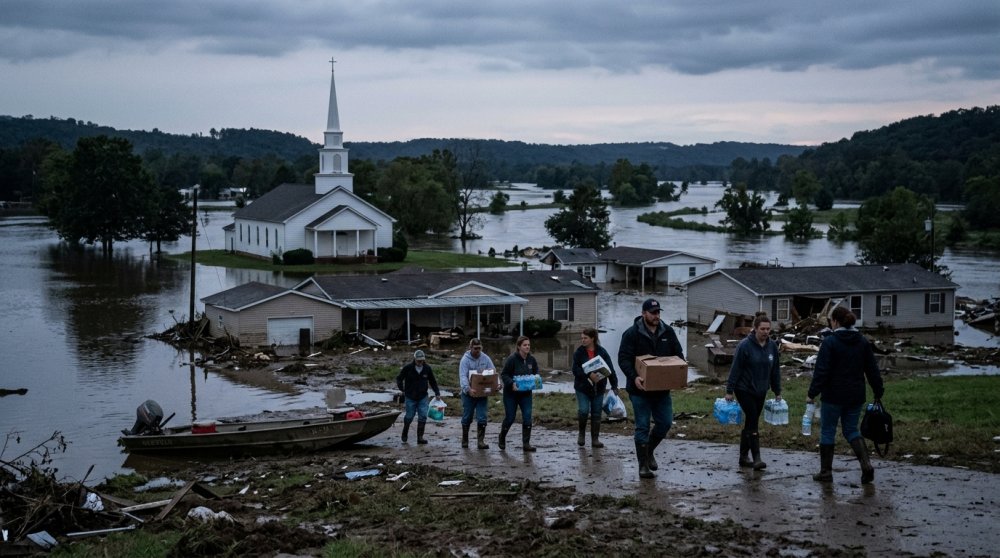
Every natural disaster reminds us that we live in a fallen world — that mankind’s sin irreparably marred the world’s original perfection.
We call these events “natural disasters,” but the reality is that these tragedies are anything but “natural.”
Let us know what you think, please share your thoughts in the comments below.


-

 Self-Reliance1 year ago
Trump’s Bold Move Uncovers Massive Social Security Fraud
-

 Faith1 year ago
New Clues Emerge in Noah’s Ark Mystery
-

 News2 years ago
Governor Walz’s Rhetoric Sparks National Controversy
-

 News1 year ago
Mel Gibson’s ‘The Passion of the Christ’ Sequel Title Announced
-

 Family1 year ago
Texas Lawmaker Targets Furries in Schools
-

 Freedom1 year ago
Maine Lawmaker Challenges Sports Fairness Controversy
-

 Family1 year ago
Canada’s Controversial Policy Sparks Ethical Debate
-
Faith10 months ago
Congress Hears Pleas for Nigerian Christians