
Freedom
Faith and Coffee Unite Amidst Unexpected Protests

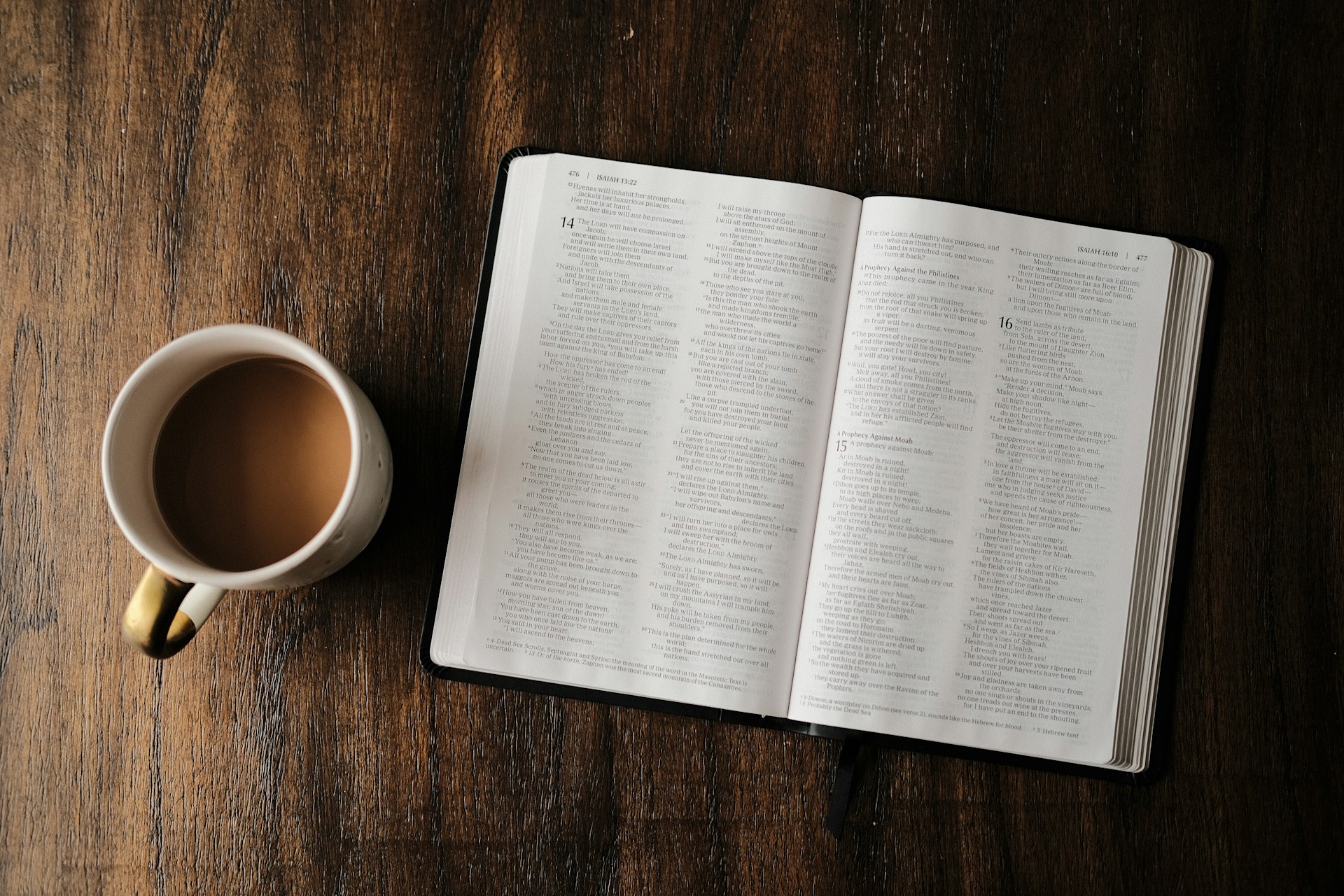
In the heart of Denver’s vibrant Art District, a remarkable story of faith, compassion, and resilience unfolds. Jamie Sanchez, a devoted Christian and the owner of The Drip Café, stands as a beacon of hope and service amidst a storm of unwarranted criticism and protest. His mission, deeply rooted in Christian values, is to uplift the homeless and provide them with a path to redemption and self-sufficiency.
Jamie Sanchez’s journey began with a calling he felt as a child—a calling to serve those less fortunate. This calling led him to establish “Recycle God’s Love” in 2012, alongside his late wife, Carolyn. What started as a modest effort to offer Bible studies and meals to the homeless has blossomed into a powerful community initiative. With the support of churches, local businesses, and dedicated volunteers, Sanchez’s ministry now provides essential services, from haircuts to housing, to hundreds in need.
“Over the years, it has just grown into just an amazing community of believers and people who really have a heart to help people who are in need and to do it selflessly,” Sanchez shared.
In 2022, Sanchez expanded his ministry with “Project Revive,” a faith-based program designed to help homeless individuals rebuild their lives. This initiative offers housing, transportation, addiction counseling, and job opportunities—all grounded in Christian discipleship. The Drip Café, opened in 2023, serves as both a coffee shop and a place of mentorship for those who have completed the program and are ready to reintegrate into society.
“We’ve had a few people go through the project so far, and it’s been very successful,” Sanchez noted.
However, Sanchez’s noble efforts have not been without challenges. Even before The Drip Café opened its doors, it faced protests organized by a group known as the Denver Communists. These protesters accused the café of being anti-gay, solely based on its Christian beliefs. Sanchez was taken aback by the hostility.
“I was in shock,” he recalled. “Our whole purpose opening the café was to serve the homeless community and help people get off the street, change their lives. And here we got a group who just hates us because we’re doing that, and we’re Christian.”
Despite the protests, Sanchez has remained steadfast in his commitment to his faith and mission. He views the backlash as part of a larger spiritual battle and responds with love and grace. “I love them even though they don’t believe me and I’ve never shown anything but love to them and that’s why the only pictures they have of me is praying for them,” he expressed.
The protests have not deterred Sanchez from his mission. Instead, he and his team have chosen to hold live worship music in the café every first Friday to “drown out” the noise of opposition. Sanchez’s unwavering faith and dedication to serving others shine through, even in the face of adversity.
“The communists have told me I’m not welcome, told me to kill myself, and my response is, ‘I love you, and you are welcome to come in peacefully.’ We have offered them free coffee and food on cold days,” Sanchez stated.
In a world where division and hostility often overshadow compassion and understanding, Jamie Sanchez’s story is a powerful reminder of the transformative power of faith, love, and service. His unwavering commitment to traditional values and his dedication to uplifting those in need exemplify the true spirit of Christian charity and patriotism.
Let us know what you think, please share your thoughts in the comments below.

Freedom
Texas Pastor Arrested While Preaching Against Abortion, Attorney Says Police Sided With Anti-Christian Left

Faith Facts
- Four Christians were arrested in Texas while peacefully proclaiming a pro-life message on public property.
- A First Amendment attorney says police acted on behalf of anti-Christian leftists rather than protecting religious freedom.
- The arrests represent a growing pattern of selective enforcement against Christian street evangelists and pro-life advocates.
Christian advocates are sounding the alarm after four believers were arrested in Texas while peacefully sharing their faith and opposing abortion on public streets. The incident has raised serious concerns about religious freedom and the First Amendment rights of Christians across America.
According to a longtime First Amendment attorney, the arrests were not about maintaining public order but about police “doing the bidding” of anti-Christian leftists who want to silence the Gospel message and pro-life advocacy in public spaces.
The four individuals were engaging in street evangelism and peacefully protesting abortion when law enforcement intervened. Rather than protecting their constitutional rights to free speech and religious expression, police took them into custody.
First Amendment advocates warn this represents a disturbing trend of selective enforcement. While protests from the left are often permitted and even encouraged, Christians exercising their constitutionally protected rights are increasingly facing arrest and harassment.
The attorney representing the arrested Christians argues that police departments are yielding to pressure from anti-Christian activists rather than upholding the law equally for all citizens. This selective application of justice undermines both religious liberty and the rule of law.
Street evangelism has a long and protected history in American jurisprudence. The Supreme Court has repeatedly affirmed that public sidewalks and streets are traditional public forums where citizens have broad free speech rights, including the right to share religious messages and engage in peaceful protest.
Pro-life advocates and street preachers have faced increasing opposition in recent years, often from local officials and activists who object to their message. However, the Constitution does not permit viewpoint discrimination, and police are sworn to protect all citizens’ rights regardless of the popularity of their message.
The Texas arrests follow a pattern seen in other states where Christian evangelists and pro-life activists have been targeted for enforcement actions while other protesters are left alone. This double standard has created a chilling effect on religious expression in public spaces.
Religious freedom advocates emphasize that if Christians can be arrested for peacefully sharing their faith and defending life, then the First Amendment means nothing. The freedom to proclaim truth in public spaces is foundational to American liberty and must be vigorously defended.
Legal experts note that such arrests often do not survive constitutional scrutiny when challenged in court. Cities and police departments have paid significant settlements after violating the First Amendment rights of street preachers and pro-life advocates.
The case highlights the urgent need for law enforcement training on First Amendment protections and for elected officials to stand firm in defending religious liberty. Police should be protecting peaceful Christians exercising their constitutional rights, not arresting them at the behest of those who oppose their message.
As America faces increasing hostility toward Christian values in the public square, believers must remain steadfast in proclaiming truth and defending the right to do so. The freedom to share the Gospel and advocate for life cannot be surrendered simply because opponents find the message offensive.
Let us know what you think, please share your thoughts in the comments below.
Faith Facts
- California’s SB 934 would allow lawsuits against Christian counselors to be revived up to 17 years after the statute of limitations has expired
- The bill retroactively punishes conduct that was legal at the time it occurred, raising serious constitutional concerns about ex post facto laws
- This legislation sets a dangerous precedent that could be used to target other faith-based practices and religious freedom protections
A new California bill is raising alarm bells among religious freedom advocates and constitutional scholars. SB 934, promoted under the banner of protecting survivors of so-called “conversion therapy,” contains provisions that could fundamentally undermine legal protections that have existed for centuries.
The legislation would grant the state unprecedented power to reach back nearly two decades to revive expired legal claims. More troubling still, it would punish counselors and ministries for conduct that was entirely legal when it occurred.
At its core, this bill represents more than a policy dispute over counseling methods. It establishes a framework where the government can retroactively redefine legal conduct as punishable — a concept that violates basic American principles of due process and fair notice.
Christian counselors who provided biblically-based guidance years ago, operating within the law and their sincerely held religious convictions, could now face lawsuits for actions the state has decided to retroactively criminalize. This creates an impossible situation where citizens cannot know whether their lawful conduct today will be deemed illegal tomorrow.
The statute of limitations exists for good reason. It protects defendants from stale claims where evidence has disappeared, memories have faded, and witnesses may no longer be available. These protections apply to everyone, regardless of the popularity of their views.
By allowing plaintiffs to revive claims that expired years ago, SB 934 strips away these fundamental fairness protections. It opens the door for similar retroactive targeting of other unpopular groups or practices — a power that could easily be turned against any faith community.
Religious organizations have long provided counseling consistent with their theological beliefs. Whether helping individuals align their lives with biblical teaching on sexuality, marriage, or other matters of conscience, these ministries operate from a place of compassion and conviction.
While proponents frame this as protection for vulnerable individuals, the bill’s actual mechanism threatens to weaponize the legal system against religious practice. It sends a chilling message: hold traditional Christian beliefs at your own risk, because the rules can change retroactively.
The precedent extends far beyond this specific issue. If California can revive expired lawsuits and retroactively punish previously legal religious counseling, what prevents future legislatures from doing the same with other faith practices? Homeschooling curricula? Pastoral counseling on marriage? Religious education on gender?
Constitutional safeguards exist precisely to prevent this kind of overreach. The prohibition on ex post facto laws — laws that retroactively criminalize conduct — is foundational to American jurisprudence. It reflects the understanding that citizens must be able to know what the law is and conform their conduct accordingly.
Americans of all backgrounds should be concerned when any group faces retroactive punishment for conduct that was legal when performed. Today it may target one unpopular practice; tomorrow it could reach any belief or behavior the government decides to redefine.
Religious freedom means little if it can be revoked retroactively. The freedom to live according to one’s faith requires the assurance that lawful religious practice today won’t become the basis for punishment years from now when political winds shift.
California lawmakers should recognize that this bill, whatever its stated intentions, establishes a dangerous precedent that threatens foundational legal protections. The power to reach back in time to punish previously legal conduct is a power no government should possess in a free society.
Let us know what you think, please share your thoughts in the comments below.
Faith Facts
- The Democratic Socialists of America have emerged as a growing political force, openly promoting an ideology historically rooted in atheistic materialism
- Socialist philosophy, from Karl Marx forward, has consistently positioned itself in opposition to traditional religious faith and Biblical values
- Nations that embraced socialist ideology in the 20th century experienced widespread persecution of Christians and suppression of religious freedom
A dangerous ideology is being repackaged for American consumption, and faithful Christians must understand what stands behind the appealing rhetoric. Names like Abdul El-Sayed and Francesca Hong may be new to many Americans, but the worldview they represent carries deep historical roots—roots that are fundamentally hostile to religious faith and Biblical principles.
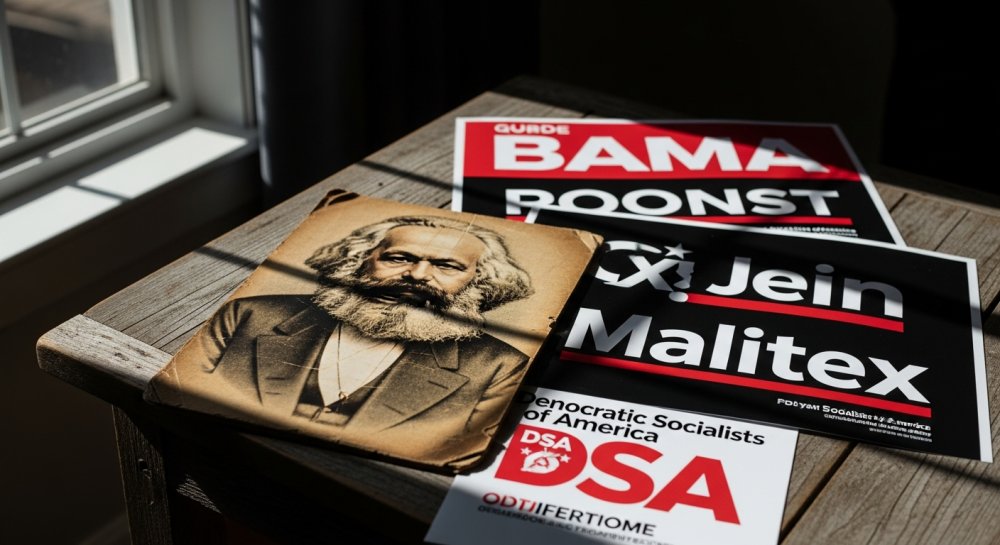
The Democratic Socialists of America (DSA) have positioned themselves as champions of economic justice and equality. But beneath the surface promises lies an intellectual foundation built by Karl Marx, whose writings explicitly rejected God and promoted a materialist philosophy incompatible with Christian truth.
Marx himself described religion as “the opium of the people,” viewing faith as an obstacle to his revolutionary vision. This wasn’t simply a passing comment—it was central to his entire philosophical system. Marxist ideology cannot accommodate genuine Christianity because it demands total allegiance to the state and its economic restructuring of society.
The historical record speaks with chilling clarity. When socialist and communist governments gained power throughout the 20th century, religious believers became targets. From the Soviet Union to China, from Cambodia to Cuba, those who proclaimed socialist ideals proceeded to persecute Christians, close churches, imprison pastors, and attempt to eradicate faith from public life entirely.
The death toll attributed to socialist regimes reaches into the tens of millions—a staggering human cost that cannot be dismissed or explained away. These weren’t accidents or deviations from “true socialism.” They were the predictable outcomes of an ideology that elevates human planning above divine wisdom and state power above individual conscience.
Today’s American socialists often distance themselves from these historical atrocities, claiming their vision is different. They speak of democratic socialism, Nordic models, and compassionate redistribution. But the philosophical foundation remains unchanged—a materialist worldview that sees human beings as economic units rather than souls created in God’s image.
Christians must discern the spiritual implications of political ideologies. When a movement’s intellectual godfather explicitly rejected the Creator, believers should approach its modern advocates with wisdom and caution. The Bible calls us to care for the poor and pursue justice, but God’s methods honor human dignity, personal responsibility, and voluntary generosity—not coercive state control.
The appeal of socialism often rests on legitimate concerns about inequality and suffering. But the solution to human brokenness isn’t found in empowering government bureaucrats to redistribute wealth. It’s found in the transformation of hearts through the Gospel and the building of communities rooted in Biblical values.
Religious freedom and economic freedom are deeply connected. When government assumes total control over economic life, it inevitably seeks control over every other sphere—including worship, education, and family life. History demonstrates this pattern with heartbreaking consistency.
American Christians have a responsibility to understand the ideologies shaping our political landscape. The DSA and similar movements may present themselves as progressive and compassionate, but their intellectual heritage tells a different story—one of hostility toward faith and tragic consequences for human flourishing.
As believers navigate these challenging times, we must hold fast to Biblical wisdom while engaging thoughtfully with political questions. The Gospel offers a vision of human dignity, redemption, and community that no political ideology can match. Our hope rests not in government programs or economic systems, but in the transforming power of Jesus Christ.
Let us know what you think, please share your thoughts in the comments below.


-

 Self-Reliance1 year ago
Trump’s Bold Move Uncovers Massive Social Security Fraud
-

 Faith1 year ago
New Clues Emerge in Noah’s Ark Mystery
-

 News1 year ago
Governor Walz’s Rhetoric Sparks National Controversy
-

 News1 year ago
Mel Gibson’s ‘The Passion of the Christ’ Sequel Title Announced
-

 Family1 year ago
Texas Lawmaker Targets Furries in Schools
-

 Freedom1 year ago
Maine Lawmaker Challenges Sports Fairness Controversy
-

 Family1 year ago
Canada’s Controversial Policy Sparks Ethical Debate
-
Faith9 months ago
Congress Hears Pleas for Nigerian Christians