
Faith
Divine Encounters Unfold in Israel

Faith Facts
- Christian leaders united in Israel for prayer and worship, witnessing powerful acts of God.
- Supernatural signs, including thunder and rain, accompanied these gatherings at biblical sites.
- Prayers and prophetic declarations coincided with the miraculous release of hostages in Israel.
This week, Christian influencers from nations worldwide gathered in Israel, drawn together by faith, prayer, and a call for peace.
On the historic Mount Carmel, worship and praise resounded as thunder echoed—without a cloud in sight—serving as a powerful reminder of God’s presence and sovereignty.
On the Sea of Galilee, worshippers joined together on three boats for prayer and prophetic declaration, united in spirit where Jesus once walked.
The group’s journey continued to Jerusalem, where over a thousand believers lifted their voices in the David’s Citadel during the Global Day of Prayer for the Peace of Jerusalem, fulfilling the biblical call to pray for God’s chosen city.
“Pray for the peace of Jerusalem: may those who love you be secure.”
At the site of recent tragedy, believers joined grieving Israelis in song, and hearts were moved in God’s presence, breaking barriers of pain and ushering in healing tears.
Compassion was felt at the highest levels, as seen during a visit with Israel’s first lady, Michal Herzog, who was moved to tears by the group’s prayer and empathy.
At the Gaza border, a bold declaration was made in faith—proclaiming freedom for the captives, mirroring Moses before Pharaoh.
In a divine turn, God’s providence was seen as news came of hostages’ release, coinciding with a worship song inspired by these moments.
The journey across Israel underscored a timeless truth: when God’s people pray in faith, heaven responds.
From worship sites to places of sorrow, the living God remains faithful, sharing in his people’s tears and moving mightily on their behalf.
Join the faithful in standing for Israel and praying for God’s continued peace and deliverance, trusting that He is ever-present and active among His people.
Let us continue to seek His hand in every season.


Faith Facts
- Mark Adams, minister at Tusculum Church of Christ in Nashville, Tennessee, has battled spasmodic dysphonia for over two and a half years—a rare neurological disorder affecting only 1 in 100,000 people.
- After months of misdiagnosis and failed speech therapy, Adams found relief through quarterly Botox injections at Vanderbilt Voice Center, though the condition remains incurable.
- His congregation rallied around him with unwavering support, reminding him that ministry isn’t measured by vocal strength but by faithfulness to God’s calling.
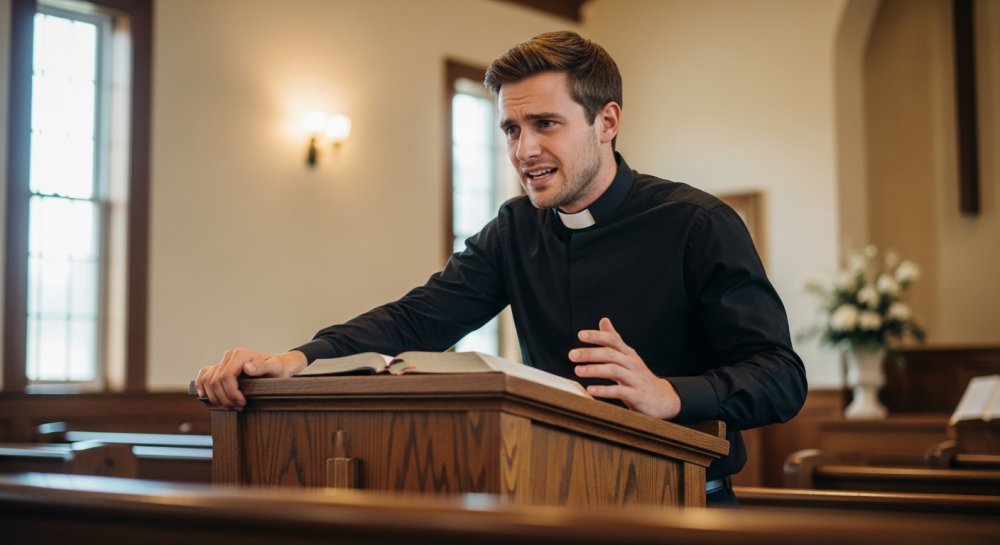
NASHVILLE, TENN. — Mark Adams stood in his office at the Tusculum Church of Christ, quietly rehearsing vocal exercises as worship hymns echoed from the sanctuary on a Sunday morning. In a few moments, he would step into the pulpit—but first, the minister paused to pray that his voice would not fail him.
As the father of two stood before the congregation, the possibility of “locking up” lingered in the back of his mind.
“I wasn’t thinking about what I was preaching. I was thinking about how I was going to get the words out.”
For more than two and a half years, the preacher has lived with spasmodic dysphonia, a neurological disorder that causes spasms in the vocal cords. The condition affects about 1 in 100,000 people, causing speech to sound strained and gravelly—especially under stress.
Through quarterly Botox injections, Adams has experienced periods of vocal improvement, though the disorder remains incurable.
‘My voice wasn’t doing what I needed it to do’
The first signs of the disorder appeared in late 2023, about a year after Adams’ arrival at Tusculum Church of Christ in 2022. He and his wife, Carolina, had recently welcomed their second child and were navigating a period of leadership transition within the church.
As stress mounted, subtle changes in his voice emerged. The pitch would rise unexpectedly, sometimes to the point of breaking or clenching.
“You don’t really know what’s going on, but it just keeps getting gravelly or kind of clenching up.”
Adams scheduled a laryngoscopy to examine his vocal cords and voice box. The exam found no signs of cancer, but doctors initially diagnosed him with muscle tension dysphonia, a disorder in which tension around the larynx affects vocal output.
The minister then entered six months of speech therapy from January to June 2024, working through exercises designed to reduce strain. The therapy temporarily improved his voice, allowing stable preaching through the summer.
But the improvement would prove short-lived.
As fall approached, Adams noticed vocal spasms and breaks while he stood before the Tusculum congregation.
“It just felt like my voice wasn’t doing what I needed it to do.”
‘What good is a preacher who can’t talk?’
As summer gave way to fall, the stability Adams had described as “mostly OK-ish” was upended by a personal tragedy involving a friend, which intensified the strain on his voice. He returned to speech therapy and mental health counseling to help manage stress.
By late fall, Adams said, the spasms had become like a “vice grip.”
“It was getting to the point where I could hardly say anything.”
With the strain at its highest, six months of voice therapy followed. Outside of therapy sessions, Adams made a point to consistently practice vocal exercises in his daily routine.
“Every Saturday night, he would spend like an hour practicing exercises to get his voice going for Sunday. He would come out saying, ‘I feel very good,’ and then on Sunday, when he would get up there, it would lock.”
The preacher relied on a mix of technology and vocal techniques to support his voice on Sundays. He used tools like ChatGPT to edit paragraphs in his sermons, adding certain sounds to open his vocal cords, and wrote notes in his outlines to lower his pitch, in an effort to prolong his ability to preach.
Before Sunday morning services, Adams took time to rehearse vocal exercises in his office, not entering the sanctuary until the Lord’s Supper directly before the sermon began.
At Tusculum, the ministry God had called him to felt increasingly uncertain. If speaking itself became unreliable, then preaching—built on his voice—was now in question.
“What good is a preacher who can’t talk?”
As the minister began preaching the Gospel, he recalled members of the congregation wincing as the sermon progressed. Although the condition itself isn’t painful, the hoarseness worried members, such as church elder Greg Petree.
“You just felt for him. You could tell he wanted to finish and deliver a strong message of Christ.”
Regardless of struggles in the pulpit, the elders and members of the congregation rallied around their minister. The elders met with Adams and assured him that he would have a ministry role within the church, with or without his ability to preach.
Sunday after Sunday, despite constant vocal exercises and preparation, no upward trend in his voice was observed. With progress stalled—and at his lowest point—he began to reshape his self-perception while holding onto his faith in God.
“My fish may feel rotten, and my loaves may feel dried up and old, but I’m just going to keep bringing them to Jesus.”
As months passed without answers, he found refuge in knowing that God was present even as uncertainty persisted.
‘A walk-by-faith process’
The Adams family decided to get a second opinion and made an appointment at the Vanderbilt Voice Center, one of the nation’s leading clinics for voice disorders.
In spring 2025, pathology specialists identified what months of therapy and exercises had failed to uncover. Adams did not have muscle tension dysphonia. Instead, doctors diagnosed him with spasmodic dysphonia.
“The diagnosis did have the immediate effect of liberating me from the guilt trip I was placing on myself. I could do speech therapy for 10 years, and I wouldn’t get any better.”
Spasmodic dysphonia has no cure, and the only treatment options include Botox treatments that weaken overactive vocal cord muscles. According to the National Library of Medicine, Botox treatments result in an average improvement of speech quality in 65% of cases.
Through the uncertainty, members of the Tusculum congregation and its elders continued to support Adams and his family, leading to a churchwide announcement of his diagnosis in June 2025. The elders joined him on stage as the congregation prayed for the minister.
“It was such a uniting thing to be able to go to God together for someone. At a time when our world is so divisive, it was refreshing to come together and pray for something.”
With prayers of the congregation behind him and his family, the minister pursued Botox treatments in the weeks following his diagnosis. At Vanderbilt, patient appointments backed up for months. But a spot opened up, and the minister’s first Botox injection was scheduled within two weeks.
The results of the first injection brought noticeable improvement. Although his voice was no longer as booming as before, speaking became smoother, restoring the confidence lost in the months of ambiguity.
Alongside his Botox injections, the minister takes a lead role in the Nashville Dysphonia Support Group, which provides a space for discussion and community for people with dysphonia and related voice disorders. The group meets at Tusculum Church of Christ quarterly.
“It continues to be kind of a walk-by-faith process. I’ve now had four injections, and every one has been a little different.”
Today, the Tusculum minister continues to receive quarterly Botox treatments to maintain his voice and avoid vocal spasms. Most Sundays, he can preach without noticeable symptoms, and he no longer walks into the pulpit wondering if he will be able to finish his message.
He no longer measures his ministry by his voice alone—but by faithfulness.
“So if this is the voice God has given me to express His love to the world, then I’m going to keep speaking, as best I can, even in my weakness.”
Let us know what you think, please share your thoughts in the comments below.

Faith Facts
- The York Revolution, a minor league baseball team in Pennsylvania, forfeited a game rather than compromise on Christian values regarding biological sex and women’s sports.
- The decision came after the opposing team fielded a biological male player on a women’s team, forcing York to choose between competing or standing firm on biblical principles.
- This incident highlights the growing tension between religious freedom and progressive gender ideology in American athletics and public life.
In an era when many institutions quickly bend to cultural pressure, a minor league baseball team in Pennsylvania has drawn a line in the sand. The York Revolution’s decision to forfeit a game rather than validate the participation of a biological male in women’s sports sends a powerful message about the cost of conviction.
The Revolution faced a choice that many Christians and conservatives encounter daily: comply with the prevailing cultural narrative or stand firm on biblical truth. They chose the latter, demonstrating that principles matter more than wins and losses.
This wasn’t merely about a single baseball game. It was about the integrity of women’s sports, the reality of biological sex, and the freedom to operate according to deeply held religious beliefs. When the opposing team included a player whose biological sex contradicted the team designation, York’s leadership recognized they faced a defining moment.
The forfeit represents more than a tactical decision. It exemplifies institutional courage—the willingness to absorb real consequences for maintaining biblical standards. In today’s climate, such stands often invite ridicule, financial penalty, and social ostracism.
For Christian Americans watching this unfold, the Revolution’s choice offers both encouragement and a challenge. It demonstrates that standing for truth remains possible, even when it’s costly. Organizations don’t have to surrender their values to participate in public life.
The broader implications extend far beyond the baseball diamond. This incident illuminates the collision between religious freedom and progressive ideology that defines much of contemporary American life. Schools, businesses, and civic organizations face similar pressure to affirm gender ideology that contradicts biological reality and biblical teaching.
York’s decision also protects the integrity of women’s athletics. Female athletes deserve competition that honors their biological reality. Allowing biological males to compete against women undermines fairness, safety, and the very purpose of sex-specific sports categories.
Critics will inevitably frame this as discrimination or bigotry. But Christians understand that affirming biological truth and protecting women’s spaces isn’t hateful—it’s loving. Real compassion doesn’t require us to deny reality or compromise biblical principles.
The Revolution’s stand reminds us that faith requires more than verbal assent. True belief manifests in action, especially when those actions carry cost. Jesus warned that following Him would bring opposition, not universal approval.
This situation also underscores the importance of leadership with moral clarity. The Revolution’s management could have quietly played the game, avoiding controversy. Instead, they led with conviction, modeling the kind of courage Christian organizations need in this cultural moment.
For families and churches, this incident provides a teaching opportunity. Young people need to see that standing for biblical truth sometimes means accepting tangible losses. Character formation happens when we choose principle over pragmatism.
The York Revolution forfeit matters because it shows what institutional integrity looks like in practice. It demonstrates that organizations can still function according to Christian principles, even as secular culture demands conformity to ideologies that contradict Scripture.
As pressure intensifies on Christian businesses, schools, and nonprofits to adopt progressive positions on sexuality and gender, York’s example offers both inspiration and instruction. Standing firm is possible, but it requires counting the cost and accepting the consequences.
This story ultimately isn’t about baseball—it’s about truth, courage, and the price of conviction. In a culture that increasingly demands we affirm what we know to be false, the York Revolution chose to forfeit a game rather than forfeit their integrity. That’s a win that transcends any scoreboard.
Let us know what you think, please share your thoughts in the comments below.
Faith Facts
- Florida church overseer Charles Barton Lucas arrested on digital voyeurism charges after illicit images from church bathroom found on his work computer
- Investigation revealed hidden camera filming church members and children in private areas; additional recordings found on device
- Church leadership responds with victim support, full cooperation with authorities, and commitment to preventing future abuse
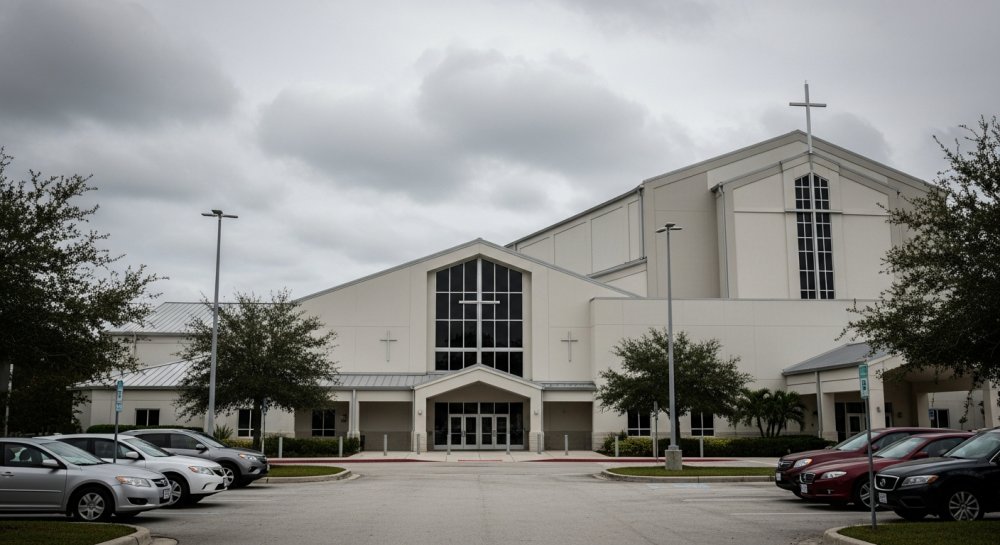
A Florida church leader is behind bars following disturbing allegations that he secretly recorded congregants in church facilities. Charles Barton Lucas, who served as an overseer at a local congregation, now faces criminal charges after law enforcement discovered hidden camera footage on his work computer.
The investigation began when church officials were alerted to suspicious activity involving recording devices in private areas of the facility. What started as internal concerns quickly escalated into a full criminal probe by local authorities. Detectives uncovered illicit images captured from a church bathroom, along with recordings from at least one other location on the property.
Forensic examination of Lucas’s work computer revealed the scope of the alleged violations. The footage reportedly included church members and minors in situations where they had every reasonable expectation of privacy. The discovery has sent shockwaves through the congregation, where Lucas held a position of trust and spiritual authority.
Church leadership responded swiftly to the allegations, expressing deep concern for victims and vowing full cooperation with law enforcement. In a statement to the congregation, officials described the situation as heartbreaking and a betrayal of the sacred trust placed in those who serve in ministry positions.
“This is a tragic situation that has affected our entire church family,” representatives stated, acknowledging the pain and violation felt by those who may have been recorded without consent.
The charges against Lucas underscore an ongoing concern about abuse of authority in religious settings. Digital voyeurism laws exist specifically to protect individuals from this type of predatory behavior, particularly in spaces where privacy is expected and vulnerability is high. Houses of worship should be sanctuaries of safety, not venues for exploitation.
As the legal process unfolds, the affected church has implemented new security measures and is providing resources for those impacted by the alleged crimes. Church officials have encouraged anyone with information relevant to the investigation to contact local authorities immediately.
Lucas faces multiple charges related to digital voyeurism, a serious offense that carries significant penalties under Florida law. The case serves as a sobering reminder that vigilance and accountability must extend to all levels of church leadership, regardless of title or tenure.
The broader Christian community has condemned the alleged actions, emphasizing that such behavior stands in direct opposition to biblical standards of integrity, purity, and respect for the dignity of every person. True spiritual leadership requires transparency, moral excellence, and unwavering commitment to protecting the vulnerable—especially children.
This case highlights the critical importance of background checks, accountability structures, and safe church policies designed to prevent and detect abuse before it occurs. Churches across the nation are being called to examine their own safeguards and ensure that congregants can worship without fear of exploitation.
Let us know what you think, please share your thoughts in the comments below.


-

 Self-Reliance1 year ago
Trump’s Bold Move Uncovers Massive Social Security Fraud
-

 Faith1 year ago
New Clues Emerge in Noah’s Ark Mystery
-

 News1 year ago
Governor Walz’s Rhetoric Sparks National Controversy
-

 News1 year ago
Mel Gibson’s ‘The Passion of the Christ’ Sequel Title Announced
-

 Family1 year ago
Texas Lawmaker Targets Furries in Schools
-

 Freedom1 year ago
Maine Lawmaker Challenges Sports Fairness Controversy
-

 Family1 year ago
Canada’s Controversial Policy Sparks Ethical Debate
-
Faith7 months ago
Congress Hears Pleas for Nigerian Christians