
Freedom
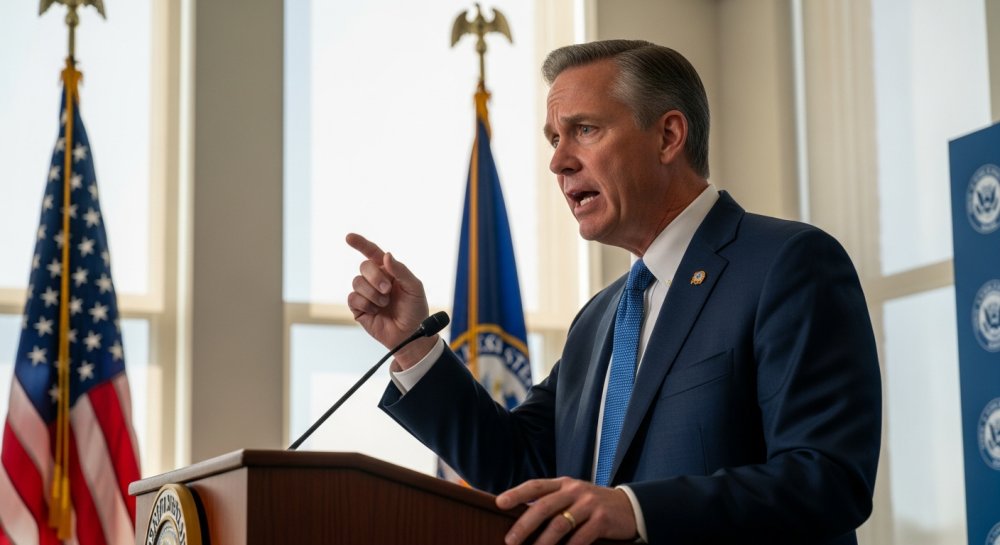
DeSantis Sounds Alarm on Surveillance State Crossing the Atlantic

Faith Facts
- Florida Governor Ron DeSantis publicly criticized the United Kingdom’s plan to implement a national digital ID system after King Charles III outlined the proposal in his parliamentary address
- The digital ID plan has raised concerns among conservatives about government overreach and surveillance of citizens’ daily activities and movements
- DeSantis’s opposition reflects growing American conservative resistance to digital tracking systems that threaten personal privacy and freedom
Florida Governor Ron DeSantis has issued a sharp rebuke of the United Kingdom’s proposed national digital identification system, condemning the plan as a dangerous expansion of government surveillance. The criticism came after King Charles III detailed the Labour government’s legislative agenda during his speech to Parliament this week.
The digital ID proposal represents a significant shift in how the U.K. government would track and monitor its citizens. DeSantis’s response highlights the growing divide between freedom-oriented conservative governance and increasingly intrusive government control systems being implemented across Western nations.
The Florida governor’s vocal opposition to the U.K. plan underscores fundamental concerns about personal liberty and the proper role of government in citizens’ lives. Such digital identification systems create comprehensive databases of personal information and daily activities, raising serious questions about privacy rights and the potential for abuse.
Conservative leaders in America have long warned about the dangers of centralized government tracking systems. The U.K.’s move toward mandatory digital identification serves as a cautionary tale for Americans who value their constitutional freedoms and limited government.
King Charles III’s endorsement of the digital ID system in his parliamentary speech represents the formal backing of Britain’s constitutional monarchy for expanded government surveillance powers. The proposal aligns with the Labour government’s broader agenda of increased state involvement in citizens’ lives.
DeSantis has built his political reputation on defending individual freedom and resisting government overreach. His criticism of the British plan fits squarely within his administration’s track record of opposing policies that expand government power at the expense of personal liberty.
The debate over digital identification systems extends beyond partisan politics to fundamental questions about human dignity and freedom. Christian conservatives recognize that each person is created in God’s image with inherent worth and rights that government must respect, not surveil.
As Western governments increasingly embrace digital tracking and monitoring systems, American conservatives face a choice about the direction of their own nation. The contrast between DeSantis’s defense of freedom and the U.K.’s embrace of surveillance technology could not be more stark.
Let us know what you think, please share your thoughts in the comments below.

Faith Facts
- Finnish Member of Parliament Päivi Räsänen was blocked from entering the United Kingdom despite being acquitted multiple times in her home country for sharing biblical views on marriage
- Left-wing activist pressure successfully prevented a Christian lawmaker from speaking in Britain, raising serious concerns about religious freedom in the West
- Räsänen faced years of legal persecution in Finland for quoting Scripture, ultimately vindicated by her nation’s highest court
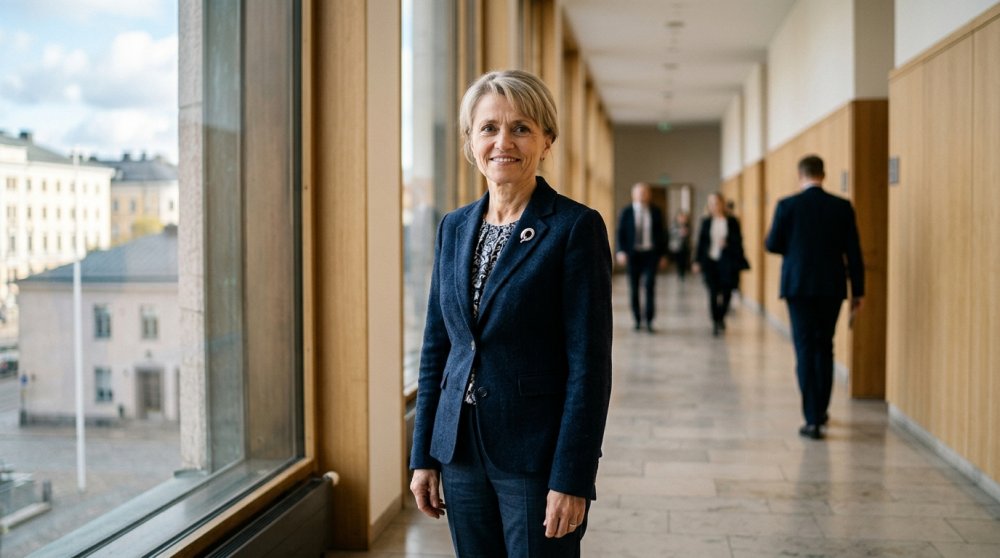
The exclusion of Finnish Member of Parliament Päivi Räsänen from the United Kingdom represents a troubling development for Christians who hold traditional biblical values. This incident exposes the growing intolerance toward Christian speech in Western democracies.
Räsänen, a respected politician and physician, has been vindicated repeatedly by Finnish courts after facing prosecution for sharing biblical teachings about marriage and sexuality. Despite these legal victories affirming her right to express her Christian faith, left-wing activists successfully pressured British authorities to prevent her from entering the country.
The silencing of a democratically elected official from a fellow Western democracy reveals how fragile Christian freedom of expression has become. When activists can block a Christian leader from even crossing borders to share her perspective, it signals a dangerous erosion of the principles of free speech and religious liberty that once defined Western civilization.
Räsänen’s case in Finland became internationally significant when she was prosecuted simply for quoting Bible verses and expressing traditional Christian teaching. Her legal battle culminated in complete exoneration by Finland’s Supreme Court, which recognized her fundamental right to express her religious beliefs.
The fact that such a vindicated Christian voice can still be banned from Britain demonstrates that legal victories alone are insufficient to protect religious freedom. Cultural and political pressure from secular activists continues to threaten the ability of Christians to participate fully in public discourse.
This exclusion sets a concerning precedent. If a sitting member of parliament from a European nation can be barred for her Christian convictions, what does that mean for ordinary believers who seek to live out their faith publicly? The message being sent is clear: traditional Christian views on marriage and morality are increasingly unwelcome in the public square.
For American Christians watching these developments, the lesson is urgent. The freedoms we often take for granted are under assault in nations that once shared our commitment to liberty of conscience. What happens in Britain today could prefigure challenges facing believers in America tomorrow.
The courage Päivi Räsänen has shown in standing firm on biblical truth, despite years of legal persecution and now international exclusion, serves as an inspiration. Her unwavering commitment to Scripture over cultural pressure exemplifies the kind of faithful witness needed in this generation.
This incident should awaken Christians to the reality that religious freedom cannot be assumed. It must be defended, protected, and exercised consistently, or it will continue to erode until expressing basic biblical truths becomes impossible in the public sphere.
Let us know what you think, please share your thoughts in the comments below.

Faith Facts
- Finnish Member of Parliament Päivi Räsänen has been barred from entering the United Kingdom despite her acquittal in Finland on all charges related to her Christian beliefs
- Räsänen faced years of legal persecution for sharing biblical teachings on marriage and sexuality, ultimately vindicated by Finland’s Supreme Court
- The UK border decision raises serious concerns about religious freedom and whether Christians who defend biblical truth are now considered unwelcome in Britain
A Finnish Christian politician who endured years of legal battles for her biblical convictions is now calling on UK Home Secretary Shabana Mahmood to reverse a troubling decision barring her from British soil. Päivi Räsänen, a sitting Member of Parliament in Finland, has requested intervention after being refused entry to the United Kingdom.
Räsänen gained international attention among believers when Finnish prosecutors targeted her for expressing traditional Christian views on marriage and human sexuality. She faced criminal charges simply for quoting Scripture and articulating the teachings of the Bible that the Church has upheld for two thousand years.
After a prolonged legal ordeal that threatened her freedom, Finland’s Supreme Court fully acquitted Räsänen of all charges. The ruling was celebrated by Christians worldwide as a victory for religious liberty and freedom of conscience in an increasingly hostile cultural climate.
Now, despite her complete vindication by Finland’s highest court, the UK government has apparently deemed this faithful Christian lawmaker unfit to enter the country. The decision raises alarming questions about whether Britain now considers biblical Christianity itself to be a disqualifying characteristic for entry.
Räsänen’s request for Home Secretary Mahmood’s intervention highlights the growing tension between Western governments and citizens who refuse to compromise their Christian convictions. Her case has become a bellwether for religious freedom across Europe and beyond.
The Finnish parliamentarian’s exclusion from the UK comes at a time when many Christians feel their governments are increasingly hostile to traditional faith expressions. While borders remain open to many, it appears that standing firm on biblical truth may now be treated as grounds for exclusion.
This situation should concern all Americans who value religious liberty. When democratically elected officials from allied nations are barred from travel simply for maintaining Christian beliefs that were universal in the West just decades ago, it reveals how rapidly the ground is shifting beneath our feet.
Räsänen’s courage throughout her legal persecution inspired countless believers to stand firm in their own contexts. Her willingness to risk her career and freedom rather than deny biblical teaching exemplifies the kind of faithful witness the Church desperately needs in this hour.
The question now is whether the UK government will reverse this decision or whether it will stand as yet another example of Western nations closing their doors to uncompromising Christian faith. Home Secretary Mahmood has the opportunity to correct this troubling precedent.
Let us know what you think, please share your thoughts in the comments below.

Faith Facts
- Western society is experiencing an unprecedented rejection of biological truth, with gender ideology being codified into law despite contradicting observable reality.
- The transgender movement represents a fundamental assault on God’s created order and the biblical understanding of male and female.
- Families are being torn apart as laws and institutions enforce ideologies that contradict both Scripture and science.
America finds itself trapped in a cultural moment that mirrors the dystopian world George Orwell warned us about. The insistence that biological sex is changeable has moved beyond social discourse into the realm of legal mandate, forcing citizens to affirm what they know to be false.
This isn’t simply a matter of political disagreement or evolving social norms. We are witnessing a direct challenge to the fundamental truths established at creation.
The Bible is clear: “So God created man in his own image, in the image of God he created him; male and female he created them.” This divine design is not subject to human revision, yet our institutions increasingly demand we pretend otherwise.
The consequences extend far beyond abstract philosophical debates. Real families are being destroyed as parents lose custody of children for refusing to affirm gender transitions.
Teachers face termination for using biologically accurate pronouns. Medical professionals are pressured to provide harmful interventions to confused young people.
The transgender ideology represents more than bad policy—it’s a spiritual battle over truth itself. When a society abandons objective reality in favor of subjective feelings, it cuts itself off from the moorings that make civilized life possible.
Our obsession with this topic persists because the stakes couldn’t be higher. At issue is whether we will continue to recognize God’s authority over His creation or whether we will embrace the serpent’s ancient lie that we can redefine ourselves apart from our Creator.
Christians cannot remain silent while laws are passed that criminalize truth-telling and force participation in delusion. Our commitment to loving our neighbors includes refusing to affirm destructive lies, even when culture demands compliance.
The relentless push to normalize gender confusion reveals the desperation of a worldview that has rejected divine order. Without God’s truth as an anchor, society drifts into ever more absurd denials of reality.
This conversation will continue—and must continue—until America rediscovers the unchanging truth that we are fearfully and wonderfully made, male and female, in the image of God.
Let us know what you think, please share your thoughts in the comments below.


-

 Self-Reliance1 year ago
Trump’s Bold Move Uncovers Massive Social Security Fraud
-

 Faith1 year ago
New Clues Emerge in Noah’s Ark Mystery
-

 News1 year ago
Governor Walz’s Rhetoric Sparks National Controversy
-

 News1 year ago
Mel Gibson’s ‘The Passion of the Christ’ Sequel Title Announced
-

 Family1 year ago
Texas Lawmaker Targets Furries in Schools
-

 Freedom1 year ago
Maine Lawmaker Challenges Sports Fairness Controversy
-

 Family1 year ago
Canada’s Controversial Policy Sparks Ethical Debate
-
Faith9 months ago
Congress Hears Pleas for Nigerian Christians