
Faith
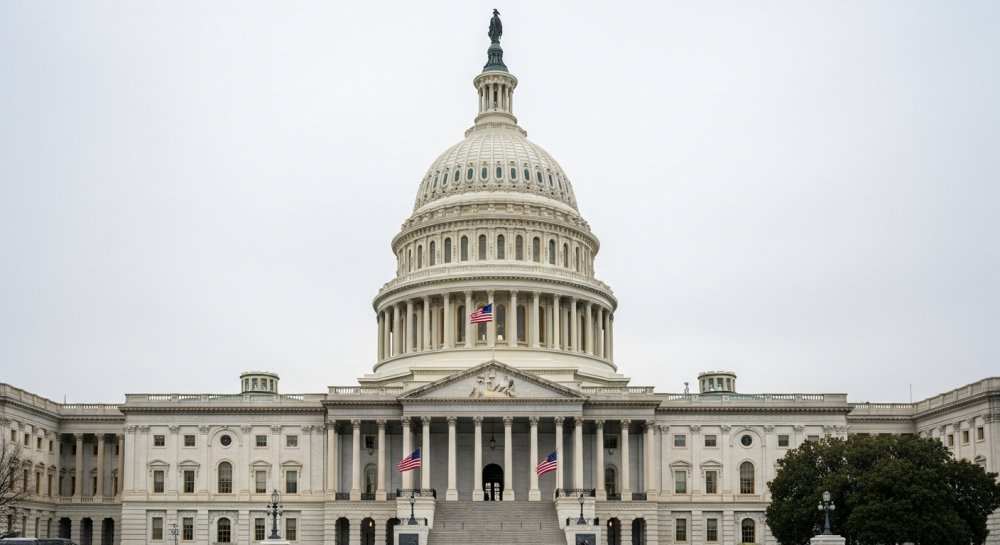
Delaware Representative Makes Surprising Claims About Church Leadership Roles

Faith Facts
- Rep. Sarah McBride, D-Del., born Tim McBride, claims to hold elder status in the Presbyterian Church (U.S.A.) and ordination through the Universal Life Church
- The Universal Life Church offers ordinations by mail without traditional theological training or denominational accountability
- The Presbyterian Church (U.S.A.) has faced ongoing internal division over biblical teachings on sexuality and gender
A Delaware representative has revealed holding positions in two religious organizations, raising questions about ordination standards and theological accountability in American denominations.
Rep. Sarah McBride, who was born Tim McBride and became the first transgender-identifying member of Congress in 2024, disclosed in a recent interview holding the position of elder in the Presbyterian Church (U.S.A.). Additionally, McBride claims ordination as a minister through the Universal Life Church, an organization known for providing ordinations through mail-order processes without requiring traditional theological education or doctrinal examination.
The revelation highlights ongoing tensions within mainline Protestant denominations regarding biblical authority and traditional Christian teaching. The Presbyterian Church (U.S.A.), one of the more theologically progressive mainline denominations, has experienced significant membership decline in recent decades amid disputes over scriptural interpretation and moral standards.
The Universal Life Church, founded in 1959, operates on a philosophy of “do what is right” and offers instant ordinations online to anyone regardless of religious background or beliefs. The organization explicitly states that it has no specific creed or doctrine, standing in stark contrast to historic Christian denominations that require theological training, doctrinal examination, and accountability to church leadership before ordaining ministers.
Traditional Christian denominations typically require elders and ordained ministers to affirm biblical teachings and undergo extensive theological training. The standards for church leadership outlined in Scripture emphasize moral character, sound doctrine, and faithfulness to biblical truth.
Conservative Christians have expressed concern about the erosion of biblical standards in mainline denominations, viewing such developments as departures from historic Christian orthodoxy and biblical authority. Many traditional believers argue that authentic church leadership must be rooted in Scripture and accountable to clearly defined doctrinal standards rather than contemporary cultural pressures.
The Presbyterian Church (U.S.A.) has lost more than half its membership since the 1980s, with many congregations leaving to join more theologically conservative Presbyterian denominations that maintain traditional biblical positions on marriage, sexuality, and gender.
Let us know what you think, please share your thoughts in the comments below.

Faith Facts
- Less than half of born-again Christians believe in the sanctity of human life, according to new survey data from Arizona Christian University
- More than half of theologically identified born-again Christians strongly reject abortion as morally acceptable
- The findings reveal a significant disconnect between Christian doctrine and actual beliefs among professing believers
A new survey has unveiled a concerning divide among American Christians when it comes to foundational biblical principles about the value of human life. The latest American Worldview Inventory 2026 survey, conducted by the Cultural Research Center at Arizona Christian University, shows that while a majority of born-again Christians oppose abortion, fewer than half actually believe in the sanctity of human life.
The study reveals a troubling inconsistency in the worldview of those who identify as born-again Christians. While more than half strongly reject abortion as morally acceptable, the fact that less than half affirm the basic biblical teaching that all human life is sacred points to a fundamental gap in Christian discipleship and biblical literacy.
This disconnect raises important questions about the depth of biblical teaching in American churches. The sanctity of life is a cornerstone doctrine rooted in Genesis 1:27, which declares that mankind is created in the image of God. This truth forms the foundation for Christian opposition to abortion, euthanasia, and other threats to human dignity.
The findings suggest that many Christians may hold positions on specific moral issues like abortion without fully embracing the underlying biblical worldview that should inform those positions. This indicates a need for more comprehensive teaching on the authority of Scripture and the biblical view of human dignity and worth.
For the conservative Christian community, these results serve as a wake-up call. Churches must redouble their efforts to ground believers in biblical truth, ensuring that faith is not merely a cultural identity but a comprehensive worldview rooted in God’s Word. The battle for life begins with teaching the unchanging truth that every human being, from conception to natural death, bears the image of their Creator.
As our nation continues to grapple with questions about abortion, end-of-life care, and the value of vulnerable populations, Christians must be equipped with more than opinions—they need a firm foundation in biblical truth that recognizes the sacred worth of every person.
Let us know what you think, please share your thoughts in the comments below.
Faith Facts
- Presbyterian Church in America General Assembly voted against ordaining women as deacons at its annual meeting in Louisville, Kentucky
- The decision maintains the denomination’s traditional understanding of biblical church leadership and ordained offices
- The assembly also advanced a report examining Christian nationalism during this week’s proceedings
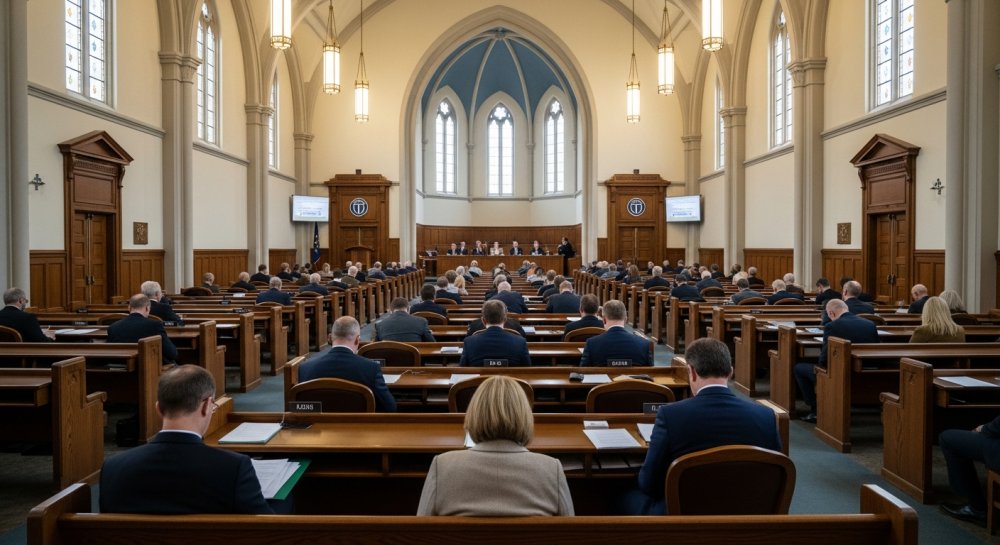
The Presbyterian Church in America has reaffirmed its commitment to traditional biblical leadership structures. During its General Assembly meeting in Louisville, Kentucky this week, the denomination voted decisively against an overture that would have opened the office of ordained deacon to women.
The decision reflects the PCA’s continued adherence to complementarian theology, which holds that men and women have distinct, God-given roles in the church. This theological position interprets Scripture as reserving ordained church offices for qualified men while honoring the vital contributions women make in other ministry capacities.
The PCA just crushed Overture 37, which would have allowed women to serve as deacons. With barely any support, which can be heard in the resounding ‘Yeas’ and whimpering ‘Nays,’ it was dead on arrival. #pcagapic.twitter.com/2voo3noFMC
— Protestia (@Protestia) June 25, 2026
For many conservative Presbyterian believers, the vote represents a faithful stand on biblical authority in an era when many mainline denominations have abandoned traditional interpretations of Scripture on leadership and gender roles. The PCA, which separated from the more liberal Presbyterian Church (USA) in 1973, has consistently maintained conservative positions on doctrinal matters.
The assembly’s decision comes as American Christianity faces increasing pressure to conform to cultural trends that often conflict with historic Christian teaching. Denominations that have embraced progressive positions on gender and sexuality have frequently experienced declining membership and theological drift.
In addition to the deacon question, the General Assembly advanced a report addressing Christian nationalism. The examination of this topic reflects ongoing discussions within conservative Christian circles about the proper relationship between faith and civic engagement, particularly as believers seek to maintain religious liberty and biblical values in the public square.
The PCA’s actions this week demonstrate the denomination’s commitment to deliberative decision-making on matters of church practice and doctrine. With approximately 1,500 congregations and 380,000 members, the PCA remains one of the largest conservative Presbyterian bodies in the United States.
As various Christian denominations navigate questions of biblical interpretation and cultural engagement, the PCA’s votes highlight the ongoing importance that many believers place on maintaining theological consistency with Scripture and historic Christian orthodoxy.
Let us know what you think, please share your thoughts in the comments below.

Faith Facts
- Pope Paul VI’s coronation in 1963 was the last papal coronation in Catholic Church history, ending a tradition spanning over a millennium
- Gospel music legend Andraé Crouch was born this week in 1942, going on to shape contemporary Christian worship music for generations
- Anglican missionaries arrived in Borneo during this week in church history, bringing the Gospel to Southeast Asia
This week marks several pivotal moments in Christian history that continue to shape the faith today. From the end of an ancient papal tradition to the birth of a gospel music pioneer, these events remind us of how God works through both institutional change and individual gifts to advance His kingdom.
On June 30, 1963, Pope Paul VI received the papal tiara in what would become the final coronation ceremony in Roman Catholic history. The elaborate ritual, which had crowned popes for over a thousand years, featured the ornate triple crown symbolizing the pontiff’s authority. Pope Paul VI later chose to set aside the practice, signaling a shift toward humility and simplicity in papal leadership that continues to this day.
In a very different corner of Christendom, July 1, 1942, marked the birth of Andraé Crouch in Los Angeles, California. The son of a pastor, Crouch would grow to become one of the most influential figures in gospel and contemporary Christian music. His songs, including “My Tribute (To God Be the Glory)” and “The Blood Will Never Lose Its Power,” have been sung in churches across denominational lines for decades.
Crouch’s musical ministry broke down barriers between traditional gospel and contemporary worship, helping to usher in a new era of praise music that emphasized both musical excellence and biblical truth. His work earned him seven Grammy Awards and an Academy Award nomination, demonstrating that music rooted in Christian faith could achieve both spiritual impact and artistic recognition.
Also this week in Christian history, Anglican missionaries arrived in Borneo, bringing the message of salvation to indigenous populations in Southeast Asia. Their arrival represented the ongoing fulfillment of the Great Commission, as faithful believers carried the Gospel to distant shores where Christ’s name had not yet been proclaimed.
These diverse events—spanning continents, denominations, and centuries—illustrate the multifaceted nature of Christian witness. Whether through institutional reform, artistic expression, or missionary zeal, believers throughout history have found different ways to honor Christ and spread His truth.
The end of papal coronations reflected a broader movement within Catholicism toward evangelical simplicity. The birth of Andraé Crouch gave the church a voice that would inspire millions to worship with joy and authenticity. And the arrival of missionaries in Borneo demonstrated the enduring call to take the Gospel to every nation.
Each of these moments reminds us that Christian history is not merely a record of the past, but a living testimony to God’s ongoing work in His church. As we remember these events, we are called to consider how we, too, might faithfully serve in our own generation.
Let us know what you think, please share your thoughts in the comments below.


-

 Self-Reliance1 year ago
Trump’s Bold Move Uncovers Massive Social Security Fraud
-

 Faith1 year ago
New Clues Emerge in Noah’s Ark Mystery
-

 News1 year ago
Governor Walz’s Rhetoric Sparks National Controversy
-

 News1 year ago
Mel Gibson’s ‘The Passion of the Christ’ Sequel Title Announced
-

 Family1 year ago
Texas Lawmaker Targets Furries in Schools
-

 Freedom1 year ago
Maine Lawmaker Challenges Sports Fairness Controversy
-

 Family1 year ago
Canada’s Controversial Policy Sparks Ethical Debate
-
Faith7 months ago
Congress Hears Pleas for Nigerian Christians