
Faith
Cuba’s Growing Persecution Exposes Rising Threats to Biblical Freedom

Faith Facts
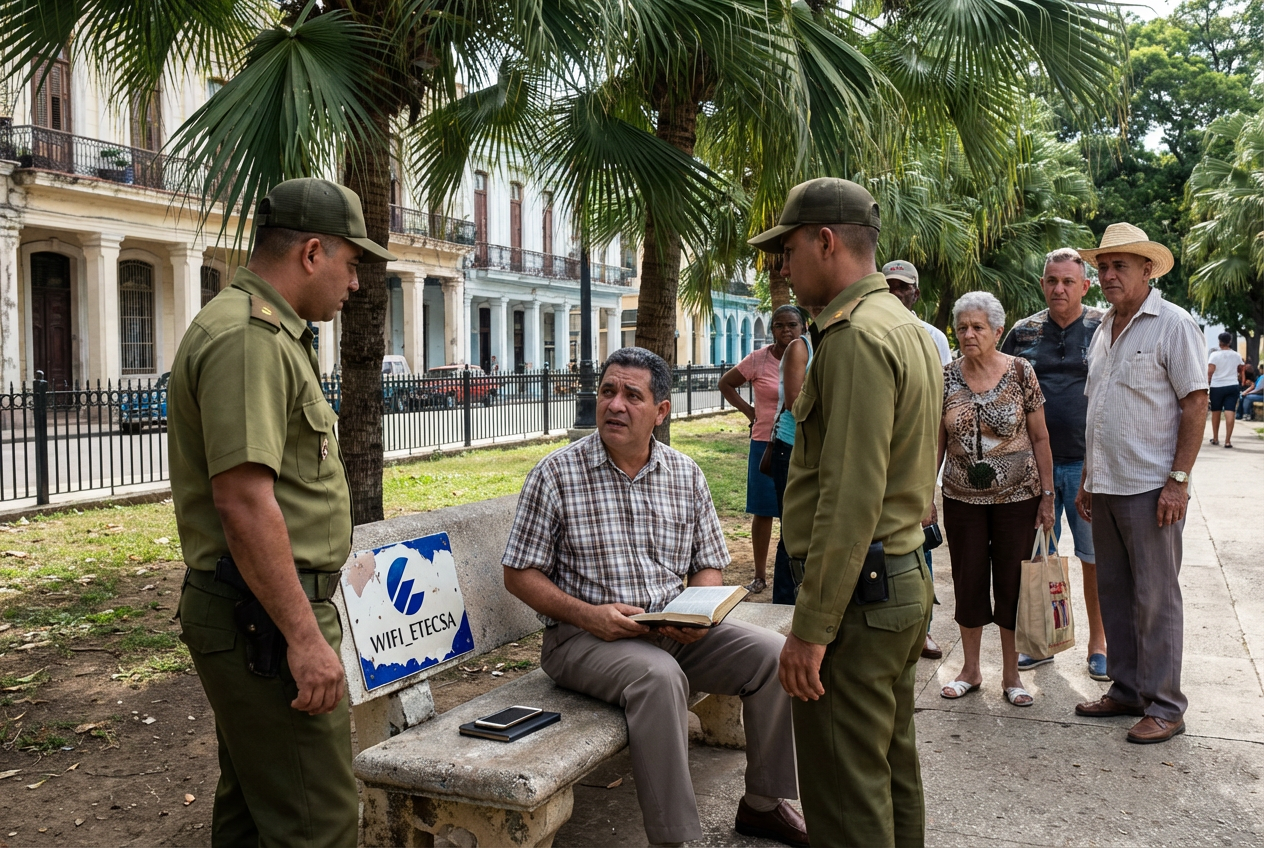
- Pastor Rolando Pérez Lora arrested moments after uploading Bible lesson to YouTube in Cuban park.
- Released after hours amid ongoing government suppression of his ministry.
- Detention linked to protests over blackouts, food, and medicine shortages.
In godless communist Cuba, police accosted Pastor Pérez Lora for sharing Scripture publicly via public Wi-Fi, revealing tyranny’s war on faith.
This faithful servant has endured relentless harassment, including summonses and surveillance, for praying and aiding his community.
“In the East [of Cuba] we were always persecuted. It was very serious … I always made it clear I wanted to serve all the people.”
“State Security in Las Tunas summoned me many times, they harassed me, sending [police] patrols to my house … we were followed constantly by the police.”
During arrest, he proclaimed, “You’re mistreating me for no reason; I haven’t done anything wrong; this man is mistreating me.”
CSW’s Anna Lee Stangl urged an end to targeting believers like Pastor Pérez Lora for their gospel influence.
Christians worldwide, pray fervently for Cuban brethren enduring oppression, and demand freedom to proclaim Christ boldly.



Faith Facts
- Matthew Rothert Sr., a small-town Arkansas man, led the successful campaign to put ‘In God We Trust’ on U.S. paper currency
- His children credit their father’s accomplishment entirely to God’s providence and guidance
- The story demonstrates how one faithful person can make a lasting impact on American culture and heritage
The children of the man responsible for ensuring “In God We Trust” appears on American paper currency say their father’s remarkable achievement proves that ordinary citizens, empowered by faith, can change the course of history.
Matthew Rothert Sr., a humble Arkansas resident, spearheaded the campaign that resulted in the national motto being printed on U.S. bills. His family told The Christian Post that the story of how this came to be is nothing short of providential.
“One person, with the Lord’s help, can make a difference,” Rothert’s children explained, emphasizing that their father’s success was rooted in divine guidance rather than political connections or personal ambition.
The placement of “In God We Trust” on American currency stands as a testament to the nation’s Christian heritage and foundational values. What many Americans handle daily without a second thought represents one man’s determination to honor God in the public square.
Rothert Sr.’s children made clear that their father deserves no personal glory for the accomplishment. Instead, they direct all credit to the Lord, whose hand they believe guided their father’s efforts from beginning to end.
The story serves as an encouragement to Christians today who may feel powerless to influence culture or government. The Rothert family’s testimony demonstrates that God can use anyone—regardless of their social standing, geographic location, or political influence—to accomplish His purposes.
This small-town success story reminds believers that faithfulness matters more than prominence. Matthew Rothert Sr. wasn’t a Washington insider or a wealthy donor, yet his faith-driven initiative left an indelible mark on American society that continues to this day.
Every time Americans handle paper money, they encounter a reminder of the nation’s acknowledgment of God—a legacy that one faithful Arkansas man helped secure for future generations.
Let us know what you think, please share your thoughts in the comments below.

Faith Facts
- New survey reveals widespread confusion about core Christian doctrines among Canadian evangelicals
- Many believers are embracing views that contradict historic biblical teaching
- Church leaders calling for renewed emphasis on biblical discipleship and theological education
A comprehensive survey examining religious beliefs across Canada has uncovered troubling findings about the state of biblical literacy among evangelical Christians. The research shows that many believers who identify as evangelical hold views that directly contradict foundational Christian doctrines that have been taught for centuries.
The findings have sparked urgent conversations among church leaders about the need for stronger biblical teaching and discipleship programs. Many pastors and ministry leaders are expressing concern that believers are not being adequately grounded in Scripture and sound theology.
The survey results highlight a growing gap between what evangelicals claim to believe and what historic Christianity has always taught. This disconnect points to a deeper crisis of biblical illiteracy that threatens the spiritual health of congregations across the nation.
Church leaders are responding with calls for a return to robust theological education at all levels of church life. They emphasize that Christians must be equipped to understand and defend the essential truths of the faith in an increasingly secular culture.
The research underscores the vital importance of discipleship that goes beyond surface-level Christianity. Without a firm foundation in biblical truth, believers are vulnerable to cultural pressures and false teachings that can lead them away from authentic faith.
Many ministry leaders view these findings as a wake-up call for the Church. They argue that congregations must prioritize teaching the whole counsel of Scripture and helping believers develop a biblical worldview that can withstand modern challenges.
The survey serves as a reminder that faith requires ongoing cultivation and growth. Christian leaders are emphasizing that churches must invest in the spiritual formation of their members through consistent biblical instruction and mentoring.
As believers grapple with these findings, there is renewed recognition that the health of the Church depends on faithfulness to God’s Word. Only through diligent study and application of Scripture can Christians maintain doctrinal integrity and pass on the faith to future generations.
Let us know what you think, please share your thoughts in the comments below.
Faith Facts
- Africa leads the developing world in Christian medical training programs but faces severe shortages of specialist doctors and rural physicians
- Christian health institutions are stepping up to fill gaps in residency programs as healthcare demands grow across the continent
- Faith-based medical schools are emerging as critical infrastructure for healthcare delivery in underserved African communities
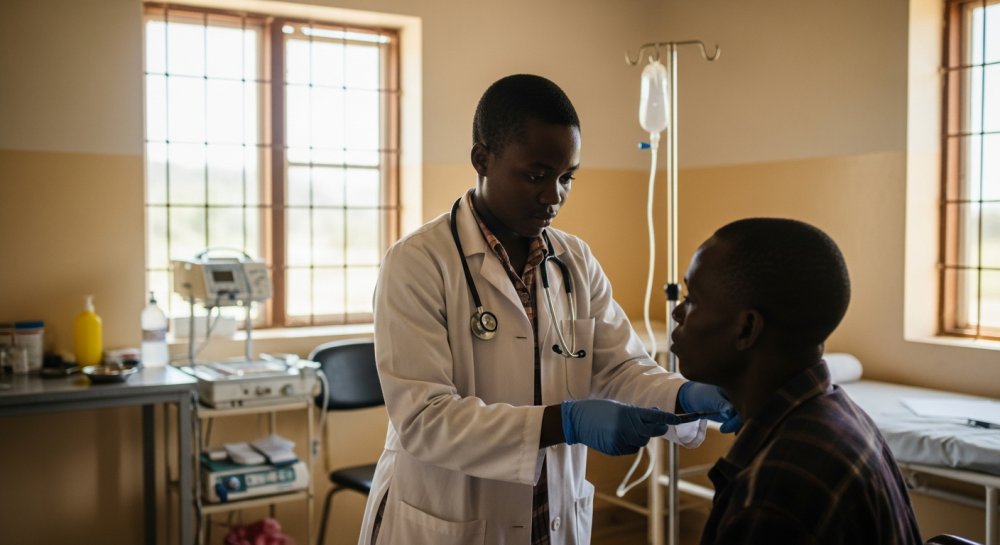
Christian medical institutions across Africa are establishing themselves as essential pillars of healthcare education in the developing world. However, new challenges reveal a troubling gap between training capacity and clinical readiness that threatens to undermine progress in bringing quality healthcare to millions.
The continent has become a beacon for faith-based medical education, with Christian universities and training centers producing thousands of new healthcare workers annually. These institutions represent a powerful testimony to the church’s commitment to healing and service in some of the world’s most medically underserved regions.
Yet health leaders across Africa are sounding the alarm about critical shortages that persist despite these educational gains. The scarcity of specialist doctors capable of performing complex procedures, the lack of physicians willing to serve in rural areas, and insufficient residency programs continue to hamper the continent’s ability to deliver comprehensive healthcare to its growing population.
Christian medical training programs have historically played a vital role in reaching remote communities and serving the poorest of the poor. Faith-based institutions often establish medical schools and teaching hospitals in areas secular organizations avoid, driven by a biblical mandate to care for the sick and vulnerable.
The challenges facing these Christian health institutions reflect broader issues of healthcare infrastructure across Africa. Many graduates of faith-based medical schools seek opportunities abroad or concentrate in urban centers, leaving rural populations without access to basic medical care.
Residency programs, essential for training specialists and advanced practitioners, remain dramatically underfunded and understaffed across the continent. This gap means that even well-trained medical graduates cannot access the supervised clinical experience needed to develop expertise in surgery, obstetrics, pediatrics, and other critical specialties.
The situation demands a renewed commitment from Christian organizations, missionary groups, and churches worldwide. Supporting medical education in Africa is not merely a charitable endeavor but a strategic investment in human flourishing that aligns with biblical principles of stewardship and compassion.
Faith-based medical institutions have proven uniquely positioned to address these challenges. Their commitment to service over profit, their willingness to work in difficult conditions, and their integration of spiritual care with physical healing provide a model that secular organizations struggle to replicate.
As Africa’s population continues to grow and healthcare needs expand, the role of Christian medical training will only become more critical. The church’s response to this moment will determine whether millions of people gain access to life-saving care or continue to suffer from preventable diseases and treatable conditions.
The path forward requires increased support for residency programs, incentives for doctors to serve in rural areas, and sustained investment in specialist training. Christian donors and organizations have an opportunity to make transformative impact by directing resources toward these specific needs.
Let us know what you think, please share your thoughts in the comments below.


-

 Self-Reliance1 year ago
Trump’s Bold Move Uncovers Massive Social Security Fraud
-

 Faith1 year ago
New Clues Emerge in Noah’s Ark Mystery
-

 News1 year ago
Governor Walz’s Rhetoric Sparks National Controversy
-

 News1 year ago
Mel Gibson’s ‘The Passion of the Christ’ Sequel Title Announced
-

 Family1 year ago
Texas Lawmaker Targets Furries in Schools
-

 Freedom1 year ago
Maine Lawmaker Challenges Sports Fairness Controversy
-

 Family1 year ago
Canada’s Controversial Policy Sparks Ethical Debate
-
Faith6 months ago
Congress Hears Pleas for Nigerian Christians