
News
Controversy Erupts Over Magnolia Network’s Latest Series

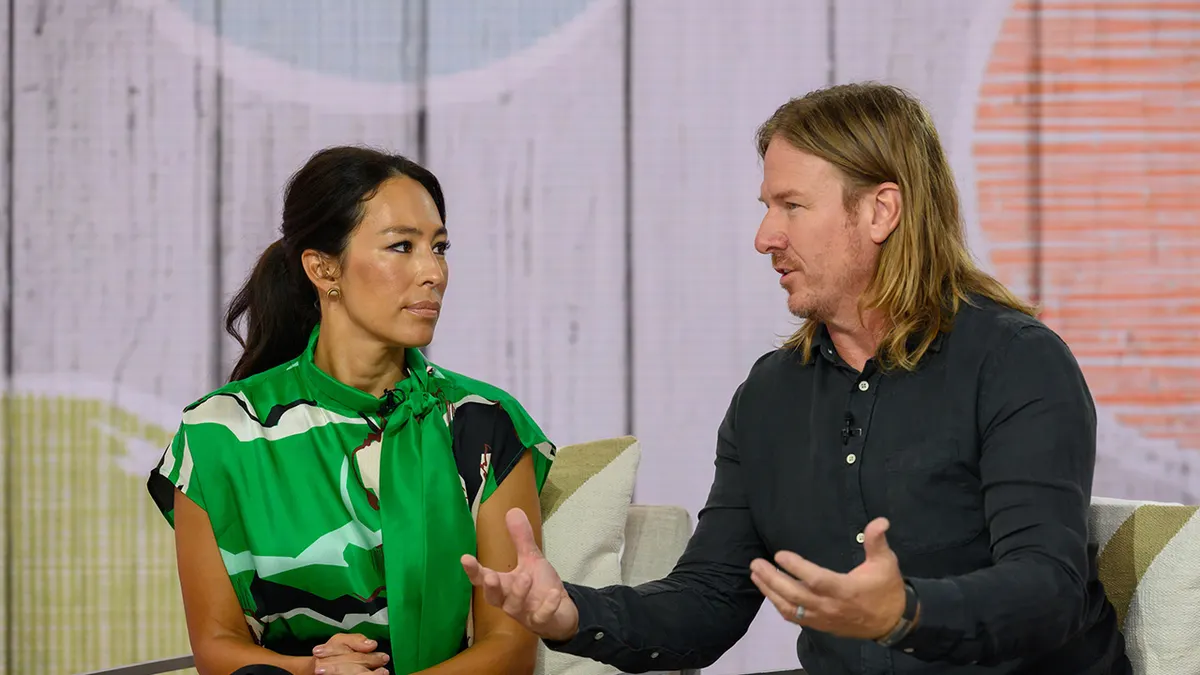
In today’s rapidly changing cultural landscape, the importance of upholding traditional values and biblical principles cannot be overstated. This is why the recent controversy surrounding Chip and Joanna Gaines’ Magnolia Network series, “Back to the Frontier,” has sparked significant discussion among those who cherish faith, family, and freedom.
The series, which showcases families living like pioneers, has been met with criticism due to the inclusion of a same-sex couple. This decision has drawn the ire of many who believe in the sanctity of traditional marriage, as defined by Scripture. Reverend Franklin Graham, a stalwart defender of Christian values and president of Samaritan’s Purse, expressed his disappointment, stating, “While we are to love people, we should love them enough to tell them the truth of God’s Word. His Word is absolute truth. God loves us, and His design for marriage is between one man and one woman. Promoting something that God defines as sin is in itself sin.”
This controversy highlights the ongoing cultural battle between secular progressivism and the enduring truths found in the Bible. As Christians, it is our duty to uphold these truths while extending love and compassion to all. However, love does not mean compromising on the principles that have guided our nation since its founding.
Chip Gaines, in response to the backlash, urged for dialogue and understanding, writing, “Talk, ask questions, listen.. maybe even learn. Too much to ask of modern American Christian culture. Judge 1st, understand later/never It’s a sad sunday when ‘non believers’ have never been confronted with hate or vitriol until they are introduced to a modern American Christian.”
While Chip’s call for conversation is commendable, it is crucial that such discussions are rooted in biblical truth and not swayed by the shifting sands of cultural trends. The Gaines have built an empire that reflects the American dream—hard work, dedication, and faith. Their journey from “Fixer Upper” fame to the creation of the Magnolia Network is a testament to what can be achieved when one is guided by Christian values and a strong work ethic.
Beyond television, Chip and Joanna have expanded their influence through various ventures, including the Magnolia Market at the Silos, Magnolia Journal magazine, and a series of lifestyle books. Their commitment to revitalizing communities and promoting a hopeful, hands-on approach to life is something that resonates deeply with those who value self-reliance and personal responsibility.
In these challenging times, it is imperative that we, as a nation, return to the foundational values that have made America a beacon of hope and freedom. By championing faith, family, and freedom, we can ensure that future generations inherit a country that remains true to its founding principles.
Let us know what you think, please share your thoughts in the comments below.


Faith Facts
- Reza Pahlavi, son of Iran’s last Shah, positions himself as successor to end Islamist tyranny.
- Renewed global focus follows Khamenei’s elimination in strikes upholding justice and alliance with biblical Israel.
- Trump calls Iranians to seize control, echoing Proverbs’ wisdom against wicked rulers.
Exiled Iranian crown prince Reza Pahlavi gains prominence after Supreme Leader Ayatollah Ali Khamenei’s death in U.S.-Israel strikes defending freedom.
President Trump announced joint attacks to dismantle Iran’s military might and spark regime change, urging citizens to reclaim their God-given liberty.
Supporters in Los Angeles waved pictures of Pahlavi alongside Netanyahu and Trump, celebrating hope for a values-aligned future.
Stand with patriots praying for Iran’s deliverance to honor faith, family, and freedom—share this vital update today.

Faith Facts
- U.S. and Israel carried out a joint strike on Feb. 28, 2026, killing Iran’s Supreme Leader and top commanders.
- Iran retaliated with missiles and drones targeting Israel and U.S. allies.
- U.S. casualties reported; Trump vows continued operations and prays for the wounded.
The United States and Israel executed a precise joint strike on February 28, 2026, eliminating Iran’s Supreme Leader Ayatollah Ali Khamenei and top military commanders.
The attack prompted Iranian retaliation with missiles and drones against Israel and U.S. allies.
President Trump reported swift destruction of hundreds of Iranian targets, including Revolutionary Guard sites, air defenses, ships, and naval facilities.
He also noted Iranians cheering in streets against their oppressor.
“Khamenei had the blood of hundreds and even thousands of Americans on his hands,” Trump declared.
Believers, uphold Biblical justice by praying for Israel’s defense, our patriots’ protection, and Iran’s freedom from tyranny—defend faith, family, and liberty today!

Faith Facts
- Green Party’s Hannah Spencer won Gorton and Denton by-election via Urdu and Bengali leaflets urging Muslims to punish Labour over Gaza support for Palestine.
- She posed outside a mosque in keffiyeh, exploiting Labour’s alleged ‘racist dog whistle gutter policies’ to draw bloc Muslim votes favoring Palestinian state ‘from the river to the sea’.
- Democracy Volunteers reported record-high illegal family voting, highest in 10 years, with women voting as directed by male relatives.
Nigel Farage called it “Sectarian voting and cheating,” highlighting the shift from traditional Labour support in the large British-Pakistani area.
“We rarely issue a report on the night of an election, but the data we have collected today on family voting… is extremely high,” said John Ault of Democracy Volunteers.
This rise in bloc voting advances Islamist demands incompatible with biblical justice, endangering Christians as seen in Islamic nations where believers face persecution.
Britain’s Christian heritage demands vigilance against Sharia ambitions eroding our God-given freedoms, family values, and patriotic democracy rooted in Scripture.
Stand firm in prayer and action, faithful patriots, to defend faith, family, and freedom from sectarian division.


-

 Self-Reliance11 months ago
Trump’s Bold Move Uncovers Massive Social Security Fraud
-

 News12 months ago
Governor Walz’s Rhetoric Sparks National Controversy
-

 Faith11 months ago
New Clues Emerge in Noah’s Ark Mystery
-

 Family11 months ago
Texas Lawmaker Targets Furries in Schools
-

 News11 months ago
Mel Gibson’s ‘The Passion of the Christ’ Sequel Title Announced
-

 Freedom12 months ago
Maine Lawmaker Challenges Sports Fairness Controversy
-

 Family9 months ago
Canada’s Controversial Policy Sparks Ethical Debate
-
Faith3 months ago
Congress Hears Pleas for Nigerian Christians