
Freedom
Concerns Remain Over Home Education Bill Changes


Faith Facts
- The government has removed some controversial home education measures from the proposed Children’s Wellbeing and Schools Bill, but significant concerns remain.
- A new amendment allows local authorities, not parents, to determine the ‘best interests’ of a ‘child in need.’
- Planned pilot schemes may leave home-educating parents vulnerable to legal penalties before meetings with officials occur.
Recent changes to the Children’s Wellbeing and Schools Bill have eased some burdens on Christian families, though challenges to parental authority persist. The original proposal demanded detailed registers from home educators, which many believed threatened both liberty and privacy.
The Christian Institute has noted that, despite positive steps, dangers remain if officials can override a parent’s wisdom in caring for their children. Securing Christian freedom in education is vital to a nation built on faith and strong families.
“The law must respect the principle that ordinarily, it is for parents to make decisions about children. We can pray that the Government will be able to remove this overbroad amendment from the Bill before it becomes law.”
Keeping parental rights central to law affirms Biblical teachings that parents are entrusted by God to nurture and instruct their children. Defending these values means holding leaders accountable and praying for wise decision-making.
Remain vigilant for further developments so we may stand together for faith, family values, and freedom under God.


Faith Facts
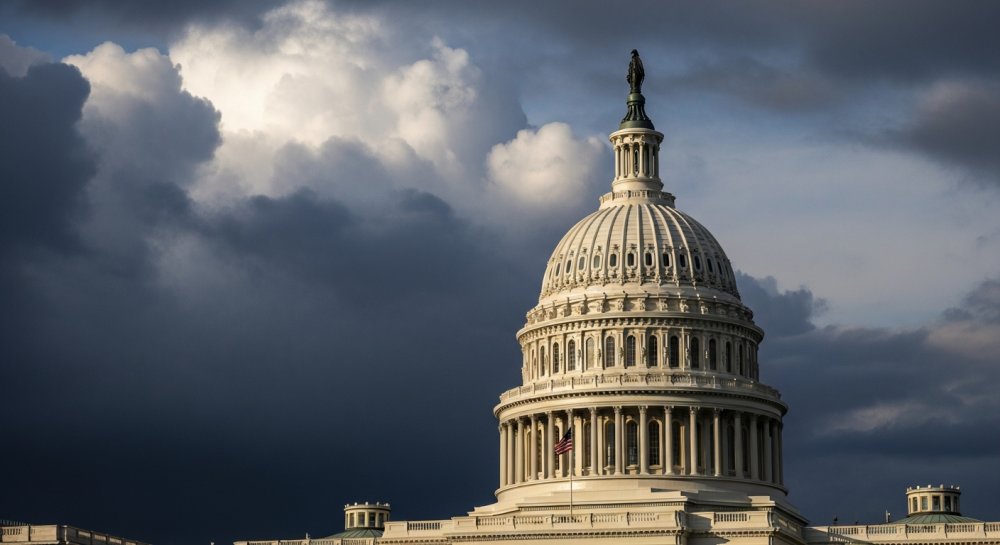
- America’s national debt has reached unprecedented levels as the nation marks 250 years of independence, raising serious concerns about fiscal sustainability
- Biblical principles emphasize wise stewardship and warn against the dangers of excessive debt, as stated in Proverbs 22:7: “The borrower is slave to the lender”
- Conservative economists and faith leaders are calling for renewed commitment to fiscal responsibility and traditional American values of living within our means
As America approaches its 250th anniversary, a troubling shadow looms over the celebration: a national debt that has spiraled beyond sustainable levels. For many Christians and conservative Americans, this fiscal crisis represents more than just numbers on a ledger—it reflects a departure from the biblical principles of stewardship and the foundational values our nation was built upon.
The concern is valid and deeply felt across communities that cherish both faith and fiscal responsibility. Our federal government’s spending has reached levels that previous generations would have found unthinkable, raising legitimate questions about the burden we’re placing on our children and grandchildren.
The Bible speaks clearly about the dangers of debt. Proverbs 22:7 warns that “the rich rule over the poor, and the borrower is slave to the lender.” This wisdom applies to nations just as it does to individuals. When a country becomes enslaved to debt, it loses its freedom to make sovereign decisions and risks compromising its values and security.
Can this be fixed? The answer is yes—but it requires what our founders would have recognized as virtues essential to a free republic: discipline, sacrifice, and a return to constitutional principles. The path forward demands that our leaders prioritize spending cuts, eliminate wasteful programs, and return to the limited government envisioned by our Constitution.
History shows that nations can recover from fiscal crisis through determined leadership and citizen engagement. But it requires political courage to make difficult choices—reducing the size and scope of government, reforming entitlement programs, and resisting the temptation to buy votes with borrowed money.
For Christian conservatives, this isn’t merely an economic issue—it’s a moral one. We have a sacred obligation to be good stewards of what God has entrusted to us, including the legacy we leave for future generations. The current trajectory violates this principle of intergenerational responsibility.
The solution begins with holding elected officials accountable. We must demand that they honor their oaths to uphold the Constitution and make the hard choices necessary to restore fiscal sanity. This means supporting candidates who demonstrate genuine commitment to spending restraint, even when it’s politically unpopular.
Additionally, we must recognize that government cannot solve every problem. Many functions currently performed by federal agencies could be better handled by states, local communities, churches, and families—as was originally intended. A return to federalism and subsidiarity would reduce both spending and the concentration of power in Washington.
The challenge before us is significant, but not insurmountable. With prayer, principled leadership, and citizen engagement rooted in traditional American values, we can chart a course back to fiscal responsibility. Our children and grandchildren deserve nothing less than a nation that honors its obligations, lives within its means, and preserves the freedom that has made America exceptional.
The question isn’t whether America can fix its debt crisis—it’s whether we have the courage and conviction to do what’s necessary. The answer will define what kind of nation we pass on to the next generation.
Let us know what you think, please share your thoughts in the comments below.

Faith Facts
- Thousands of international attendees convened in London this week to address what they view as existential threats to Western civilization and traditional values.
- The gathering focused on reversing cultural decline and rebuilding foundational principles that have sustained Western society for centuries.
- Participants united around concerns that the West is abandoning its Judeo-Christian heritage and the values that made it prosperous and free.
A remarkable gathering took place in London this week, drawing thousands of concerned citizens from across the globe. These attendees share a common conviction: Western civilization faces existential threats that demand immediate attention and action.
The conference centered on a critical question that resonates with many Americans who hold traditional values: Can the West be saved from its current trajectory of decline? Participants expressed deep concern about the erosion of foundational principles that have sustained Western society for generations.
The event’s focus on moving from “deconstruction” to “reconstruction” reflects a growing recognition among conservatives that cultural institutions, family structures, and religious freedoms have been systematically undermined. Many attendees believe that reversing this course requires intentional effort to rebuild what has been torn down.
For American Christians and conservatives, this international gathering represents more than just a conference. It symbolizes a worldwide movement of people who refuse to accept the narrative that Western values—rooted in Judeo-Christian tradition—are outdated or oppressive.
The sense of urgency among participants stems from witnessing rapid cultural changes that seem to contradict the principles of faith, family, and freedom that built prosperous democratic societies. These concerned citizens are not content to watch passively as institutions crumble and values shift.
The London gathering demonstrates that the desire to preserve and restore traditional Western values transcends national boundaries. People from diverse backgrounds are uniting around shared concerns about the direction of their societies and the future they will leave to their children.
This movement toward reconstruction offers hope that it’s not too late to reclaim the cultural ground that has been lost. By gathering together, sharing ideas, and committing to action, these thousands of attendees are taking the first steps toward renewal.
Let us know what you think, please share your thoughts in the comments below.

Faith Facts
- Thousands of international leaders and thinkers convened in London this week to address what they identify as existential threats to Western civilization and traditional values
- The gathering reflects growing concern among Christians and conservatives about cultural decline and the systematic deconstruction of foundational principles
- Participants are united in their commitment to reversing course and rebuilding society on time-tested Judeo-Christian foundations
An unprecedented gathering is taking place in London this week as thousands converge from across the globe with a shared mission. These leaders, thinkers, and concerned citizens recognize that Western civilization faces threats unlike any in recent memory—and they’re determined to act.
The assembly reflects a growing awareness among people of faith and traditional values that the very foundations of our society are under assault. From family structures to religious freedom, from educational integrity to national sovereignty, the pillars that have sustained Western prosperity and liberty for centuries are being systematically dismantled.
What makes this gathering significant is not just the diagnosis of decline, but the unified commitment to reconstruction. Attendees aren’t simply lamenting what’s been lost—they’re strategizing about how to rebuild on principles that have proven their worth across generations.
The sense of urgency is palpable. Many participants recognize that the window for peaceful, democratic restoration may be closing. The cultural revolution that has swept through institutions—from universities to corporations to government agencies—has accelerated at an alarming pace, leaving many Americans feeling like strangers in their own country.
Yet amid the concern, there’s also hope. The very fact that thousands are willing to travel internationally to address these challenges demonstrates that the spirit of the West—rooted in faith, reason, and liberty—is far from extinguished.
This movement represents more than political activism. It’s a spiritual and cultural awakening among those who understand that civilization isn’t self-sustaining. Each generation must choose whether to preserve, improve, and pass along the inheritance they’ve received—or allow it to crumble through neglect or active destruction.
The stakes couldn’t be higher. Western civilization, built on Judeo-Christian values and classical liberal principles, has produced unprecedented human flourishing. Religious freedom, rule of law, scientific advancement, and individual dignity—these aren’t accidents of history but fruits of a worldview that recognizes human beings as created in God’s image.
The question now is whether this generation will rise to defend and restore what previous generations built and preserved at great cost. The gathering in London suggests that many are ready for that challenge.
Let us know what you think, please share your thoughts in the comments below.


-

 Self-Reliance1 year ago
Trump’s Bold Move Uncovers Massive Social Security Fraud
-

 Faith1 year ago
New Clues Emerge in Noah’s Ark Mystery
-

 News1 year ago
Governor Walz’s Rhetoric Sparks National Controversy
-

 News1 year ago
Mel Gibson’s ‘The Passion of the Christ’ Sequel Title Announced
-

 Family1 year ago
Texas Lawmaker Targets Furries in Schools
-

 Freedom1 year ago
Maine Lawmaker Challenges Sports Fairness Controversy
-

 Family1 year ago
Canada’s Controversial Policy Sparks Ethical Debate
-
Faith7 months ago
Congress Hears Pleas for Nigerian Christians