
Faith
College Journalist Finds Calling Through Faith and Storytelling


Faith Facts
- Young journalist joins Christian publication after finding spiritual renewal in Tennessee church community following his father’s death
- Ephraim Rodenbach serves as managing editor of MTSU Sidelines while interning at The Christian Chronicle
- Student from Middle Tennessee State University aims to glorify God through journalism that proclaims the Gospel
MURFREESBORO, TENN. — For young people today searching for purpose and genuine connection, one college journalist has discovered both through faith and the power of sharing God’s Word.
Ephraim Rodenbach’s journey began in the rolling hills of Pleasant Shade, Tennessee, where he joined the Bagdad Church of Christ during one of life’s darkest valleys. Following the death of his father, Stacey Rodenbach, the young man found himself welcomed into a faith community that would change his life forever.
“In a season of loss, I found a family that welcomed my mother, Tracey, and me with outstretched arms and countless illuminating smiles,” Rodenbach shared. “That fellowship helped me climb out of a hole, following the passing of someone who shaped who I am now.”
The small wooden church provided something increasingly rare in modern America — authentic Christian fellowship. Every handshake at the door, every shared moment of laughter among believers, created the kind of connection that draws people to Christ.
That experience of genuine Christian community led Rodenbach to The Christian Chronicle, where he discovered stories of faith that resonated deeply with his own journey. The publication became a regular fixture at his family’s dinner table, offering perspectives on how God’s Word impacts daily life.
Yet despite his familiarity with the Chronicle, Rodenbach nearly missed the opportunity to intern there. It took his journalism mentor from Smith County High School, Jason Robert Smith, to point him toward the opening.
Without hesitation, Rodenbach applied, hoping to spend his summer strengthening his faith through meaningful work. What followed surprised him — he became one of two summer interns selected, despite not attending Harding University, where many previous interns had studied.
Instead, Rodenbach attends Middle Tennessee State University in Murfreesboro, where he serves as managing editor of the student newspaper, MTSU Sidelines. His experience ranges from covering the university’s club hockey program to photographing campus events.
But his goal at the Chronicle goes far beyond professional development.
“My goal at the Chronicle is to tell stories that glorify God and the good work of the Gospel,” Rodenbach explained. “With this endeavor in mind, I’m blessed to learn from members of the Chronicle staff who proclaim God’s work through storytelling.”
In an age when mainstream media often dismisses or distorts Christian values, young journalists like Rodenbach represent a refreshing commitment to truth-telling grounded in faith. His story demonstrates how God works through tragedy to create new paths of purpose and service.
The young journalist reflects on how unexpected opportunities often reveal God’s greater plans. He didn’t anticipate this path, but recognizes divine guidance in every step.
“I may not have expected this opportunity, but perhaps that’s the beauty of it all,” Rodenbach said. “God often creates paths far greater than the ones we plan for ourselves.”
As he embarks on this internship, Rodenbach hopes the same connection, encouragement, and love that first drew him to the Chronicle will shine through his own work. His commitment to glorifying God through journalism stands as an example for young Christians seeking to integrate faith with professional calling.
In a generation often described as disconnected and searching, Rodenbach has found his anchor in Christ and his calling in sharing the stories of faith that build up the body of believers. His journey from grief to purpose illustrates the transforming power of Christian community and the enduring truth of Jeremiah 29:11: “For I know the plans I have for you, declares the Lord, plans to prosper you and not to harm you, plans to give you hope and a future.”
Let us know what you think, please share your thoughts in the comments below.

Faith Facts
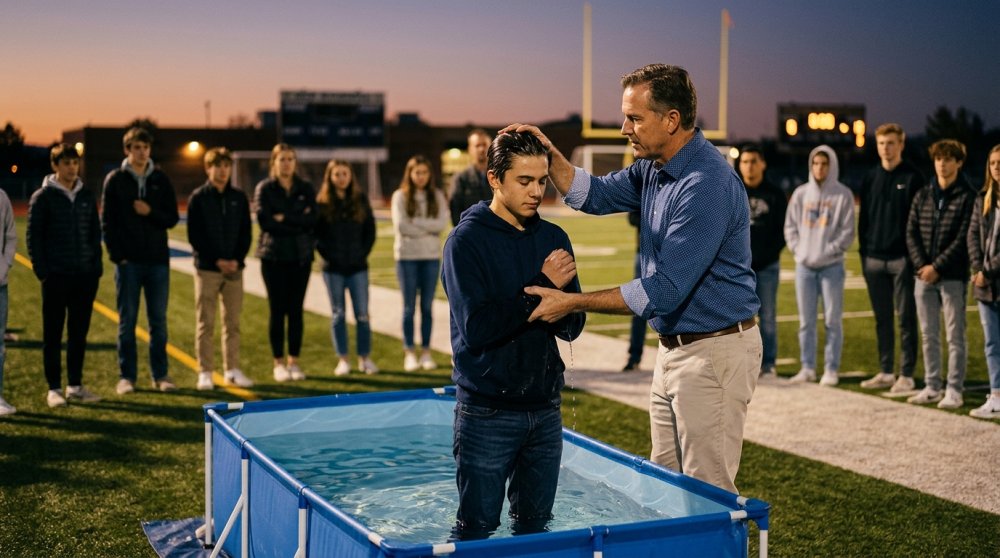
- Nearly 100 students at a Christian high school in Colorado have been baptized following athletic events this year.
- Five separate worship gatherings were organized after games, drawing students seeking faith commitments.
- The baptisms reflect a growing movement of young people responding to the Gospel in school settings.
High school athletic events have long been community gatherings, but one Colorado Christian school is seeing those moments turn into something far more eternal.
After five post-game worship services, nearly 100 students stepped forward for baptism, marking a powerful season of spiritual renewal.
School leaders say the response has been both unexpected and deeply encouraging, as students publicly declare their faith in Christ.
“It has been incredible to watch these young people take this step,” one administrator shared.
The gatherings combine prayer, worship, and testimony, creating a space where students feel welcomed to respond to the message of salvation.
Parents and faculty have noted a renewed sense of purpose and unity among the student body as a result.
“We are seeing the Holy Spirit move in powerful ways,” a staff member added.
Christian education advocates view the events as evidence that faith-based environments can shape hearts as well as minds.
The school plans to continue the post-game worship gatherings in the coming seasons, hoping to build on the momentum of spiritual awakening.
Let us know what you think, please share your thoughts in the comments below.
Faith Facts
- Matthew West releases new album titled ‘Jesus Is King’
- Album emphasizes surrender, vulnerability, and Scripture after nearly 30 years in Christian music
- West challenges the culture of self-empowerment with a message of Christ-centered living
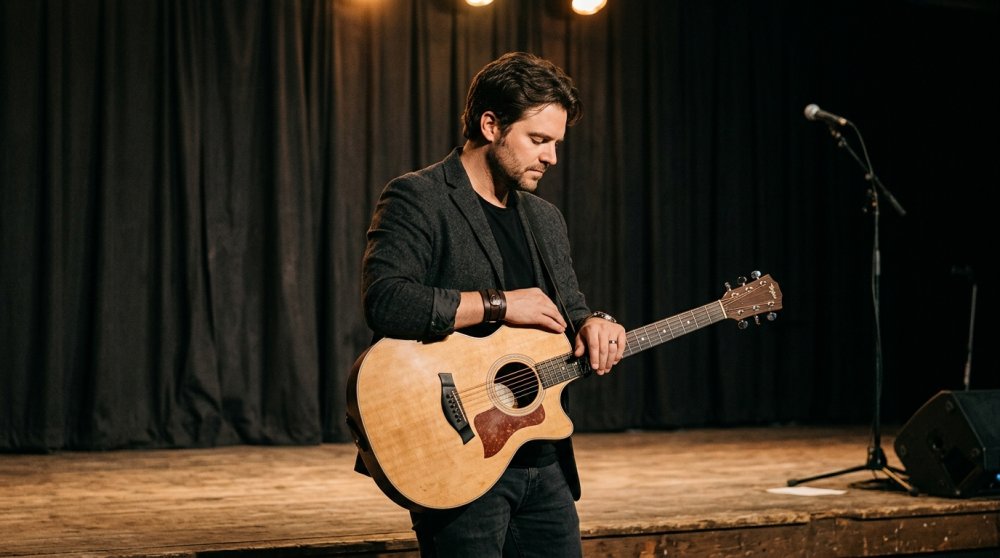
Christian music artist Matthew West is calling believers to place Jesus above self in his latest album, ‘Jesus Is King.’ The project comes after nearly three decades of ministry and reflects a deeper commitment to Scripture and surrender.
West says the album confronts a culture obsessed with self-empowerment by lifting up the lordship of Christ instead. He believes true strength comes from laying down personal control and trusting God’s Word.
"The message of this album is that Jesus is King, and that changes everything."
Through honest lyrics and personal testimony, West hopes listeners will rediscover the power of vulnerability before God. He points to Scripture as the foundation for every song and every season of life.
"After nearly 30 years in Christian music, I am more convinced than ever that surrender is the doorway to real freedom."
Let us know what you think, please share your thoughts in the comments below.
Faith Facts
- Jordan Shipley called on the Lord during a life-threatening accident that left over 20% of his body with third-degree burns.
- More than eight months later, the former NFL wide receiver described his recovery as a miracle.
- Shipley publicly credits his faith in God for sustaining him through the ordeal.
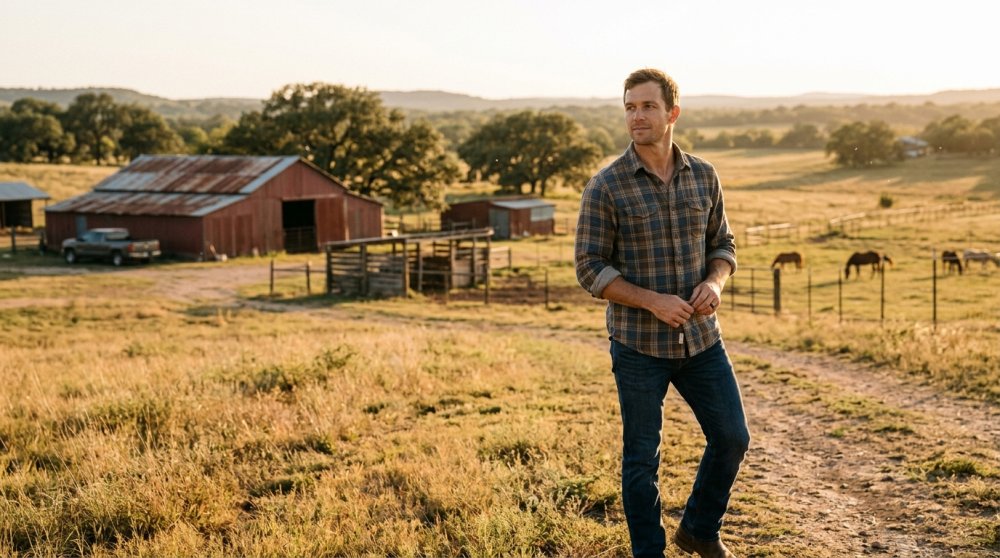
Former NFL wide receiver Jordan Shipley is sharing a powerful testimony of survival and faith. More than eight months ago, Shipley endured a devastating accident on his Texas ranch that left him with third-degree burns across more than 20 percent of his body.
In the midst of the crisis, Shipley says he turned to God with desperate prayers for help. He now describes his recovery as nothing short of miraculous.
“I desperately called on the Lord for help during the life-threatening ordeal and experienced a ‘miracle.'”
Let us know what you think, please share your thoughts in the comments below.


-

 Self-Reliance1 year ago
Trump’s Bold Move Uncovers Massive Social Security Fraud
-

 Faith1 year ago
New Clues Emerge in Noah’s Ark Mystery
-

 News2 years ago
Governor Walz’s Rhetoric Sparks National Controversy
-

 News1 year ago
Mel Gibson’s ‘The Passion of the Christ’ Sequel Title Announced
-

 Family2 years ago
Texas Lawmaker Targets Furries in Schools
-

 Freedom2 years ago
Maine Lawmaker Challenges Sports Fairness Controversy
-

 Family1 year ago
Canada’s Controversial Policy Sparks Ethical Debate
-
Faith10 months ago
Congress Hears Pleas for Nigerian Christians