
Faith
Churches Urged to Guide AI with Faith

Faith Facts
- Christian leaders at the World Evangelical Alliance General Assembly emphasized the need for a biblical approach to artificial intelligence.
- Panelists highlighted both the dangers and opportunities presented by AI, insisting on theological clarity and ethical action.
- Experts promoted the idea of “faithful innovation”—engaging technology with wisdom rooted in Scripture.
At the World Evangelical Alliance gathering in Seoul, respected Christian voices called on churches to shape the future of artificial intelligence by applying biblical truth rather than reacting in fear or passivity. AI was described as a powerful tool that must be approached with wisdom, discernment, and a commitment to honoring God’s design for humanity.
Panelists outlined how the church can offer a much-needed moral compass: addressing challenges to human identity, the spread of misinformation, economic injustice, and stewardship of God’s creation.
These leaders noted the potential for the church to influence technology for the good of families, communities, and the vulnerable.
Quintin McGrath presented a “trust framework” for using AI that evaluates whether technology aligns with loving God and others, strengthens real relationships, meets needs justly, and maintains accountability and stewardship. He called for moving beyond statements to hands-on action informed by faith.
Chris Watkin urged believers to evaluate AI in light of the whole biblical story, focusing on the people affected rather than on policy or culture alone. He encouraged a “people-first” ethic anchored in Scripture.
Dr. Sam D. Kim drew on the biblical pattern of “rupture and repair,” advising Christians to view technological disruption as a chance for redemption and innovation under Christ’s lordship.
“The lordship of Christ is not just about discipleship; it is lordship.”
He warned against relying on AI as a replacement for incarnational living and encouraged the church to maintain its spiritual distinctiveness.
Speaking from experience in the technology field, Nick Kim emphasized that AI reshapes human life by outsourcing intelligence itself, urging churches to respond with faithful, biblically grounded engagement rather than withdrawal.
Faith-driven innovation is essential for navigating our rapidly changing world and honoring God’s purpose in every generation.
Now is the time for Christian leaders, families, and communities to approach technology with prayer, wisdom, and boldness grounded in Scripture.


Faith Facts
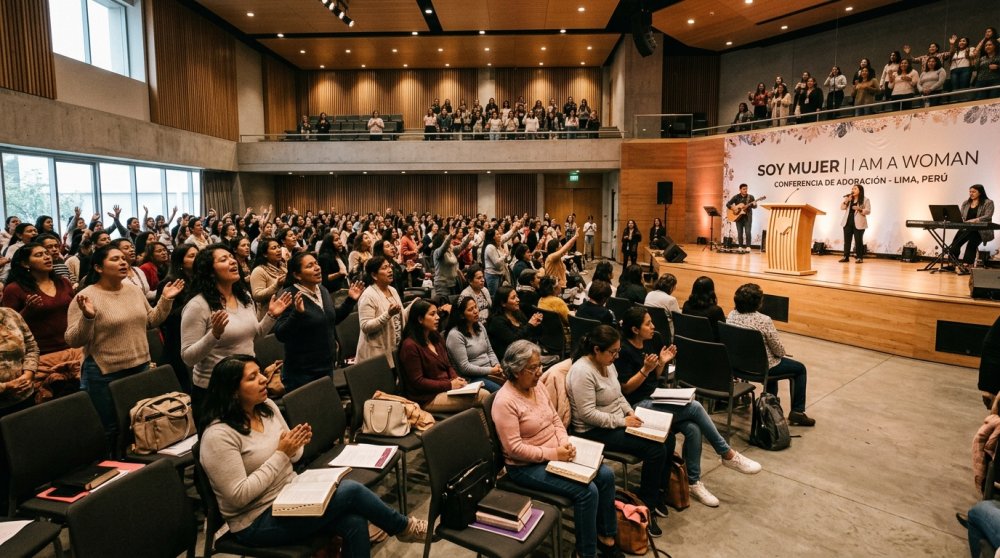
- More than 100 Christian women attended the “I Am a Woman” conference in Lima, Peru, organized by the National Evangelical Council of Peru (CONEP)
- The gathering focused on biblical identity and God-given purpose for women in today’s culture
- The event represents a growing movement across Latin America to affirm traditional Christian values amid cultural pressures
Christian women across Peru are standing firm in their faith and identity. More than 100 women gathered Thursday at the National Evangelical Council of Peru (CONEP) auditorium in Lima for the “I Am a Woman” conference, an event dedicated to affirming biblical womanhood in an increasingly secular world.
The conference, organized by CONEP’s Women’s Commission, brought together women from diverse backgrounds united by a common purpose: to discover and embrace their identity as defined by Scripture rather than by modern culture. In a time when traditional values face mounting challenges, these women chose to gather in fellowship and worship, seeking God’s design for their lives.
The event underscores a powerful truth often overlooked in mainstream discussions about women’s roles and identity: that the Bible offers a complete and fulfilling vision of womanhood. Rather than seeking validation from a culture that constantly shifts its definitions, these Christian women are anchoring their sense of self in the unchanging Word of God.
As churches worldwide grapple with cultural pressures to conform to secular ideologies about gender and identity, gatherings like this demonstrate that Christian women are hungry for truth grounded in Scripture. The conference represents more than just a single event—it signals a broader awakening among believers who refuse to compromise biblical principles for cultural acceptance.
The location in Lima also highlights the strength of evangelical Christianity throughout Latin America, where traditional Christian values remain deeply rooted despite global cultural shifts. The work of CONEP and its Women’s Commission reflects the vital role that organized Christian communities play in preserving and teaching biblical truth to new generations.
Events like “I Am a Woman” provide essential encouragement and biblical teaching that equip women to live out their faith with confidence and conviction. In a world that often dismisses or distorts the beauty of God’s design for men and women, these gatherings offer a life-giving alternative rooted in eternal truth.
Let us know what you think, please share your thoughts in the comments below.
Faith Facts
- Christian apologist William Lane Craig questioned the Nicene Creed’s doctrine of eternal generation in a recent video clip
- The Nicene Creed affirms Jesus Christ is “eternally begotten of the Father,” a foundational doctrine established in AD 325
- The controversy has sparked debate among Christian scholars and defenders of historic orthodoxy
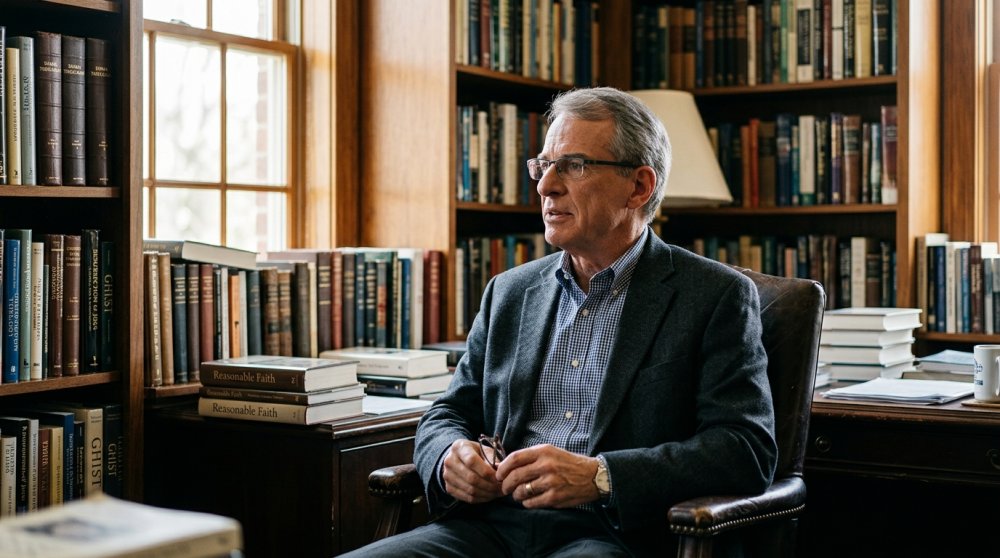
A recent video clip featuring renowned Christian apologist William Lane Craig has ignited controversy within the Christian community after he appeared to question fundamental language in the Nicene Creed. The clip shows Craig raising concerns about the ancient creed’s assertion that Jesus Christ is “eternally begotten of the Father” in His divine nature.
The Nicene Creed, established at the Council of Nicaea in AD 325 and expanded at the Council of Constantinople in AD 381, has served as a cornerstone of Christian orthodoxy for nearly seventeen centuries. Its formulation was crucial in defending the Church against Arianism and other heresies that denied the full divinity of Christ.
William Lane Craig disavows the Nicene Creed:
“I do not believe or confess that the Son is eternally begotten from the Father in his divine nature.” pic.twitter.com/3Yz3UcQ8VE
— Protestia (@Protestia) August 21, 2026
Craig’s comments have drawn sharp criticism from theologians and apologists who view the creed as essential to maintaining biblical Christianity. The doctrine of eternal generation teaches that the Son has always existed in relation to the Father, neither created nor made, but eternally begotten—sharing fully in the divine nature while remaining distinct as the Second Person of the Trinity.
Critics argue that questioning this foundational doctrine undermines the careful theological work of the early Church Fathers who formulated these truths under the guidance of the Holy Spirit. The Nicene Creed has united Christians across denominational lines—Catholic, Orthodox, and Protestant—for generations.
The controversy highlights ongoing tensions in contemporary Christian theology between traditional formulations and modern philosophical frameworks. Many defenders of orthodox Christianity maintain that the ancient creeds provide essential guardrails that protect the faith from theological drift and preserve the gospel message.
Church history demonstrates that departures from creedal orthodoxy have often led to significant doctrinal error. The early councils carefully crafted their language to express biblical truth about Christ’s nature—fully God and fully man—in ways that excluded false teaching while remaining faithful to Scripture.
As this debate unfolds, it serves as a reminder of the importance of holding fast to the faith once delivered to the saints. The Nicene Creed remains a vital confession for Christians seeking to maintain theological fidelity in an age of increasing doctrinal confusion.
Let us know what you think, please share your thoughts in the comments below.

Faith Facts
- A single handful of soil contains billions of living microorganisms, making it one of the most complex ecosystems on Earth
- Gravity keeps our atmosphere, water, and soil anchored to the planet, sustaining all life as designed by the Creator
- The earth beneath our feet is far from lifeless — it teems with biological activity essential for food production and ecological balance
When we touch earth, we are touching something deeply ancient and deeply alive. It may appear solid and unchanging, but the truth is far more remarkable.
Scoop up a handful of dirt and you hold in your palm a living, breathing substance. That seemingly simple soil contains billions of microorganisms — bacteria, fungi, protozoa, and countless other forms of microscopic life working together in intricate harmony.
Without gravity, this remarkable system could not exist. Nothing would stay in place — not the atmosphere we breathe, not the water we drink, not the fertile ground that produces our food. Everything would drift away into the void of space.
These are not random accidents of nature, but carefully orchestrated systems that point to divine design. The complexity found in even the smallest sample of soil reveals an intelligence and purposefulness that defies evolutionary explanations.
In our modern world of concrete, asphalt, and technology, we have become disconnected from the earth God created. We walk over it daily without considering the miraculous processes happening beneath our feet. We take for granted the invisible force that holds us securely to the ground.
Scripture reminds us that man was formed from the dust of the earth, and to dust we shall return. This connection to the soil is not merely poetic — it is literal and profound. The same elements that make up our bodies are found in the earth, a testament to our Creator’s unified design.
As Christians, we are called to be stewards of God’s creation. That stewardship begins with recognizing the gifts we have been freely given — gifts like fertile soil and the gravitational force that sustains all life on this planet. These are provisions from a loving Father who designed a world perfectly suited for human flourishing.
Let us not lose our sense of wonder at the ordinary miracles surrounding us. The next time you step outside, take a moment to consider what lies beneath your feet. Remember that even the ground itself is evidence of God’s provision and creative power.
Let us know what you think, please share your thoughts in the comments below.


-

 Self-Reliance1 year ago
Trump’s Bold Move Uncovers Massive Social Security Fraud
-

 Faith1 year ago
New Clues Emerge in Noah’s Ark Mystery
-

 News1 year ago
Governor Walz’s Rhetoric Sparks National Controversy
-

 News1 year ago
Mel Gibson’s ‘The Passion of the Christ’ Sequel Title Announced
-

 Family1 year ago
Texas Lawmaker Targets Furries in Schools
-

 Freedom1 year ago
Maine Lawmaker Challenges Sports Fairness Controversy
-

 Family1 year ago
Canada’s Controversial Policy Sparks Ethical Debate
-
Faith9 months ago
Congress Hears Pleas for Nigerian Christians