
Faith
Church Urged to Embrace Data with Integrity

Faith Facts
- Dr. John Dayal urged the Indian Church to prioritize data to serve society with greater integrity.
- Accurate information helps ministries respond effectively and align with Christian values.
- Leaders were encouraged to see data as a key part of faithful, evidence-based service.
During the All India Congress on Church in Mission (AICOCIM) in Nagpur, Dr. John Dayal emphasized that data is vital for the Church to respond to society with truth and relevance. He explained that relying on mere assumptions weakens the Church’s credibility and effectiveness.
“The lack of empirical data has left many of our conversations shallow,” Dr. Dayal said.
Dayal shared from his background in journalism and science, urging Christian leaders to adopt research and data collection to meet real community needs. He pointed out that myths or inflated claims cannot guide future ministry or build trust within society.
“Numbers on a page become meaningful only when they tell the story of people’s lives,” he explained.
Practical examples were given, showing that reliable statistics reveal areas where Christian institutions excel and where improvements are needed—especially in ministries like healthcare and education. Dayal cautioned that overstating achievements without evidence limits the Church’s ability to serve effectively and uphold Biblical honesty.
He encouraged pastors and church leaders not to be intimidated by the technicalities of data but to seek training and partnerships, integrating facts with faith to guide preaching, teaching, and outreach. The ultimate goal, he insisted, is not self-promotion but Christlike service rooted in truth.
“We need both: the numbers give credibility, and the stories give heart,” Dayal stated.
He called on Christian organizations to systematically gather and share information for greater accountability and strategic ministry, reflecting Biblical stewardship and love for neighbor. This, he concluded, will allow the Church to chart a clearer, more faithful course in service to the nation.



Faith Facts
- Young adults who lack employment or education face real spiritual and practical challenges.
- Scripture calls the Church to care for the vulnerable and offer meaningful purpose.
- Traditional Christian values emphasize work, responsibility, and community involvement.
The rising number of young people who are neither employed nor in education or training has become a quiet crisis in many communities. These young adults need more than government programs.
Churches are uniquely positioned to offer guidance, mentorship, and real opportunities rooted in biblical truth. When families and congregations step forward, they model the values of diligence and service that have strengthened America for generations.
Christian leaders are urging congregations to see this not as a social issue alone but as a spiritual opportunity. The Church has always been called to minister to those who are lost or without direction.
One pastor recently stated, “Let’s not view the needs of our young people as a problem to be left to government.”
By offering vocational training, discipleship groups, and life skills rooted in Scripture, churches can help restore purpose to a generation searching for meaning. This approach aligns with the American tradition of faith-based solutions over bureaucratic ones.
Local churches that invest in young adults are already seeing fruit. Mentorship programs, job fairs, and Bible studies focused on work ethic and stewardship are drawing young men and women back into community life.
Let us know what you think, please share your thoughts in the comments below.

Faith Facts
- Scripture calls believers to remember God’s gifts in every season
- Trusting God’s mercy opens the heart to genuine thanksgiving
- Grief and gratitude can coexist when faith anchors the soul
Thanksgiving is more than a holiday on the calendar. It is a spiritual discipline that calls Christians to remember the goodness of God even when circumstances feel heavy.
Many believers struggle to give thanks when loss or hardship lingers. The temptation is to push grief aside or pretend everything is fine, but Scripture shows a different path.
“Remember the wondrous works that he has done, his miracles, and the judgments he uttered.”
That command from 1 Chronicles 16:12 reminds Christians that gratitude begins with remembrance. Recalling God’s past faithfulness strengthens trust for the present and future.
Trusting God’s mercy also means accepting that His ways are higher than ours. When families gather around tables this week, some chairs will be empty and some hearts will ache. Yet the mercy of God remains steady.
“The steadfast love of the Lord never ceases; his mercies never come to an end.”
Those words from Lamentations 3:22-23 offer comfort that grief does not cancel gratitude. Both can dwell together when the heart is anchored in Christ.
Making room for grief does not mean abandoning thankfulness. It means bringing honest sorrow before the Lord while still declaring His goodness. This honest faith reflects the example of King David and the prophets who poured out their laments yet ended in praise.
As families celebrate Thanksgiving, the secret to a thankful heart is simple yet profound. Remember God’s gifts, trust His mercy, and allow grief its rightful place under the covering of faith.
Let us know what you think, please share your thoughts in the comments below.
Faith Facts
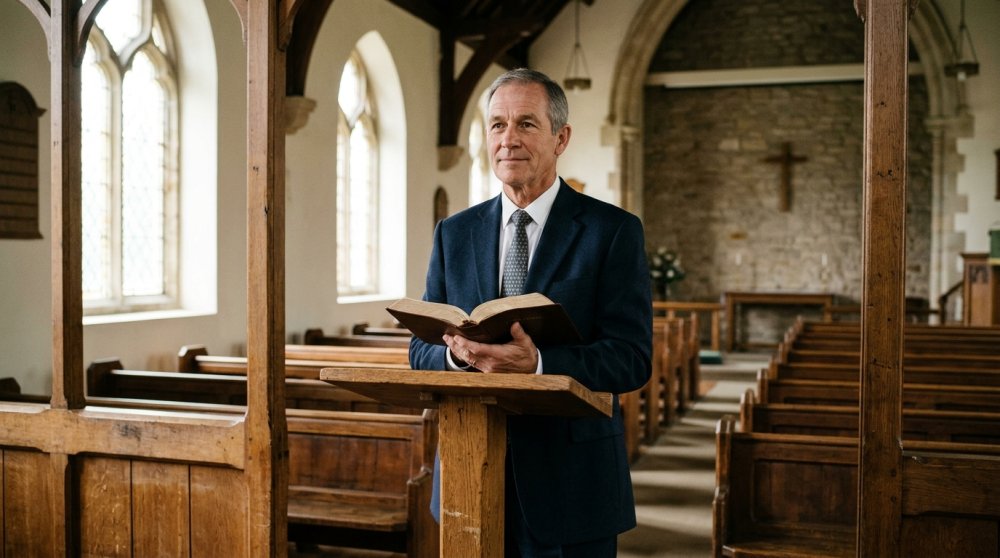
- Nearly 40% of American adults have considered serving in a faith-based leadership role such as ministry, seminary, or chaplaincy.
- Most individuals who expressed interest have not taken any steps toward pursuing these callings.
- The findings come as churches across the nation continue to face a growing shortage of pastors.
A new survey shows that a significant portion of Americans are open to answering the call to ministry, even as congregations struggle to find enough pastors to lead them.
The data highlights a gap between interest and action that could affect the future of local church leadership across the country.
“Nearly 40% of adults in a recent survey said they have considered a faith-based leadership role such as ministry, seminary or chaplaincy, but most have never taken a step toward pursuing it.”
Churches have been sounding the alarm for years about the shrinking number of pastors available to shepherd congregations, particularly in rural and smaller communities.
Many denominations report rising numbers of vacant pulpits and fewer young people entering seminary training.
The survey results suggest that while the desire to serve may exist in the hearts of many believers, practical barriers or lack of clear pathways could be preventing them from moving forward.
Christian leaders have long taught that the harvest is plentiful but the laborers are few, underscoring the need for more faithful men and women to step into these vital roles.
Let us know what you think, please share your thoughts in the comments below.


-

 Self-Reliance2 years ago
Trump’s Bold Move Uncovers Massive Social Security Fraud
-

 Faith2 years ago
New Clues Emerge in Noah’s Ark Mystery
-

 News2 years ago
Governor Walz’s Rhetoric Sparks National Controversy
-

 News2 years ago
Mel Gibson’s ‘The Passion of the Christ’ Sequel Title Announced
-

 Family2 years ago
Texas Lawmaker Targets Furries in Schools
-

 Freedom2 years ago
Maine Lawmaker Challenges Sports Fairness Controversy
-

 Family2 years ago
Canada’s Controversial Policy Sparks Ethical Debate
-
Faith1 year ago
Congress Hears Pleas for Nigerian Christians