
Faith
Church Called to Renew Holistic Healing Mission

Faith Facts
- Dr. Santhosh T. Mathew urged the Church to reclaim its role as a community of healing, rooted in Scripture and Christian history.
- He emphasized the urgent need for holistic care in response to rising mental health and trauma crises affecting all generations.
- Mathew challenged Christians to adopt vulnerability, compassion, and integration of body, mind, and spirit in their response to suffering.
At the All India Congress on Church in Mission, Dr. Santhosh T. Mathew inspired believers to see the Church as a “wounded healer,” calling for a revival of compassionate care that embraces every aspect of human brokenness. Pointing to Jesus’ compassion and the example of early Christians, he highlighted a legacy of risk-taking, sacrificial care—especially in times of fear and despair.
“This was a persecuted minority with no power,” Mathew said, “yet they took responsibility for their neighbors.”
Mathew voiced concern over the modern tendency to separate physical, psychological, and spiritual needs, urging Christians to recover a holistic vision for ministry. He reminded the audience of the deep human realities behind mental health statistics and observed how spiritual support is critical amid rising loneliness and generational struggles.
He did not ignore wounds within the Church itself, noting how ministry pressures and unhealthy dynamics create deep pain that requires honest, loving attention. Mathew urged the Church to counter trends of performance-focused worship with genuine care, offering safe spaces where healing can begin.
He affirmed that Scripture and science agree on the importance of spiritual life for healing. By learning from leaders of faith who faced depression, Mathew pointed to the strength found in vulnerability and empathy.
He called on believers to resist harmful patterns like labeling or delivering simplistic answers, and instead foster settings of genuine listening and support. As followers of Christ, he said, we are called to embody God’s compassion and bring hope to the suffering.
Let us recommit to a faith-filled response that restores body, mind, and spirit, following Christ’s example and shining as a beacon of hope in our communities.


Faith Facts
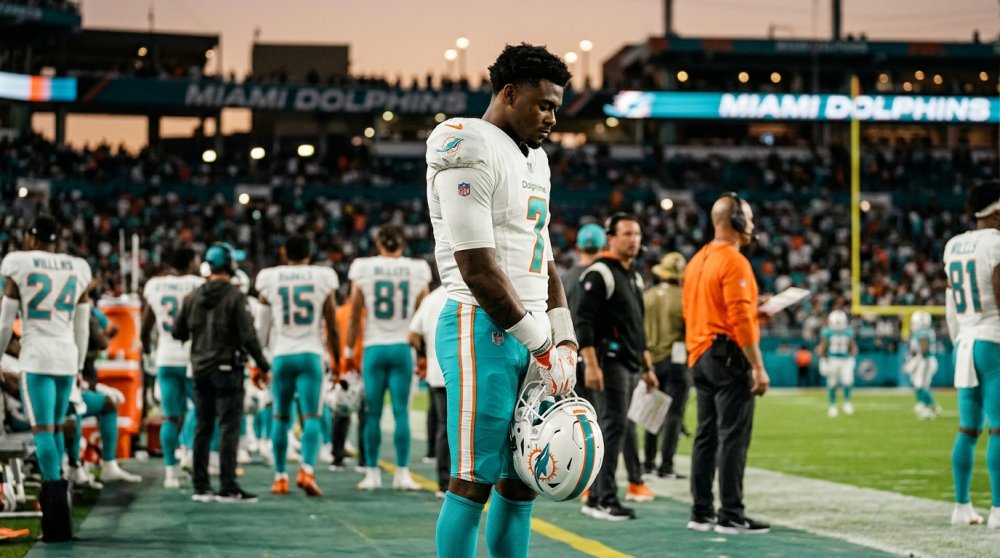
- Malik Willis, a former Liberty University standout, now plays quarterback for the Miami Dolphins.
- Willis has openly credited his Christian faith for helping him stay grounded in professional football.
- He reminds himself that Jesus endured far greater hardships than any NFL challenge.
Miami Dolphins quarterback Malik Willis is leaning on his Christian faith as he navigates the demands of the NFL.
The former Liberty University standout has spoken about the importance of staying rooted in Christ while facing professional pressure.
“Jesus has it way harder than I do.”
Willis has emphasized that remembering the suffering of Jesus helps him maintain perspective during difficult seasons.
“Jesus has it way harder than I do.”
His comments reflect a growing trend among Christian athletes who publicly tie their identity to faith rather than performance.
Let us know what you think, please share your thoughts in the comments below.
Faith Facts
- Since 1956, the Bell Trust has distributed approximately $40 million in grants to individual congregations for minister salaries, building maintenance, and mission vehicles.
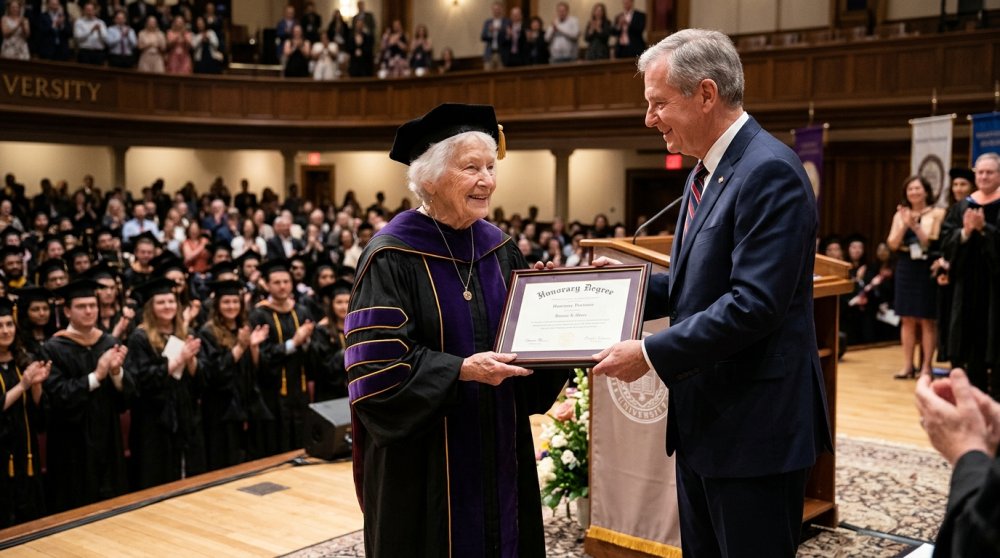
- Barbara Bell Packer, now 98, has served continuously as a trustee since the trust’s founding, representing one of the longest recorded tenures for any foundation board member.
- Family members spanning three generations continue to oversee the trust’s mission of advancing the gospel through Churches of Christ around the world.
The Bell family built one of Dallas’s largest grocery empires and then turned their resources toward eternal purposes. Robert and Katharine Bell established the Bell Trust in 1956 to support the advancement of religious, missionary, and charitable works within Churches of Christ.
Seventy years later, the Texas-based foundation has awarded roughly $40 million to congregations for needs ranging from minister and missionary salaries to church building maintenance and mission vehicles.
“Churches are always dreaming of how they can impact the kingdom,” said Clark Packer, great-grandson of the founders and the trust’s executive trustee since 2020.
“If we can play a small part in helping some of those dreams come to reality, that’s a powerful testimony to the heart of the Bells from the beginning.”
Legacy Church of Christ in North Richland Hills, Texas, has received support to send missionaries to Australia, Brazil, New Zealand, and Ukraine. Missions committee chairwoman Nancy Snelson praised the trust’s model that keeps missionaries accountable to their sending congregations rather than the foundation itself.
Tom Riley, senior minister at Canyon Church of Christ in Phoenix, received grants that helped plant a new congregation in Arizona in 2003. He described the trust as a “cruciform ministry” shaped by the cross of Christ, noting that the trustees seek to make Jesus memorable rather than themselves.
Robert Bell served more than three decades as an elder at Preston Road Church of Christ in Dallas before his death in 1982. The original board consisted of his daughters, sons-in-law, and minister Hulen L. Jackson, all of whom served faithfully for decades.
Barbara Bell Packer, approaching her 98th birthday, remains an active trustee. Her son Barry Packer called the family’s multi-generational commitment “very rarefied,” noting that no one he knows has served as a trustee for any organization for seventy years.
J. Terry Johnson, former president of Oklahoma Christian University and longtime friend of the family, observed that the fruit of the trust’s investment is incalculable, with congregations planted across the United States and abroad, souls saved, and human needs met in the name of Jesus.
The current nine-member board continues to meet quarterly in Dallas to review grant applications. While family members remain the predominant focus, the board also includes ministry and missions representatives to ensure wise stewardship of resources.
Collin Packer, director of strategic development for Let’s Talk Race Ministries, said it is an honor to carry on the legacy and pass down the same values that guided his great-grandparents when they first established the trust.
Let us know what you think, please share your thoughts in the comments below.
Faith Facts
- Scripture commands believers to care for one another in times of crisis (Galatians 6:2).
- Christian churches in America have historically stepped forward during national emergencies to provide shelter, food, and spiritual support.
- Prepared congregations can become reliable centers of hope when government resources are stretched thin.
Covid-19 exposed gaps in many church emergency plans. Leaders across the nation are now reviewing those lessons to ensure their congregations can serve faithfully when the next crisis arrives.
The United Kingdom’s recent guidance urging households to stock three days of supplies has renewed attention on local preparedness. American churches can draw wisdom from this approach and apply it within their own communities.
“Covid-19 caught many churches off-guard,”
Rev. Jules Middleton observed. She urged fellow leaders to learn from the pandemic so congregations can serve more effectively when future emergencies strike.
Practical steps include establishing a disaster response team, creating communication chains that function without electricity, and identifying members with medical or technical skills. Churches should also map vulnerable households and secure backup power for essential ministries.
Food, water, and hygiene supplies kept on-site allow churches to open their doors quickly. Partnerships with local first responders and county emergency offices help coordinate efforts and avoid duplication of services.
Training volunteers in basic first aid and trauma-informed care equips the body of Christ to minister both physically and spiritually. Regular drills keep plans fresh and reveal weaknesses before disaster hits.
Scripture reminds believers that wise planning honors God and protects neighbors. Churches that prepare now can become beacons of stability and compassion when the unexpected arrives.
Let us know what you think, please share your thoughts in the comments below.


-

 Self-Reliance2 years ago
Trump’s Bold Move Uncovers Massive Social Security Fraud
-

 Faith2 years ago
New Clues Emerge in Noah’s Ark Mystery
-

 News2 years ago
Governor Walz’s Rhetoric Sparks National Controversy
-

 News2 years ago
Mel Gibson’s ‘The Passion of the Christ’ Sequel Title Announced
-

 Family2 years ago
Texas Lawmaker Targets Furries in Schools
-

 Freedom2 years ago
Maine Lawmaker Challenges Sports Fairness Controversy
-

 Family1 year ago
Canada’s Controversial Policy Sparks Ethical Debate
-
Faith11 months ago
Congress Hears Pleas for Nigerian Christians