
Faith
Christian Leader Warns Against Violent Activism Masquerading as Patriotism


Faith Facts
- A prominent Christian voice is cautioning believers against mixing violent protest tactics with genuine patriotic concern over immigration policy
- Biblical principles demand Christians question their own methods and motives when engaging in social action
- True Christian witness requires peaceful advocacy grounded in Scripture, not masked violence in the streets
A leading Christian advocate is sounding the alarm about activist movements that cloak themselves in patriotic language while abandoning Christ-centered principles. Dr. Krish Kandiah is urging believers to carefully discern between legitimate policy concerns and movements that employ un-Christian tactics.
The issue centers on how Christians should respond to controversial immigration policies. While asking tough questions about border security and national sovereignty isn’t inherently wrong, Kandiah warns that some responses have crossed clear biblical boundaries.
“It isn’t racist to ask hard questions of our government about immigration policy,” Kandiah acknowledges. “But when we consider what form our social action should take, let’s use the Bible to ask hard questions of ourselves.”
The distinction matters deeply for Christians who value both their faith and their country. America’s founding principles align closely with biblical justice and ordered liberty. But when activists resort to violence and intimidation—even in the name of patriotism—they abandon the very values they claim to defend.
Kandiah specifically criticizes tactics that involve taking to the streets in balaclavas and using violence. Such methods, he argues, fundamentally contradict Jesus’s teachings and example. Christ never endorsed mob violence or masked intimidation, even when confronting genuine injustice.
For Christian conservatives, this presents a critical moment of reflection. Many believers share legitimate concerns about border security, cultural preservation, and national sovereignty. These aren’t fringe positions—they’re rooted in the biblical concept that nations have the right and responsibility to maintain ordered boundaries.
The challenge lies in expressing these convictions through means that honor God. Scripture calls believers to be “wise as serpents and innocent as doves.” That wisdom includes recognizing when movements exploit legitimate grievances to justify decidedly un-Christian behavior.
True patriotism and genuine faith aren’t at odds. America’s greatest movements for justice—from abolition to civil rights—were led by Christians who combined unwavering moral conviction with peaceful, prayerful action. They changed hearts and laws without resorting to the very tactics they opposed.
Christians must remain vigilant against deception. Not every movement draped in national symbols represents godly principles. Not every leader who speaks about defending traditional values actually follows Christ’s example. Discernment requires matching rhetoric against Scripture and actions against Jesus’s teachings.
The Bible provides clear guidance for believers engaged in the public square. We’re called to speak truth, pursue justice, love mercy, and walk humbly. We’re commanded to respect governing authorities while maintaining ultimate allegiance to God. We’re instructed to be peacemakers, not troublemakers.
This doesn’t mean Christians should remain silent on important issues. Border security, immigration reform, and cultural preservation are legitimate policy debates. Believers have every right—and often a duty—to advocate for laws that protect citizens and uphold order. But the means matter as much as the ends.
When movements adopt violent tactics or promote hatred, Christians must recognize that darkness cannot drive out darkness. Only light can do that. Only love, grounded in truth and expressed through peaceful means, can genuinely transform society.
The warning against Danny Tomo’s Patriot Platform serves as a broader cautionary tale. In an age of political polarization and cultural anxiety, Christians face constant temptation to compromise biblical principles for perceived political gains. Such compromises ultimately betray both faith and country.
America needs Christians who will stand firm on principle while modeling Christ’s character. The nation benefits when believers bring both moral clarity and spiritual fruit to public debates. Violence and intimidation offer neither.
Let us know what you think, please share your thoughts in the comments below.

Faith Facts
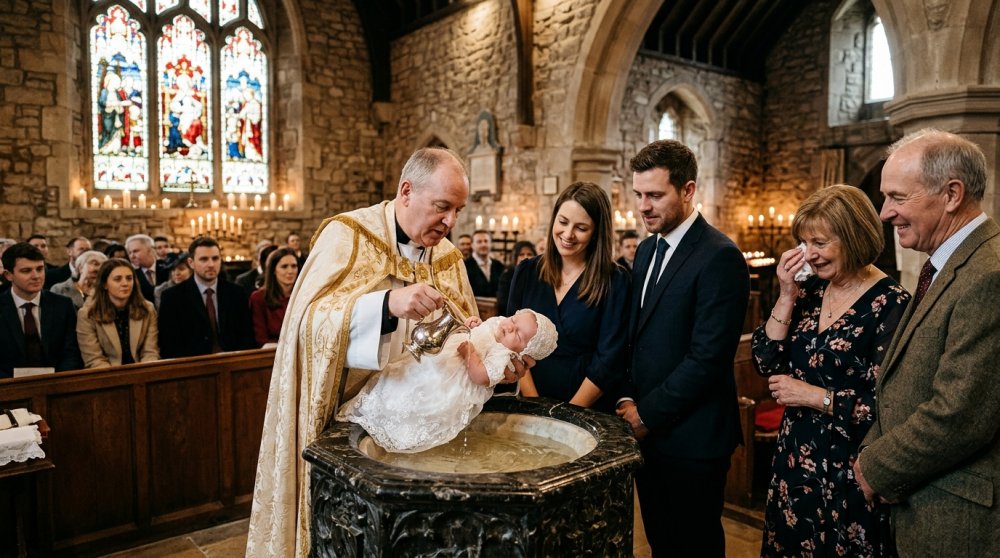
- Infant baptism is a sacred Christian tradition that welcomes children into the faith community as an act of divine grace.
- Scripture affirms that children are to be brought to Jesus, as He declared, “Let the little children come to me, and do not hinder them, for the kingdom of heaven belongs to such as these.”
- Baptism represents God’s free gift of grace, not a violation of rights, but a profound blessing passed from one generation to the next.
Former Irish President Mary McAleese recently made headlines by asserting that baptizing infants amounts to an infringement on their human rights. This claim strikes at the heart of centuries-old Christian practice and the biblical understanding of grace.
Christian theologian Gavin Ashenden has responded forcefully, calling the assertion “nonsense.” He argues that baptizing children into a loving church family is actually the greatest gift parents can give, reflecting God’s own free gift of grace to humanity.
“Being baptised into a loving church family is the greatest gift we can offer our children, and echoes God’s free gift of grace to us all.”
Ashenden’s defense of infant baptism aligns with the historic teaching of the Church across denominations. For generations, Christian parents have brought their children to the baptismal font, trusting in God’s promises rather than waiting for a profession of faith that may never come.
The controversy reveals a deeper cultural shift, where traditional religious practices are increasingly scrutinized through the lens of modern human rights ideology. This framework often pits individual autonomy against the communal bonds of faith and family that have sustained Western civilization.
Critics like McAleese frame baptism as an imposition rather than a blessing. Yet Christian teaching holds that children are born into original sin and stand in need of the regenerating grace that baptism signifies. Far from violating rights, baptism restores what was lost in the Fall.
Parents who baptize their infants are exercising their God-given responsibility to raise children in the nurture and admonition of the Lord. This sacred duty cannot be reduced to a question of consent any more than feeding or clothing a child requires their permission.
The push to redefine baptism as a rights violation represents yet another front in the ongoing conflict between secular progressivism and historic Christianity. As the culture drifts further from its biblical foundations, even the most cherished sacraments face new forms of attack.
Let us know what you think, please share your thoughts in the comments below.
Faith Facts
- Renowned New Testament scholar N.T. Wright teaches that biblical glory centers on restored humanity rather than heavenly escape.
- Wright stresses that Scripture calls believers to serve as God’s image-bearing agents in a renewed creation.
- This understanding affirms traditional Christian teaching on the value of the physical world and human responsibility.
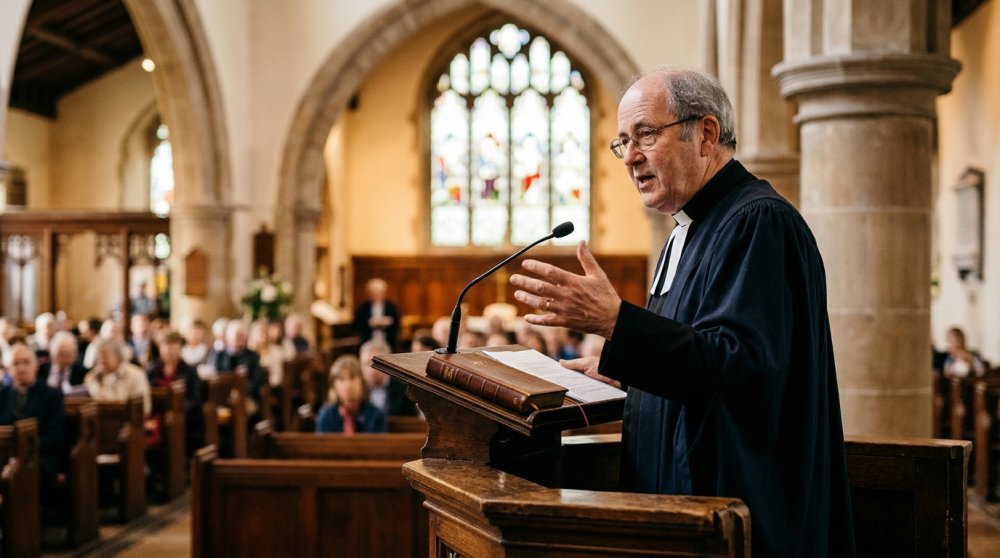
For renowned New Testament scholar N.T. Wright, the “glory” promised in the Bible doesn’t primarily mean “going to Heaven,” but the restoration of humanity’s role as God’s image-bearing agents in a renewed creation.
This perspective challenges modern assumptions that reduce the Christian hope to an otherworldly escape. Wright’s view instead highlights the biblical emphasis on God’s intention to redeem and restore His creation through faithful human stewardship.
“Glory doesn’t mean going to Heaven” but rather “becoming fully human,” says NT Wright
By framing glory as the fulfillment of humanity’s original calling, Wright invites believers to embrace their earthly responsibilities with renewed purpose. This message resonates with traditional Christian values that honor work, family, and community as sacred vocations.
Let us know what you think, please share your thoughts in the comments below.
Faith Facts
- Scripture calls believers to bear one another’s burdens and so fulfill the law of Christ (Galatians 6:2).
- Regular church attendance alone does not guarantee the deep fellowship God designed for His people.
- True Christian community requires honest vulnerability and genuine relationship, not merely surface-level conversation.
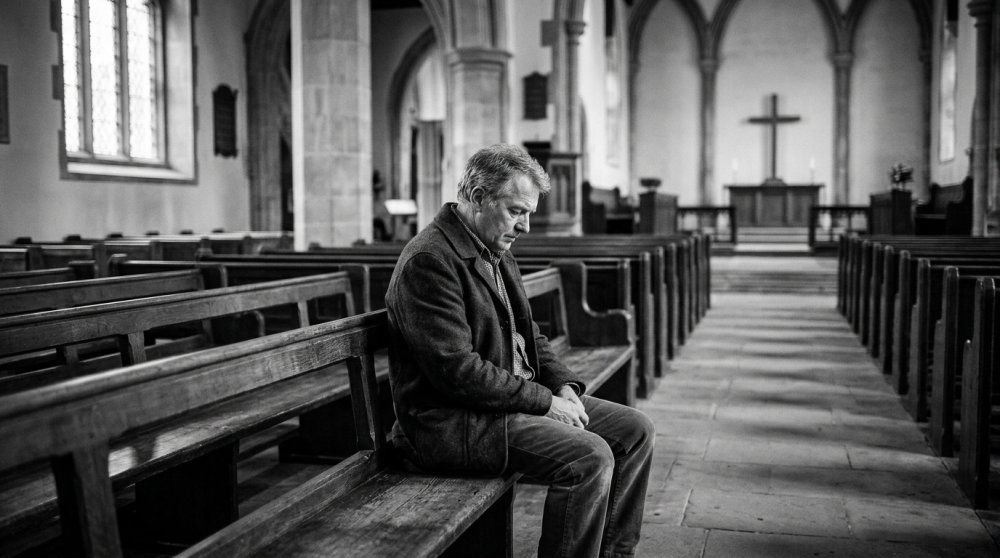
You can attend church every Sunday, know everyone by name and still feel desperately lonely. Derek Hughes knows what it’s like to hide behind small talk. Here’s why genuine Christian community requires more than simply showing up.
Many believers show up week after week, exchange polite greetings, and leave without ever being truly known. This pattern leaves hearts heavy even in crowded sanctuaries.
God never intended His church to function as a collection of isolated individuals who merely occupy the same space for an hour. He calls His people to live in deep, accountable, and loving community.
“You can attend church every Sunday, know everyone by name and still feel desperately lonely.”
Small talk serves as a convenient shield, allowing Christians to remain hidden even while surrounded by brothers and sisters in Christ. This kind of superficial interaction falls far short of the biblical vision for fellowship.
Authentic Christian community demands courage to step beyond pleasantries and share real struggles, prayer requests, and victories. When believers open their lives to one another, the body of Christ functions as God intended.
“Here’s why genuine Christian community requires more than simply showing up.”
Churches that prioritize depth over attendance numbers create spaces where lonely hearts find true belonging. Such fellowships reflect the love of Christ in practical, life-giving ways.
Believers who invest in meaningful relationships discover that church becomes more than a weekly obligation; it becomes a spiritual family where burdens are shared and hope is renewed.
Let us know what you think, please share your thoughts in the comments below.


-

 Self-Reliance2 years ago
Trump’s Bold Move Uncovers Massive Social Security Fraud
-

 Faith2 years ago
New Clues Emerge in Noah’s Ark Mystery
-

 News2 years ago
Governor Walz’s Rhetoric Sparks National Controversy
-

 News2 years ago
Mel Gibson’s ‘The Passion of the Christ’ Sequel Title Announced
-

 Family2 years ago
Texas Lawmaker Targets Furries in Schools
-

 Freedom2 years ago
Maine Lawmaker Challenges Sports Fairness Controversy
-

 Family1 year ago
Canada’s Controversial Policy Sparks Ethical Debate
-
Faith12 months ago
Congress Hears Pleas for Nigerian Christians