
Faith
Christian Filmmaker Reveals Spiritual Danger Behind the Camera

Faith Facts
- Alex Kendrick and his brother Stephen are remaking their first Christian film “Flywheel” more than 20 years after its original release
- The remake is being produced in the Philippines with a new generation of filmmakers and cast
- Kendrick warns that Christian filmmakers face spiritual danger when they seek personal glory rather than honoring God
More than two decades after launching their groundbreaking ministry in Christian cinema, filmmakers Alex and Stephen Kendrick are returning to where it all began. The brothers behind beloved faith-based films like “Fireproof” and “War Room” are now overseeing a remake of their very first movie, “Flywheel,” but with a powerful twist that underscores their commitment to raising up the next generation of believers in filmmaking.
This time, the story is being retold thousands of miles away in the Philippines, with an entirely new cast and crew of Christian filmmakers eager to share the gospel through their craft.
The original “Flywheel” was created in 2003 on a shoestring budget of just $20,000 in Albany, Georgia. Despite its humble origins, the film resonated with audiences and laid the foundation for what would become one of the most successful Christian film ministries in modern history. The Kendrick brothers went on to produce several box office hits that have touched millions of lives worldwide.
Now, as the story gets new life in a different culture, Alex Kendrick is using the opportunity to share a crucial spiritual warning with Christian filmmakers and content creators everywhere.
In discussing the remake, Kendrick emphasized the spiritual dangers that come with success in Christian media. He cautioned that believers working in film and creative industries must constantly guard their hearts against the temptation to pursue their own glory rather than God’s.
“We have to resist the urge to make it about ourselves,” Kendrick explained, highlighting the subtle but dangerous shift that can occur when Christians in media begin to focus on personal recognition rather than Kingdom impact.
The decision to empower Filipino filmmakers to remake “Flywheel” reflects the Kendrick brothers’ commitment to mentoring and equipping believers globally. Rather than simply exporting American Christian films, they’re investing in indigenous storytellers who can reach their own communities with culturally relevant but biblically grounded messages.
This approach aligns with the Great Commission’s call to make disciples of all nations, recognizing that effective evangelism often requires local voices and cultural understanding.
The remake also serves as a testament to the enduring power of stories centered on repentance, redemption, and transformation—themes that transcend cultural boundaries. “Flywheel” tells the story of a dishonest car dealer whose life is turned upside down when he commits to living with integrity and honoring God in his business practices.
For Christian filmmakers and content creators, Kendrick’s warning about pursuing personal glory comes at a critical time. As faith-based media continues to grow in influence and profitability, the temptation to prioritize acclaim, awards, and recognition over faithful stewardship can become increasingly powerful.
The Kendrick brothers’ model offers a different path—one focused on equipping others, sharing resources, and ensuring that God receives the glory for any success that comes.
This commitment to humility and servant leadership has characterized their ministry from the beginning, and it continues to guide their work as they expand their influence globally.
As the Philippine remake of “Flywheel” moves forward, it represents more than just a new version of an old story. It’s a practical demonstration of what happens when Christian leaders prioritize raising up the next generation over building their own platforms, and when they recognize that God’s Kingdom work extends far beyond their own projects and productions.
Let us know what you think, please share your thoughts in the comments below.


Faith Facts
- Actress Danica McKellar credits Candace Cameron Bure with leading her to a personal relationship with Jesus Christ.
- McKellar is best known for her childhood role as Winnie Cooper on the beloved family series “The Wonder Years.”
- Bure, a committed believer, has consistently used her platform to point others toward faith and traditional values.
Danica McKellar opened up about the meaningful influence of her longtime friend Candace Cameron Bure in her journey toward faith. The two former child stars developed a friendship that extended far beyond their early careers in Hollywood.
McKellar explained that Bure was the one who introduced her to Jesus in a personal way. Their shared history in the entertainment industry gave McKellar a trusted voice to hear when spiritual matters came up.
“Wonder Years” actress Danica McKellar shares how fellow child star Candace Cameron Bure helped bring her to Jesus.
McKellar has spoken openly about her growing faith and the importance of surrounding herself with fellow believers. She has described how that friendship helped anchor her during seasons of change and uncertainty.
The story reflects a pattern seen among many in Hollywood who quietly seek truth and community outside the spotlight. For McKellar, that path led her straight to the feet of Jesus through the faithful witness of a friend.
Let us know what you think, please share your thoughts in the comments below.

Faith Facts
- Danica McKellar credits Candace Cameron Bure with leading her to Christ four years ago.
- McKellar now views her acting career through a faith-centered lens.
- She seeks roles that reflect her Christian values and convictions.
Actress Danica McKellar has opened up about the moment she found faith in Christ. She credits longtime friend and fellow former child star Candace Cameron Bure for guiding her on that journey four years ago.
McKellar shared that her new relationship with Jesus has transformed the way she sees her career and the projects she now chooses to pursue. Instead of simply chasing roles for fame or success, she is now more intentional about the stories she tells on screen.
“It’s been Jesus this whole time”
McKellar’s transformation reflects a deeper commitment to living out her faith both on and off the screen. She has expressed gratitude for the spiritual mentorship she received from Bure, whose own public witness as a believer has long been a steady presence in Hollywood.
The actress says her faith has redefined her purpose, helping her to focus on projects that align with her Christian convictions rather than simply accepting work based on popularity or financial gain.
Let us know what you think, please share your thoughts in the comments below.
Faith Facts
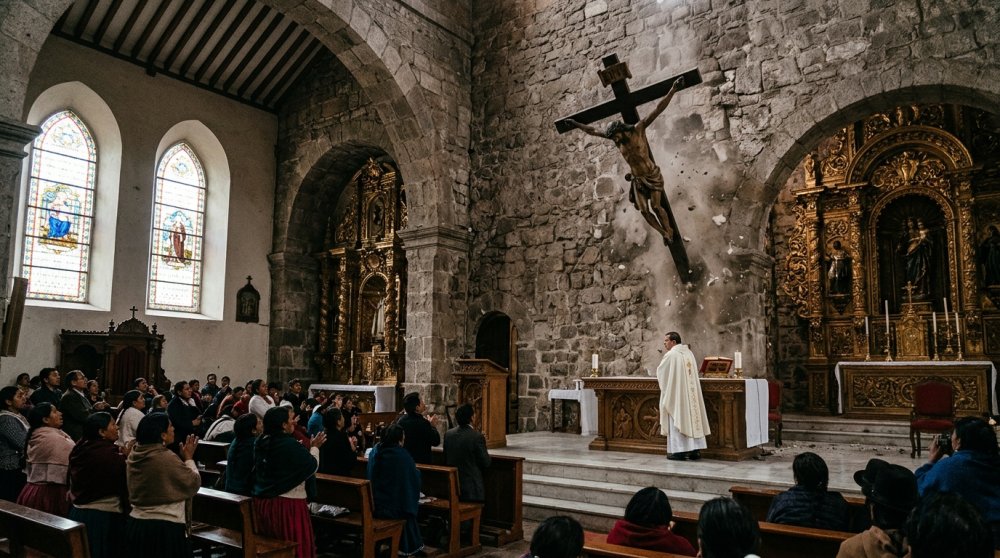
- A priest in Ecuador died during a church service when a large crucifix fell from the wall.
- Kenny Kinglesmith addresses unbelieving friends in an open letter about hope in Jesus amid suffering.
- Christian believers continue to place their trust in Christ even when tragedy strikes inside the sanctuary.
The sudden death of a priest while leading worship has shaken believers across Ecuador. Questions about suffering and divine purpose are rising again.
Kenny Kinglesmith has written an open letter to friends who do not believe. He explains why his hope in Jesus remains firm despite the pain.
“In the face of inexplicable suffering, I still choose to place my hope in Jesus.”
Many Christians are wrestling with how a loving God could allow such a loss inside His house. The event has prompted renewed reflection on the mystery of suffering.
Kinglesmith does not offer easy answers. Instead he points to the cross itself, where Christ endured the ultimate injustice yet brought redemption.
“I still choose to place my hope in Jesus.”
The tragedy has become a moment for believers to examine their own trust in God. It is also an opportunity to demonstrate compassion to those who question.
Kinglesmith urges Christians to live out their faith openly. He believes the witness of steadfast hope can speak louder than arguments.
“In the face of inexplicable suffering, I still choose to place my hope in Jesus.”
Let us know what you think, please share your thoughts in the comments below.


-

 Self-Reliance2 years ago
Trump’s Bold Move Uncovers Massive Social Security Fraud
-

 Faith2 years ago
New Clues Emerge in Noah’s Ark Mystery
-

 News2 years ago
Governor Walz’s Rhetoric Sparks National Controversy
-

 News2 years ago
Mel Gibson’s ‘The Passion of the Christ’ Sequel Title Announced
-

 Family2 years ago
Texas Lawmaker Targets Furries in Schools
-

 Freedom2 years ago
Maine Lawmaker Challenges Sports Fairness Controversy
-

 Family1 year ago
Canada’s Controversial Policy Sparks Ethical Debate
-
Faith11 months ago
Congress Hears Pleas for Nigerian Christians