
Faith
Canadian Christians Fight Expansion of Assisted Suicide to Mentally Ill


Faith Facts
- The Evangelical Fellowship of Canada warns that expanding assisted suicide for mental illness ‘fundamentally devalues human life and normalizes suicide’
- Canada’s Medical Assistance in Dying program is set to expand eligibility to include patients suffering from mental health conditions
- Christian leaders are calling on policymakers to prioritize treatment and support for mentally ill citizens rather than offering death as a solution
The Evangelical Fellowship of Canada (EFC) is taking a bold stand against the expansion of the nation’s Medical Assistance in Dying (MAiD) program, warning that allowing mentally ill patients to qualify for assisted suicide crosses a dangerous moral line.
In a direct appeal to Canadian policymakers, the EFC has made clear that expanding MAiD eligibility to include those suffering from mental illness sends a devastating message about the value of human life. Rather than offering hope, healing, and comprehensive mental health support, the policy would essentially offer death as a treatment option.
The Christian organization’s concern centers on a fundamental principle: every human life possesses inherent dignity and worth, regardless of physical or mental condition. When governments begin to expand assisted suicide programs to include those with treatable conditions like mental illness, they risk creating a system that views certain lives as not worth living.
This expansion represents a troubling shift in how society views vulnerability and suffering. Instead of investing resources in mental health treatment, therapy, medication, and community support systems that could help people overcome their struggles, the policy would make death more accessible than care.
The EFC’s position reflects a broader Christian conservative understanding that compassion means walking alongside those who suffer, providing them with the tools and support they need to heal. True mercy does not rush to end life, but seeks to restore hope and purpose even in the darkest moments.
Mental illness, unlike terminal physical conditions, is often treatable. Suicidal ideation is a symptom of mental health crises that can be addressed through proper intervention, medication, and therapeutic support. Normalizing assisted suicide for this population could discourage people from seeking help and recovery.
The stakes are particularly high for vulnerable populations, including the elderly, disabled, and economically disadvantaged, who may feel pressure to choose death rather than burden their families or society. A culture that normalizes assisted suicide for mental illness creates implicit—and sometimes explicit—pressure on those struggling to end their lives prematurely.
Canada’s MAiD program has already expanded significantly since its inception, and each expansion has been met with concerns from faith communities and disability rights advocates. The proposed inclusion of mental illness represents perhaps the most controversial expansion yet, as it blurs the line between alleviating suffering in terminal cases and offering death to those whose conditions could improve.
Christian conservatives across Canada and the United States are watching this development closely, recognizing that policies adopted in Canada often serve as test cases for legislation in other Western nations. The slippery slope from assisted dying for terminal illness to assisted dying for mental health conditions demonstrates how quickly societal norms can shift once the principle of life’s sanctity is compromised.
The EFC is urging Canadian lawmakers to reject this expansion and instead commit resources to building a robust mental health infrastructure that offers real hope to those in crisis. This includes increasing access to counseling, improving medication options, training more mental health professionals, and creating community support networks that remind struggling individuals they are valued and loved.
As this debate continues, people of faith are called to advocate for policies that protect the vulnerable and affirm the dignity of every human life from conception to natural death.
Let us know what you think, please share your thoughts in the comments below.

Faith Facts
- Dr Michael Tang relocated from London to Yorkshire to serve rural believers after observing urban church trends.
- Smaller rural churches often rely on older faithful members who continue to uphold traditional worship and community.
- The focus on headline-grabbing urban growth can overlook the steady witness of countryside congregations.
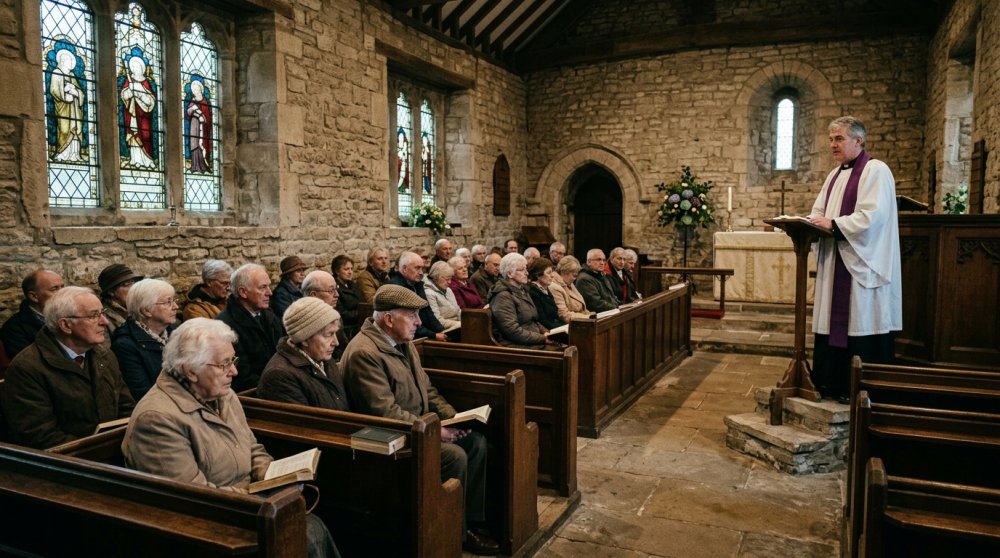
Big city churches full of young people are great, says Dr Michael Tang. But what about smaller rural ones, with their faithful older congregations?
After moving from London to Yorkshire, he’s learning to listen to the wisdom of age, not just the headline-grabbing reports of church growth.
“Big city churches full of young people are great, says Dr Michael Tang. But what about smaller rural ones, with their faithful older congregations?”
“After moving from London to Yorkshire, he’s learning to listen to the wisdom of age, not just the headline-grabbing reports of church growth.”
Let us know what you think, please share your thoughts in the comments below.

Faith Facts
- Eric Metaxas emphasizes the biblical foundation of American self-government.
- Nathan Hale, executed by the British at age 21, exemplifies early American faithfulness and courage.
- Remembering heroic figures like Hale strengthens national resolve rooted in biblical truth.
Author Eric Metaxas recently spoke with The Christian Post about the urgent need to recall the biblical principles that shaped American self-government.
Metaxas pointed to the story of Nathan Hale, the 21-year-old patriot who was hanged by British forces 250 years ago this week, as a powerful example of sacrificial courage.
“We need to remember these heroic figures who laid down their lives for the cause of liberty,” he said.
The author stressed that such stories are not mere historical footnotes but living reminders of the Christian virtues that once defined the American experiment.
“Without these examples, we lose the moral imagination required to sustain freedom,” Metaxas added.
He urged believers and citizens alike to recover the memory of those who stood firm in faith and principle during the nation’s founding era.
Let us know what you think, please share your thoughts in the comments below.

Faith Facts
- A North Carolina church baptized 458 people in one day.
- This event marks the largest single-day baptism in the congregation’s 137-year history.
- The congregation attributes the record turnout to God at work in their community.
A multisite church in North Carolina baptized 458 people in a single day. This remarkable turnout set a new record for the congregation.
The milestone surpasses any previous single-day baptism in the church’s 137-year history. Church leaders say the outpouring reflects God’s active work among their members and surrounding communities.
Let us know what you think, please share your thoughts in the comments below.


-

 Self-Reliance1 year ago
Trump’s Bold Move Uncovers Massive Social Security Fraud
-

 Faith1 year ago
New Clues Emerge in Noah’s Ark Mystery
-

 News2 years ago
Governor Walz’s Rhetoric Sparks National Controversy
-

 News1 year ago
Mel Gibson’s ‘The Passion of the Christ’ Sequel Title Announced
-

 Family2 years ago
Texas Lawmaker Targets Furries in Schools
-

 Freedom2 years ago
Maine Lawmaker Challenges Sports Fairness Controversy
-

 Family1 year ago
Canada’s Controversial Policy Sparks Ethical Debate
-
Faith10 months ago
Congress Hears Pleas for Nigerian Christians